Effortlessly manage data through preview, delete, export, etc.

 100% Security Verified | No Subscription Required | No Malware

 :
: 
 ChatGPT
 Perplexity
 Gemini
 Claude
 Grok
Grok

My Galaxy freezes when I jump between apps or use split-screen. The screen looks stuck and taps don’t register, even though it was fine right after restarting.
Samsung Community user
Your Samsung phone may freeze when you switch between apps, use split-screen, or jump from a game to messaging—often right after a restart or a recent update. On devices like a Galaxy S22 or Galaxy S23, it can look like the screen is “stuck,” with taps not registering and nothing changing after several minutes.
AI (like ChatGPT or Gemini) can help you describe the symptoms clearly, narrow the most likely causes, and choose low-risk checks based on what you observed (heat, storage, recent app installs, update timing).
AI can’t confirm the real root cause from text alone, and repeated trial-and-error (forced restarts, cache clearing, changing system settings) can increase the chance of lockouts or data loss—so it helps to be deliberate.
In this article
- Part 1. Why Samsung phone freezes during multitasking happens and what it means
- What a multitasking freeze usually means
- Common triggers during rapid switching
- Soft freeze vs system stall
- Before you prompt the AI
- Part 2. Using AI prompts to diagnose Samsung multitasking freezes safely
- Prompt refinement: follow-ups that force clarity
- AI output vs reality: what you must verify on-device
- Part 3. When to stop troubleshooting a frozen Samsung phone and avoid risks
Part 1. Why Samsung phone freezes during multitasking happens and what it means
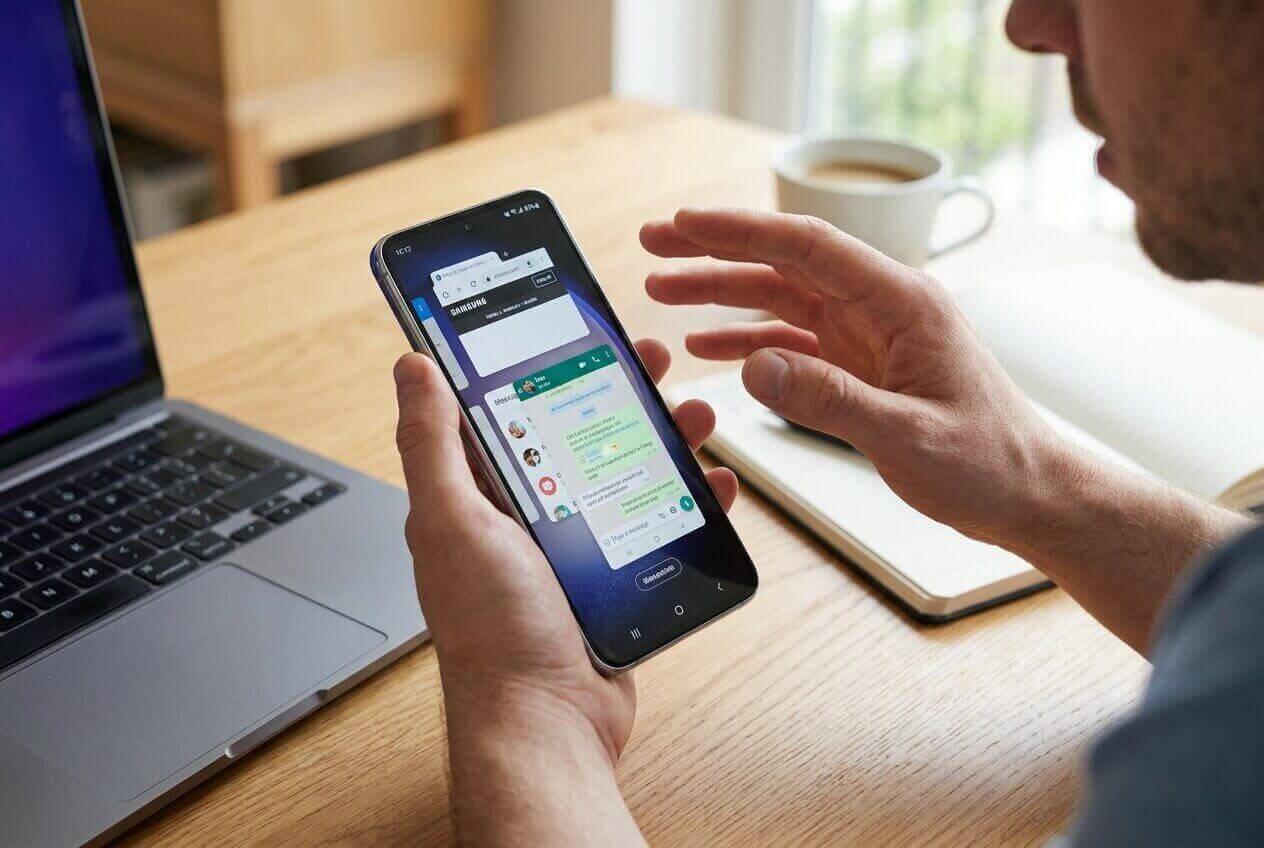
A multitasking freeze usually means the phone’s resources are getting overwhelmed or a specific app/process is hanging. Common triggers include rapid app switching, picture-in-picture, split-screen, heavy background sync, or an app update that introduced a bug.
Sometimes the freeze is “soft” (UI stops responding but the phone is still running), and sometimes it’s closer to a system stall (black screen, repeated stutter, or it returns to the lock screen after a forced reboot). After a reboot, you may also find biometrics disabled until you enter your PIN/password—problematic if you can’t remember it.
What makes this tricky is that the same symptom can come from very different causes (overheating vs. low storage vs. one bad app vs. system corruption), and the fastest “fix attempt” isn’t always the safest next step.
Before You Prompt the AI
Collect a few facts first so the AI can narrow causes without guesswork:
- Samsung model and Android/One UI version (if known)
- What you were doing right before the freeze (split-screen, game + chat, camera + upload)
- Whether the phone felt hot, laggy, or low on storage beforehand
- What “freeze” looks like (touch unresponsive, black screen, app stuck, spinning circle)
- What you already tried (waited, force restart, Safe mode, removed an app)
Part 2. Using AI prompts to diagnose Samsung multitasking freezes safely
Use prompts like these to get a structured, low-risk troubleshooting plan based on what you observed.
Level 1: Basic Prompt
My Samsung phone freezes during multitasking. Ask me the minimum questions needed to narrow the likely causes, then suggest the safest first checks that don’t risk data loss. My symptoms: [describe what happens]. What I did right before it: [action]. What I tried: [steps].
Level 2: Advanced Prompt
Diagnose my Samsung multitasking freeze like a triage.
Goal: rank likely causes and propose low-risk next steps first.
Output format:
1) Top 5 likely causes (ranked) with “why it fits” based on my details
2) For each cause: 1–2 safe checks and what result would confirm/deny it
3) Risk flags: anything that could cause data loss or lockout
My details:
- Model: [ ]
- When it freezes: [ ]
- Heat/battery/storage: [ ]
- Recent changes (update/new apps): [ ]
- After reboot, can I unlock normally: [yes/no/unknown]
Level 3: Evidence Prompt
Help me troubleshoot a Samsung phone that freezes during multitasking using evidence only.
Device info
- Samsung model: (e.g., Galaxy S22)
- Android/One UI: (e.g., Android 14 / One UI 6)
- Storage free space: (e.g., 6 GB free)
- Battery health/age: (e.g., 2 years old, unknown health)
Freeze pattern
- Exact actions before freeze: (e.g., split-screen YouTube + WhatsApp, then switch to Camera)
- Frequency: (every time / daily / random)
- Duration if I wait: (e.g., 30 seconds, 5 minutes, never recovers)
- Heat: (cool/warm/hot to touch)
- Audio/vibration continues: (yes/no)
What I can still do
- Pull down notification shade: (yes/no)
- Press power/volume response: (yes/no)
- Can enter Safe mode: (yes/no/unknown)
- After forced reboot, lock screen works: (yes/no/biometrics only)
History
- Recent update/app install: (list)
- Any crashes or “System UI isn’t responding”: (yes/no)
Task
1) Separate likely causes into: app-level, storage/memory pressure, thermal/power, OS/system corruption, hardware
2) Tell me the safest first 5 actions in order
3) Tell me what evidence would justify moving to higher-risk steps
Prompt refinement: follow-ups that force clarity
If the AI answer feels broad, use these follow-ups to force clarity:
“What 3 questions would change your ranking the most? Ask them one by one.”
“Split your causes into app-level vs system-level and tell me the top 2 signs for each.”
“Rank the causes again, but only using evidence I provided—no assumptions.”
“What single observation should I check next to distinguish overheating vs low storage vs a buggy app?”
“List steps from lowest risk to highest risk, and label any step that could cause data loss or lockout.”
AI output vs reality: what you must verify on-device
AI can help you decide what to try next—but it can’t verify the phone’s internal state from text alone.
| What AI can infer | What you still must verify on the device |
|---|---|
| A likely category (app vs system vs thermal) | Whether Safe mode changes the behavior |
| Whether storage pressure fits your symptoms | Actual free space and background app load |
| Whether overheating is plausible | Real device temperature and throttling signs |
| Whether a lockout risk exists after reboots | Whether you can complete PIN/password entry |
Use AI to narrow the “most plausible + lowest risk” path; use your phone’s actual behavior (and any lock screen access issues) to decide when to switch from diagnosis to a controlled execution tool.
Part 3. When to stop troubleshooting a frozen Samsung phone and avoid risks
Stop trying random fixes once the situation starts trending toward lockout or repeated instability.
- Freezes are getting worse after each restart, or the phone keeps looping back to the lock screen
- You see repeated “System UI isn’t responding” or the device becomes unresponsive for long periods
- You’re at risk of being locked out (forgot PIN/pattern, biometrics disabled after reboot, too many failed attempts)
- The phone heats abnormally or powers off during basic use, suggesting a deeper system or power issue
If your diagnosis points to an access problem (you can’t get past the lock screen to change settings or remove a problematic app), it’s usually better to move from guessing to a purpose-built execution step.
Unlock Android screen after Samsung freeze with Dr.Fone
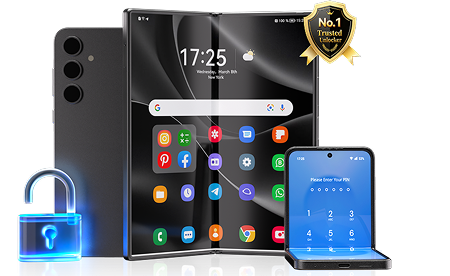
If multitasking freezes forced you into repeated reboots and you’re now stuck at the lock screen (forgotten PIN/pattern or biometrics no longer accepted), the next practical step is to regain access in a controlled way rather than attempting more trial-and-error on-device. Dr.Fone - Screen Unlock (Android) is relevant here because it’s designed to guide the lock-screen removal flow when normal unlock methods aren’t working, helping you proceed step-by-step with clearer prompts and fewer improvised actions.
 Unlock Android phone in seconds.
- Remove PIN, pattern, password, fingerprint.
- Bypass Google FRP lock easily.
- Works on all Android brands & models.
- No tech skills required – user-friendly.
-
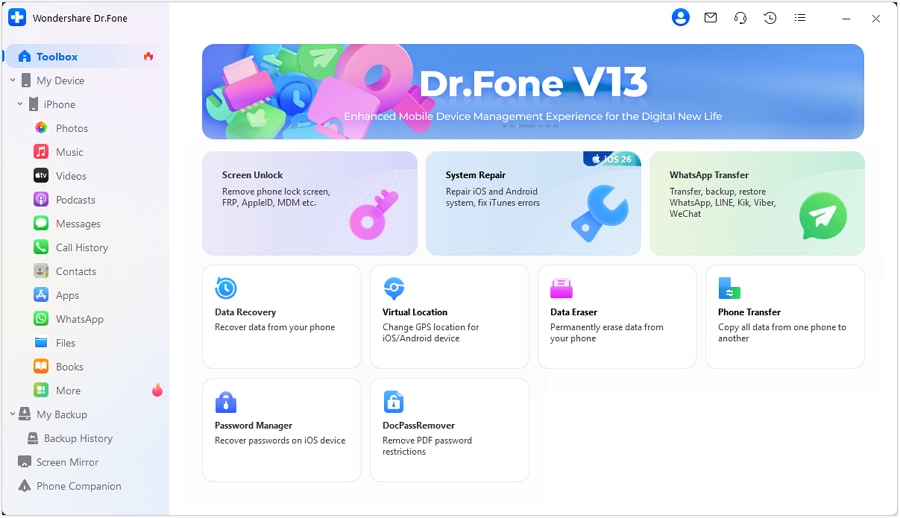
Step 1 Install Dr.Fone on a computer
Download and open Dr.Fone, and choose Screen Unlock (Android) so you don’t mix it up with system or data tools.
-
Step 2 Connect your Samsung phone by USB
Use a stable cable/port and avoid disconnects mid-process to reduce the chance of interruptions.
-
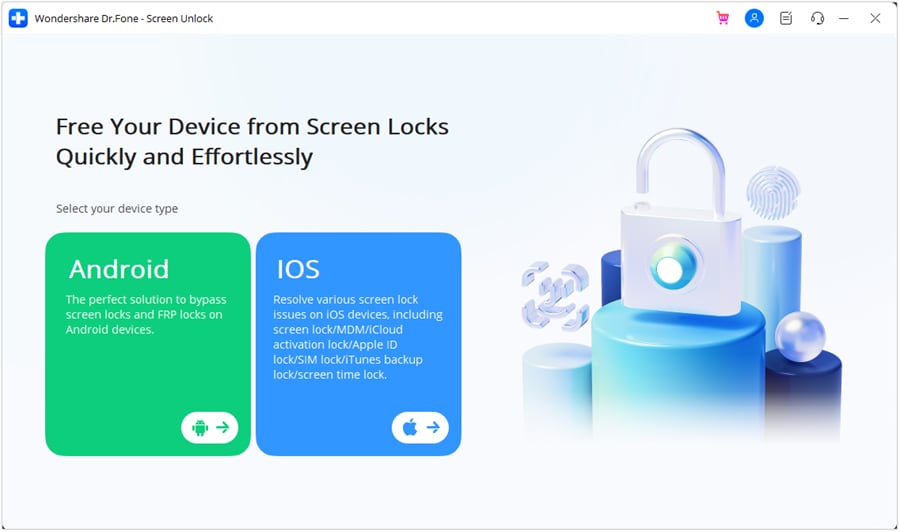
Step 3 Select “Unlock Android Screen”
Follow the on-screen device selection carefully so the guided steps match your model family and Android version.
-
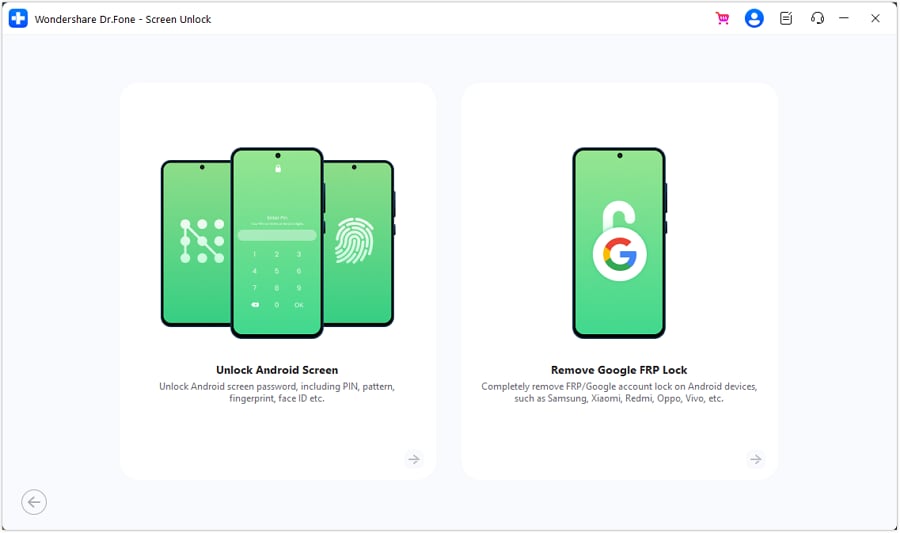
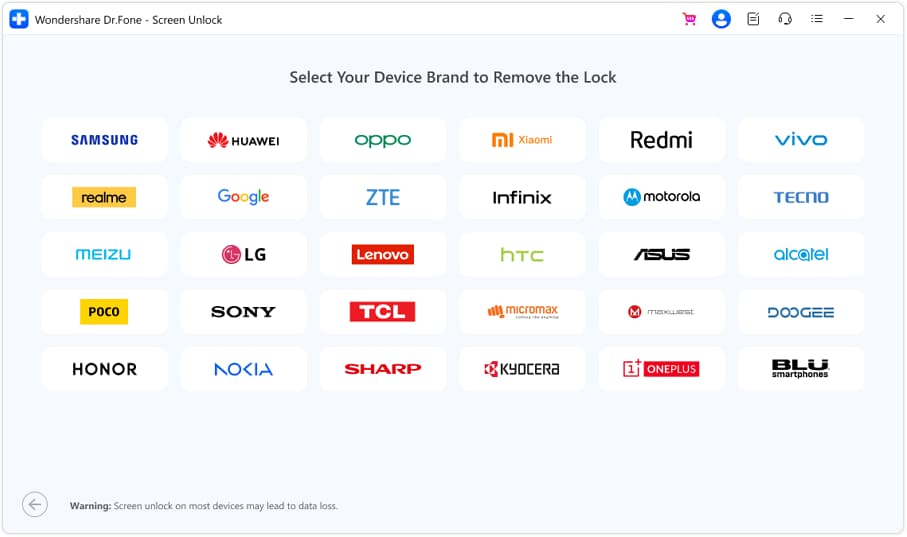
Step 4 Enter the required device mode when prompted
Complete the guided button-press sequence exactly as shown to let the process proceed without extra retries.
-
Step 5 Finish lock screen removal and set a new access method
Once access is restored, set a new PIN and review recent apps/updates that may have triggered the freezes.




Conclusion
AI is best used here to translate your freeze pattern into a ranked set of likely causes and low-risk checks, while avoiding random steps that can escalate into lockout. When the situation becomes primarily about access—especially after forced reboots—handoff to an execution tool like Dr.Fone’s Screen Unlock (Android) can be the more controlled way to proceed.
FAQ
-
Why does my Samsung freeze only when I switch apps quickly?
Rapid switching can spike memory/CPU use; a single misbehaving app, low free storage, or background sync can push the system into a UI hang. -
Is a multitasking freeze more likely an app issue or a system issue?
If it happens only with specific apps, it’s often app-level; if it happens across many apps and after reboots, it leans system-level or resource-related. -
What’s the safest first check before I force restart?
Wait briefly and see if the phone recovers, then try closing the current app (if possible) and reduce background load; forced restarts can increase lockout friction if you don’t know your PIN. -
Why did my phone ask for a PIN after reboot when I usually use fingerprint?
Android typically requires your PIN/password after a restart before biometrics work again; this can feel like a sudden “lockout” if the PIN isn’t remembered. -
When should I use Dr.Fone – Screen Unlock (Android) for this situation?
When freezes and reboots leave you unable to pass the lock screen (forgotten credentials, repeated failed attempts, or biometrics unavailable), and you need a guided way to regain access.
 Add Wondershare Dr.Fone as a preferred source on Google