Effortlessly manage data through preview, delete, export, etc.

 100% Security Verified | No Subscription Required | No Malware

 :
: 
 ChatGPT
 Perplexity
 Gemini
 Claude
 Grok
Grok

I thought switching my work phone would be quick, but I’m worried one missed dependency—like an authenticator setup or a work profile policy—will quietly break email, VPN, or MFA after I wipe the old device.
Forum user
A business phone migration can fail quietly if you miss one dependency—an authenticator seed, a work profile policy, or an app that won’t re-activate after reinstall. One skipped check can turn into lost access, broken MFA, or compliance issues.
AI is useful for turning “move everything” into a sequence: what to inventory, what to verify, what to back up, and what to test before you touch the old device. It can also help you spot “hidden” work data locations (managed containers, app sandboxes, encrypted chats) and define pass/fail checks.
AI cannot actually transfer apps/files, unlock accounts, or validate what’s on your physical devices. Execution requires real device tools and real sign-ins—especially before any irreversible step like wiping the old phone or unenrolling it from MDM.
In this article
- Part 1. Plan a business phone migration checklist without missing critical steps
- What can go wrong (and why it’s usually order-dependent)
- Your point of no return (irreversible actions)
- What the AI needs to know (inputs to generate the right checklist)
- Quick summary (planning + verification gates)
- Part 2. Use AI prompts to build a safer workflow
- Part 3. Prompt refinement (follow-up prompts)
- Part 4. AI plan vs. real device constraints (what AI can and can’t do)
- Part 5. Execute the workflow safely with Dr.Fone (transfer + verification)
Part 1. Plan a business phone migration checklist without missing critical steps
1. Treat migration as an order-dependent workflow, not a “move everything” task.
The biggest risk is doing the right steps in the wrong order (for example, changing MFA or enrolling into MDM too early), causing lockouts or restricted transfers.
2. Define verification gates before any irreversible moment.
Create “Do not proceed unless…” checks for MFA prompts, VPN connectivity, email sync, cloud drive access, and required local files before wiping, trade-in, or unenrolling.
3. Inventory where work data actually lives.
Work files and chat history may exist in managed containers, app sandboxes, or encrypted stores that don’t migrate like personal data—identify locations and required evidence.

1-1. What can go wrong (and why it’s usually order-dependent)
You’re replacing a work phone (or moving to a new device) and you need work apps, work files, and settings to come across without breaking access. You might be juggling MDM/Intune policies, a work profile, MFA apps, VPN, SSO, and a mix of cloud and on-device files.
The uncertainty usually isn’t “can I transfer data,” but “what order prevents lockouts?” For example, signing out of an authenticator on the old phone too early can strand you, or enrolling the new phone into MDM before you’ve captured non-managed items can restrict transfers.
1-2. Your point of no return (irreversible actions)
Your point of no return is any action that removes recovery paths—factory reset, remote wipe, device trade-in, MDM unenrollment that deletes managed data, or deleting the authenticator/VPN credentials before verifying the new device works end-to-end.
1-3. What the AI needs to know
Share your context so the AI can build a checklist that matches your company setup and risk level:
- Old phone OS/model and new phone OS/model (e.g., iPhone 13 iOS 17 → iPhone 15 iOS 18)
- Is the phone company-managed (MDM) or BYOD with a work profile/container?
- MDM platform (if known): Intune, Workspace ONE, MobileIron, JAMF, etc.
- Authentication setup: MFA app(s), hardware keys, SMS fallback, backup codes available?
- Work apps list: email, chat, VPN, password manager, authenticator, CRM, ticketing, storage
- Where “work files” live: OneDrive/SharePoint, Google Drive, Dropbox, local storage, app-only sandboxes
- Messaging apps with critical history (Teams/Slack/WhatsApp/Signal/WeChat) and whether history must migrate
- Any eSIM/physical SIM constraints and carrier requirements
- Compliance needs: encryption, data loss prevention (DLP), restrictions on backups/transfers
- Deadline and downtime tolerance (e.g., “must be fully working by Monday 9am”)
- Access to admin/helpdesk or self-service portal for enrollment/activation resets
- Whether the old phone must be wiped/returned and by when
1-4. Quick summary: when planning is “done”
AI improves planning, but cannot execute. Once your workflow and verification gates are clear, you need real tools on real devices to perform the migration and confirm outcomes.
Part 2. Use AI prompts to build a safer workflow
Use the prompts below to make the AI produce a step-by-step plan with explicit verification gates before you touch the old device.
2-1. Level 1: Basic Prompt
I’m migrating from my old work phone to a new phone and need a checklist for work apps and work files. Build a safe sequence that prioritizes avoiding MFA lockouts, missing files, and MDM/work profile surprises. Include a “do not do yet” list until verification is complete.
2-2. Level 2: Advanced Prompt
Create a migration workflow with three sections: Preparation, Execution, Verification.
Within each section, separate critical steps (must do) from optional steps (nice to have), and add a “stop/go” gate before any irreversible actions (factory reset, trade-in, unenroll/wipe).
Assume I need email, Teams/Slack, VPN, authenticator, password manager, and cloud drive access working on the new phone before I decommission the old one.
2-3. Level 3: Evidence Prompt
Design a business phone migration checklist tailored to this context, and include checks before / during / after transfer with clear pass/fail criteria.
Context
- Devices: (Old: iPhone 12 iOS 17.4), (New: iPhone 15 iOS 18.0)
- Management: (Company-managed via Intune; work apps include Outlook, Teams, OneDrive; device requires compliance)
- MFA: (Microsoft Authenticator; no SMS fallback; backup codes available = yes)
- VPN: (Cisco AnyConnect with certificate-based login)
- Files: (OneDrive + some local “On My iPhone” PDFs)
- Deadline: (2 hours downtime max)
- Point of no return: (Old phone must be wiped and returned today)
Output requirements
- Inventory table: app/data type → where it lives → how it migrates → verification method
- Risk list: top 8 failure modes and mitigations
- Verification gates: “Do not proceed unless…” checks before wiping/unenrolling
- A final “cutover checklist” that confirms end-to-end access on the new phone
Part 3. Prompt refinement (follow-up prompts)
Turn this into a two-column checklist: Action and Evidence to capture (screenshots/logins/files count) for each step.
Add a “lockout prevention plan” for MFA and password manager, including fallback options and how to confirm recovery works.
Produce a minimal-downtime sequence that fits a (90-minute) window, with time estimates and dependencies.
Ask me 10 clarifying questions first, then output the checklist; do not assume MDM, MFA, or file locations if unknown.
Add explicit “If X happens, do Y” branches for: enrollment failure, VPN certificate missing, OneDrive not syncing, authenticator prompts not arriving.
Part 4. AI plan vs. real device constraints (what AI can and can’t do)
| What AI can plan well | What AI cannot do on your behalf |
|---|---|
| Map dependencies (MDM → email → MFA → VPN → apps) | Enroll devices into MDM or satisfy compliance checks |
| Define verification gates and pass/fail checks | Transfer/restore apps and files between physical devices |
| Identify lockout risks and irreversible moments | Generate working MFA tokens, certificates, or sign-ins |
| Create evidence checklist for audits/handovers | Confirm what data actually moved without device access |
AI improves planning, but cannot execute. Once your workflow and verification gates are clear, you need real tools on real devices to perform the migration and confirm outcomes.
4-1. When to stop planning and start execution
- You have an inventory of critical work apps, MFA methods, and file locations (cloud vs local vs managed container).
- You have recovery options ready (backup codes, admin/helpdesk path, secondary device access, known-good passwords).
- You have defined verification gates (what must work on the new phone before any wipe/return action).
- You have identified the irreversible moment and scheduled it last (wipe/unenroll/trade-in only after verification).
At this point, the main risk shifts from “unclear plan” to “delayed execution,” and you can move forward without improvising mid-migration.
Part 5. Execute the workflow safely with Dr.Fone (transfer + verification)
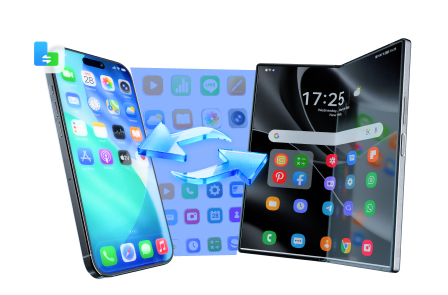
Execution now matters because transferring and validating real data depends on device state, cables/network, OS prompts, and security controls. Follow your plan, and only proceed past each gate when the verification evidence matches your checklist. To perform the on-device transfer steps for supported data types, you can use Dr.Fone - Phone Transfer.
 Move data between iOS to Android and vice versa.
- Transfer contacts, SMS, photos, videos, music, and more types.
- Available with all phones with Android and iOS versions.
- Simple, click-through process.
-
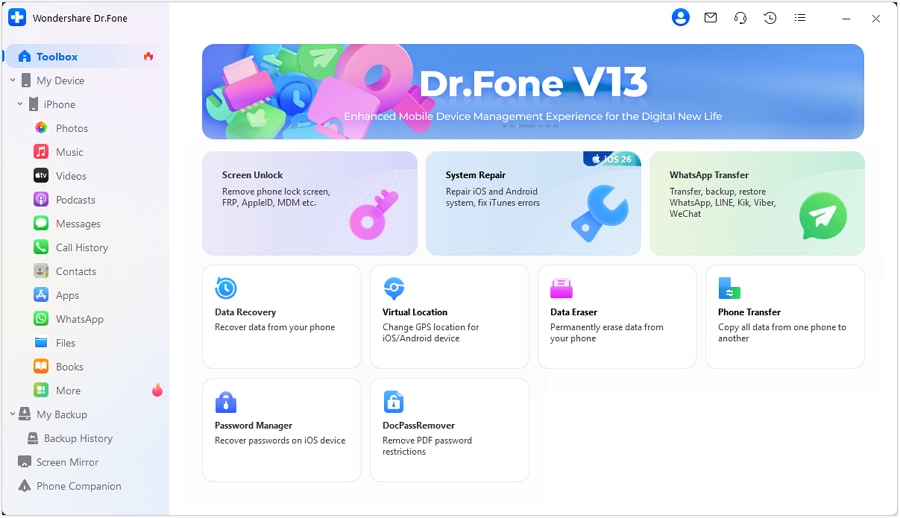
Step 1 Prepare for migration
Confirm your inventory, ensure both phones are charged/on stable Wi‑Fi, and gather required credentials/recovery codes before starting any transfer.
Limitation: AI can’t confirm your account access or device compliance status; you must verify readiness on the devices.
-
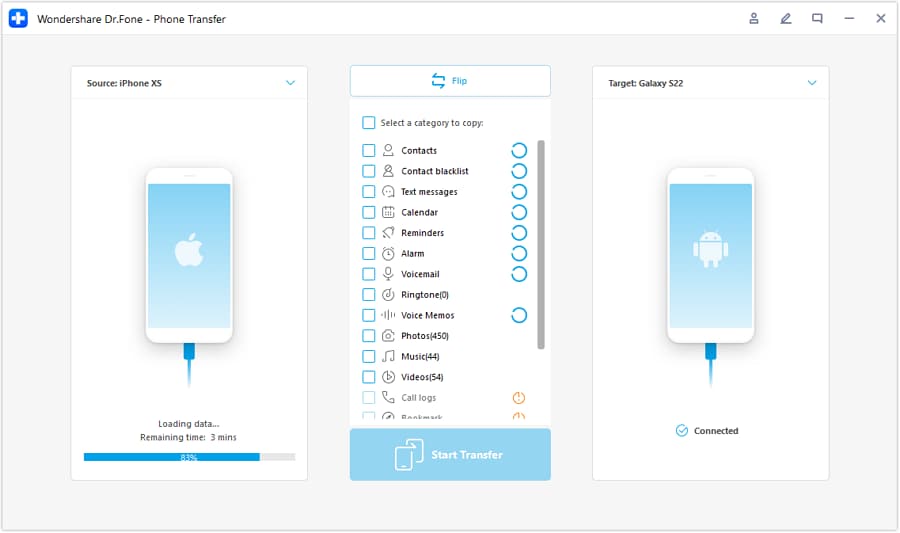
Step 2 Set the transfer direction and connect devices
On your computer, open the phone transfer tool and set the correct source/target path (for example, iOS → Android or Android → iOS) so you don’t overwrite the wrong device.
-
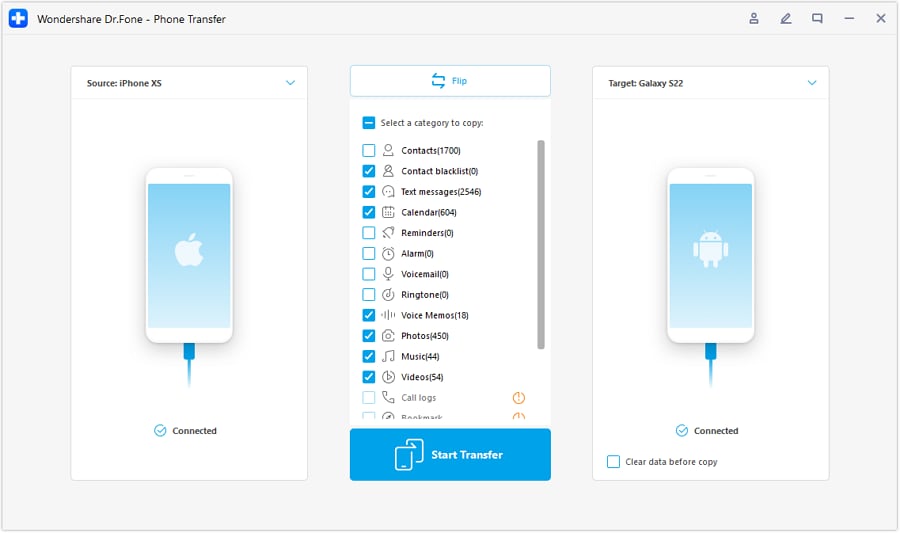
Step 3 Select what to transfer (based on your plan)
Choose the data types your checklist allows and that your organization’s policies permit. Keep your verification gates nearby so you can confirm outcomes immediately after transfer.
Limitation: AI cannot operate Dr.Fone or guarantee MDM-restricted apps/data will migrate; follow your organization’s rules and app-specific requirements.
-
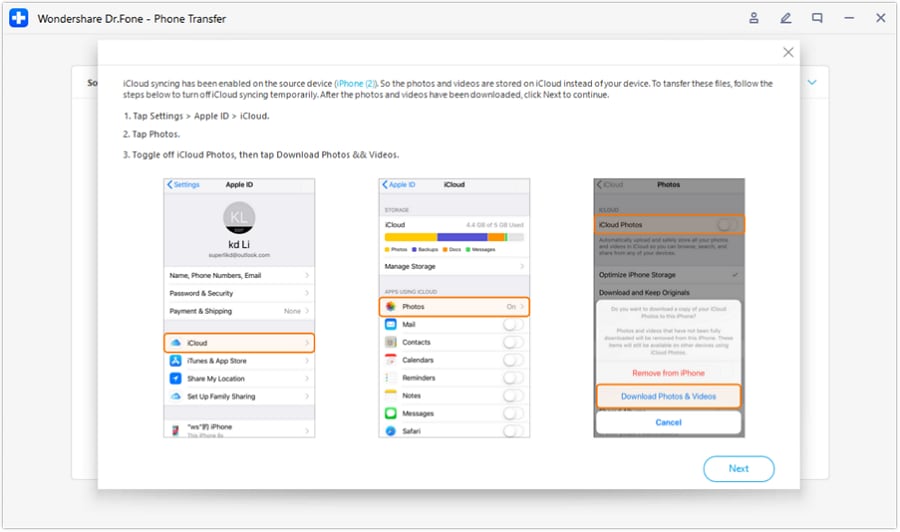
Step 4 Verify, then perform irreversible actions
Validate logins and data on the new phone (email sync, Teams/Slack, VPN connection, authenticator prompts, cloud file access, and any required local files), and only then proceed to wipe/unenroll/return the old phone.
Limitation: If you wipe or unenroll too early, recovery may be impossible without admin intervention; AI cannot reverse device wipes or restore deleted managed data.




Conclusion
Use AI to produce a structured migration checklist with clear verification gates and a defined point of no return; then use Dr.Fone to carry out the real transfer and restore steps on-device, only proceeding to irreversible actions after your checks pass.
FAQ
-
What’s the most common “silent failure” in business phone migration?
MFA/authenticator issues and managed work-profile data that doesn’t transfer like normal personal data; you notice only when you try to sign in or connect to VPN. -
When should I capture backup codes or recovery options?
Before you start execution—ideally before enrolling the new phone or changing anything on the old phone—so you still have multiple ways to recover access. -
How do I know if work files are truly migrated vs just visible in the cloud?
Define a verification check: open several known files, confirm offline availability if required, and compare folder/file counts where applicable (and confirm the correct account/tenant is signed in). -
Can I factory reset the old phone once the main apps are installed on the new phone?
Not safely. Installation is not verification—don’t wipe until you’ve confirmed end-to-end access (MFA prompts, VPN, email sync, and required files) and you’ve passed your checklist gates. -
What if MDM blocks transfers or forces a wipe during enrollment?
Stop and use your “If X happens, do Y” branch: preserve the old phone state, contact helpdesk/admin, and avoid irreversible steps until policy requirements are clarified. -
What are AI’s limits here?
AI can structure the plan and checks, but it cannot execute device actions, validate what data moved, or recover access after a wipe/lockout.
 Add Wondershare Dr.Fone as a preferred source on Google