Effortlessly manage data through preview, delete, export, etc.

 100% Security Verified | No Subscription Required | No Malware

 :
: 
 ChatGPT
 Perplexity
 Gemini
 Claude
 Grok
Grok

I’ve tried the usual fixes—restart, clear storage, reinstall apps, even an iOS update after tapping “Install Now”—but the issue keeps coming back. Now I’m not sure if I’m helping or making it worse.
Apple Support Community user
Your phone is acting up and you’ve already tried the usual DIY steps—restart, storage cleanup, app reinstalls, maybe even an iOS update on an iPhone 13 or iPhone 14 after tapping Install Now. But the problem keeps returning, or nothing changes after several minutes, and it’s unclear whether you’re helping or making it worse.
AI (like ChatGPT or Gemini) can help you organize symptoms, narrow likely causes, and compare low-risk next steps—especially when the issue could be hardware, software, or account-related and you don’t want guesswork.
AI has limits: it can’t “see” your device state, and repeated trial-and-error can increase risk (data loss, account lockouts, or system instability). This guide is designed to help you decide when to stop DIY and hand off execution to a safer, more controlled approach.
In this article
- Part 1. Why DIY phone troubleshooting can make iPhone issues worse
- When DIY shifts from “simple” to risky
- How symptoms escalate with trial-and-error
- Before you prompt the AI
- What to collect for evidence-based triage
- Part 2. Using AI prompts to diagnose phone problems safely
- Part 3. When to stop DIY troubleshooting to avoid data loss
- Part 4. Fix iOS system issues safely with Dr.Fone - System Repair (iOS)
- Part 5. A simple “stop DIY” decision checklist

Part 1. Why DIY phone troubleshooting can make iPhone issues worse
DIY troubleshooting becomes risky when the problem isn’t a single setting or app, but a deeper system condition—like repeated crashes, boot loops, update failures, or persistent “stuck” screens. In these cases, random fixes can overlap and make it harder to identify what actually changed.
A common pattern is: you update or restart, the phone hangs on a logo/progress bar, reboots repeatedly, or becomes unresponsive. You may try multiple button combos, re-install iOS, or wipe settings—then you’re unsure which step caused the next symptom.
The key meaning: if symptoms are escalating (frequency, severity, or new errors), the situation is no longer “simple DIY,” and your next steps should prioritize risk control over speed.
1-1. Before You Prompt the AI
Collect a few specifics first so the AI can reason from evidence rather than guesses:
- iPhone model and iOS version (if known)
- What you did right before it started (update, restore, storage cleanup, drop, water exposure)
- Exact symptom (boot loop, stuck logo, black screen, freezing, repeated crash)
- Time behavior (e.g., changes after 5–10 minutes, only when charging, only on Wi‑Fi)
- What you already tried (and in what order)
Part 2. Using AI prompts to diagnose phone problems safely
2-1. Level 1: Basic Prompt
I’m trying to decide whether to stop DIY troubleshooting on my iPhone. Here are my symptoms: [describe]. What are the most likely causes, and what are the lowest-risk next steps I should try first?
2-2. Level 2: Advanced Prompt
Act as a cautious phone triage assistant. Based on my symptoms, rank the top 5 likely causes from most to least likely, and label each step I might take as **low / medium / high risk** (risk = data loss, account lockout, making the issue worse).
My device: iPhone [model]. Trigger event: [what I did right before]. Current symptoms: [symptoms]. What I already tried: [list]. Constraints: I want to avoid data loss and avoid repeated trial-and-error.
2-3. Level 3: Evidence Prompt
Diagnose my iPhone issue using evidence-based reasoning and tell me when I should stop DIY troubleshooting.
Device
- iPhone model: (e.g., iPhone 13 Pro)
- iOS version (if known): (e.g., iOS 17.x)
- Storage free space (approx): (e.g., 2–5 GB free)
What happened right before
- Action: (e.g., tapped Install Now / restarted / restored from iCloud)
- Battery level + charging state: (e.g., 30%, plugged in)
- Network state: (e.g., Wi‑Fi on)
Current symptoms
- What I see on screen: (e.g., Apple logo, progress bar, black screen)
- Timing pattern: (e.g., reboots every 3 minutes)
- Sounds/vibration/heat: (e.g., gets warm near camera area)
What I already tried (in order)
1) …
2) …
Goal + risk tolerance
- Goal: (e.g., get phone booting normally)
- Data priority: (e.g., must avoid losing photos)
Output format I want
1) Most likely causes (ranked) with reasoning
2) What evidence would confirm/deny each cause
3) “Stop DIY” thresholds (clear red flags)
4) Lowest-risk next actions, in order
2-4. Prompt Refinement
If the AI answer feels too broad, use these follow-ups to force clarity:
“What 5 questions do you need to ask me to reduce uncertainty the most?”
“Separate causes into software, hardware, and account/network categories—then rank within each category.”
“Which single piece of evidence would most strongly distinguish between an iOS system issue and a failing battery?”
“Based on what I’ve tried, what actions should I avoid next because they increase risk or reduce recoverability?”
“Give me a decision tree with 3 branches maximum, using only checks I can do without wiping data.”
2-5. AI Output vs Reality
AI can help you reason; your phone still needs real-world validation steps.
| What AI can tell you | What you still must verify on-device |
|---|---|
| Likely cause ranking based on symptom patterns | Whether the phone holds a stable boot, charges normally, or overheats |
| Which steps are lowest risk first | Whether a given step triggers new errors or changes behavior |
| What evidence is missing | Whether you can access storage, settings, or backup status |
| When to stop DIY | Whether the device is degrading with each attempt |
AI closes the diagnosis gap (what’s probably happening and what to try safely), but it doesn’t execute changes or guarantee outcomes—so your next move should prioritize controlled, reversible actions.
Part 3. When to stop DIY troubleshooting to avoid data loss
Stop DIY is not “give up”—it’s a safety decision when uncertainty is high and the next steps are more destructive than informative.
- The phone is stuck in a boot loop / Apple logo / update screen and repeats for 30+ minutes with no progress.
- Symptoms are worsening after each attempt (new errors, shorter boot time, more heat, more frequent crashes).
- The next DIY step you’re considering involves wiping/restore, and you’re not 100% sure you have a usable backup.
- You suspect hardware stress (swelling, unusual heat, liquid exposure) but you’re still trying repeated restarts/updates.
Once you’ve used AI to narrow likely causes and define “safe vs risky” actions, you’re ready to switch from diagnosis to a controlled execution path.
Part 5. A simple “stop DIY” decision checklist
Use this as a final checkpoint before you attempt another round of trial-and-error:
- Time threshold: If you’re stuck on a logo/progress/update screen with repeating behavior for ~30+ minutes, stop adding more random steps.
- Trend check: If each attempt creates new symptoms (more heat, faster boot loops, new errors), treat it as escalating risk.
- Data risk: If the next action is restore/wipe and you can’t confirm a usable backup, stop DIY.
- Hardware suspicion: If there’s swelling, unusual heat, or liquid exposure, stop DIY and seek service rather than repeated restarts/updates.
Part 4. Fix iOS system issues safely with Dr.Fone - System Repair (iOS)
If AI-based triage suggests a likely iOS system-level issue (boot loop, stuck logo, update failure, repeated crashes) and you want to reduce guesswork, a dedicated execution tool can help you apply a more structured approach. Dr.Fone - System Repair (iOS) is relevant at this stage because it focuses on the practical “do” part—running a guided system repair flow—after you’ve already clarified symptoms, risks, and stop signals. When your priority is to stabilize the device behavior with fewer random attempts, using a purpose-built workflow (see Repair iOS Issues on the Dr.Fone system repair page) can be a calmer next step than continuing DIY cycles.
 Fix iOS issues, no data loss.
- One-click repair for all iOS problems.
- Solve recovery mode, Apple logo, black screen, etc.
- Upgrade or downgrade iOS without iTunes
-
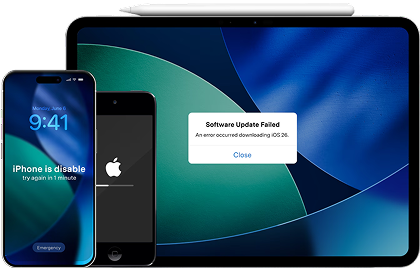
Step 1 Confirm your symptom category
Match your issue (boot loop, stuck Apple logo, update failure) to an iOS system problem before proceeding to avoid solving the wrong problem.
-
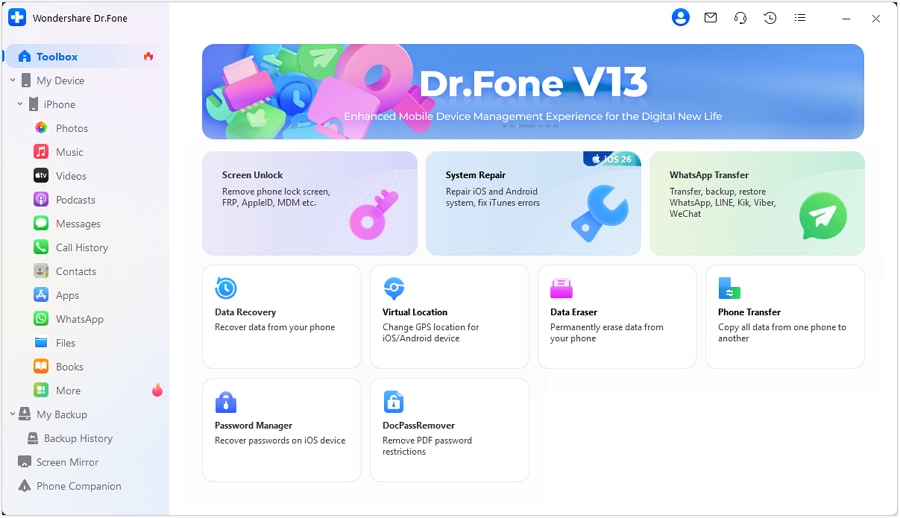
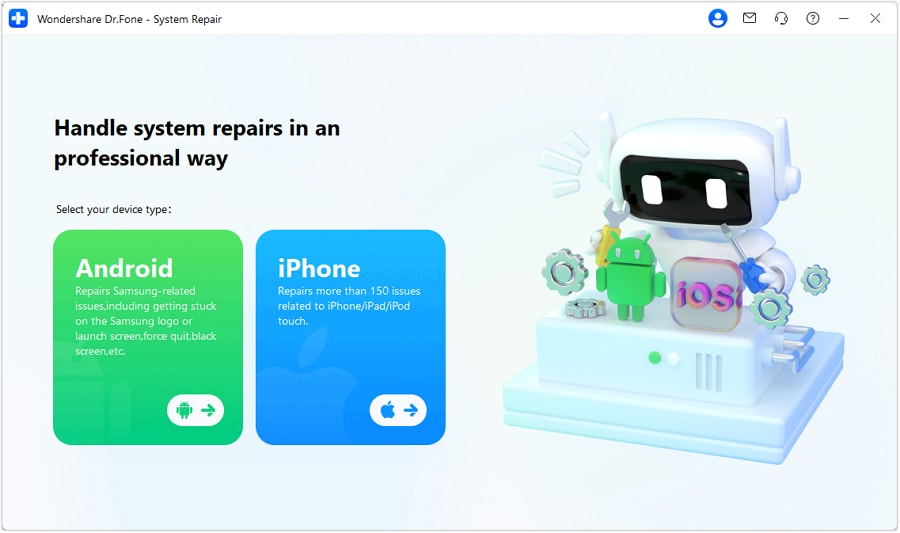
Step 2 Open System Repair (iOS)
Launch Dr.Fone and select the iOS System Repair option, proceeding carefully if your device shows heat/swelling (stop and seek service in that case).
-
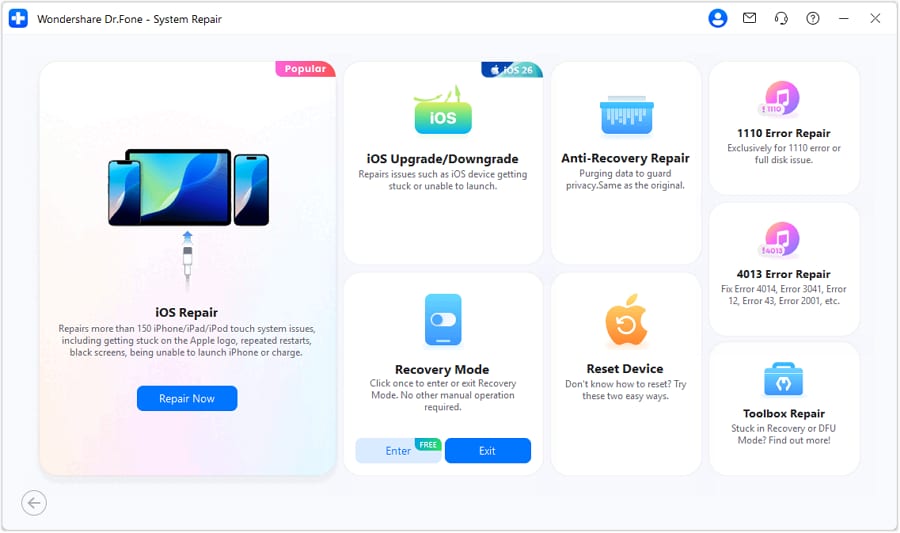
Step 3 Connect and follow the guided flow
Connect the iPhone and follow the on-screen instructions to keep steps consistent and avoid repeated trial-and-error.
-
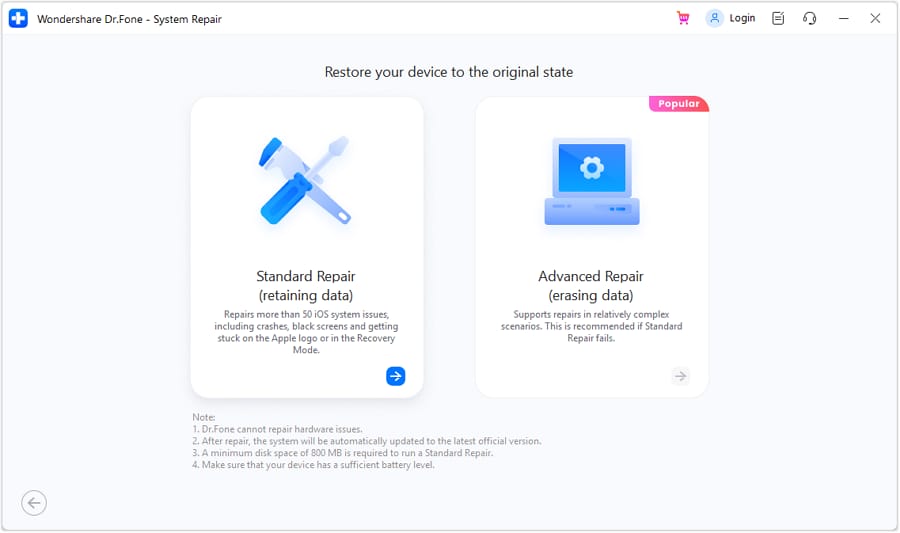
Step 4 Choose the appropriate repair mode
Pick the mode that best matches your data-risk tolerance, and don’t switch modes repeatedly unless the tool suggests it.
-
Step 5 Re-check stability after completion
After the process, test reboot, charging, and basic apps before re-attempting updates or restores.




Conclusion
Use AI to structure what you’re seeing, rank likely causes, and choose the lowest-risk next checks—then stop DIY when the next steps become destructive or uncertain. At that point, handing execution to a controlled iOS system repair workflow is a safer way to move forward than repeating random troubleshooting cycles.
FAQ
-
How do I know it’s time to stop DIY troubleshooting on my iPhone?
When the problem escalates (boot loops, stuck screens, worsening behavior) and your next DIY steps are high-risk (restore/wipe) without strong evidence. -
Is restarting and trying again harmful?
Occasional restarts are usually low-risk, but repeated cycles while the phone is overheating, failing updates, or degrading can increase instability and hide the real cause. -
What should I tell AI to get a useful diagnosis?
Include: trigger event, exact on-screen symptom, timing pattern, what you tried in order, and your data-loss tolerance—then ask for ranked causes and low-risk steps. -
What’s the biggest DIY mistake when an iPhone is stuck on the Apple logo?
Jumping straight to wipe/restore without confirming backup status and without first mapping safer checks (battery/charging behavior, timing patterns, recent update events). -
When is a system repair workflow more appropriate than more DIY steps?
When symptoms match system-level failure patterns (boot loop, update failure, stuck logo) and you’ve hit your “stop DIY” thresholds.
 Add Wondershare Dr.Fone as a preferred source on Google