Effortlessly manage data through preview, delete, export, etc.

 100% Security Verified | No Subscription Required | No Malware

 :
: 
 ChatGPT
 Perplexity
 Gemini
 Claude
 Grok
Grok

After an update and a restart, my tablet booted up fine but my photos and downloads look empty. I’m scared to try random fixes because I don’t want to overwrite anything.
Reddit user, r/AndroidQuestions
Tablet data loss often happens right after a stressful moment—after you tapped Install now, restarted a Samsung Galaxy Tab, or tried a new lock screen method and suddenly files, photos, or notes seem missing. Sometimes the device still boots, but content looks empty; other times you’re locked out and can’t even confirm what’s gone.
AI (like ChatGPT or Gemini) can help you triage what you’re seeing, narrow likely causes (sync, multi-user, SD card, encryption, factory reset, lockout), and suggest low-risk next checks before you do anything irreversible.
AI can’t see your tablet state, storage, or logs, so trial-and-error can backfire—especially steps like repeated unlock attempts, “cleaner” apps, reformatting an SD card, or reset flows that may overwrite what you’re trying to preserve.
In this article
- Why safe first steps after tablet data loss matter right now
- What “data loss” can mean on a tablet
- Why lock-related triggers are common
- Uncertainty signals you might see
- Before you prompt the AI
- Using AI prompts to diagnose tablet data loss safely
- When to stop troubleshooting tablet data loss to avoid risks
- Unlock vs. loss: when access is the real blocker
- Safely unlock Android screen with a guided workflow
Part 1. Why safe first steps after tablet data loss matter right now

“Data loss” on a tablet can mean different things: your files were deleted, your account changed, storage became unreadable, or you simply can’t access the device to verify what’s still there. If you’re coming from a phone workflow (like an iPhone 13 or iPhone 14) it’s easy to assume the same iCloud-style behavior—Android tablets may behave differently with Google accounts, multi-user profiles, and SD cards.
A common trigger is lock-related: after too many wrong PIN attempts, a lock screen change, a biometric failure, or a forced restart, you get stuck at the lock screen and can’t confirm whether data is missing or just inaccessible.
Uncertainty is normal here: you might see “0 items,” missing gallery folders, or apps acting like first launch—and it’s unclear whether the tablet is still indexing, still syncing, or pointing to a different user/account.
1-1. Before You Prompt the AI
Collect a few details first so the AI can narrow causes without guessing.
- Tablet brand/model (e.g., Galaxy Tab S7, Lenovo Tab P11)
- Android version (if known) and approximate storage free space (if visible)
- What happened right before the issue (update, restart, lock change, SD removal)
- Where the “missing” data lived (internal storage, SD card, specific app)
- Whether you can still unlock the screen, or you’re fully locked out
- Any exact messages (e.g., “Try again in 30 seconds,” “Encryption unsuccessful”)
Part 2. Using AI prompts to diagnose tablet data loss safely
2-1. Level 1: Basic Prompt
I have a tablet with missing data after a recent change (update/restart/lock screen). I want the safest first steps that minimize overwriting or making things worse. Ask me the minimum questions needed, then give a short checklist of low-risk checks.
2-2. Level 2: Advanced Prompt
Act as a cautious Android tablet triage assistant. Based on my symptoms, rank the most likely causes of “data loss” (sync/account switch, multi-user profile, SD card issue, app storage issue, encryption/reset, physical storage failure). For each cause, list: (1) what evidence would confirm it, (2) the safest next step, and (3) the risk level (low/medium/high) if I proceed. Avoid any step that could overwrite data unless it’s clearly marked high-risk.
2-3. Level 3: Evidence Prompt
Help me diagnose tablet data loss with a “do-no-harm first” approach.
Device: (e.g., Samsung Galaxy Tab S7)
Android version: (e.g., Android 12 / unknown)
Lock status: (can unlock / locked out / forgot PIN)
What changed right before: (e.g., tapped Install now, forced restart, changed PIN, too many attempts)
What’s missing: (photos / downloads / notes / app data)
Where it was stored: (internal / SD card / app-only)
Account context: (same Google account? any work profile?)
Users/profiles: (single user / guest / kids / work profile)
SD card behavior: (removed recently? asks to format? not detected?)
Current symptoms: (0 items shown, apps reset, storage size changed, error messages)
Constraints: I want the lowest-risk steps first and I want you to warn me before any action that could overwrite or erase data.
Output: a ranked cause list + the top 5 safest checks in order + what NOT to do yet.
2-4. Prompt Refinement
Use these follow-ups to make the AI’s answer more precise and less risky:
What single missing detail would change your ranking the most, and why?
Separate your causes into access issues vs true deletion vs storage/media failure.
Rank the next steps by risk of overwriting data, not by convenience.
List the exact evidence I should look for on-screen (settings, storage numbers, account name) to confirm each cause.
If I’m locked out, how does that change your safest-first plan compared to if I can unlock?
2-5. AI Output vs Reality
AI can suggest reasoning and sequences; your tablet’s actual state decides what’s possible.
| What AI can infer | What you must verify on the device |
|---|---|
| Whether symptoms match account/profile switching | Which Google account/user profile is actually active |
| Whether an SD card issue is plausible | If the SD card is detected, corrupted, or prompting a format |
| Which actions are high-risk for overwriting | Whether a proposed step triggers reset, re-encryption, or erase prompts |
| Whether lockout is the true blocker vs real loss | If you can regain access to check storage and file paths safely |
AI helps you avoid blind moves, but it can’t “see” your tablet—execution still depends on what the lock screen, storage menus, and prompts actually show in real time.
Part 3. When to stop troubleshooting tablet data loss to avoid risks
Stop and switch to a more controlled approach if you hit any of these signals:
- You’re repeatedly prompted to format storage (especially an SD card) to proceed.
- The tablet shows encryption/corruption warnings or can’t mount storage reliably.
- You’re locked out and tempted to keep trying PINs/patterns until timeout escalates.
- Your “fix” requires a factory reset, “erase all data,” or unknown “cleaner/optimizer” tools.
Once you’ve used AI to narrow the likely cause (access vs account/profile vs storage), the next step is to execute the least risky path—especially if the real barrier is that you can’t unlock the tablet to confirm what’s still there.
Part 4. Unlock vs. loss: when access is the real blocker
If your “data loss” might actually be an access problem (you can’t get past the lock screen to verify files, accounts, storage, or SD card status), it’s reasonable to focus on regaining access first—without improvising risky reset flows.
A guided unlock workflow can help you get back into the device and continue low-risk checks, while paying attention to any steps that may erase data on certain models/Android versions.
Part 5. Safely unlock Android screen with a guided workflow
If lockout is blocking verification, Dr.Fone - Screen Unlock (Android) can be used at this stage to follow a guided Android screen unlock flow and then return to your safest-first triage (account/profile checks, storage totals, and SD card detection).
 Unlock Android phone in seconds.
- Remove PIN, pattern, password, fingerprint.
- Bypass Google FRP lock easily.
- Works on all Android brands & models.
- No tech skills required – user-friendly.
-
Step 1 Confirm your priority before you act
Decide whether your immediate goal is to regain access to verify what’s missing. Pause anything that looks like it will erase data, and don’t proceed past warnings you don’t fully understand.
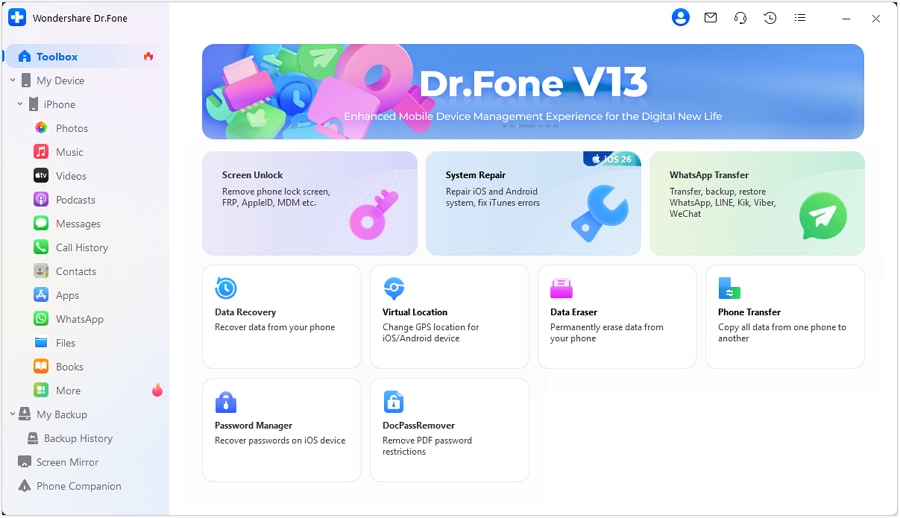
-
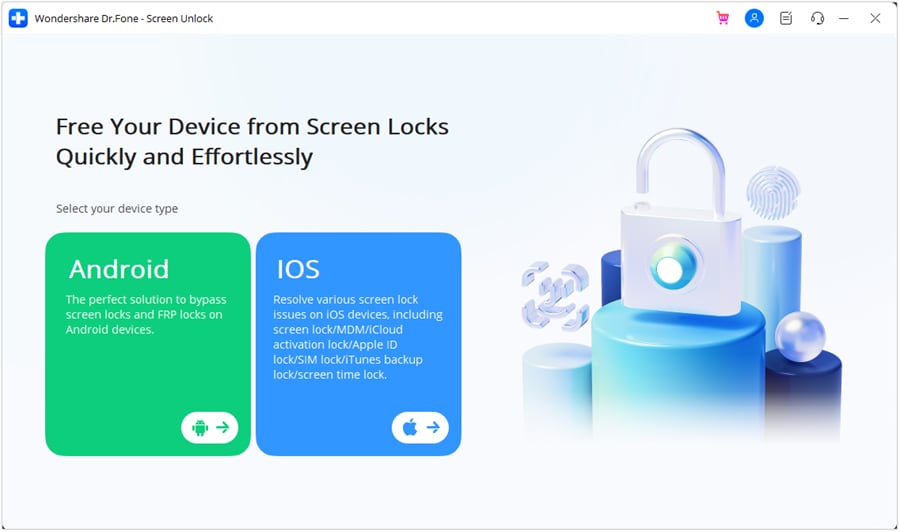
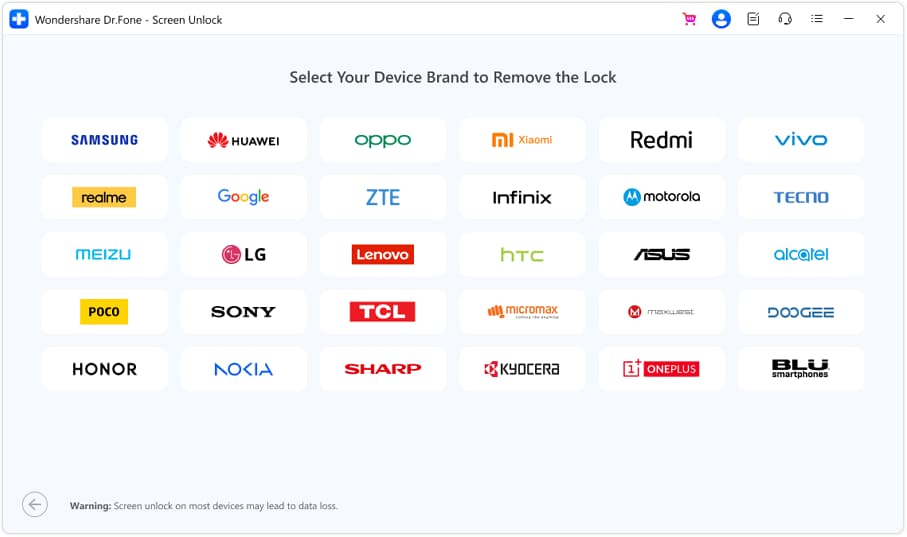
Step 2 Launch Screen Unlock and select the correct device type
Open Dr.Fone and choose the Android screen unlock flow that matches your situation. Selecting the correct device brand/model helps avoid mismatched procedures.
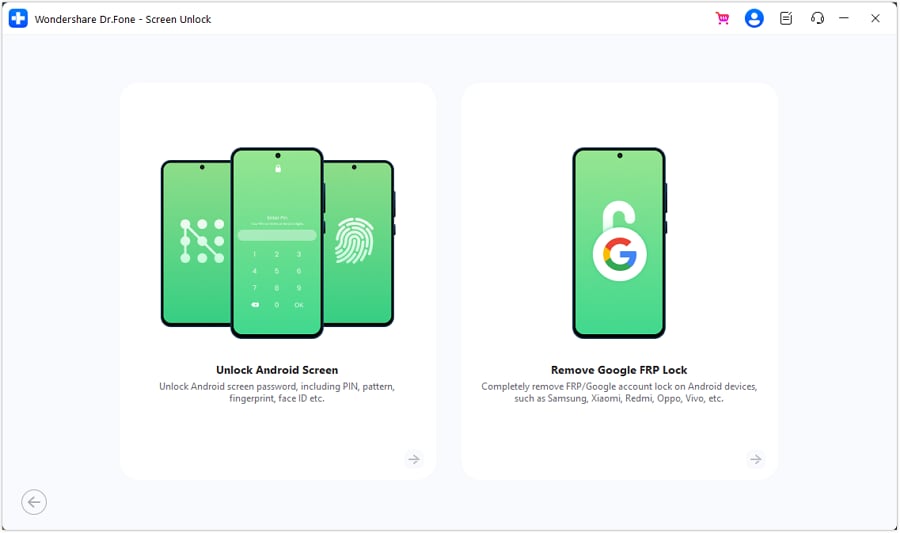
-
Step 3 Follow on-screen instructions carefully and stop on erase/reset wording
Only put the tablet into the required mode as instructed. If any step implies reset/erase and that’s not your intent, stop and reassess your risk tolerance before continuing.
-
Step 4 Re-check data visibility after access returns
Once you can reach Settings and file locations, verify Google account, user/profile, storage size, and SD card detection before changing anything else.
-
Step 5 Stabilize before further changes
Disable “cleanup” apps, avoid reformatting storage, and document what you see (screenshots/photos) so your next decision is evidence-based.




Conclusion
Use AI to classify the symptoms, rank likely causes, and choose the lowest-risk next checks—then hand off the actual on-device steps to a controlled execution tool like Dr.Fone when lockout is the barrier to confirming what data is still present.
FAQ
-
What are the safest first checks after tablet data loss?
Confirm you’re in the correct user/profile, verify the signed-in Google account, check storage totals (used/free), and see whether an SD card is detected—before deleting, reinstalling, or formatting anything.
-
Is “missing data” sometimes just a different account or profile?
Yes. Switching Google accounts, entering Guest mode, or using a Work/Kids profile can make apps look reset and files appear missing even when they still exist elsewhere.
-
Should I format an SD card if the tablet asks?
Not as a first step. A format prompt can indicate corruption or incompatibility; formatting may overwrite structures needed for later recovery attempts.
-
If I’m locked out, what should I avoid doing repeatedly?
Avoid repeated unlock attempts that escalate timeouts, and avoid any reset/erase path you’re considering “just to get in,” unless you’ve accepted the data-loss risk.
-
How does unlocking relate to data loss triage?
Unlocking can be a prerequisite to verify whether data is truly gone versus inaccessible due to lockout, account switching, or storage not mounting properly.
 Add Wondershare Dr.Fone as a preferred source on Google