Effortlessly manage data through preview, delete, export, etc.

 100% Security Verified | No Subscription Required | No Malware

 :
: 
 ChatGPT
 Perplexity
 Gemini
 Claude
 Grok
Grok

I finished setup, added my plan, and it still says “No Service.” Now I’m not sure if it’s the tablet, the eSIM, or something on the carrier side—and I’m afraid to delete anything and lose the plan.
Apple Support Community user
Activating cellular on a tablet after setup sounds simple, but missing one carrier or device step can leave you stuck with “No Service,” an invalid SIM/eSIM state, or a plan that’s billed but not usable.
AI is useful here because it can turn your situation into a clean, checklisted sequence: what to confirm first, what to try next, and how to verify each change before you move on.
AI can’t actually read your tablet’s modem status, provision a line, or trigger carrier-side activation. For that, you still need real device actions and tools, after the plan is settled.
In this article
- How to plan activation without missing critical steps
- Why order matters
- Verification gates AI answers often miss
- The “point of no return” risk
- What “safe planning” looks like
- What the AI needs to know
- AI prompts to build a safer workflow
- AI plan vs. real device constraints
- When to stop planning and start execution
Part 1. How to Plan Cellular Tablet Activation After Setup Without Missing Critical Steps

You just finished setting up a new or reset cellular tablet and now need to activate service—SIM or eSIM—on a specific carrier plan. The uncertainty usually isn’t “what button to press,” but what order to press things in so you don’t waste time or accidentally lock in the wrong configuration.
1-1. Why the order matters
Activation can fail even when you’re “doing the right steps,” because carriers may require provisioning prerequisites (line type, IMEI/EID compatibility, device unlock status) before the device-side flow can succeed.
1-2. Verification gates many generic answers skip
Many AI answers skip the verification gates: whether the line is provisioned for a tablet, whether the device is carrier-locked, whether the IMEI/EID is accepted, whether APN/profile is correct, and whether the tablet is failing because of a simple network setting versus an account issue.
1-3. The “point of no return” risk

1-4. What a “safe plan” should produce
A safe plan should force a strict sequence with check points: confirm account/line eligibility first, then device eligibility, then activation steps, and only then consider high-risk remediation—each with a clear “stop condition” for escalation.
Part 2. What the AI Needs to Know
Share enough detail so the workflow can be ordered and verified without guesswork:
- Tablet brand/model and OS version (e.g., “iPad Air 5, iPadOS 17.5” / “Galaxy Tab S9, Android 14”)
- SIM type you’re using (physical SIM vs eSIM)
- Carrier and plan type (postpaid/prepaid, tablet-only plan vs shared data)
- Whether the tablet is carrier-locked or unlocked (and where it was purchased)
- Current symptom (e.g., “No Service,” “Searching,” “SIM Not Provisioned,” “Cellular Plan Cannot Be Added,” can’t scan QR)
- What you’ve already tried (restarts, airplane mode, toggles, swapping SIM)
- Whether you have Wi‑Fi available during activation
- Whether you have account access for the carrier (login, app, or support PIN)
- Any time constraints (travel, needing service today)
- Whether there’s data on the device you can’t risk losing
Part 3. Using AI Prompts to Build a Safer Cellular Tablet Activation After Setup Workflow
Use the prompts below to force a step-by-step plan with verification gates before any irreversible actions.
3-1. Level 1: Basic Prompt
Create a safe, ordered checklist to activate cellular on my tablet after setup.
Include what to verify first, what to try next, and how to confirm each step worked before moving on.
Do not suggest resets or deleting eSIM until you list prerequisites and recovery requirements.
3-2. Level 2: Advanced Prompt
Build a structured activation workflow for my cellular tablet with three phases: Preparation, Execution, and Verification.
Within each phase, label steps as Critical or Optional, and add “stop conditions” (when to pause and contact the carrier).
Include a section called “Do not do yet” for irreversible steps (e.g., deleting an eSIM plan, network reset, factory reset) and the exact checks required before those steps are allowed.
3-3. Level 3: Evidence Prompt
Here’s my context: tablet model/OS (e.g., iPad mini 6, iPadOS 17.5), carrier (e.g., Verizon), activation type (eSIM via QR), plan (e.g., tablet add-on to existing unlimited plan), purchase status (unlocked retail), and current symptom (e.g., ‘Cellular Plan Cannot Be Added’ after setup; Wi‑Fi works).
Design a workflow with checks before/during/after each action.
Include: provisioning checks (IMEI/EID compatibility), account checks (line type allowed), device checks (carrier lock status, software update, date/time), and network checks (coverage, APN/profile, roaming toggle).
Add example values where helpful (IMEI: 15-digit, EID: 32-digit, error message text).
End with a “verification pack” of screenshots/logs/fields I should collect if escalation is needed.
3-4. Prompt Refinement (follow-ups)
Rewrite the workflow as a decision tree with If/Then branches for physical SIM vs eSIM and for the specific error text I’m seeing.
Add a verification gate after every step: what exact on-screen status should change (signal bars, carrier name, LTE/5G icon), and what to do if it doesn’t.
List the minimum required prerequisites before I’m allowed to delete an eSIM plan or reset network settings (QR code availability, carrier login, confirmation the line is active, backup status).
Create a short escalation script for carrier support that includes the exact fields to provide (IMEI, EID, ICCID, device model, error text) and the specific request (re-provision line, resend eSIM, confirm plan type).
Compress the plan into a 10-minute quick triage path and a full deep-dive path, each with clear stop conditions.
Part 4. AI Plan vs. Real Device Constraints
| Planning item (AI) | What AI can do | Real constraint (device/carrier) | What to verify before proceeding |
|---|---|---|---|
| Sequence activation steps | Produce an ordered workflow | Carrier systems may require specific provisioning order | Line is active, correct plan type (tablet vs phone), device is unlocked |
| Diagnose likely cause from symptoms | Suggest hypotheses + tests | Error messages can map to multiple carrier-side issues | Capture exact error text, timestamp, and current status indicators |
| Risk management | Flag irreversible actions and prerequisites | eSIM deletion/reset can remove access to the plan | Confirm you can re-download eSIM (QR/app), have Wi‑Fi, have credentials |
| Escalation readiness | Provide a checklist for support | Support needs exact identifiers and account authorization | IMEI/EID/ICCID collected, account PIN/authorized user ready |
AI improves planning, but cannot execute provisioning, push carrier profiles, or change device state for you; it only helps you decide the safest next action and what to verify.
Part 5. When to Stop Planning Cellular Tablet Activation After Setup and Start Execution
- You have a single, ordered workflow with clear verification gates and stop conditions.
- You’ve confirmed prerequisites for high-risk actions (eSIM re-download method, Wi‑Fi access, carrier login/PIN, backup status).
- You’ve collected the identifiers you may need (IMEI, EID, ICCID) and the exact error text.
- You know which path you’re on (physical SIM vs eSIM) and whether the likely fix is device-side settings vs carrier provisioning.
Once those points are true, the uncertainty is low enough that planning should pause and real device actions can begin.
Cellular tablet activation after setup: Execute the Workflow Safely with Dr.Fone
Execution now matters because activation problems often compound when you “try everything” out of order; you want controlled changes, one at a time, with quick rollback and clear evidence if escalation is needed. Once your carrier plan path is confirmed, you can use Dr.Fone - Phone Transfer to handle the on-device transfer/execution side in a controlled, click-through flow.
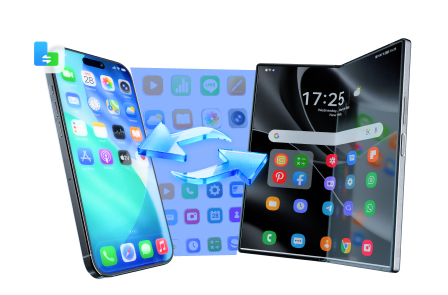
 Move data between iOS to Android and vice versa.
- Transfer contacts, SMS, photos, videos, music, and more types.
- Available with all phones with Android and iOS versions.
- Simple, click-through process.
Keep your activation workflow disciplined: make one change at a time, verify the on-screen status change you expected, and stop early when your “carrier-side” stop conditions are met (so you don’t accidentally delete an eSIM or reset away your only working path).
-
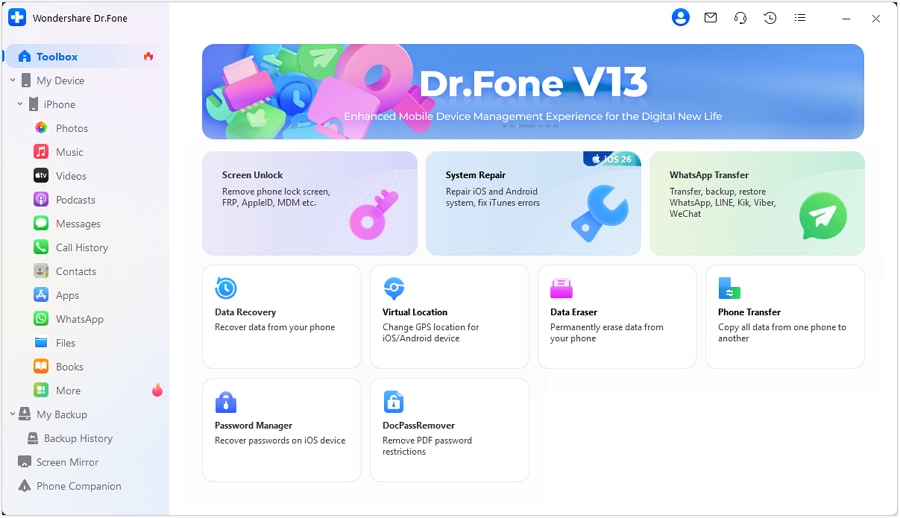
Step 1 Launch the transfer/execution tool after your activation plan is settled
Start the tool on your computer so you can proceed in a controlled sequence rather than improvising on-device.
-
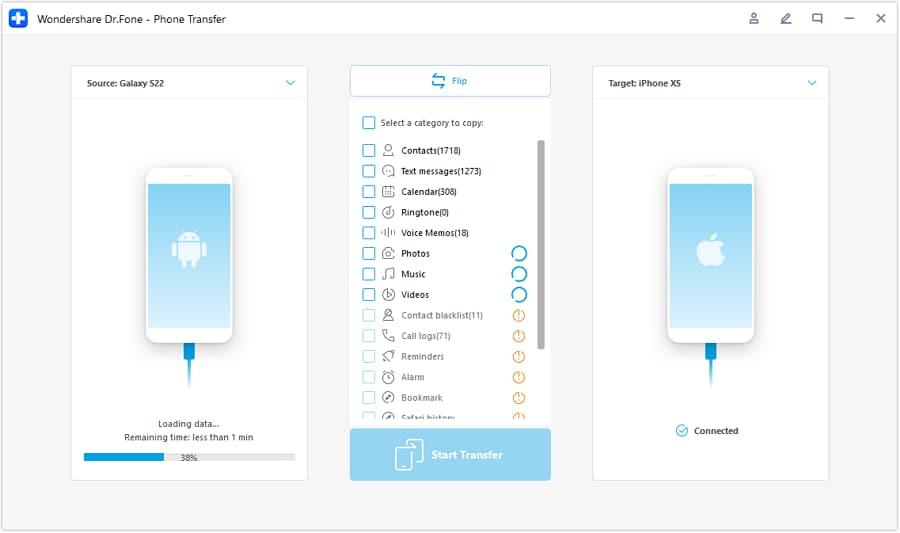
Step 2 Set the correct device-to-device path
Select the appropriate source and target devices so the next actions stay aligned with your intended outcome.
-
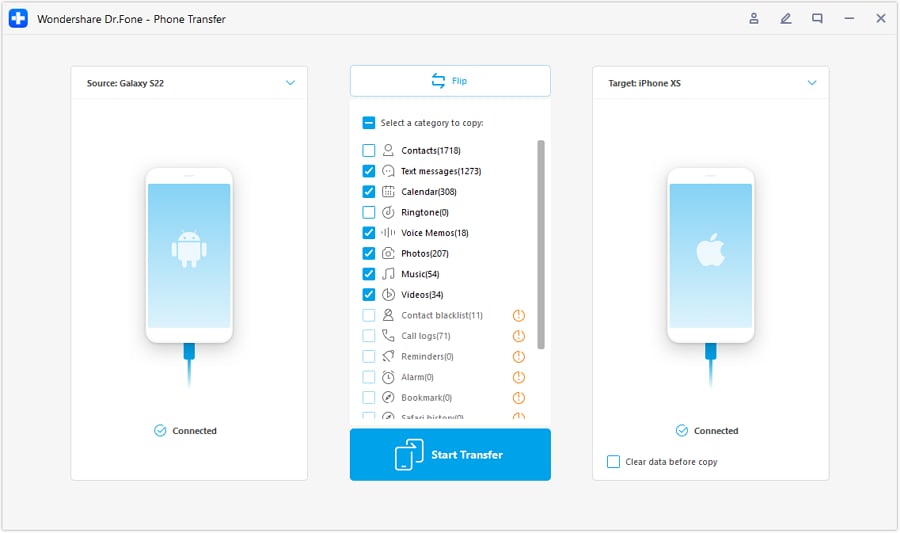
Step 3 Choose data types and run the transfer with single-change verification
Pick what you need and start the process, confirming progress indicators rather than repeating actions blindly.
-
Step 4 Monitor progress and keep evidence for escalation
Let the transfer complete and record any errors/status screens if you need to escalate to carrier support later.




Conclusion
Use AI to produce a strict, verified activation plan with stop conditions and irreversible-step gates; then use real tools like Dr.Fone to carry out the actions on-device once you’re confident the sequence is correct.
FAQ
-
What’s the biggest avoidable mistake after tablet setup?
Deleting an existing eSIM plan or resetting settings before confirming you can re-download the plan (QR/app access) and that the line is correctly provisioned.
-
How do I know it’s a carrier provisioning issue vs a device issue?
If Wi‑Fi works, the tablet is updated/unlocked, and multiple device-side checks pass but the status remains “Not Provisioned/No Service,” it often points to line/plan eligibility, IMEI/EID registration, or an eSIM push problem on the carrier side.
-
What should I verify immediately after each change?
Carrier name appears, signal bars stabilize, LTE/5G icon shows when expected, cellular data toggle is available, and a simple data test works (loading a webpage with Wi‑Fi off).
-
When is it safe to delete an eSIM and re-add it?
Only after you confirm: you have Wi‑Fi, the carrier can resend the eSIM (QR/app), you have account access/PIN, and the line is active and eligible for the tablet.
-
Can AI tell me the exact APN or fix a locked device?
AI can suggest what to check, but APN/profile details and lock status are carrier- and device-specific; you must verify them in the device settings and with the carrier.
 Add Wondershare Dr.Fone as a preferred source on Google