Effortlessly manage data through preview, delete, export, etc.

 100% Security Verified | No Subscription Required | No Malware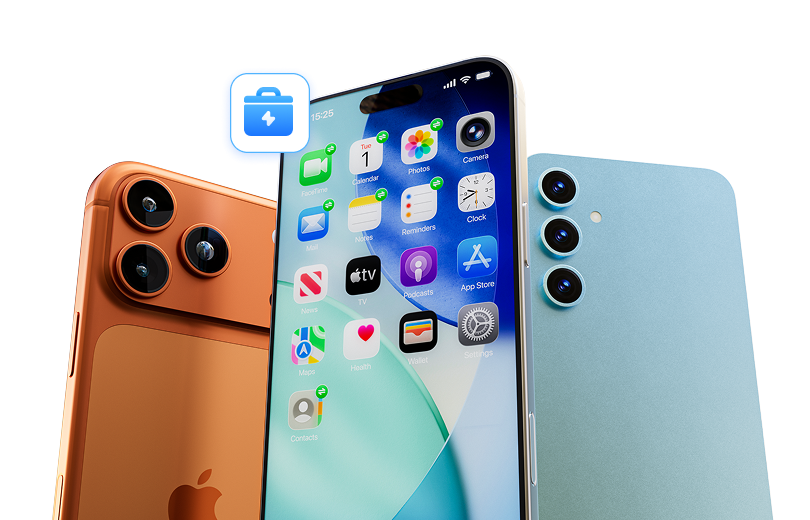

 :
: 
 ChatGPT
 Perplexity
 Gemini
 Claude
 Grok
Grok

I tried deleting “duplicates” after turning sync back on, and then the originals disappeared on my other device too. Now I’m scared to clean anything up.
Forum user
Cloud sync can quietly create duplicates across devices and folders, and removing them without a plan can lead to deleting the only “good” copy by mistake. One missed step—like skipping verification of the original location—can turn cleanup into data loss.
AI helps by turning your situation into a structured workflow: what to check first, how to define “duplicate,” what to back up, and which actions are safe vs. risky. It also helps you sequence tasks so you don’t hit irreversible steps too early.
AI can’t see your actual files, metadata, or sync rules in real time, and it can’t perform device actions. You still need real tools to back up, review, and delete files once the plan is verified.

In this article
- How to plan duplicate cleanup without missing critical steps
- What to tell the AI
- Level 1–3 prompts
- Prompt refinement follow-ups
- AI vs. real device constraints
- What the AI needs to know
- Using AI prompts to build a safer workflow
- AI plan vs. real device constraints
- When to stop planning and start execution
Part 1. How to Plan remove duplicate files created by cloud sync Without Missing Critical Steps
You might notice the same photos, documents, or videos appearing multiple times after enabling iCloud/Google Drive/OneDrive/Dropbox, switching phones, or re-linking an account. Duplicates can be “true duplicates” (same content) or “near-duplicates” (same photo resized, re-saved, or edited).
The uncertainty is usually not whether duplicates exist, but where the authoritative copy lives and which version is newest. Sync can also scatter files into multiple folders (e.g., “Camera,” “DCIM,” “Downloads,” “WhatsApp,” “Cloud Drive”), making it easy to delete a file that isn’t actually duplicated everywhere.
The point of no return is when you permanently delete or empty trash/recycle bins across devices/cloud—because the sync engine may propagate that deletion everywhere. Your plan needs a verification gate before any irreversible deletion happens.
Part 2. What the AI Needs to Know
Share only what’s necessary so the plan can be precise and low-risk.
- Devices involved (e.g., “iPhone + Windows laptop,” “Android + Mac”)
- Cloud/sync services involved (iCloud Photos, Google Photos/Drive, OneDrive, Dropbox, vendor gallery sync, etc.)
- Where duplicates appear (Photos app, Files app, specific folders, SD card, external drive)
- File types and scope (photos/videos only, documents, or everything)
- What “duplicate” means for you (exact match, same filename, same visual content, same date)
- Your risk tolerance (must keep originals at all costs vs. okay to reclaim space aggressively)
- Whether you have a recent backup (device backup, cloud backup, or none)
- Any constraints (low storage, slow upload, limited time, work files mixed with personal)
Part 3. Using AI Prompts to Build a Safer remove duplicate files created by cloud sync Workflow
Use these prompts to make AI produce a step-by-step plan with clear verification gates before you touch anything.
3-1. Level 1: Basic Prompt
Create a safe, step-by-step plan to remove duplicate files created by cloud sync without deleting originals. Include a “stop and verify” checkpoint before any deletion. Assume I want to minimize risk more than maximize storage.
3-2. Level 2: Advanced Prompt
Design a workflow with three phases: Preparation, Execution, and Verification for removing cloud-sync duplicates.
In each phase, label steps as critical vs optional, and highlight any irreversible actions I must not do until verification is complete.
Also list the most common failure modes (e.g., deleting the only edited version, sync propagating deletions).
3-3. Level 3: Evidence Prompt
I have duplicates after re-linking sync on (Android 14, Samsung Gallery + Google Photos) and copying files to a PC (Windows 11).
Duplicates appear in (DCIM/Camera), (Pictures/Screenshots), and (Downloads), plus some “edited” versions.
Build me a plan that includes:
- Checks before cleanup (how to define duplicates, what metadata to compare, where originals likely live)
- Checks during cleanup (sampling strategy, spot-check rules, naming/version patterns like IMG_1234 vs IMG_1234(1))
- Checks after cleanup (how to confirm space reclaimed without missing albums)
Include a simple decision rule example using fields like (file size ~3.2 MB), (date taken 2024-08-11), (same resolution 3024×4032), (edited flag present).
3-4. Prompt Refinement
Convert my situation into a decision tree: “If duplicates are in Photos app vs file folders, do X; if cross-cloud, do Y.” Include explicit stop points.
Give me a definition table for “duplicate” vs “near-duplicate” vs “version,” and tell me how each category should be handled safely.
Produce a verification checklist I can complete in under (15 minutes) before deletion, including sample size (e.g., verify 20 random files across 3 folders).
Create a rollback-minded plan: what to back up, where to store it, and how to validate the backup before removing anything.
Provide a folder-by-folder order of operations (which folder to evaluate first and why), and include rules for excluding app folders that regenerate files.
Part 4. AI Plan vs. Real Device Constraints
| Planning Need | What AI Can Do | What AI Can’t Do | What You Must Verify |
|---|---|---|---|
| Identify safest sequence | Propose an ordered workflow with checkpoints | Detect your actual duplicates | Which locations contain the authoritative originals |
| Define “duplicate” precisely | Suggest criteria (hash, size, timestamp, visual similarity) | Compute hashes or scan your storage | Which criteria match your real file patterns |
| Prevent sync-propagated loss | Flag irreversible moments and safe staging | Disable sync or change device settings | Whether deletions will sync across devices/accounts |
| Confirm success | Provide post-cleanup validation checklist | Measure reclaimed space or confirm missing files | Albums/folders open correctly and key files still exist |
AI improves planning and reduces avoidable mistakes, but it cannot execute scans, backups, deletions, or sync changes on your real devices.
Part 5. When to Stop Planning remove duplicate files created by cloud sync and Start Execution
- You can clearly state what counts as a duplicate (exact match vs same filename vs same photo content) and what must be preserved (edited versions, Live Photos, RAWs, work docs).
- You have a backup plan you trust (what is backed up, where it is stored, and how you’ll confirm it opens/restores).
- You identified the irreversible moments (permanent delete, emptying trash, “delete from all devices,” removing a synced folder) and placed them after verification gates.
- You have a verification method (spot-check set, folder order, and a rule for conflicts like “same name, different size”).
If all four are true, your next step is no longer “more advice,” but controlled execution with real tooling.
Remove duplicate files created by cloud sync: Execute the Workflow Safely with Dr.Fone
Execution now matters because the risk is operational: one wrong deletion choice can propagate through sync, and you can’t “plan” your way out after an irreversible step. To reduce risk, use Dr.Fone Basic - Data Manager to back up and review data before you delete anything.
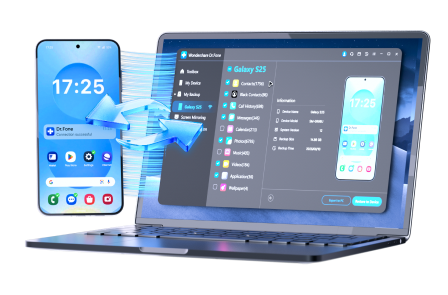
 Easily manage data through preview, delete, export, etc.
- Transfer all data between devices.
- Robust backup solutions for reliable data protection.
- Mirror screens to PC for meetings, teaching, and control.
-
Step 1 Create a protected fallback copy
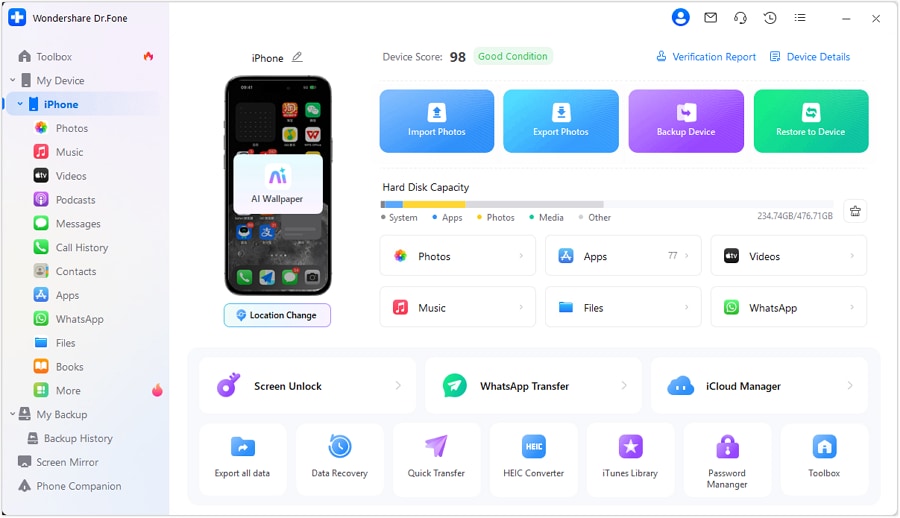
Action: Use Dr.Fone to perform a device backup to a computer so you have a recoverable reference before removing anything.
Limitation: Dr.Fone won’t decide which files are duplicates for you—you still need the plan’s criteria and verification gates.
-
Step 2 Review data in the right category before deleting anything
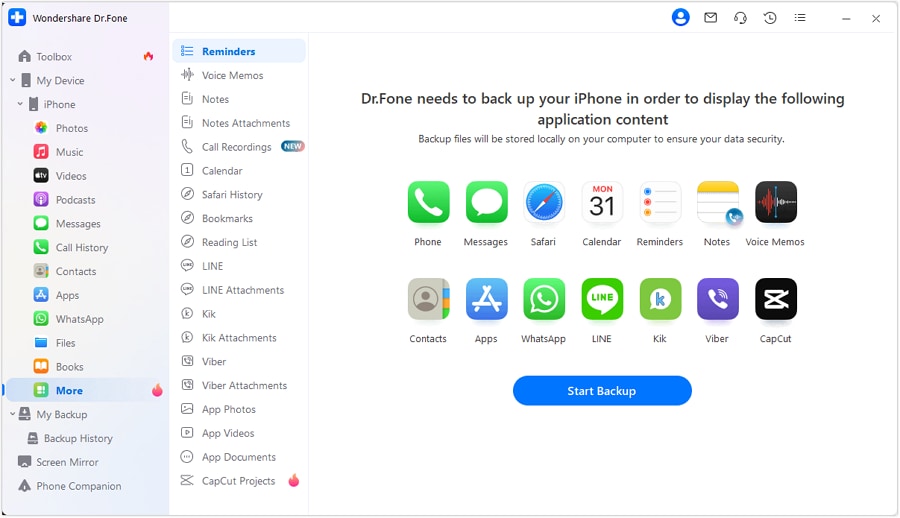
Action: Navigate to the relevant data area (photos/videos/documents) and confirm you’re inspecting the correct location before you start applying any “duplicate” rules.
Limitation: Dr.Fone executes actions you choose; it cannot confirm your “authoritative copy” logic is correct.
-
Step 3 Apply your AI-built rules in small batches

Action: Using your AI-built rules (what to keep, what to exclude), proceed with deletion in small batches and re-check a sample after each batch.
Limitation: Dr.Fone executes actions you choose; it cannot validate cross-cloud sync outcomes in real time.
-
Step 4 Validate results before any permanent purge
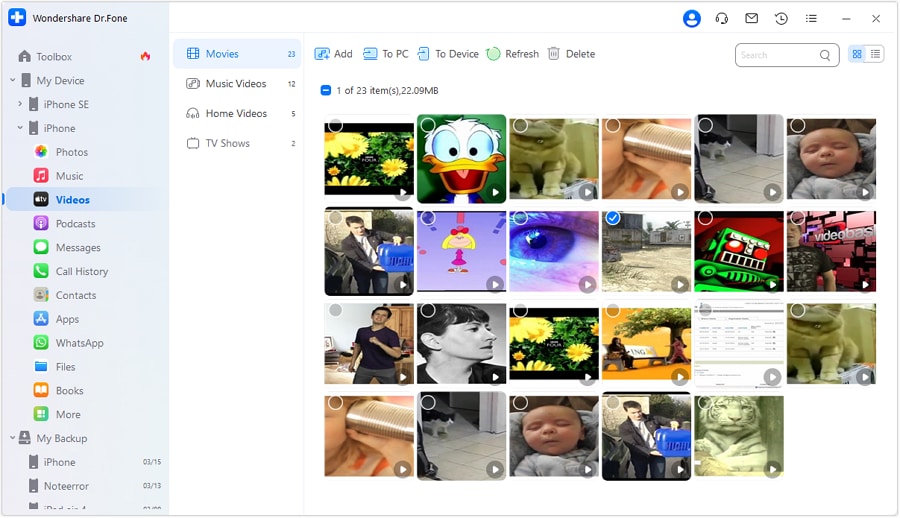
Action: Validate that key albums/folders open, edited versions are present, and storage reclaimed matches expectations before you permanently empty trash/recycle bins or trigger “delete everywhere.”
Limitation: AI can provide the checklist, but only you can confirm real-world results on your devices and cloud accounts.




Conclusion
Use AI to design a cautious, verification-first workflow with clear definitions and stop points; then use Dr.Fone to execute backups and cleanup actions once you’ve confirmed you’re not approaching an irreversible deletion without a safety net.
FAQ
-
What’s the biggest risk when removing cloud-sync duplicates?
Deleting the only good copy (often the edited or highest-resolution version) and having that deletion sync across devices/cloud.
-
When is deletion effectively irreversible?
After you empty trash/recycle bins, confirm “delete from all devices,” or when a synced service propagates deletions and its recovery window expires.
-
How do I verify I’m not deleting originals if filenames look the same?
Use multiple signals (file size, resolution, date taken/created, edit markers, and location). Don’t rely on filename alone.
-
Should I stop sync before cleanup?
Often yes for safety, but it depends on the service and your goal. Plan it explicitly: when to pause sync, what device is the “source of truth,” and when to resume.
-
What can AI do if it can’t see my files?
It can define criteria, produce a sequence with verification gates, and anticipate failure modes—then you apply that plan using real tools and real checks.
-
How long should verification take before I delete anything?
Long enough to confirm your rules on a representative sample (e.g., across folders and file types). If sampling reveals edge cases, update the plan before proceeding.
 Add Wondershare Dr.Fone as a preferred source on Google