Effortlessly manage data through preview, delete, export, etc.

 100% Security Verified | No Subscription Required | No Malware

 :
: 
 ChatGPT
 Perplexity
 Gemini
 Claude
 Grok
Grok

Deleted a PDF on my iPhone and now I can’t find it where I expect—Files, Books, Mail, or a third‑party app.
Forum user
Deleted a PDF on your iPhone (for example, an iPhone 13 or iPhone 14) and now you can’t find it where you expect—Files, Books, Mail, or a third‑party app. This often happens right after tapping Delete, emptying Recently Deleted, or completing an iOS update and restart.
AI tools like ChatGPT or Gemini can help you map where the PDF likely came from, what “deleted” means in that context, and which checks are safest to try first.
AI can’t see your device or confirm what’s still stored locally or in cloud services, and trial‑and‑error can create risks (like overwriting sync states, removing app caches, or losing the only copy if you delete from a synced location).
In this article
- Part 1. Why a deleted PDF on iPhone happens and what it means
- Before You Prompt the AI
- What “deleted” can mean on iPhone
- Why search and “Recently Deleted” look empty
- What to capture before you act
- Part 2. Using AI prompts to diagnose missing PDF on iPhone
- Part 3. AI output vs reality (what you must verify)
- Part 4. When to stop iPhone file recovery attempts to avoid overwriting
- Part 5. If another device still has the PDF (backup copy scenario)

Part 1. Why a deleted PDF on iPhone happens and what it means
A “deleted PDF” on iPhone can mean different things depending on the source: a downloaded file in Files, an attachment in Mail, a document in Books, or a PDF inside an app like WhatsApp, Google Drive, or Adobe. Each has its own “trash” behavior and retention window.
The trigger is usually simple (you deleted it, cleared storage, reinstalled an app, or your iCloud/Drive sync completed). The symptom is confusing: the PDF is gone, search returns nothing, and “Recently Deleted” may look empty.
The uncertainty is the key clue: you may not know which app originally created or stored the PDF, so you’re not sure which “trash” to check—or whether it was only ever a view/download rather than a saved file.
1-1. Before You Prompt the AI
Collect a few facts first so the AI can narrow causes without guesswork:
- iPhone model + iOS version
- Where you last opened the PDF (Files / Books / Mail / a specific app)
- Whether you use iCloud Drive, Google Drive, OneDrive, Dropbox, or device-only storage
- Whether you deleted it from a shared folder, chat thread, or email attachment
- Whether you recently changed Apple ID, storage settings, or reinstalled any apps
Part 2. Using AI prompts to diagnose missing PDF on iPhone
2-1. Level 1: Basic Prompt
My PDF is missing on my iPhone. Ask me the minimum questions to figure out where it likely came from (Files/Books/Mail/third-party app), what “deleted” means in that context, and the safest places to check first without making things worse.
2-2. Level 2: Advanced Prompt
Act like a cautious iPhone file-triage assistant. Based on my answers, rank the most likely reasons a PDF “disappeared” on iPhone (top 5), and for each reason:
1) what evidence would confirm it,
2) the lowest-risk next step,
3) what NOT to do (anything that could overwrite, desync, or permanently remove copies).
Start by asking only the questions you need.
2-3. Level 3: Evidence Prompt
Help me diagnose a missing/deleted PDF on iPhone using the evidence below. Provide:
- a ranked list of likely causes,
- the safest checks first,
- what to avoid.
Evidence:
- iPhone model: (e.g., iPhone 13 Pro)
- iOS version: (e.g., iOS 17.5)
- Where the PDF was last opened: (Files / Books / Mail / app name)
- Original source: (download link / email attachment / AirDrop / scan / chat app)
- Deletion event: (tapped Delete / cleared Recently Deleted / offloaded app / iOS update)
- Files app location: (On My iPhone / iCloud Drive / “Recently Deleted”)
- Search results: (Files search returns nothing / finds an older copy / finds a shortcut only)
- Cloud services used: (iCloud Drive / Google Drive / OneDrive / Dropbox / none)
- Other devices: (Mac/iPad/Windows) and whether the PDF exists there
- Sync status: (iCloud storage low? Drive sync paused? recently signed out?)
- Time since missing: (e.g., 2 hours / 3 days)
Constraints:
- I want low-risk steps only.
- I don’t want actions that might remove synced copies.
2-4. Prompt Refinement
Use these follow-ups to force clearer conclusions and reduce risky guesses:
Ask missing questions:
What are the 5 most important questions you still need answered to distinguish between iCloud Drive deletion, app-only deletion, and “not saved, only viewed”?
Rank causes:
Re-rank the causes assuming the PDF was opened from Mail and never manually saved to Files. What changes?
Separate categories:
Split your diagnosis into categories: (A) still exists somewhere (cloud/other device), (B) exists but hidden/misplaced, (C) likely removed from all user-accessible locations. Put each cause into one category.
Identify key evidence:
Tell me the single best piece of evidence to check next that would eliminate at least 2 of the top causes, and explain why.
Risk check before actions:
Before you suggest any steps, list actions that could accidentally delete the only remaining copy in a synced setup.
Part 3. AI output vs reality (what you must verify)
AI can help you reason, but it can’t validate what’s actually on-device or in each service.
| AI can help you do | Reality you must verify |
|---|---|
| Identify likely source apps and “trash” locations | Whether the PDF ever existed as a saved file vs a view-only attachment |
| Propose the safest order of checks | Whether iCloud/Drive sync already removed it across devices |
| Explain what evidence matters most | What’s actually inside Files, app bins, and web dashboards right now |
| Flag risky actions (desync, purge, overwrite) | Whether your next tap triggers permanent deletion in that app/service |
AI narrows the decision tree; execution still depends on what you can confirm in Files, each app’s bin, and your cloud accounts.
Part 4. When to stop iPhone file recovery attempts to avoid overwriting
Stop and reassess when continued poking around is more likely to reduce your remaining options than help.
- You’re about to sign out of iCloud/Drive or toggle sync settings without understanding cross-device effects
- You’re repeatedly deleting/clearing bins and you can’t confirm the PDF’s original source
- The PDF may be tied to a work/school account and you might trigger policy-based deletions by removing the app/account
- You’ve reached a point where every next step is “destructive” (purge, reset, erase, reinstall) rather than evidence-based checks
If your diagnosis suggests the PDF likely exists on another device/account but you’re blocked from accessing it (for example, a locked spare Android phone that had the only downloaded copy), it’s time to switch from analysis to controlled access and retrieval planning.
Part 5. If another device still has the PDF (backup copy scenario)
Sometimes “deleted on iPhone” really means “the iPhone copy is gone, but another copy still exists elsewhere”—in a chat download, a cloud folder, or on a secondary device you used previously. In that case, prioritize accessing and exporting the remaining copy through normal sharing methods, and only then re-check iPhone using a source-aware plan.
Product recommendation: Unlock an Android phone to access a PDF backup copy
If an older Android phone is the only place you remember saving the PDF (or where the download originally landed) but you can’t get past the lock screen, Dr.Fone - Screen Unlock (Android) can help you regain access so you can check for the PDF and export it through normal file-sharing methods, instead of guessing on the iPhone and risking synced deletions.
 Unlock Android phone in seconds.
- Remove PIN, pattern, password, fingerprint.
- Bypass Google FRP lock easily.
- Works on all Android brands & models.
- No tech skills required – user-friendly.
-
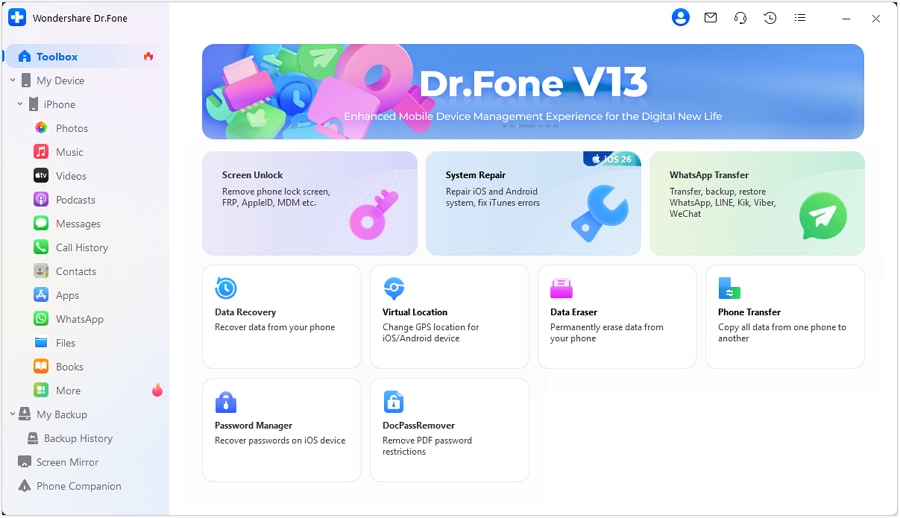
Step 1 Confirm the target Android device
Identify the Android phone that likely contains the PDF copy, and ensure it has enough battery power to avoid interruptions during unlock attempts.
-
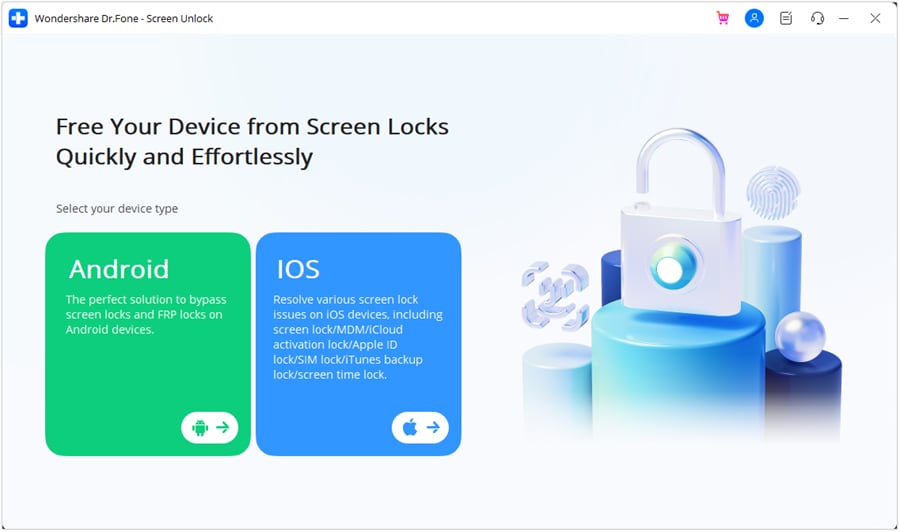
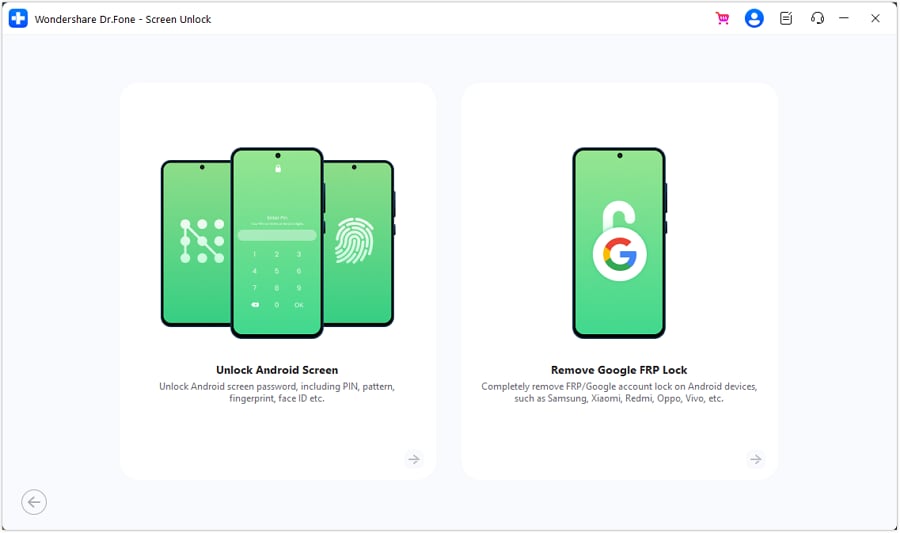
Step 2 Open the Android screen unlock workflow
In Dr.Fone, choose Unlock Android Screen and select the correct device prompts carefully, since wrong selections can increase the chance of unwanted outcomes.
-
Step 3 Follow the guided unlock steps
Proceed through the on-screen instructions step by step, stopping if you see warnings you don’t understand—especially if the device is tied to a work profile or managed policy.
-
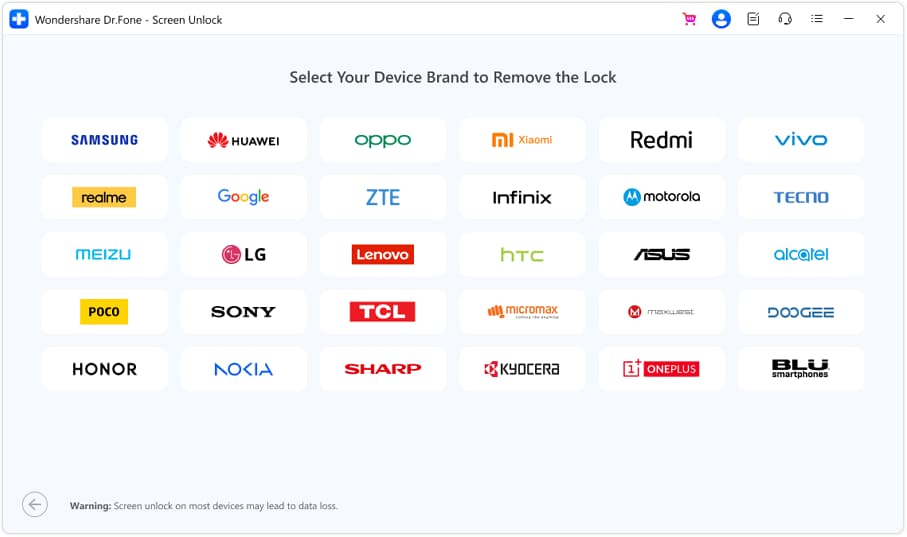
Step 4 Locate and export the PDF normally after access
After you can access the Android home screen, check common locations (Downloads, Files, Drive offline, chat app media/doc folders) and share the PDF to a safe destination (cloud drive or computer).
-
Step 5 Re-check iPhone with a “source-aware” plan
Once you know the PDF’s original source (email/chat/drive), use that same source path on iPhone to avoid chasing the wrong bin or folder.




Conclusion
Use AI to clarify what “deleted” most likely means for your specific PDF source, rank the causes, and choose the lowest-risk checks in the right order; then hand off the execution to the appropriate tool or device workflow—especially if the remaining copy is gated behind access, like a locked Android phone you need to open before you can verify and export the file.
FAQ
-
Where do deleted PDFs go on iPhone?
Usually to the “Recently Deleted” area of the app that stored them (Files or Photos-like bins), but email attachments and third‑party apps often have their own trash behavior or none at all.
-
Why can’t I find a PDF in Files search after deletion?
If it was never saved into Files (for example, it was only viewed from Mail or a chat), Files search may never index it as a standalone document.
-
Can iCloud Drive deletion remove a PDF from all devices?
Yes—if the PDF was stored in iCloud Drive and sync is active, deleting it on one device can propagate to others, depending on how the service treats deletions and trash retention.
-
What’s the safest first check before trying anything drastic?
Identify the original source app/location (Mail, Files, Books, Drive, chat app) and check that app’s “trash” or account dashboard before changing sync settings or reinstalling apps.
-
How does unlocking an Android phone help with an iPhone PDF problem?
If the iPhone copy is gone but you previously saved or downloaded the PDF on an Android device, unlocking that Android device can let you access and export the remaining copy through standard sharing methods.
 Add Wondershare Dr.Fone as a preferred source on Google