Effortlessly manage data through preview, delete, export, etc.

 100% Security Verified | No Subscription Required | No Malware

 :
: 
 ChatGPT
 Perplexity
 Gemini
 Claude
 Grok
Grok

I factory reset my phone, finished setup, and now fingerprint/face unlock won’t add—buttons are greyed out or it just keeps failing. I can’t tell if it’s still “settling” after the reset or something is blocked.
Reddit user, r/AndroidQuestions
Biometrics can stop working right after a reset—often when you’ve just finished setup on a Samsung Galaxy S22 or Google Pixel 7 and tried to add a fingerprint or face unlock again. You tap Add fingerprint (or Set up Face Unlock), and it fails, loops, or stays greyed out. Nothing seems to change even after a few minutes, so it’s unclear whether the phone is still “settling” after the reset.
AI can help you describe the symptoms precisely, narrow the likely cause (policy restriction vs hardware vs setup state), and choose the lowest-risk next step. You can use tools like ChatGPT or Gemini to turn vague behavior into a clean checklist of what to verify.
AI can’t directly validate hardware status, bypass security, or confirm what your exact Android build enforces. Trial-and-error can also trigger lockouts, erase settings, or tighten security policies—so the goal is to diagnose carefully, then hand off execution to a dedicated tool when needed.
In this article
- Part 1. Why phone biometrics stopped working after reset happens and what it means
- Strong authentication after reset
- Common symptoms
- Policy/MDM and restored security settings
- Before you prompt the AI
- Part 2. Using AI prompts to diagnose phone biometrics stopped working after reset safely
- Part 3. When to stop troubleshooting phone biometrics stopped working after reset and avoid risks
- Part 4. Phone biometrics stopped working after reset: resolve access safely with Dr.Fone
- Part 5. Low-risk checklist to reduce guessing and avoid lockouts
1. This often happens because Android’s “trust state” changes after a reset.
Even if apps/data restore, Android may require a strong authentication event (PIN/password) before biometrics can be enabled again—especially after reset, reboot, or major security changes.
2. AI is best used to classify the cause and choose the lowest-risk next step.
Prompts can help separate policy restrictions (work profile/MDM) vs software state vs hardware/sensor issues—so you don’t escalate risk through random fixes.

Part 1. Why phone biometrics stopped working after reset happens and what it means
1-1. Strong authentication after reset can be required
A reset changes the phone’s trust state. Even if you restore apps and data, Android may require a strong authentication event (PIN/password) before biometrics can be enabled or used again, especially after reboot, reset, or major security changes.
1-2. Common symptoms you might see
This issue often shows up as: fingerprint setup failing, face unlock unavailable, “Can’t use fingerprint sensor,” biometric options missing, or biometrics repeatedly turning off.
1-3. Policy/MDM or restored security settings can block enrollment
In some cases, work profiles, device admin policies, or security settings restored from backup can block biometric enrollment.
1-4. Before you prompt the AI
Gather these basics first so the AI can classify the cause accurately:
- Phone brand/model and Android version/build
- Reset type (factory reset from Settings, recovery mode, or remote wipe)
- Whether you restored from Google backup or vendor backup
- Screen lock type currently set (PIN/pattern/password) and whether you know it
- What exactly fails (enrollment step, verification step, or biometric menu missing)
- Any work/school account, MDM, or “Device admin apps” enabled
Part 2. Using AI prompts to diagnose phone biometrics stopped working after reset safely
2-1. Level 1: Basic Prompt
My phone biometrics stopped working after reset. Ask me the minimum questions needed to narrow it down, then suggest the lowest-risk next steps. I want to avoid lockouts or data loss.
2-2. Level 2: Advanced Prompt
Diagnose why phone biometrics stopped working after reset on Android.
Output format:
1) List the top 5 likely causes ranked by likelihood.
2) For each cause, give 2 checks I can do without installing apps.
3) Label each check as Low / Medium / High risk (risk = lockout, policy restriction, wiping settings).
4) Tell me what to try first if I’m not sure whether it’s a policy issue or hardware issue.
2-3. Level 3: Evidence Prompt
Help me diagnose phone biometrics stopped working after reset using my evidence. Please classify into: (A) setup/state requirement, (B) policy restriction/MDM, (C) software/OS issue, (D) hardware/sensor issue, (E) unknown. Then give the safest next actions in order.
Evidence:
- Phone model: (e.g., Galaxy S22 / Pixel 7)
- Android version + security patch (if known):
- Reset method: (Settings factory reset / recovery mode / remote wipe)
- Trigger right before issue: (e.g., after finishing setup, after restoring backup, after changing screen lock)
- Current screen lock set to: (PIN / password / pattern / none)
- Do I know the current lock credentials? (yes/no/unsure)
- What happens when I try to add fingerprint/face? (exact message or behavior)
- Is the biometric menu missing or greyed out?
- Any work profile / device policy / company portal installed?
- Any recent OS update during/after reset?
- Physical signs: sensor area damaged, screen protector, moisture, etc.:
Constraints: I want steps that minimize lockout risk and avoid unnecessary wiping. If a step might erase settings or block access, warn me before listing it.
2-4. Prompt Refinement (follow-ups)
Use these follow-ups to tighten the diagnosis and avoid risky guessing:
What one missing detail would change your ranking the most, and why?
Separate causes into policy vs software vs hardware, and give one telltale sign for each.
Rank the next actions by safety first, not by speed.
What single observation (setting, message, or menu state) would be strongest evidence of MDM/policy blocking biometrics?
If I can’t enroll fingerprints, how do I determine whether it’s a sensor detection problem vs a security requirement problem without installing apps?
List actions that could increase lockout risk so I can avoid them.
2-5. AI Output vs Reality
AI helps you decide what’s most likely; it doesn’t guarantee what will work on your specific device state.
| What AI can do | What you still need to verify |
|---|---|
| Turn symptoms into likely cause categories | Whether the device is under MDM/work policy control |
| Suggest low-risk checks in Settings | Whether your exact Android build enforces extra post-reset rules |
| Help interpret common error messages | Whether the fingerprint/face sensor is physically functioning |
| Identify lockout/data-loss risks before you try steps | Whether access requires a dedicated unlock workflow |
AI can guide the reasoning, but execution depends on what the phone will accept right now—especially if you’re blocked at the lock screen or a policy prevents biometric setup.
Part 3. When to stop troubleshooting phone biometrics stopped working after reset and avoid risks
Stop “trying random fixes” once signs point to a lock-state or policy-state problem rather than a simple settings toggle.
- You’re repeatedly prompted for a PIN/password you don’t recognize after reset or restore
- Biometric options are missing/disabled and you see signs of work profile / device admin / MDM
- Enrollment consistently fails with the same error across restarts and safe-mode checks
- You’re locked out at the screen and further attempts could trigger time delays or account protection
At that point, the most practical path is to move from diagnosis to a controlled execution method designed for Android lock access—so you don’t escalate risk through repeated attempts.
Part 4. Phone biometrics stopped working after reset: resolve access safely with Dr.Fone
If biometrics stopped working after a reset and you’re now blocked by a screen lock (or can’t reach the settings needed to re-enroll biometrics), the immediate task becomes regaining device access in a predictable way. This is where Dr.Fone - Screen Unlock (Android) is relevant: it’s an execution tool for the “unlock Android screen” step after you’ve used AI to confirm you’re dealing with a lock-state problem rather than a simple enrollment glitch.
 Unlock Android phone in seconds.
- Remove PIN, pattern, password, fingerprint.
- Bypass Google FRP lock easily.
- Works on all Android brands & models.
- No tech skills required – user-friendly.
-
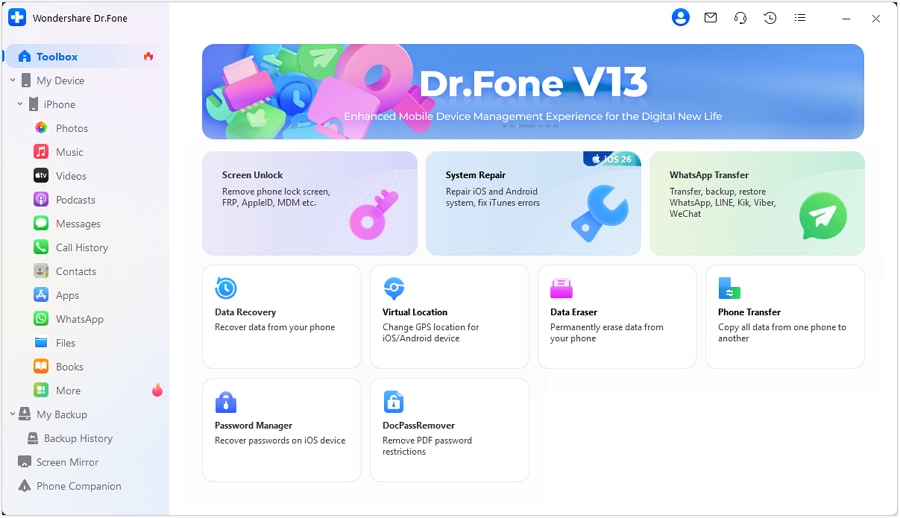
Step 1 Confirm your lock situation
Identify whether you’re stuck on PIN/pattern/password (avoid repeated guesses that can trigger delays).
-
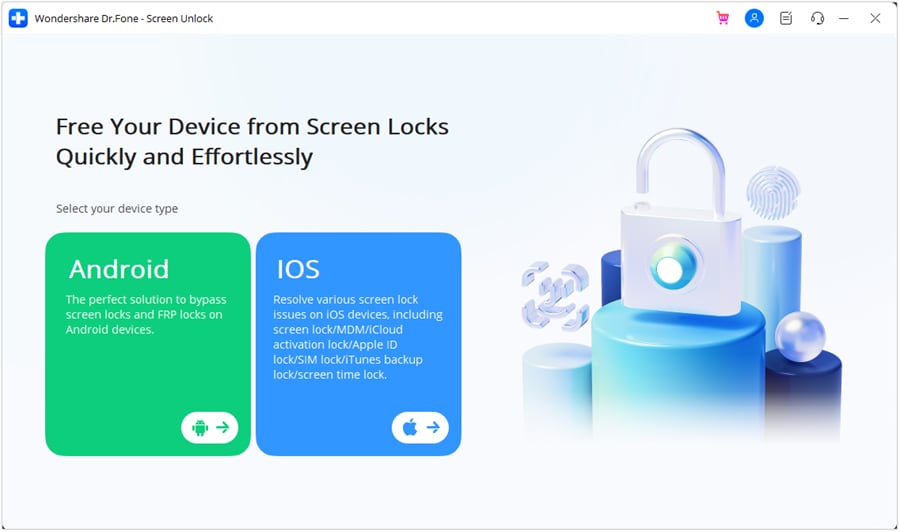
Step 2 Open Screen Unlock for Android in Dr.Fone
Choose the Android screen unlock workflow that matches your device brand/model to reduce mismatch risk.
-
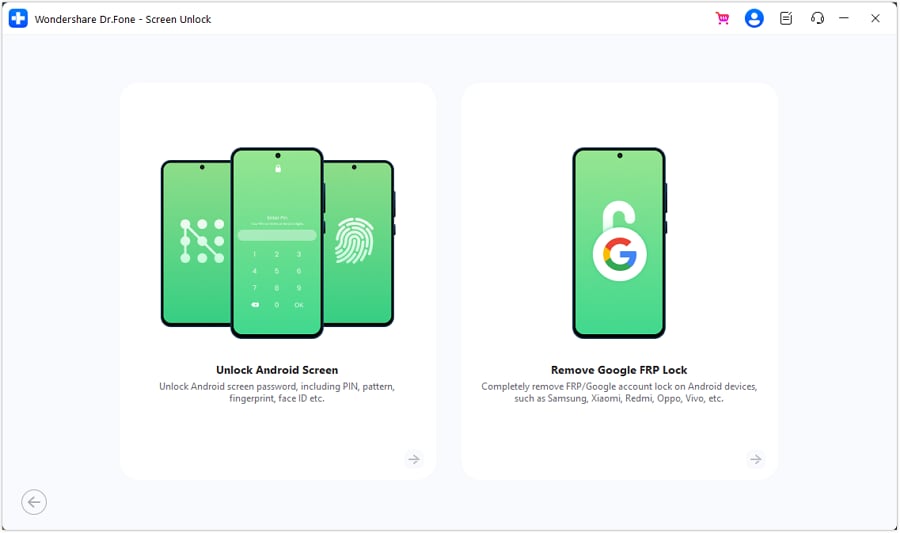
Step 3 Connect the phone to your computer
Use a stable cable/port and keep the phone powered to avoid interruptions mid-process.
-
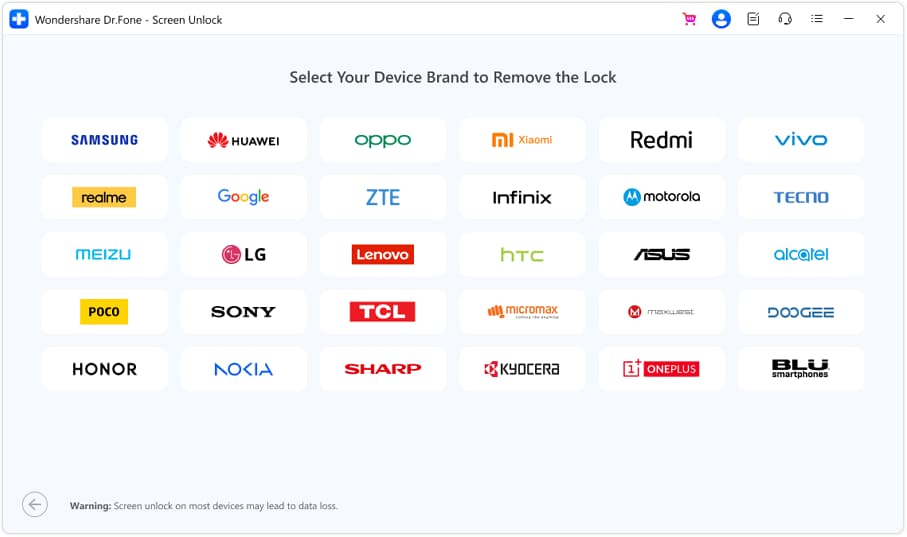
Step 4 Follow the on-screen removal steps carefully
Proceed carefully and stop if the tool warns about device-specific limitations or required conditions.
-
Step 5 Set up access again after entry
Once you can get into Android, re-create a known screen lock first, then re-enroll fingerprint/face in Settings.




Part 5. Low-risk checklist to reduce guessing and avoid lockouts
Before you change more settings (or repeat enrollment attempts), use this low-risk checklist to clarify which category you’re in (setup/state vs policy/MDM vs software vs hardware):
- Confirm your current screen lock type (PIN/pattern/password) and whether you know it.
- Note exactly what fails (enrollment step, verification step, or biometric menu missing/greyed out) and any exact on-screen message.
- Check whether a work/school account, work profile, “Device admin apps,” or other device policy control is present.
- Remember whether you restored from Google backup or vendor backup (restored security/policy settings can matter).
- Record reset method (Settings factory reset vs recovery mode vs remote wipe) and whether any OS update happened during/after reset.
- Look for physical signs that could affect sensors (damage, screen protector, moisture) and treat that as a separate “hardware/sensor” possibility.
Conclusion
Use AI to translate “biometrics stopped working after reset” into a clear cause shortlist and a low-risk action order, then switch to an execution tool when access itself is the blocker—so you’re not relying on trial-and-error that can increase lockout or policy complications.
FAQ
-
Why did my fingerprint stop working after a factory reset?
A reset can require “strong authentication” again and may restore security/policy settings that block biometric enrollment until certain conditions (like a PIN/password) are re-established. -
Why is the Face Unlock or Fingerprint menu missing after reset?
Common reasons include device policy restrictions (work profile/MDM), incomplete setup state, or OS-level limitations for your model/region/build. -
Can a work profile block biometrics after a reset?
Yes. Device admin or MDM policies can disable biometrics or require specific lock requirements; AI can help you identify the indicators before you change settings. -
What’s the safest first check when biometrics won’t enroll?
Verify you can unlock with a known PIN/password, confirm biometrics are allowed in Settings, and check for work profile/device admin restrictions before trying aggressive steps. -
If I’m locked out after reset, what should I do next?
Use AI to confirm you’re in a lock-state issue (not just a sensor hiccup), then use an Android screen unlock workflow such as Dr.Fone – Screen Unlock to handle the execution step.
 Add Wondershare Dr.Fone as a preferred source on Google