Effortlessly manage data through preview, delete, export, etc.

 100% Security Verified | No Subscription Required | No Malware

 :
: 
 ChatGPT
 Perplexity
 Gemini
 Claude
 Grok
Grok

"After I rebooted, my phone kept saying the PIN was wrong even though I'm sure it's correct. Now I don't know if I should go to warranty service or try an unlock tool first."
Samsung Community user
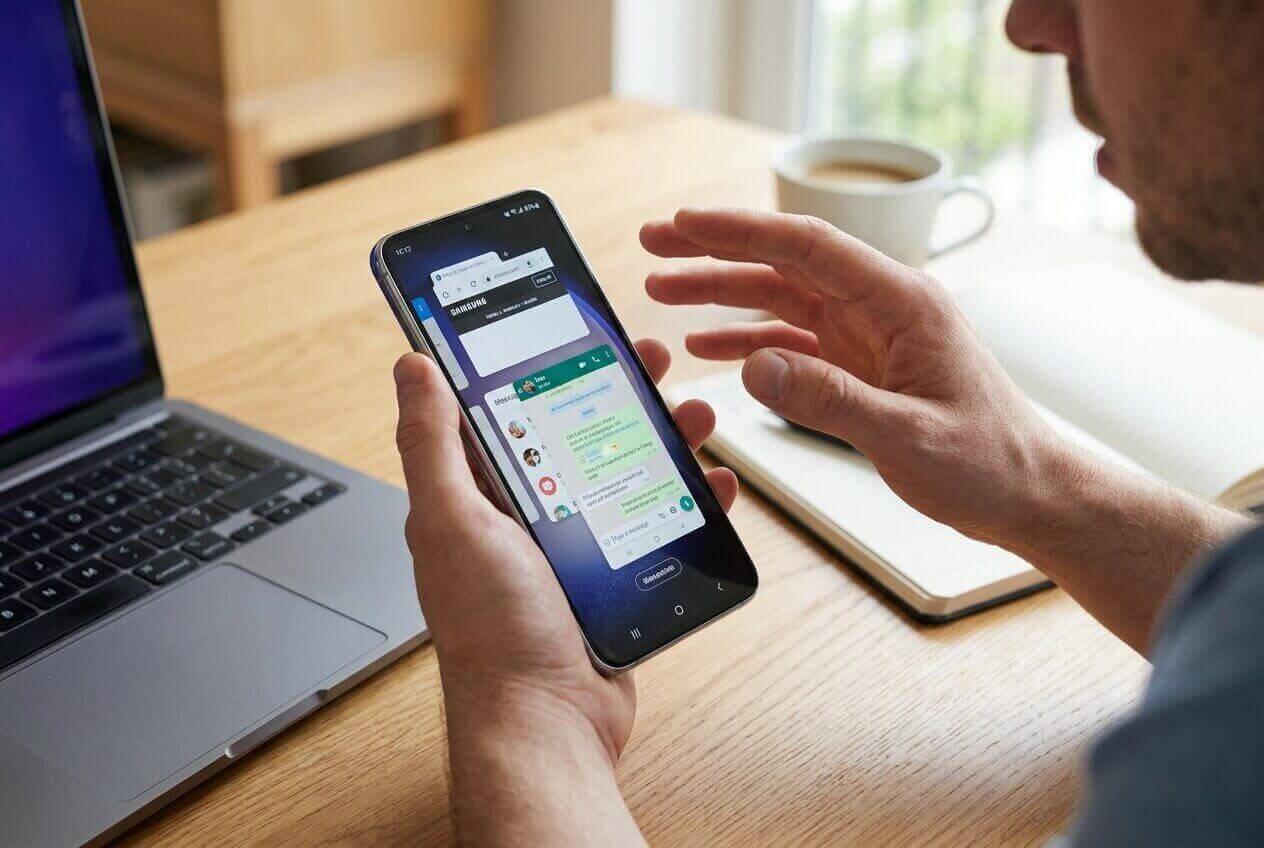
You've got a locked phone and you're stuck deciding what to do first: go through warranty service, or use a repair tool to regain access. This often happens right after changing a PIN/pattern, enabling biometrics, or rebooting—suddenly the lock screen won't accept what you're sure is correct. Nothing seems to change after multiple attempts, and it's unclear if you're making things worse.
AI can help you sort the situation into a few likely buckets—forgotten credentials vs. software glitch vs. policy/warranty constraints—and map a lowest-risk next step based on your exact context. You can use tools like ChatGPT or Gemini to ask targeted questions and compare tradeoffs without guessing.
AI can't verify your warranty status, your device's internal security state, or what a service center will decide—and trial-and-error can trigger lockout timers, data loss, or warranty complications. Treat AI as a planning layer, not the execution.
In this article
- Why should I use warranty service or a repair tool first happens and what it means
- Using AI prompts to diagnose warranty vs repair tool choice safely
- Level 1: Basic Prompt
- Level 2: Advanced Prompt
- Level 3: Evidence Prompt
- Prompt Refinement
- AI Output vs Reality
- When to stop troubleshooting to protect warranty eligibility
- Least-regret checklist before you act
- Unlock Android screen safely with Dr.Fone

1. Use AI to classify the lockout before you "try random things."
Have AI narrow it into credential confusion, policy/MDM restrictions, FRP/account risk, software bug, or possible hardware issues—then choose the lowest-risk next step for your situation.
2. Warranty-first is usually lowest-risk; tool-first is usually fastest (with tradeoffs).
If the phone is healthy and under warranty, official service often protects your support history. If time is critical and service is slow, a tool-based path can be practical, but you must accept possible data/account/warranty implications.
3. Stop escalating once lockout timers, policy signs, or reset/firmware ideas appear.
Repeated failed attempts can increase delays; managed devices and FRP/activation restrictions can block progress; resets/bootloader/firmware changes can raise data-loss and warranty-dispute risk.
Part 1. Why should I use warranty service or a repair tool first happens and what it means
This dilemma usually appears when an Android phone is locked and you need access quickly, but you also want to avoid actions that could affect warranty coverage. A common trigger is repeated failed unlock attempts after a restart, a recent PIN change, or a child/accidental input that changed the lock method.
If the phone is otherwise healthy (no drops, no liquid exposure) and still under warranty, service may be the lowest-risk path—especially if you care about preserving official support history. If you're locked out and warranty routes will take too long, a tool-based approach may be more practical—provided you accept the possible tradeoffs.
The uncertainty is the hard part: you can't easily tell whether you're facing simple credential confusion, a device policy restriction, or a deeper system issue from the lock screen alone.
Warranty service first (usually lowest risk)
- Often protects the "cleanest" official support path and service history.
- Better when you suspect hardware involvement (touch issues, swelling, liquid exposure) and want it documented first.
- May reduce the chance of triggering data-loss or security complications through trial-and-error.
Repair/unlock tool first (often fastest)
- Can be more practical when you need access soon and service timelines are too slow.
- May involve tradeoffs like potential data loss (depending on device/security state).
- Can run into account/security restrictions afterward if verified credentials are required.
1-1. Before You Prompt the AI
Gather a few facts first so the AI can narrow causes without guesswork:
- Phone brand/model and Android version (if known)
- What changed right before the lockout (PIN change, restart, update, new fingerprint)
- Any work profile/MDM/company policy on the device
- Whether you can access Google/Samsung account recovery on another device
- Whether you're trying to preserve warranty eligibility and/or on-device data
Part 2. Using AI prompts to diagnose warranty vs repair tool choice safely
2-1. Level 1: Basic Prompt
I'm locked out of my Android phone and I'm deciding between warranty service or using a repair tool first. Ask me the minimum questions needed, then recommend the lowest-risk next step based on time, warranty risk, and data-loss risk.
2-2. Level 2: Advanced Prompt
Act as a decision assistant. Given my answers, rank the top 5 likely situations causing the lockout (credential issue, policy/MDM restriction, FRP risk, software bug, hardware issue). For each, rate (1) warranty risk, (2) data-loss risk, (3) time-to-resolution, and suggest the safest next action. If any action could increase lockouts, trigger factory reset, or complicate warranty, flag it clearly.
2-3. Level 3: Evidence Prompt
Help me decide whether to use warranty service or an Android screen unlock tool first.
My details (fill in):
- Phone model: (e.g., Samsung Galaxy S22 / Pixel 7)
- Region/carrier: (e.g., US unlocked / EU carrier-locked)
- Purchase date + warranty status guess: (e.g., ~8 months ago, likely in warranty)
- What I did right before lockout: (e.g., changed PIN, tapped Restart, then PIN rejected)
- Current symptom: (e.g., "wrong PIN" even when sure; increasing wait time after attempts)
- Lock method: (PIN / pattern / password / fingerprint)
- Google account access: (yes/no, can sign in elsewhere)
- OEM account access (Samsung/Xiaomi/etc.): (yes/no)
- Work profile/MDM: (yes/no/unsure)
- Data importance: (high/medium/low)
- Time urgency: (today/this week/no rush)
- Any damage/liquid exposure: (yes/no)
Output format I want:
1) Clarifying questions (max 6)
2) Decision tree: warranty-first vs tool-first vs account-recovery-first
3) Risks to avoid (lockout timers, FRP, reset triggers, warranty flags)
4) A "least regret" recommendation with reasoning
2-4. Prompt Refinement
Use these follow-ups to tighten the diagnosis:
"What key question am I missing that would most change the recommendation?"
"Separate causes into: credential/account issues, policy/MDM issues, software issues, hardware issues."
"Rank the most likely causes given that the PIN was recently changed and the phone rebooted."
"What single piece of evidence should I check next (without unlocking) to confirm or rule out each cause?"
"If I choose warranty service first, what should I avoid doing beforehand to reduce dispute risk?"
"If I choose a tool first, what are the realistic worst-case outcomes and how can I minimize them?"
2-5. AI Output vs Reality
AI can help you think clearly, but it can't guarantee outcomes from behind a lock screen.
| What AI can provide | What you still must verify/do |
|---|---|
| A ranked list of likely causes | Confirm warranty terms and service-center requirements |
| A risk-based decision tree | Decide your priority: data preservation vs speed vs warranty cleanliness |
| Safe "next checks" that don't require access | Perform the checks and record what you observe |
| A plan for what to try first | Use the appropriate service route or tool to carry out the plan |
AI reduces blind trial-and-error; execution still depends on your device's security state, account status, and the method you choose.
Part 3. When to stop troubleshooting to protect warranty eligibility
If you care about warranty outcomes and data integrity, stop "trying random things" when any of these show up:
- You've triggered long lockout timers or escalating delays after attempts.
- The phone is managed (work profile/MDM) or you suspect activation/FRP restrictions.
- You're considering steps that require a reset, bootloader changes, or unofficial firmware.
- There's possible hardware involvement (touchscreen misreads, swelling, liquid exposure) that service should document first.
Once you've used AI to narrow the most likely scenario and risks, the next step is choosing an execution path that matches your priorities.
Part 5. Least-regret checklist before you act
Before you commit to warranty-first or tool-first, sanity-check these points (they map directly to the risks AI should flag):
- Time: Do you need access today, or can you wait for official service timelines?
- Data: Is preserving on-device data your top priority, or is speed more important?
- Policy: Is there any chance the phone is managed (work profile/MDM) or tied to admin controls?
- Account readiness: Can you sign into your Google/OEM account elsewhere for recovery steps?
- Escalation risk: Have you already hit long lockout timers (a sign to stop guessing)?
- Warranty cleanliness: If you want the least dispute risk, avoid actions that resemble resets, bootloader changes, or unofficial firmware.
Part 4. Unlock Android screen safely with Dr.Fone
If your AI triage suggests "tool-first" is reasonable—especially when you own the device, need access soon, and warranty service would be slow—an execution tool like Dr.Fone - Screen Unlock (Android) becomes relevant because it focuses on carrying out the screen access step you've already decided on. At this point, your goal is to follow a controlled process (not repeated guesses on the lock screen) while staying aware of data and account implications that AI flagged during diagnosis.
 Unlock Android
phone in seconds.
Unlock Android
phone in seconds.- Remove PIN,
pattern, password, fingerprint.
- Bypass Google
FRP lock easily.
- Works on all
Android brands & models.
- No tech skills
required – user-friendly.
Use a controlled workflow rather than repeated lock-screen guesses, and re-check your priorities (warranty documentation vs on-device data vs speed) before you proceed.
-
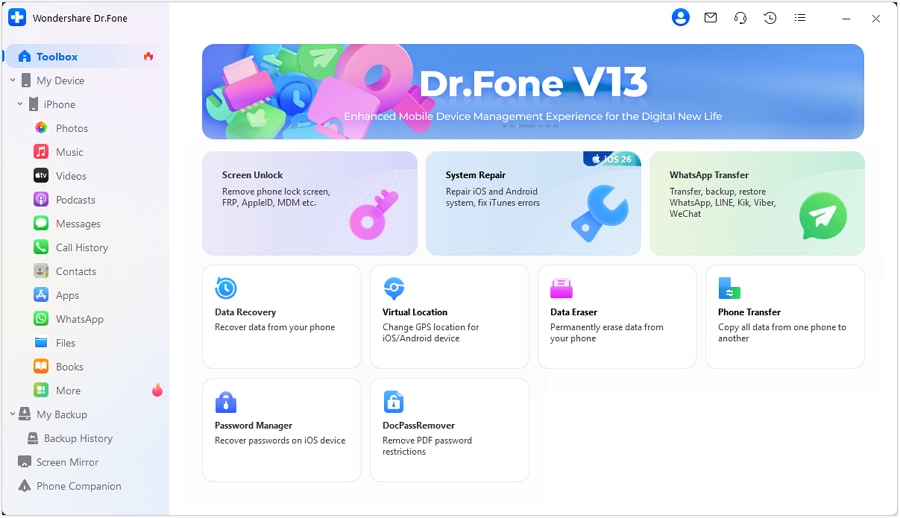
Step 1 Prepare and open Dr.Fone
Use a stable computer, a reliable USB cable, and steady power. Then launch Dr.Fone so you can follow a consistent flow instead of guessing on the lock screen.
-
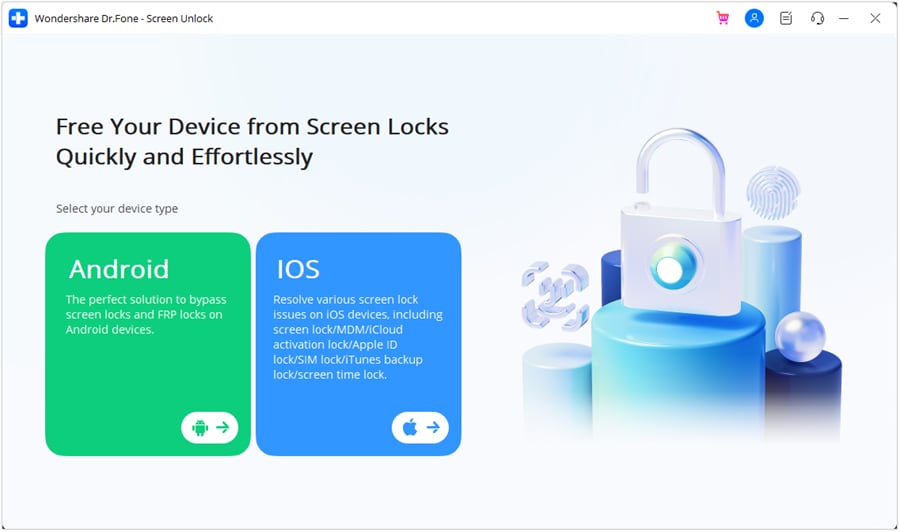
Step 2 Choose the Android screen unlock path
Select the Android-related screen unlock option so the tool's steps match your device category.
-
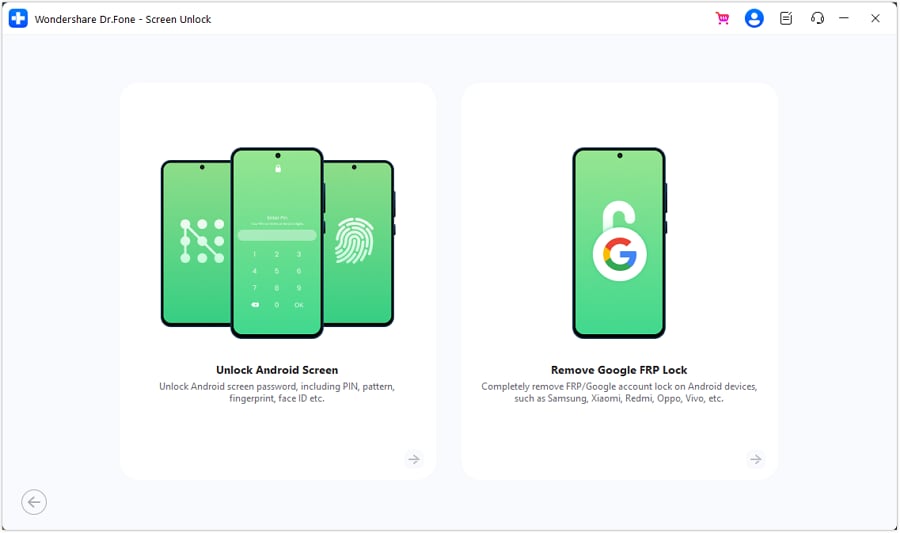
Step 3 Enter the screen lock removal flow
Proceed to the "remove screen lock" function and follow the on-screen instructions rather than improvising with resets or firmware steps outside the guided path.
-
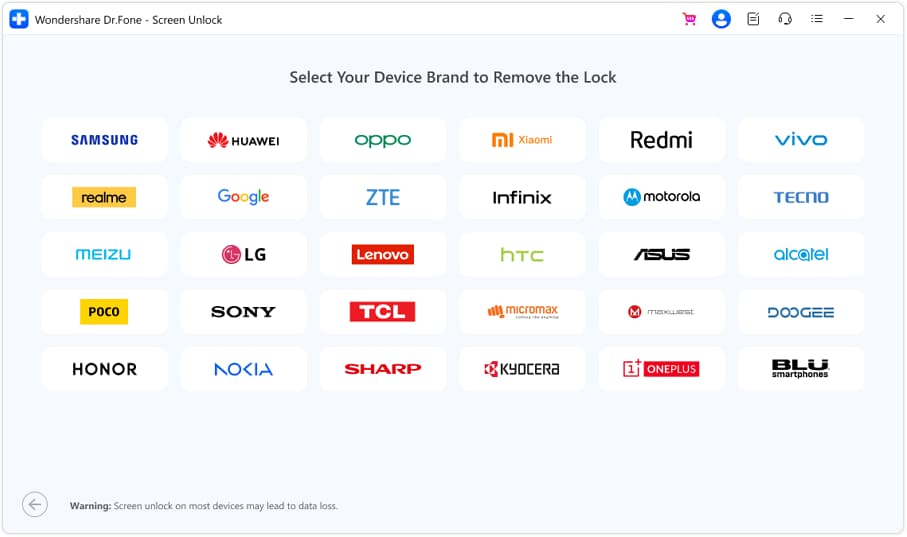
Step 4 Select your device brand/model carefully
Pick the correct brand/model options to avoid mismatched steps and extra complications.
-
Step 5 Re-secure access after you regain entry
Once you regain access, immediately set a new lock method and update account recovery options to prevent a repeat lockout.


 Add Wondershare Dr.Fone as a preferred source on Google