Effortlessly manage data through preview, delete, export, etc.

 100% Security Verified | No Subscription Required | No Malware

 :
: 
 ChatGPT
 Perplexity
 Gemini
 Claude
 Grok
Grok

I did a “fresh start” on my student’s phone, then got stuck in a 2FA loop because the authenticator was on the old setup. I wish I had a checklist that told me what to verify before I reset anything.
Forum user
A fresh-start phone setup sounds simple until you realize one missed step can lock you out, lose school files, or erase data you still need.
AI helps by turning a vague goal (“only essentials”) into a clear sequence: what to decide first, what to verify, and what not to do yet.
AI can’t actually touch your phone, move files, or confirm what’s on-device—so execution still requires real device tools and checks after each critical change.
In this article
- Plan an essentials-only setup without missing critical steps
- Why “essentials-only” is easy to mess up
- What a correct order must include
- Irreversible actions to delay
- Common failure pattern to avoid
- What the AI needs to know
- AI prompts to build a safer workflow
- AI plan vs. real device constraints
- When to stop planning and start execution

Part 1. Plan an essentials-only setup without missing critical steps
1-1. Why “essentials-only” is easy to mess up
You’re setting up (or resetting) a phone for a student who needs the basics: calls/texts, school apps, calendar/email, and a few utilities—without distractions or risky permissions. The problem is “essentials” is subjective, and one wrong tap can either over-restrict (breaking school logins) or under-restrict (leaving distracting apps and notifications everywhere).
1-2. What a correct order must include
Most people get an AI answer that lists apps and settings, but it rarely tells you the correct order: what must be backed up first, which accounts must be confirmed working, and which settings should wait until after school apps are tested.
1-3. Irreversible actions to delay
There’s also a point of no return: factory reset / erase-all-content or deleting the “old” cloud backup before confirming the student can sign in and recover what’s needed. Don’t approach that step until verification is complete.
1-4. Common failure pattern to avoid
A safe workflow is verification-first: confirm access (accounts, recovery methods, 2FA/authenticator) before any destructive changes, then validate school apps end-to-end before you enable strict limits.
Part 2. What the AI needs to know
Share your constraints so the plan matches the student’s reality, not a generic checklist.
- Phone model and OS (e.g., iPhone 13 iOS 17 / Samsung A54 Android 14)
- Is this a brand-new phone, or a “fresh start” on an existing phone?
- Who owns/manages the device (student, parent, school/MDM)?
- Must-keep data types (contacts, photos, notes, WhatsApp, school files)
- Required school tools (email provider, LMS apps, authenticator, VPN, browser)
- Screen time policy goals (hard blocks vs gentle limits; bedtime; downtime)
- Account setup rules (one Apple ID/Google account vs parent-managed accounts)
- Connectivity constraints (limited data plan, unreliable Wi‑Fi, hotspot needs)
- Accessibility needs (text size, voice control, hearing/vision supports)
- Deadline and risk tolerance (can you spend 2 hours testing, or 20 minutes?)
Part 3. AI prompts to build a safer workflow
Use the prompts below to make the AI produce a sequence with verification gates—so you don’t accidentally erase data or lock the student out.
3-1. Level 1: Basic Prompt
Create a step-by-step plan only for a “fresh start phone setup for a student with only essentials.”
Include what to decide first, what to verify before changing anything major, and a short list of core apps/settings.
Do not give device-specific tap paths—just the workflow and checks.
3-2. Level 2: Advanced Prompt
Build a structured workflow for a student “essentials-only” phone setup with Preparation / Execution / Verification sections.
Mark each step as Critical vs Optional, and add “stop points” where I must confirm access (accounts, school email, authenticator) before I continue.
3-3. Level 3: Evidence Prompt
Context: Setting up an (iPhone 12, iOS 17) for a high-school student; goal is essentials only.
Must have (school Gmail, Google Classroom, Microsoft Authenticator, Maps, Calendar).
Must keep (contacts + a few photos).
Parent wants limits (no social apps, downtime 10pm–6am).
Connectivity: (5GB/month data).
Ask me for any missing info, then output:
- A checklist of checks before any irreversible action (e.g., reset/erase)
- A during-setup checklist (accounts, permissions, notification defaults)
- A post-setup verification checklist (logins, 2FA, backups, find-my)
- A minimal “allowed apps” set and a minimal “blocked/avoid for now” set
Also include quick examples of acceptance criteria (e.g., “Student can sign into Gmail within 2 minutes without parent phone.”).
3-4. Prompt Refinement (follow-up prompts)
Return the plan as a table with columns: Step, Critical/Optional, Why it matters, How to verify, What can go wrong, Rollback option.
List the top 10 failure modes for student phone setups (account lockouts, 2FA loops, missing SIM/eSIM, etc.) and add a prevention check for each.
Create a ‘no-regrets’ minimal setup that works even if the student forgets passwords—include recovery methods and what I must record securely.
Force a dependency order: identify steps that must happen before others (e.g., authenticator before resetting the old device) and explain why.
Add a final ‘readiness gate’ that I must pass before enabling restrictions (screen time/app limits), including which school apps must be tested first.
Part 4. AI plan vs. real device constraints
| Planning with AI | Reality on the device |
|---|---|
| Can propose a safest-order sequence and verification gates | Can’t confirm what’s actually backed up, signed in, or synced |
| Can list likely required apps/settings for “essentials only” | Can’t install apps, approve permissions, or validate app behavior |
| Can highlight irreversible moments (erase/reset, deleting backups) | Can’t stop you from tapping the wrong destructive option |
| Can define acceptance criteria and test scripts | Can’t run tests (login, 2FA, notifications) or see error messages |
AI improves planning and reduces avoidable mistakes, but it cannot execute the setup or verify outcomes—you’ll need real on-device execution and confirmation.
Part 5. When to stop planning and start execution
- You have a final “essentials” list (apps + accounts + accessibility needs) that all stakeholders agree on.
- You’ve defined acceptance criteria (what “done” means) and a verification checklist for logins, 2FA, and backups.
- You’ve identified irreversible actions (factory reset/erase, deleting old backups, removing authenticators) and placed them after verification gates.
- You have required credentials and recovery methods ready (passwords, recovery email/phone, 2FA device plan) without relying on guesswork.
If those are true, you’re ready to move from a plan to controlled execution—without improvising mid-setup.
Fresh start phone setup for students with only essentials: Execute the workflow safely with Dr.Fone
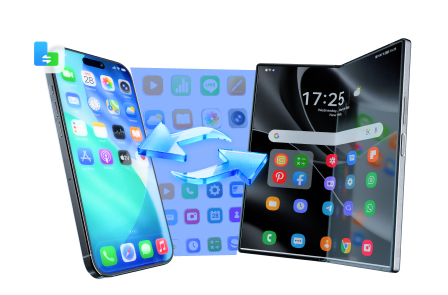
Execution now matters because this is where data loss, lockouts, and incomplete transfers happen—especially around backups, device-to-device moves, and post-transfer verification. For hands-on transfers and backups, you can use Dr.Fone - Phone Transfer once your verification gates (accounts, recovery, and 2FA access) are ready.
 Move data between iOS to Android and vice versa.
- Transfer contacts, SMS, photos, videos, music, and more types.
- Available with all phones with Android and iOS versions.
- Simple, click-through process.
-
Step 1 Lock in your “do-not-erase-yet” safety check
Run the needed backup/transfer actions only after you’ve confirmed credentials and recovery access are working.
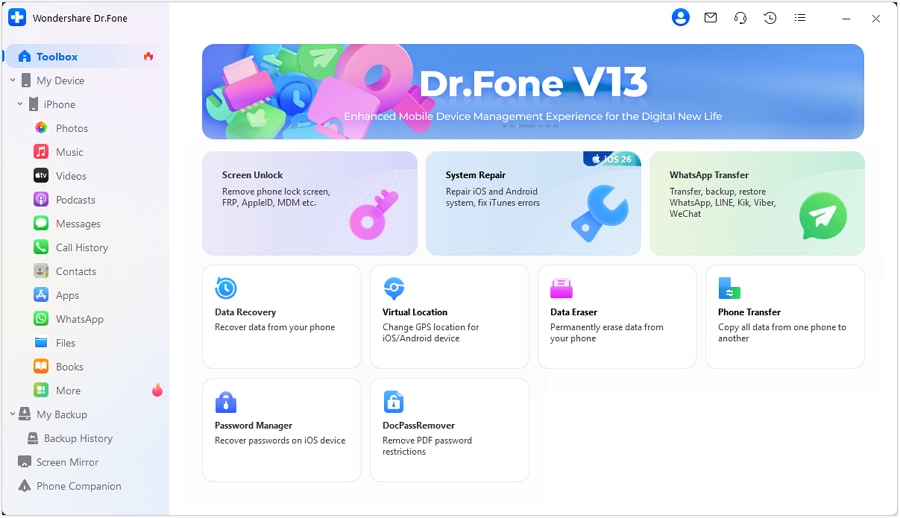
Limitation: The tool can execute actions, but it can’t decide what you should keep or whether your “essentials-only” policy is correct—that must be settled in the plan first.
-
Step 2 Perform the transfer/backup with the correct path selected
Choose the intended transfer direction and proceed only when you’re sure you’re moving data to the correct device.
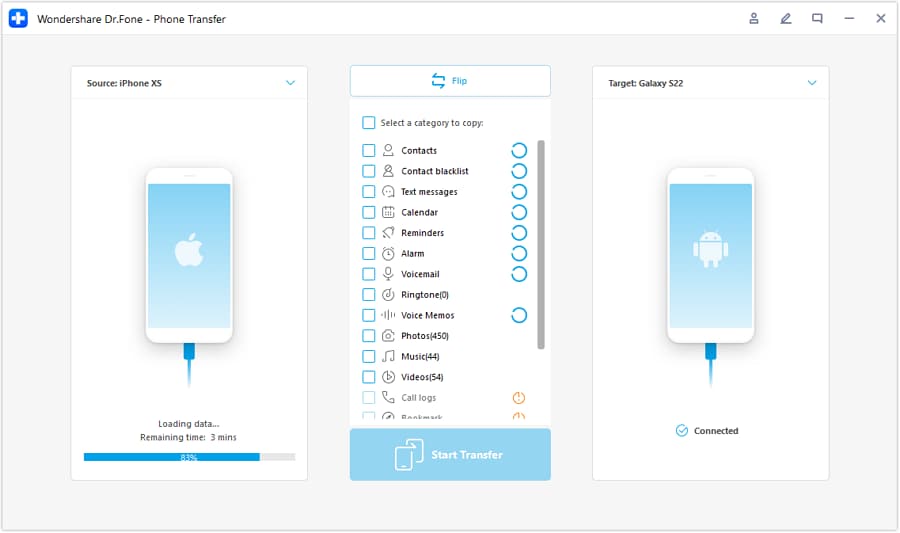
Limitation: If you choose the wrong device direction or source/target, you can waste time—or worse, overwrite what you meant to keep.
-
Step 3 Select the data scope and keep evidence of what was included
Complete the selected backup/transfer workflow and record what was included (apps/data categories) so you can validate outcomes.
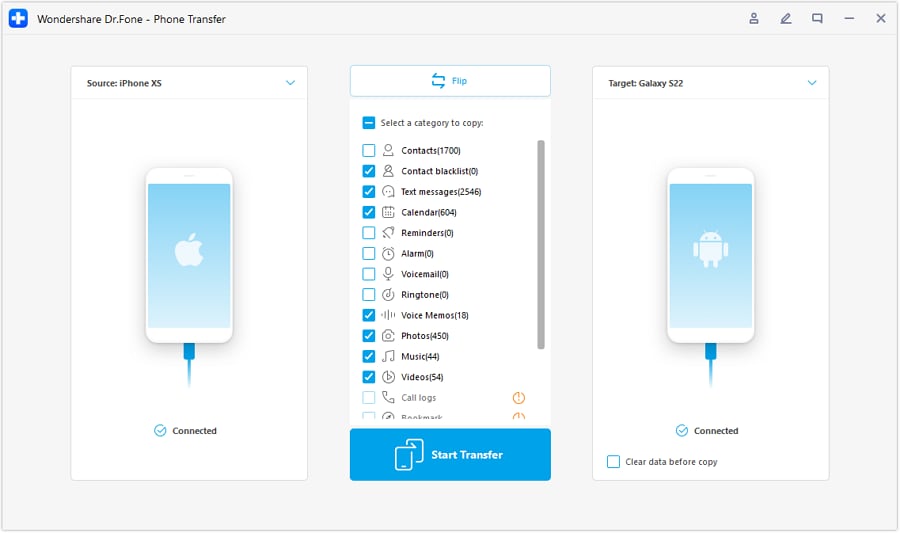
Limitation: If you choose the wrong data scope during execution, you may carry over clutter or miss critical items—your verification checklist is what catches this.
-
Step 4 Verify results before any irreversible cleanup
Check the student can log in (email/LMS/2FA), access required data, and operate under limits—then proceed to destructive cleanup like wiping the old device.
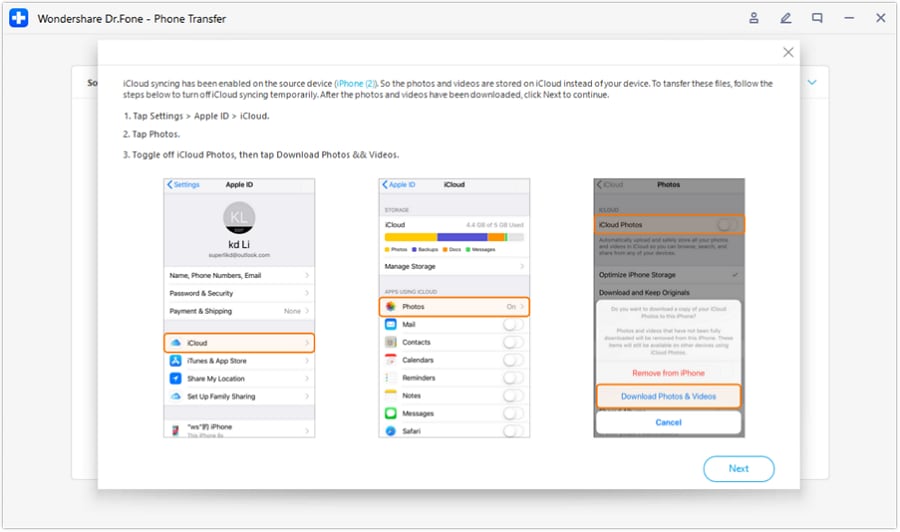
Limitation: Factory reset / erase-all-content is irreversible if you didn’t confirm successful transfer and account access first; AI can warn you, but it cannot recover data you never backed up.




Conclusion
Use AI to design a careful, verification-first workflow for a student “essentials-only” fresh start, then rely on real tools for execution—AI plans the safe sequence, and the device tool performs the actions you’ve already verified are ready.
FAQ
-
What’s the biggest risk in an “essentials-only” student setup?
Account lockout (especially 2FA/authenticator loops) and data loss from resetting/wiping before verifying backups and logins. -
When should restrictions (limits/blocking) be enabled?
After core school apps are installed and tested end-to-end (login, 2FA, notifications, file access), otherwise you can block the very steps needed to finish setup. -
How do I define “essentials” without overcomplicating it?
Use acceptance criteria: “Student can communicate, access school platforms, navigate, and authenticate—without non-school distractions installed.” -
What should I verify before any factory reset or deleting anything?
Backup exists, required data is present, passwords/recovery methods work, and 2FA/authenticator access is confirmed on the intended device. -
Can AI tell me exactly which toggles to tap on my phone?
It can suggest a sequence and checks, but it can’t see your device, confirm OS variations, or validate outcomes—treat it as a planner, not an operator.
 Add Wondershare Dr.Fone as a preferred source on Google