Effortlessly manage data through preview, delete, export, etc.

 100% Security Verified | No Subscription Required | No Malware

 :
: 
 ChatGPT
 Perplexity
 Gemini
 Claude
 Grok
Grok

My apps keep crashing right after I updated my phone. I can’t tell if it’s one bad app or something in the system—should I try Safe Mode, and what does it actually prove?
Reddit user, r/AndroidQuestions
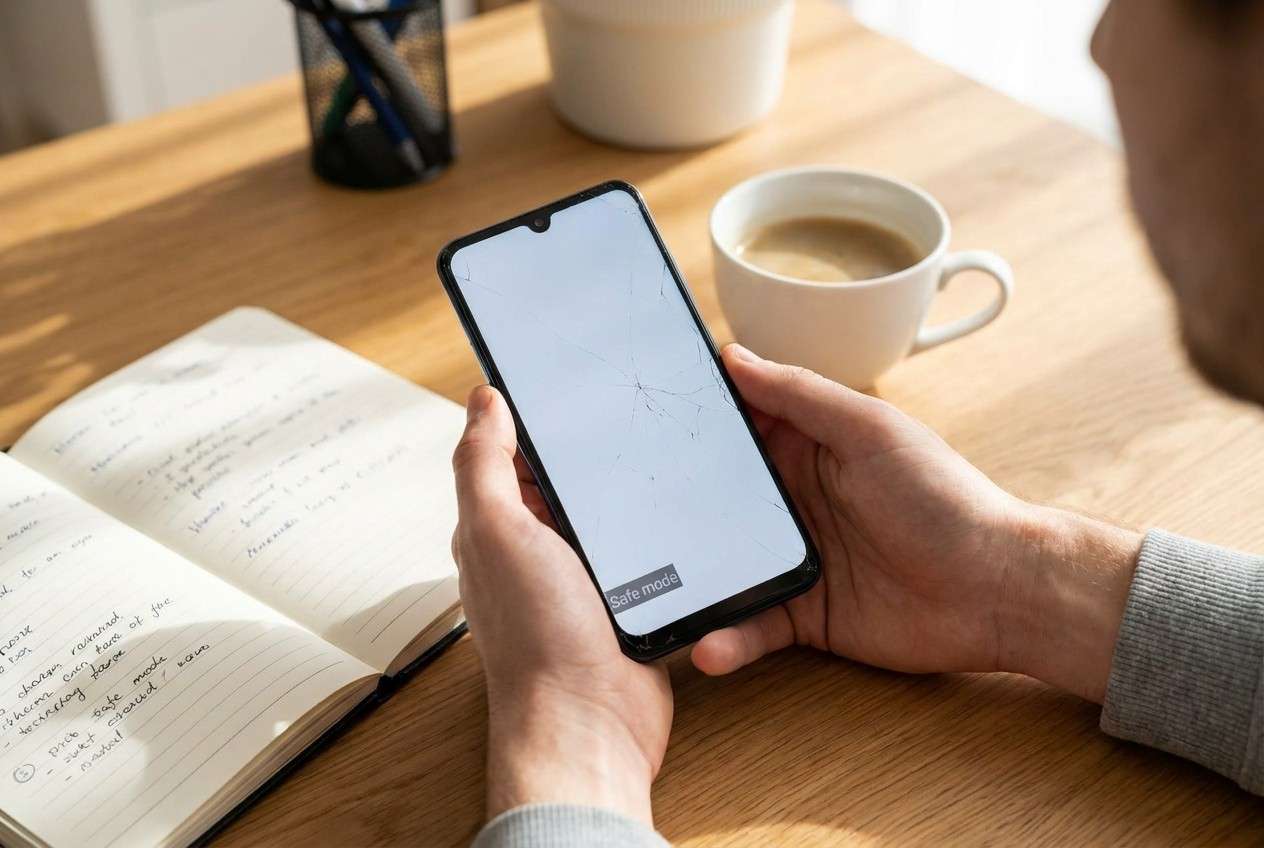
Android apps that keep crashing can make your phone feel unreliable—especially right after you installed an update, a new app, or restarted your device (for example, on a Samsung Galaxy S22 or Pixel 7). You may open an app, see it flash, then close immediately, and it’s unclear whether the phone is “still loading” or actually stuck.
AI (like ChatGPT or Gemini) can help you describe the symptoms clearly, narrow down likely causes (app bug vs. cache issue vs. third‑party conflict), and decide whether Safe Mode is a good next diagnostic step.
AI can’t see your device state or run tests for you, so repeated trial-and-error (randomly clearing things, uninstalling, resetting) can increase risk—especially if you’re not sure what changed before the crashes started.
In this article
- Part 1. Why use Safe Mode for Android app crashes (and what it means)
- Safe Mode as a diagnostic environment
- When Safe Mode is most useful
- What it means if crashes persist in Safe Mode
- Before you prompt the AI
- Part 2. Using AI prompts to decide on Safe Mode safely
- Part 3. When to stop troubleshooting and avoid risks
- Part 4. AI output vs. reality: what you must still verify
- Part 5. Fix deeper crashes safely with Dr.Fone (guided repair)
Part 1. Why should i use safe mode for android app crashes happens and what it means
1-1. Safe Mode is a diagnostic environment
Safe Mode is mainly a diagnostic environment: it boots Android with most third‑party apps disabled. If your crashing apps stop crashing in Safe Mode, that strongly suggests a third‑party app (or its overlays/permissions) is contributing to the problem.
1-2. When Safe Mode is most useful
This is most useful when crashes began after tapping Update/Install, after restoring apps, after enabling an accessibility tool, or after installing a “cleaner/optimizer” app. In normal mode, everything may look fine until you open a specific app—then it closes, freezes, or repeatedly shows “keeps stopping.”
1-3. If crashes persist in Safe Mode
If the crashes still happen in Safe Mode, the cause is more likely system-level (OS update issue, corrupted system components, storage problems) or a specific app bug that occurs even without third‑party interference.
1-4. Before you prompt the AI
Gather a few details first so the AI can separate “app-level” from “system-level” causes:
- Phone brand/model and Android version
- Which apps crash (one app or many)
- When it started (after update/install/restart)
- Whether crashes happen in Safe Mode
- Any on-screen error text (“keeps stopping” / “not responding”)
- Storage status and recent changes (new launcher, VPN, battery saver, accessibility)
Part 2. Using AI prompts to diagnose should i use safe mode for android app crashes safely
2-1. Level 1: Basic Prompt
My Android apps are crashing. Should I use Safe Mode for Android app crashes in my case?
Ask me the minimum questions needed, then give a short decision: “Use Safe Mode now” or “Try something else first,” with 3 low-risk steps.
2-2. Level 2: Advanced Prompt
Diagnose whether Safe Mode is the right next step for my Android app crashes.
Requirements:
1) List the top 5 likely causes ranked by probability.
2) For each cause, label risk level (low/medium/high) for troubleshooting.
3) Give a “least risky first” plan with 5 steps, and clearly mark which steps change system/app data.
4) Tell me what outcome in Safe Mode would confirm or rule out each cause.
2-3. Level 3: Evidence Prompt
Act as an Android crash triage assistant. Use my evidence to decide if Safe Mode is appropriate and what it will prove.
Evidence
- Phone model: (e.g., Samsung Galaxy S22)
- Android version / One UI version (if Samsung):
- Trigger before crashes: (e.g., installed an update, installed a new app, restart)
- Scope: (one app / multiple apps / system UI)
- Error message text (exact):
- Frequency: (every launch / after a few minutes / random)
- Storage free space (approx):
- Battery saver / performance mode on?:
- VPN / ad-block / firewall / DNS app?:
- Accessibility services enabled?:
- Launcher changed?:
- In Safe Mode: (same crashes / reduced / gone / not tested)
- What I already tried:
Output format
1) Should I use Safe Mode now? (yes/no + why)
2) Most likely cause categories (third‑party conflict vs app bug vs OS/system)
3) 5 low-risk next steps with expected results
4) Red flags that mean I should stop troubleshooting
2-4. Prompt Refinement
If the AI’s first answer feels generic, use these follow-ups to force clarity:
What key question are you missing that would most change your recommendation about Safe Mode?
Separate causes into: third‑party app conflict, corrupted app data/cache, OS update/system instability, storage/resource constraints.
Rank the causes again, but explain what single piece of evidence would move each cause up or down.
If Safe Mode improves crashes, which exact categories become most likely, and what should I do next without factory resetting?
If Safe Mode does not improve crashes, what are the safest next steps before any reset or firmware action?
Part 3. When to stop troubleshooting should i use safe mode for android app crashes and avoid risks
Stop experimenting when the symptoms suggest the problem is no longer just “an app acting up,” or when your next step would be high-impact without a clear diagnosis.
- Crashes include System UI, Settings, or core functions (calls, screen lock, home screen) rather than one app
- The phone restarts, boot loops, freezes, or can’t stay on long enough to test safely
- You’ve confirmed Safe Mode doesn’t change the crashing behavior
- You’re considering factory reset / firmware actions mainly as guesses, not evidence-based steps
Once you’ve used Safe Mode to classify the issue (third‑party vs system-level), it’s usually better to hand off execution to a purpose-built repair workflow rather than escalating random fixes.
Part 4. AI output vs reality: what you still need to verify
AI can guide interpretation, but your phone’s behavior is the final proof.
| What AI can infer | What you still need to verify |
|---|---|
| Safe Mode is useful to isolate third‑party interference | Whether crashes actually stop in Safe Mode on your device |
| Likely culprits (VPN, launcher, accessibility, overlays) | Which specific app/service is causing the conflict |
| Low-risk sequencing (observe → disable → update → clear cache) | Whether each step changes data or introduces new issues |
| Red flags (system UI crashes, boot loops, overheating) | When the issue is system-level and needs a repair workflow |
AI narrows the decision and reduces guesswork, but it can’t execute checks, reproduce the crash, or apply system repair actions for you.
Part 5. should i use safe mode for android app crashes: fix or resolve it safely with Dr.Fone
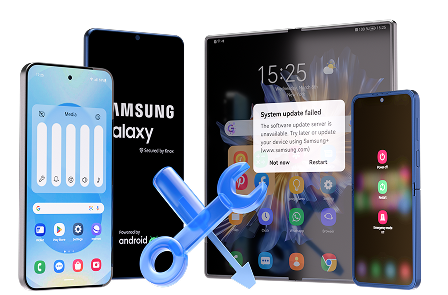
If Safe Mode suggests a deeper Android system issue (or Safe Mode doesn’t help at all), the next need is often a controlled way to address system instability without stacking more uncertain tweaks. Dr.Fone - System Repair (Android) is relevant at this point because it’s designed to execute a guided Android system repair workflow—particularly for supported Samsung phone issues—after you’ve already used AI to narrow the likely cause and decide that basic app-level steps aren’t enough.
 Fix Android instantly – no skills needed.
- Solve boot loop, black screen, won’t turn on, etc.
- High success rate for all system issues.
- User-friendly interface with easy-to-follow steps.
-
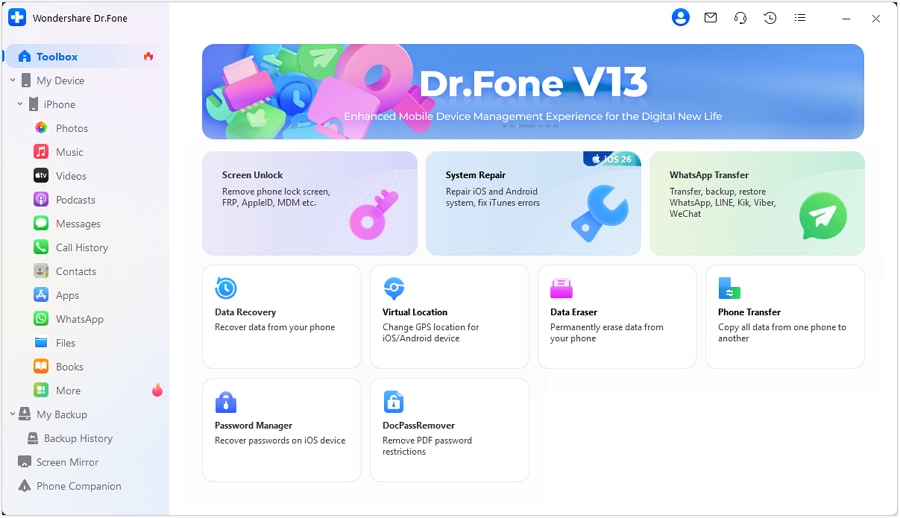
Step 1 Confirm the scope (choose the right repair option)
Open the tool and choose the Android repair option that matches your device scenario, avoiding any reset-style choice unless you’ve accepted the data impact.
-
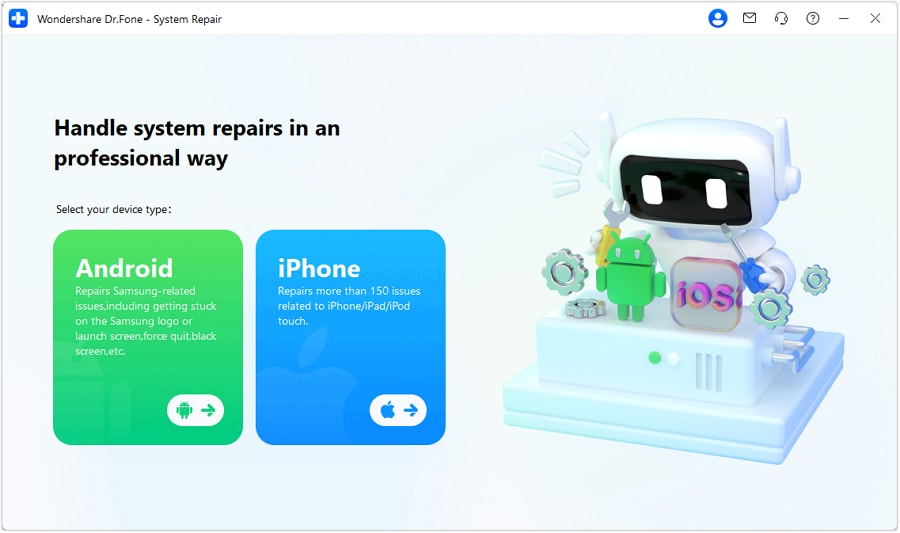
Step 2 Select Android as the device type
Make sure you’re in the Android repair path (not iOS), then continue.
-
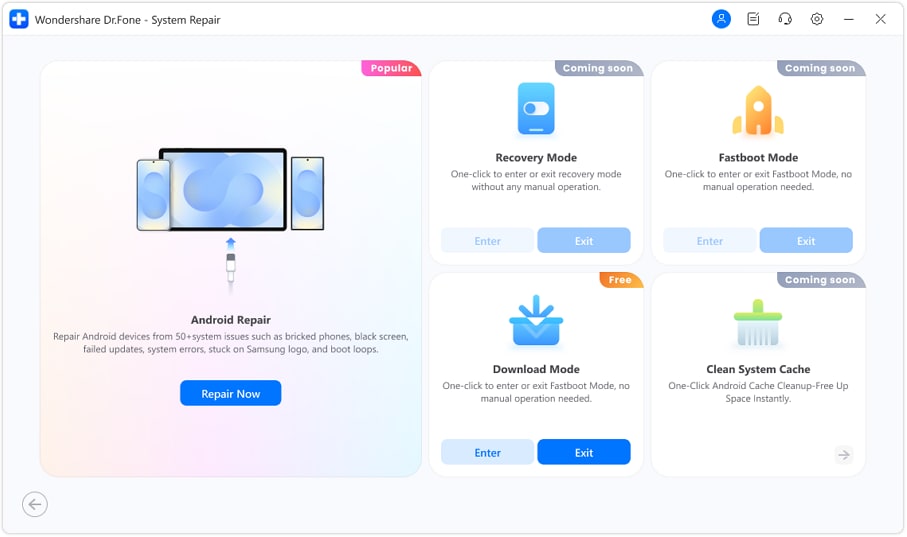
Step 3 Pick the Android repair module
Enter the repair flow designed for Android system issues, then proceed.
-
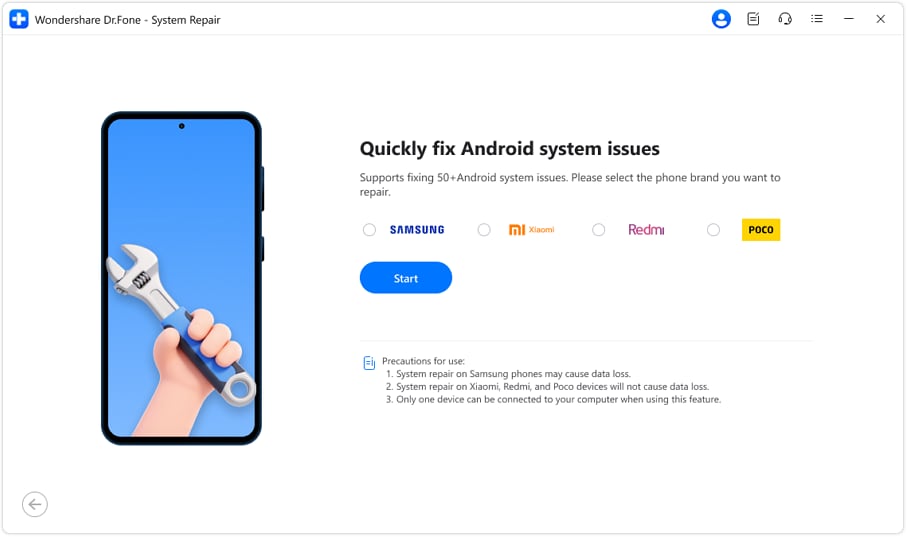
Step 4 Select your device details carefully
Enter the correct brand/model and other requested info precisely, because mismatches can increase failure risk.
-
Step 5 Run the repair, then re-check the Safe Mode signal
Connect via USB, follow the on-screen steps to place the device into the required mode, and keep the connection stable (avoid hubs if disconnects are common). Start the repair and wait for completion without interrupting the cable or closing the program, then re-test the crashing apps in normal mode.
If crashes persist, compare behavior in normal mode vs Safe Mode again to confirm whether you’re dealing with a remaining third‑party conflict.




Conclusion
Safe Mode is a low-risk way to classify Android app crashes as likely third‑party conflicts vs system-level instability, and AI prompts help you interpret what the Safe Mode result actually means and what to try next. When the evidence points beyond simple app-level fixes, Dr.Fone - System Repair (Android) becomes the practical handoff for executing a more structured repair workflow.
FAQ
-
Should I use Safe Mode if only one app is crashing?
Safe Mode can still help, but first confirm whether that app crashes even after updating it and rebooting; if the crash disappears in Safe Mode, a third‑party conflict is likely. -
Does Safe Mode delete apps or data?
No—Safe Mode temporarily disables most third‑party apps from running automatically; it’s meant for testing, not cleanup. -
If apps stop crashing in Safe Mode, what does that mean?
It usually points to a third‑party app/service causing interference (launcher, VPN, accessibility service, overlay, optimizer), so you can disable/remove suspects systematically. -
If apps still crash in Safe Mode, is it an Android system problem?
It increases the likelihood of system-level instability or a broader issue (OS components, storage/resource problems), especially if multiple apps crash the same way. -
Can I keep using my phone in Safe Mode as a workaround?
It’s useful for short-term diagnosis, but it’s not ideal long-term because many third‑party apps and services won’t function normally.
 Add Wondershare Dr.Fone as a preferred source on Google