Effortlessly manage data through preview, delete, export, etc.

 100% Security Verified | No Subscription Required | No Malware

 :
: 
 ChatGPT
 Perplexity
 Gemini
 Claude
 Grok
Grok

My iPhone is stuck on the Apple logo and keeps restarting. I can’t tell if it’s an iOS/software problem or if something is wrong with the motherboard.
Apple Support Community user
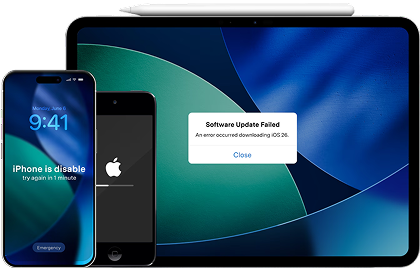
Your iPhone may suddenly refuse to boot, loop on the Apple logo, overheat, lose signal, or randomly restart—making you wonder if it’s a motherboard issue or just a software problem. This often happens right after tapping Install Now for an iOS update, restoring from iCloud, or doing a forced restart on a device like an iPhone 13 or iPhone 14. After several minutes, nothing changes, and it’s unclear whether the phone is still “working in the background.”
AI (like ChatGPT or Gemini) can help you sort symptoms, narrow likely causes, and choose low-risk checks before you try anything that could worsen data loss or hardware damage.
AI can’t confirm hardware failure from text alone, and trial-and-error can add risk (especially if you keep rebooting, update again, or attempt restores without a plan). The goal is to diagnose carefully—then use a dedicated tool for execution when you’re ready.
In this article
- Part 1. How to tell if an iPhone problem is motherboard or software
- Software vs motherboard: key clues
- What changed right before it started
- Before you prompt the AI
- Why both can look the same at first
- Part 2. AI prompts to diagnose iPhone motherboard vs software issue safely
- Part 3. Prompt Refinement (follow-ups to force clarity)
- Part 4. AI output vs reality (gap-check table)
- Part 5. Repair iOS issues with Dr.Fone System Repair (iOS)
Part 1. How to tell if an iPhone problem is motherboard or software

A “software issue” is more likely when the problem started immediately after an iOS update, storage-full warnings, app crashes, or a failed restore—and the phone still shows signs of life (charging icon, recognized by a computer sometimes, predictable error messages).
A “motherboard issue” becomes more likely when symptoms are inconsistent or tied to physical events: drops, liquid exposure, overheating, third‑party charging accessories, or sudden power loss. Clues can include no response to charging, random reboots with no pattern, cellular/Wi‑Fi/Bluetooth failures together, or the phone not being recognized by any computer.
The tricky part: both can look the same at first (Apple logo loop, black screen, freezing). Your job is to capture what changed right before it started and what the phone still can/can’t do now.
1-1. Before You Prompt the AI
Collect these details first so the AI can compare possibilities without guessing:
- iPhone model and iOS version (if known)
- What happened right before the issue (update, restore, low battery, drop, water)
- Current state (Apple logo loop, black screen, recovery mode, boots then shuts off)
- Whether a computer detects the device (Finder/iTunes/Device Manager)
- Any error codes (e.g., 4013, 9, 14) and how repeatable they are
- Battery/heat signs (gets hot near camera area, won’t charge past X%)
Part 2. AI prompts to diagnose iPhone motherboard vs software issue safely
2-1. Level 1: Basic Prompt
My iPhone is acting like it might be a motherboard issue or a software issue. Ask me the minimum questions needed to narrow it down safely, and then give me the top 3 likely causes with low-risk next steps.
2-2. Level 2: Advanced Prompt
Diagnose whether this iPhone problem is more likely software or hardware.
Requirements:
1) Rank the most likely causes (with probabilities).
2) Separate “low-risk checks” vs “higher-risk actions.”
3) Tell me what evidence would change your mind toward motherboard failure.
4) Avoid steps that increase data loss risk unless clearly justified.
Symptoms: [paste what you see]
What happened right before: [paste]
What I already tried: [paste]
2-3. Level 3: Evidence Prompt
Act like a diagnostic assistant. Use my evidence to decide whether this is more likely a motherboard issue or a software issue on iPhone, and propose the safest plan.
Evidence (fill in):
- iPhone model: (e.g., iPhone 13 Pro)
- iOS version (if known): (e.g., iOS 17.x)
- Trigger event: (e.g., tapped Install Now / forced restart / dropped phone)
- Current screen state: (e.g., Apple logo loop / black screen / recovery mode cable icon)
- Charging behavior: (e.g., shows battery icon / no response / gets hot)
- Computer detection: (e.g., Finder sees it sometimes / never detected)
- Error codes: (e.g., 4013 / 9 / none)
- Connectivity issues: (Wi‑Fi/Bluetooth/cellular working?)
- Storage situation before issue: (e.g., “iPhone storage full” warning)
- Physical history: (drop/liquid/overheat/repair history)
- What I tried already: (e.g., force restart, different cable/port)
Output format:
1) Most likely category: software vs motherboard (with reasoning)
2) 5 key observations that support your conclusion
3) 3 low-risk next steps (in order)
4) Red flags that mean “stop and avoid further attempts”
5) What to do next if I need a system repair tool
Part 3. Prompt Refinement (follow-ups to force clarity)
If the AI answer feels generic, use these follow-ups to force clarity:
What 5 questions do you still need from me to reduce uncertainty the most?
Rank the causes again, but separate: boot failure, power delivery, and baseband/connectivity issues.
Which symptoms specifically point to a motherboard issue, and which point to a software issue?
What single piece of evidence would be the strongest discriminator here (and how do I check it safely)?
List actions I should avoid because they increase the chance of data loss or complicate later repair.
Part 4. AI output vs reality (gap-check table)
AI can map logic; real devices still need real verification. Use this gap-check:
| AI suggests | What you verify in reality |
|---|---|
| “Likely software crash after update” | Device enters recovery mode consistently and is detected reliably by a computer |
| “Possible power/battery path issue” | Phone won’t draw power, shows unstable charging, or shuts off under load |
| “Possible storage/restore corruption” | Issue began after restore/update and repeats with similar behavior each attempt |
| “Possible motherboard/baseband fault” | Cellular/Wi‑Fi/Bluetooth failures cluster, or errors persist across cables/ports/computers |
AI helps you choose the next safest test; it doesn’t confirm the root cause without the device behavior to back it up.
4-1. When to stop iPhone troubleshooting and avoid data loss
Stop early when continued attempts are more likely to worsen outcomes than help.
- The phone gets unusually hot, smells burnt, or the screen flickers before shutting off.
- The device isn’t detected by any computer across multiple cables/ports, and charging behavior is erratic.
- You keep hitting the same restore/update errors repeatedly (especially if the phone disconnects mid-process).
- You suspect liquid damage or a recent drop and symptoms are worsening with each reboot attempt.
Once you’ve narrowed the likely category (software vs hardware), shift from experimenting to a controlled execution path—especially if your priority is preserving data and avoiding repeated restore loops.
Part 5. Repair iOS issues with Dr.Fone System Repair (iOS)
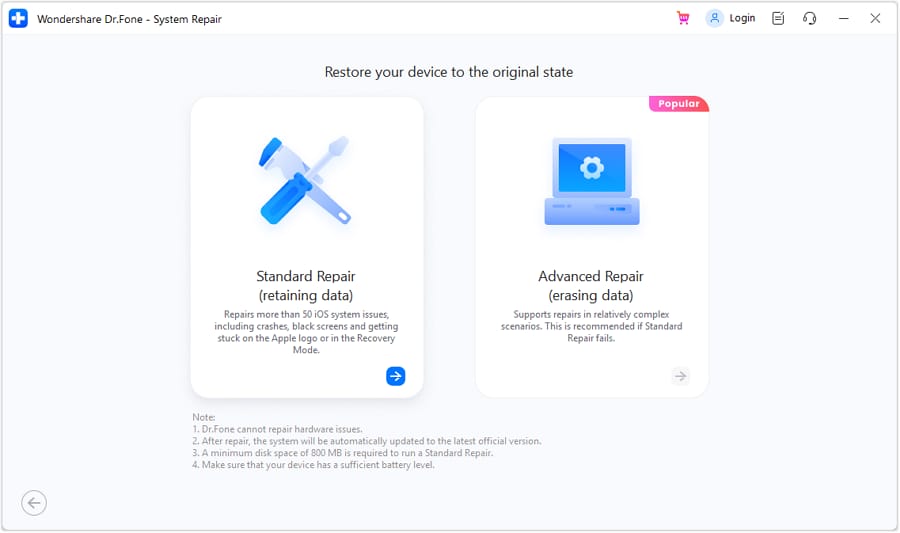
If your AI-assisted triage points to a software-level system problem (boot loop, stuck logo, recovery mode loop, failed update) and your iPhone is still detectable or at least consistently enters a connect-to-computer state, a dedicated iOS system workflow is the practical next step. Dr.Fone - System Repair (iOS) is relevant here because it’s built to execute an iOS repair process in a guided way—after you’ve already decided (with AI) that you should prioritize low-risk system repair actions over repeated restores or random reboot cycles.
 Fix iOS issues, no data loss.
- One-click repair for all iOS problems.
- Solve recovery mode, Apple logo, black screen, etc.
- Upgrade or downgrade iOS without iTunes
-
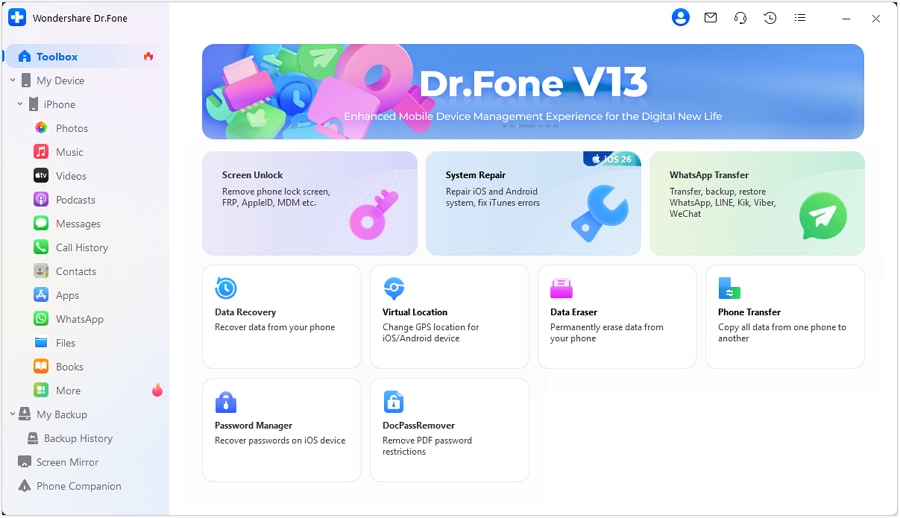
Step 1 Install and open Dr.Fone
Download and launch Dr.Fone on your computer, then choose System Repair (iOS) so you stay focused on system-level symptoms rather than trial steps.
-
Step 2 Connect your iPhone reliably
Connect with an MFi-certified cable and a stable USB port, and avoid hubs/adapters to reduce mid-process disconnect risk.
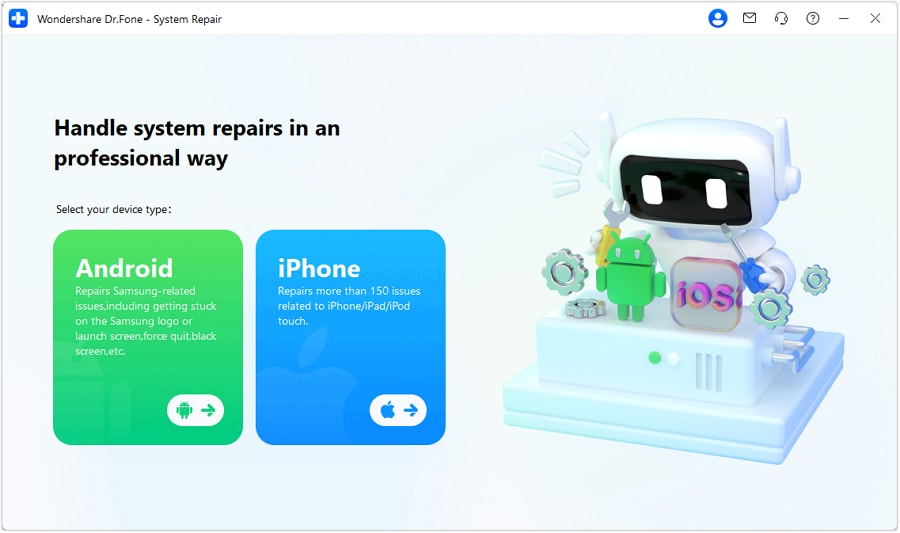
-
Step 3 Select the iOS repair workflow
Choose the iOS system repair option that matches your situation, and follow on-screen guidance to place the device into the required mode if prompted.
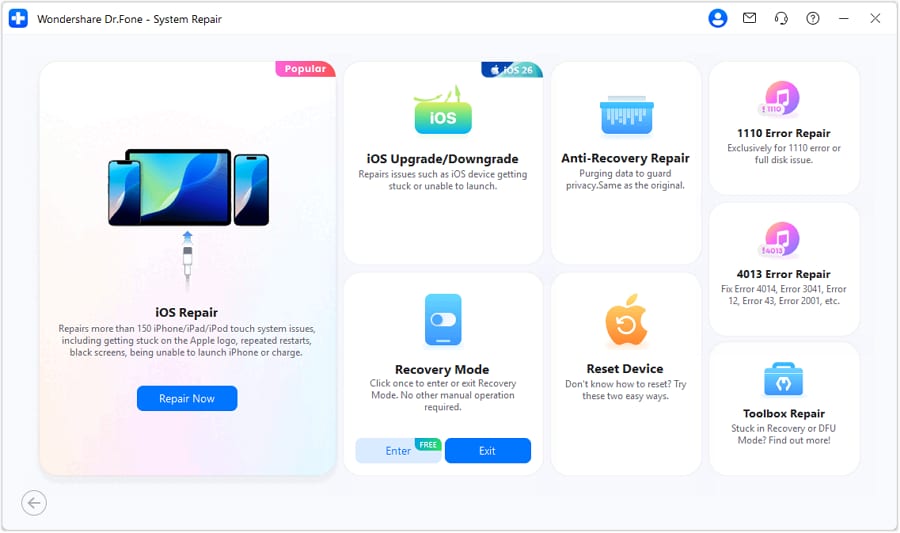
-
Step 4 Run the repair process
Start the repair and keep the computer powered and connected until completion to avoid interruptions that can worsen boot issues.
-
Step 5 Re-check the original symptoms
After the process, confirm whether the boot loop, Apple logo freeze, or recovery mode loop is resolved before attempting updates or restores again.




Conclusion
Use AI to structure the evidence, rank whether the issue is more likely software or motherboard-related, and choose low-risk next steps; then hand off execution to a controlled iOS system workflow (such as Dr.Fone – System Repair) when your diagnosis points to a software-level failure and repeated trial-and-error is becoming risky.
FAQ
-
How can I tell if it’s a motherboard issue or a software issue on iPhone?
Software issues often follow updates/restores and show consistent states (recovery mode, repeatable errors). Motherboard issues are more likely after physical damage, overheating, or when symptoms are inconsistent and detection/charging is unstable.
-
What iPhone symptoms most strongly suggest a motherboard problem?
No response to charging, random shutdowns unrelated to battery level, persistent connectivity failures (cellular/Wi‑Fi/Bluetooth), and repeated disconnects during restore attempts can point toward hardware.
-
Is it safe to keep force-restarting my iPhone during a boot loop?
A few attempts are reasonable, but repeated force restarts can add risk if the device is overheating, has physical damage, or is repeatedly failing mid-restore.
-
Does an iTunes/Finder error code mean hardware failure?
Not always. Some error codes can come from cables, ports, drivers, or corrupted firmware processes; others become more suspicious when they repeat across multiple computers and known-good cables.
-
When is iOS system repair more appropriate than restoring the iPhone?
When the goal is to address system boot/update corruption while minimizing unnecessary data-loss steps—especially if the issue started after an update or failed install and the device can still enter a consistent connection mode.
 Add Wondershare Dr.Fone as a preferred source on Google