Effortlessly manage data through preview, delete, export, etc.

 100% Security Verified | No Subscription Required | No Malware

 :
: 
 ChatGPT
 Perplexity
 Gemini
 Claude
 Grok
Grok

My iPhone got stuck on the Apple logo after I tapped Install Now. I’m scared to try “repair” steps because I can’t lose my photos and chats.
Apple Support Community user
A phone that won’t boot, gets stuck on a logo, or loops after an update can make “repair” feel risky—especially if you’re trying to avoid losing photos, chats, and notes on an iPhone 13 or iPhone 14. This often happens right after tapping Install Now, restoring from a backup, or doing a forced restart, and then nothing seems to change after several minutes.
AI (like ChatGPT or Gemini) can help you describe the symptoms clearly, narrow likely causes, and compare low-risk paths before you take any action that might overwrite data.
AI can’t see your device state or run real checks, so trial-and-error can backfire. The goal is to use AI to reduce guesswork—then use the right tool for execution.
In this article
- Why choosing a phone repair path without data loss is hard—and what it means
- Why “similar” repair options have different data risk
- Why early symptoms overlap
- When waiting vs acting changes the risk
- Before you prompt the AI: what to collect first
- Using AI prompts to diagnose safe repair options
- When to stop troubleshooting to prevent data loss
- A low-risk decision checklist before you “repair”
- Repair iOS system issues safely with Dr.Fone System Repair (iOS)
Part 1. Why choosing a phone repair path without data loss is hard—and what it means
When your iPhone won’t start normally, the “right” repair path depends on what’s actually happening: a software hang, a failed update, storage pressure, a corrupted system component, or a hardware issue. Many repair options look similar on the surface, but differ in data risk.

The tricky part is that early symptoms overlap. A device stuck on the Apple logo could be a temporary update phase, a boot loop caused by low storage, or a deeper iOS system problem—so the safest next step isn’t always obvious.
If you just restarted the phone or attempted an iOS update, it may be unclear whether the device is still processing in the background or genuinely stuck—so choosing a “repair” action too quickly can increase the chance of data loss.
1-1. Before You Prompt the AI
Collect a few specifics first so the AI can narrow causes without guessing:
- iPhone model and iOS version (if known)
- What happened right before the issue (update, restore, storage full, drop, water, etc.)
- Current symptom (stuck logo, boot loop, black screen, frozen, won’t charge)
- How long it’s been in this state
- Any computer available (Mac/Windows) and whether you have a recent backup
- What you already tried (force restart, charging, cable swap, recovery mode)
Part 2. Using AI prompts to diagnose safe repair options
2-1. Level 1: Basic Prompt
My phone is failing to start and I want to choose the safest repair path with the lowest risk of data loss. Ask me the minimum questions needed, then suggest the next 3 lowest-risk actions in order, with a 1–2 sentence reason for each.
2-2. Level 2: Advanced Prompt
Act as a phone boot-issue triage assistant. Based on my answers, rank the most likely causes and rank next steps by data-loss risk (lowest to highest).
Requirements:
1) Separate “safe observation steps” vs “device-mode steps” (recovery/DFU) vs “erase/restore”.
2) For each step, state what evidence would confirm it worked.
3) Flag any step that could increase data-loss risk.
Start by asking no more than 8 questions.
2-3. Level 3: Evidence Prompt
Use the following evidence to diagnose my phone issue and propose a low-risk repair path that prioritizes data retention.
Device: iPhone model (e.g., iPhone 13 Pro)
iOS version: (e.g., iOS 17.x / unknown)
Trigger event: (e.g., tapped Install Now; forced restart; storage nearly full)
Current symptom: (e.g., stuck on Apple logo; boot loop; black screen but vibrates)
Elapsed time: (e.g., 20 minutes; overnight)
Battery/charging signs: (e.g., shows charging icon; no response; gets warm)
Storage situation before issue: (e.g., nearly full / plenty free / unknown)
Any physical incident: (e.g., drop; water exposure; none)
Computer available: (Mac/Windows/none)
Cable/port tried: (original cable / different cable / different port)
Backups: (iCloud recent / computer backup / none / unknown)
What I already tried: (e.g., force restart; waited; recovery mode attempt)
Goal: keep data if possible
Output format:
1) Most likely cause categories (with confidence %)
2) Safest next steps (numbered) with data-risk rating (low/medium/high)
3) What to avoid right now
4) What evidence to collect next
2-4. Prompt Refinement
If the AI response feels generic, use these follow-ups to force clarity and reduce risk:
“What key question(s) are you missing that would change your recommendation the most?”
“Rank the top 5 causes again, but separate them into software, storage/update, battery/charging, and hardware categories.”
“Which step is the lowest risk that also produces new evidence (not just ‘try again’)—and what evidence should I look for?”
“Give me a decision tree with stop conditions at each step so I don’t accidentally escalate to data-loss actions.”
“List 3 signs this is likely hardware-related (and therefore prompting more steps is unlikely to help).”
2-5. AI Output vs Reality
AI can help you choose a path, but it can’t validate the device state the way real tools and device modes do.
| What AI can infer | What you still must verify on the device |
|---|---|
| Symptom patterns that match common iOS boot failures | Whether the phone is truly stuck vs still updating |
| A risk-ranked order of next steps | Whether the device enters recovery mode / is recognized by a computer |
| Which actions are likely to increase data-loss risk | Whether storage, battery, or cable issues are the blocker |
| A short list of evidence to collect next | Whether a repair attempt completes successfully without escalation |
AI reduces guesswork, but execution depends on what the phone and computer actually detect—and some steps are irreversible once started.
Part 3. When to stop troubleshooting to prevent data loss
If your priority is data retention, stopping at the right time is part of a safe repair plan.
- You’re about to choose an option that says Erase, Restore, Reset, or implies wiping content to proceed.
- The phone shows signs of possible hardware trouble (liquid exposure, repeated overheating, visible damage, or no charging response across known-good cables).
- The device repeatedly fails to enter/hold a stable mode (keeps disconnecting, can’t be recognized, loops immediately after each attempt).
- You don’t have a current backup and the next suggested step is a high-risk escalation (like deep restore-level actions) with uncertain benefit.
Once you’ve used AI to narrow the safest path, the next step is choosing an execution method that matches your risk tolerance—ideally starting with a standard iOS system repair approach before anything that wipes data.
Part 4. A low-risk decision checklist before you “repair”
Use this as a quick gate to keep your next action aligned with data retention.
- Clarify the trigger and symptom. Update/restore/forced restart + “stuck logo/loop/black screen” can point to different risks, even when it looks similar.
- Confirm what you can observe safely. Charging signs, heat, vibration, and whether anything changes over time help you avoid rushing into destructive options.
- Prefer steps that create new evidence. For example, whether a computer can recognize the device or whether the phone can enter a stable mode (rather than repeating the same restart endlessly).
- Stop at wipe-language. If a screen or tool path implies erase/restore/reset, pause and confirm backup status and tradeoffs before proceeding.
- Escalate only when the benefit is clear. If the next action is higher risk and you can’t confirm it targets the likely cause, gather more evidence first (or seek hardware assessment if signs point there).
Part 5. Repair iOS system issues safely with Dr.Fone System Repair (iOS)
If your AI triage points to an iOS-level boot problem (stuck logo, boot loop, black screen) and you want a controlled path that prioritizes data retention, Dr.Fone - System Repair (iOS) becomes relevant as the execution layer for “Repair iOS Issues.” It’s designed to run a guided iOS system repair workflow from a computer, which is often the next practical step after you’ve confirmed cables/power and clarified symptoms. Start with the mode intended to preserve data, and only escalate if you accept higher risk and the earlier attempt doesn’t work.
 Fix iOS issues, no data loss.
- One-click repair for all iOS problems.
- Solve recovery mode, Apple logo, black screen, etc.
- Upgrade or downgrade iOS without iTunes
-
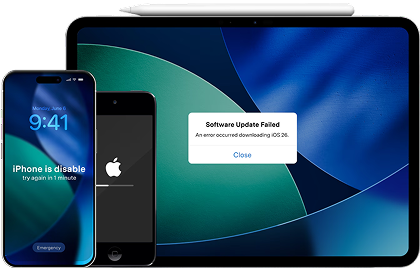
Step 1 Confirm your lowest-risk goal
Choose the repair mode intended to keep user data first, and avoid any option that explicitly indicates erasing unless you’ve decided data loss is acceptable.
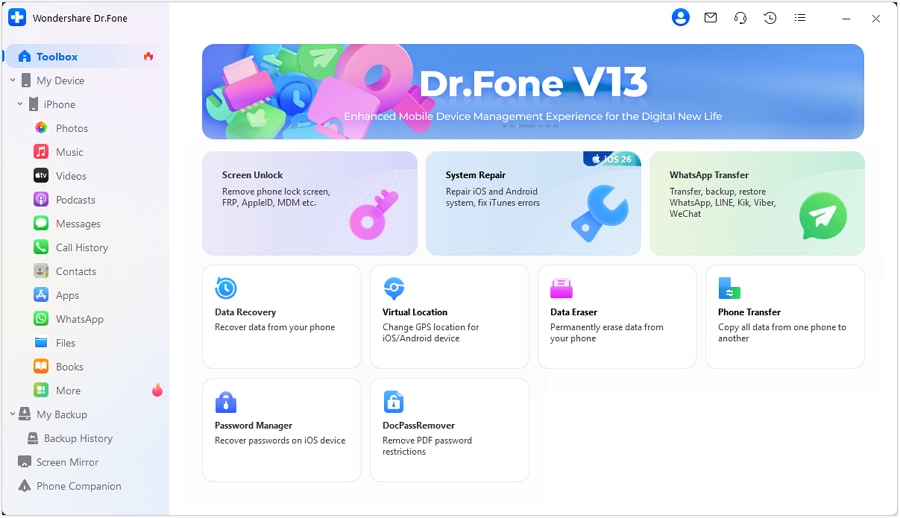
-
Step 2 Connect iPhone to a stable computer setup
Use a reliable cable/port and keep the computer powered (a disconnect mid-process can increase complications).
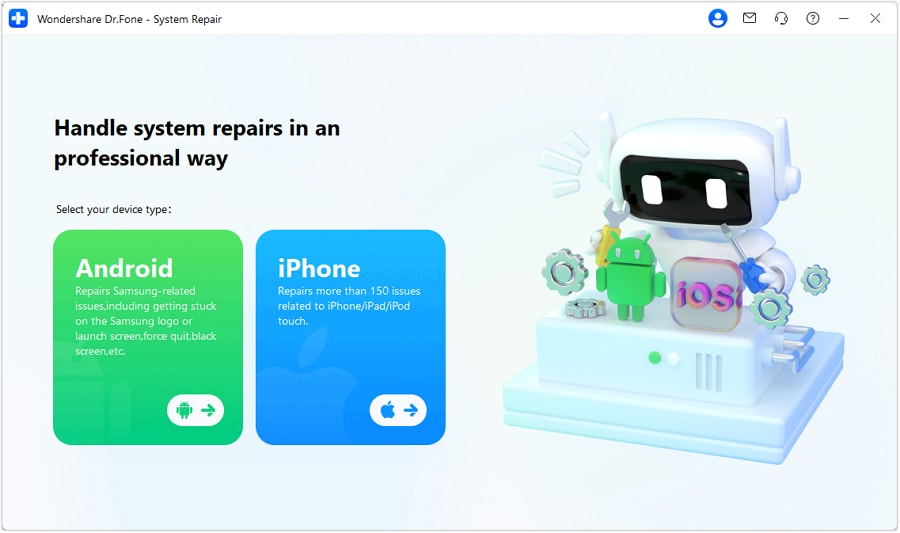
-
Step 3 Run the iOS system repair workflow
Follow the on-screen steps to place the device in the required mode and start the repair process, stopping if the tool indicates an erase-required escalation you didn’t intend.
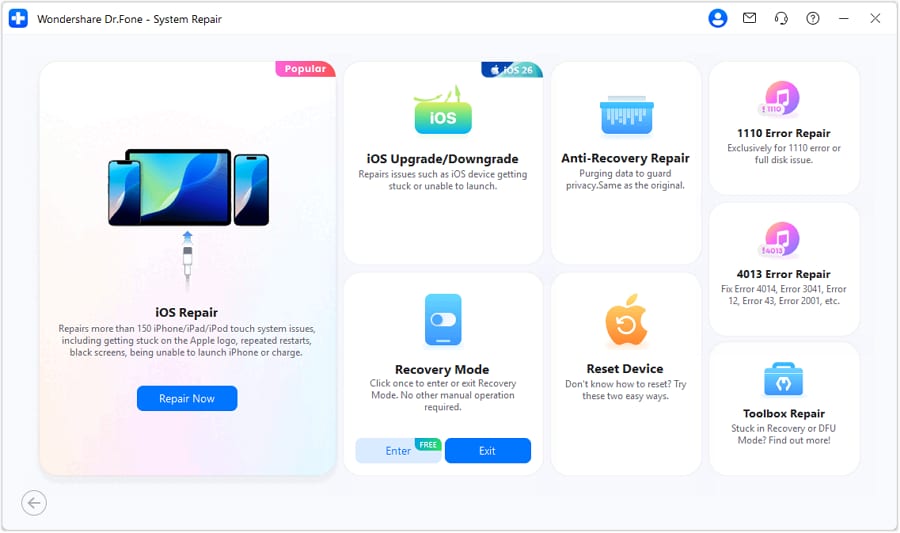
-
Step 4 Re-check boot behavior and data state
After completion, verify whether the device boots normally and whether your key apps/photos are intact before attempting further changes.
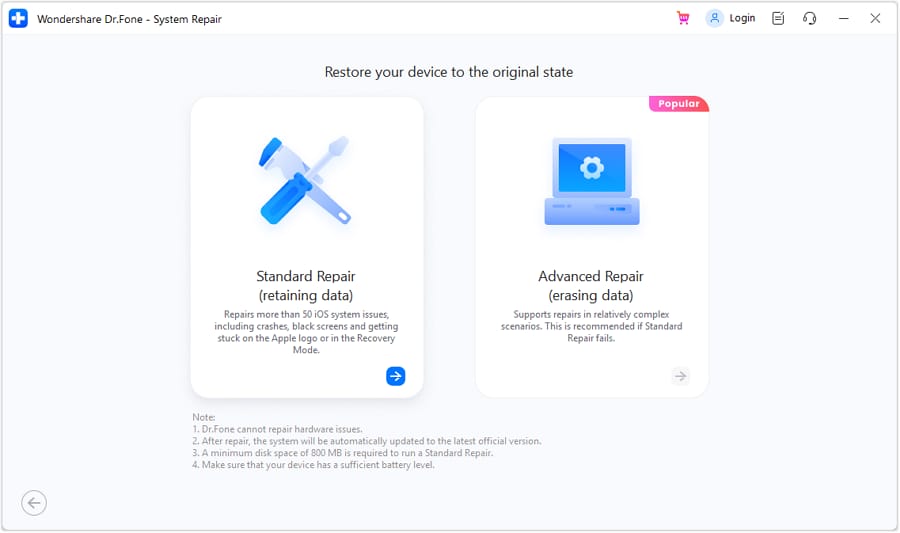
-
Step 5 Escalate only with a clear tradeoff
If the standard approach fails, only proceed to higher-impact options after confirming your backup status and accepting the data-risk tradeoff.




Conclusion
Use AI to translate symptoms into likely causes, rank options by data-loss risk, and decide what evidence you still need—then hand off to an execution tool like Dr.Fone System Repair (iOS) when you’re ready to run a controlled iOS repair workflow without jumping straight to wipe-level steps.
FAQ
-
Does “repair” always mean I’ll lose my iPhone data?
No. Some iOS system repair paths are designed to preserve data, while restore/erase paths typically wipe it. Your first decision is choosing a method that matches your data-risk tolerance. -
How do I know if my iPhone is still updating or actually stuck?
Time and behavior matter: if there’s no progress for an extended period, repeated rebooting, or the phone never reaches the lock screen, it’s more likely stuck than updating. -
What’s the safest first step if I have no recent backup?
Avoid erase/restore wording, collect evidence (symptoms, time, trigger), and prioritize lower-risk steps that produce new information (recognition by a computer, stable charging, consistent boot behavior). -
If my iPhone is in a boot loop, should I keep force restarting it?
Repeated force restarts can be useful once or twice to confirm behavior, but looping endlessly without new evidence usually means it’s time to switch to a structured repair approach rather than repeating the same action. -
When should I assume it’s a hardware problem instead of iOS?
Signs include water exposure, physical impact, no charging response with known-good accessories, overheating, or inconsistent detection by a computer across cables/ports.
 Add Wondershare Dr.Fone as a preferred source on Google