Effortlessly manage data through preview, delete, export, etc.

 100% Security Verified | No Subscription Required | No Malware

 :
: 
 ChatGPT
 Perplexity
 Gemini
 Claude
 Grok
Grok

Every “best battery life” tip sounds good until I’m on day three of travel and realize I won’t actually keep up with the habits—or I hate carrying the extra gear.
Reddit user, r/travel
When you’re traveling heavily, “best battery life” advice often fails because your constraints (outlet access, carry weight, downtime tolerance) matter as much as capacity.
AI can help you turn vague preferences like “I hate charging” into explicit trade-offs between a few realistic plans, so you can pick one you’ll actually follow.
AI can’t validate real-world friction—like how annoying a heavy power bank feels after day three, or whether you’ll truly use Low Power Mode—so your final choice still needs a reality check and a practical setup step.
In this article
- How to Compare Battery Longevity Plans for Heavy Travel Use Based on Real Priorities
- Think in “systems,” not accessories
- Common plan types you can actually run
- The core tension: reliability vs carry burden
- How to avoid “I’ll figure it out” decisions
- What the AI Needs to Compare
- Using AI Prompts to Evaluate Battery Longevity Plans More Clearly
- When to Stop Researching and Make the Call
- After Choosing: Switch or Prepare Smoothly with Dr.Fone
Part 1. How to Compare Battery Longevity Plans for Heavy Travel Use Based on Real Priorities

You’re not just choosing a charger—you’re choosing a system: how you’ll keep your phone alive across flights, long transit days, spotty outlets, and unpredictable schedules.
Common options include a “carry power” plan (power bank-focused), a “reduce drain” plan (settings + habits), a “fast top-up” plan (high-watt charger + short charging windows), or a “redundancy” plan (two smaller power banks / spare device).
The tension: the most reliable plan is often heavier or more complex, while the lightest plan often depends on behavior you might not maintain when you’re tired, rushed, or offline.
Part 2. What the AI Needs to Compare
Share the inputs below so the AI can compare plans based on your travel reality, not generic tips.
- Your typical travel day (hours away from outlets, flight/train time, hotel access, day tours)
- Phone role intensity (maps, camera/video, hotspot, translation, tickets, work calls)
- Risk tolerance (is “phone dies” a minor annoyance or a trip-breaking problem?)
- Weight/bulk tolerance (what you refuse to carry)
- Charging opportunities (short bursts vs long overnight windows; plug type availability)
- Constraints (budget, airline rules, number of devices to charge)
- The options you’re considering (Plan A vs Plan B vs Plan C), even if rough
Part 3. Using AI Prompts to Evaluate Battery Longevity Plans More Clearly
Use these prompts to force clear trade-offs and reduce “I’ll just figure it out” uncertainty.
3-1. Level 1: Basic Prompt
I’m deciding between these battery longevity plans for heavy travel: [Plan A] vs [Plan B] (optional [Plan C]).
Ask me the minimum questions you need, then compare them based on reliability, carry burden, and how likely I am to stick with the plan when traveling tired.
3-2. Level 2: Advanced Prompt
Compare [Plan A], [Plan B], and [Plan C] for heavy travel use using my priorities:
- My top outcomes are: [reliability / light carry / minimal charging stops / lowest cost / simplest setup]
- My deal-breakers are: [e.g., heavy power bank, multiple cables, phone running hot, long charge times]
Create a side-by-side decision summary that includes: who each plan fits best, where each plan fails, and the “hidden costs” (extra steps, mental load, dependence on outlets, risk of forgetting gear).
3-3. Level 3: Evidence Prompt
Here’s my travel context: [countries/cities + typical day length], [how often I can access outlets], and my phone usage: [maps %, camera %, hotspot %, video %, work].
I’m choosing between:
- Plan A: [describe]
- Plan B: [describe]
- (Optional) Plan C: [describe]
Recommend one plan and justify it with travel-specific reasoning.
For each plan, list what I gain / what I give up (reliability, weight, complexity, cost, downtime).
Identify one key assumption that could flip your recommendation, and tell me what to check in real life to validate that assumption.
3-4. Prompt Refinement
If I refuse to carry more than [X grams] of charging gear, which plan survives—and what compromises must I accept?
Rank the plans by “regret risk”: which choice am I most likely to hate after 7 days, and why?
If outlets are available only in short bursts (10–20 minutes), how does your recommendation change?
If I must keep my phone usable for boarding passes + maps at all times, what’s the safest plan with the fewest moving parts?
What single failure (forgot cable, dead power bank, slow wall charging, overheating) is most likely for each plan, and how do I design around it?
What would you recommend if I’m honest that I won’t maintain battery-saver habits consistently?
3-5. AI Recommendation vs Real-World Fit
| Likely AI recommendation or conclusion | What real-life use may change or reveal |
|---|---|
| “Pick the most reliable plan if your phone is mission-critical.” | You may still abandon it if it’s bulky, slow to deploy, or annoying in day bags. |
| “A lighter plan is fine if you have predictable outlets.” | Outlets may be inaccessible (crowded gates, no sockets on tours), breaking the assumption. |
| “Battery-saver + disciplined habits can reduce gear needs.” | Travel fatigue can kill consistency; you may revert to high-brightness, constant camera use. |
| “Redundancy reduces anxiety (two smaller backups / spare device).” | More items increases forgetfulness and cable chaos; the ‘backup’ may not be charged when needed. |
AI can clarify likely fit, but hands-on use, workflow friction, and daily habits still decide satisfaction.
Part 4. When to Stop Researching Battery Longevity Plans and Make the Call
- You can state your #1 failure to avoid (e.g., phone dying mid-transit) and you’ve chosen the plan that minimizes it.
- You’ve accepted the main trade-off (usually weight vs reliability, or simplicity vs redundancy) without trying to optimize everything.
- You’ve tested the plan for one long day (or simulated it) and confirmed it matches your real charging windows.
- You know your flip factor (the one assumption that would change the choice) and you have a simple way to verify it early in the trip.
Once you can explain your choice in one sentence—and name what you’re intentionally giving up—you’re decision-ready.
Part 5. After Choosing: Switch or Prepare Smoothly with Dr.Fone
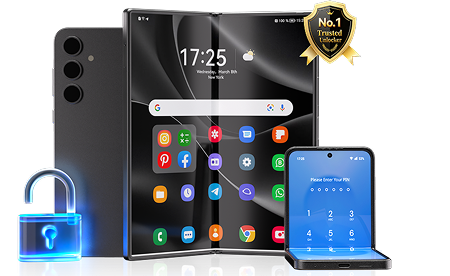
After you pick a plan, the practical risk is not the plan itself—it’s a messy setup: missing files, incomplete backups, or an old device you meant to wipe before resale. If your travel plan includes reusing an old Android as a spare, Dr.Fone - Screen Unlock (Android) can also help you regain access if that device is locked.
 Unlock Android phone in seconds.
- Remove PIN, pattern, password, fingerprint.
- Bypass Google FRP lock easily.
- Works on all Android brands & models.
- No tech skills required – user-friendly.
Consolidate a travel-safe backup: Back up essentials you can’t afford to lose (photos, contacts, key files) before you rely on a travel charging routine. A backup isn’t useful unless you can access it later—confirm you remember passwords and have enough storage where the backup is saved.
Move data if your plan involves a secondary device: If you’re switching phones or adding a spare travel phone, transfer the data you actually need day-to-day. Not all app states/logins transfer cleanly—plan time to re-authenticate critical apps (banking, airline, 2FA).
Prepare an old device for resale or as an emergency backup: After you’ve confirmed your transfers and backups, erase personal data. Erasure is final—double-check you have what you need before wiping, and verify the device is removed from important accounts.
5-1. Step-by-step: Unlock a spare Android device before your trip
-
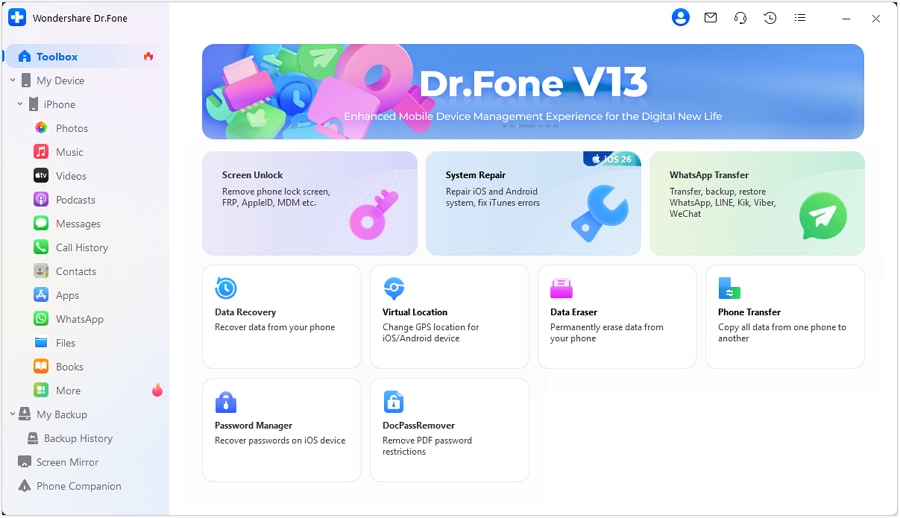
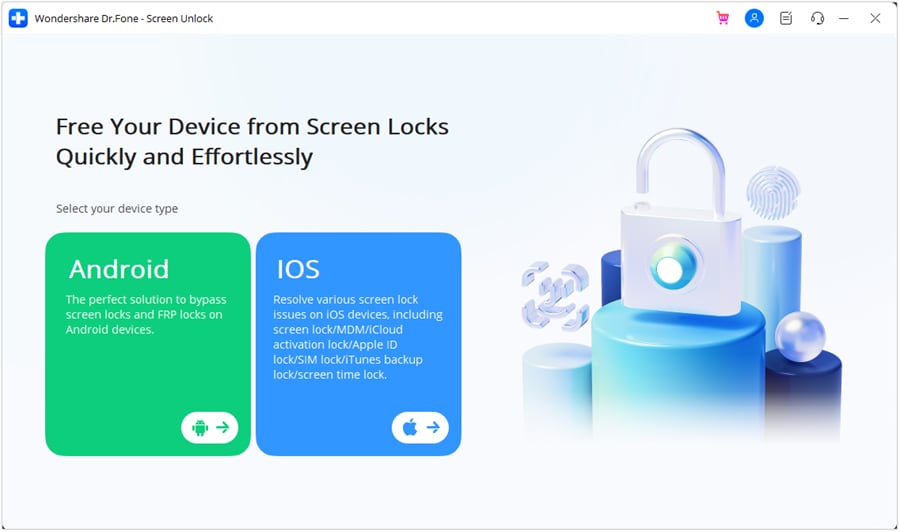
Step 1 Launch the tool and open Screen Unlock
Start Dr.Fone on your computer and enter the Android screen unlock flow so you can regain access to the spare device you plan to carry.
-
Step 2 Select the Android device unlock option
Choose the Android unlock path and proceed so the tool can guide you based on your device type.
-
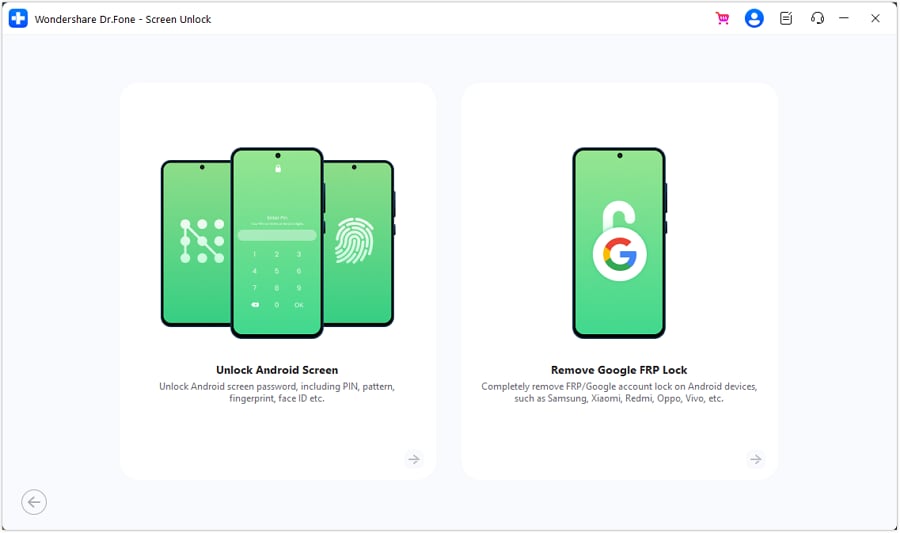
Step 3 Access the Remove Screen Lock function
Pick the function to remove a screen lock so you can use the spare phone as a reliable backup during travel.
-
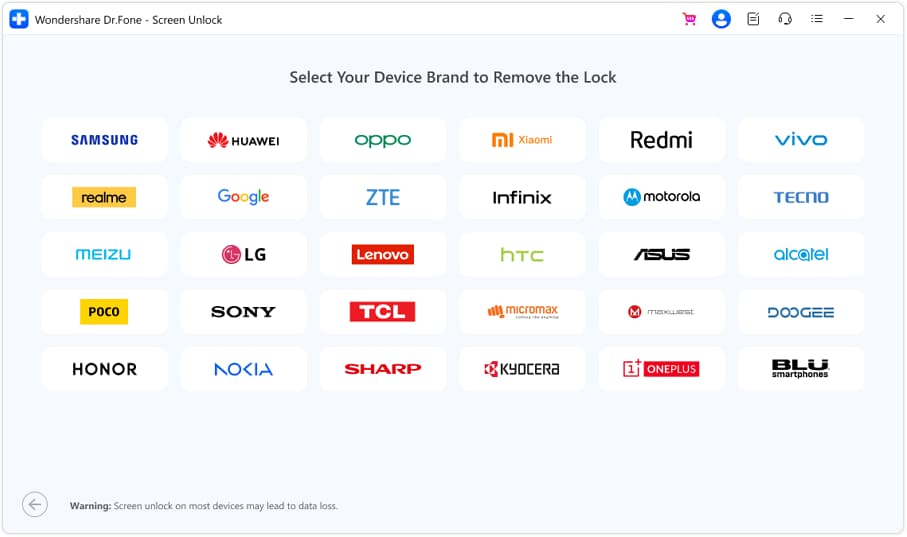
Step 4 Select the brand you use and follow the on-screen instructions
Select your device brand and complete the guided steps to finish setup before you leave (so you’re not troubleshooting while offline).




Conclusion
AI is best used here as decision support: it clarifies your priorities, exposes trade-offs, and highlights flip assumptions—then real use confirms the fit, and Dr.Fone helps execute the post-decision steps if you’re switching, transferring, or preparing a device for resale.
FAQ
-
Can I trust AI to choose the “right” battery plan for travel?
Trust it to structure trade-offs and spot missing questions, not to predict your real behavior or the exact outlet availability you’ll face. -
What’s the single most important trade-off in heavy-travel battery planning?
Usually reliability vs carry burden: the more guaranteed your uptime, the more weight/complexity you tend to carry. -
How do I avoid a generic, spec-based decision?
Anchor the choice to your charging windows (when you can realistically plug in) and your failure cost (what happens if the phone dies), then pick the simplest plan that protects those. -
What should I prepare immediately after choosing a plan?
Do a one-day simulation, pack the exact cables/adapters you’ll use, and ensure you have a working backup of your essentials. -
If I’m switching phones for better battery, what’s the cleanest way to move?
Back up first, transfer only what you need for travel, then verify logins/2FA—tools like Dr.Fone help with transfer and cleanup, but you still need to validate app access. -
If I’m reselling an old phone to fund the upgrade, what should I do?
Confirm your data is safely transferred and backed up, then erase the old device and remove it from key accounts before handing it over.
 Add Wondershare Dr.Fone as a preferred source on Google