Effortlessly manage data through preview, delete, export, etc.

 100% Security Verified | No Subscription Required | No Malware

 :
: 
 ChatGPT
 Perplexity
 Gemini
 Claude
 Grok
Grok

Generic “best phone for accessibility” answers usually fail because accessibility isn’t one feature—it’s a bundle of daily needs, triggers, and workarounds.
Forum user
AI helps by turning “I need something easy” into specific trade-offs (screen reader learning curve, hearing support, one-handed control, captions, shortcut speed) so you can compare options you’re actually considering.
AI can’t verify hands-on feel, friction in your real routines, or how reliably a specific model behaves with your apps and accessories—so after you decide, setup and real-world testing still matter.
In this article
- Part 1. Compare hidden accessibility features by real priorities
- Why “best phone for accessibility” comparisons fail
- What the AI needs from you
- The trade-offs that actually decide daily comfort
- How to frame a 20-minute real-world trial
- Part 2. Use AI prompts to evaluate iPhone vs Android more clearly
- Part 3. AI recommendation vs real-world fit
- Part 4. When to stop researching and make the call
- Part 5. After choosing: switch or prepare smoothly with Dr.Fone
Part 1. Compare hidden accessibility features by real priorities
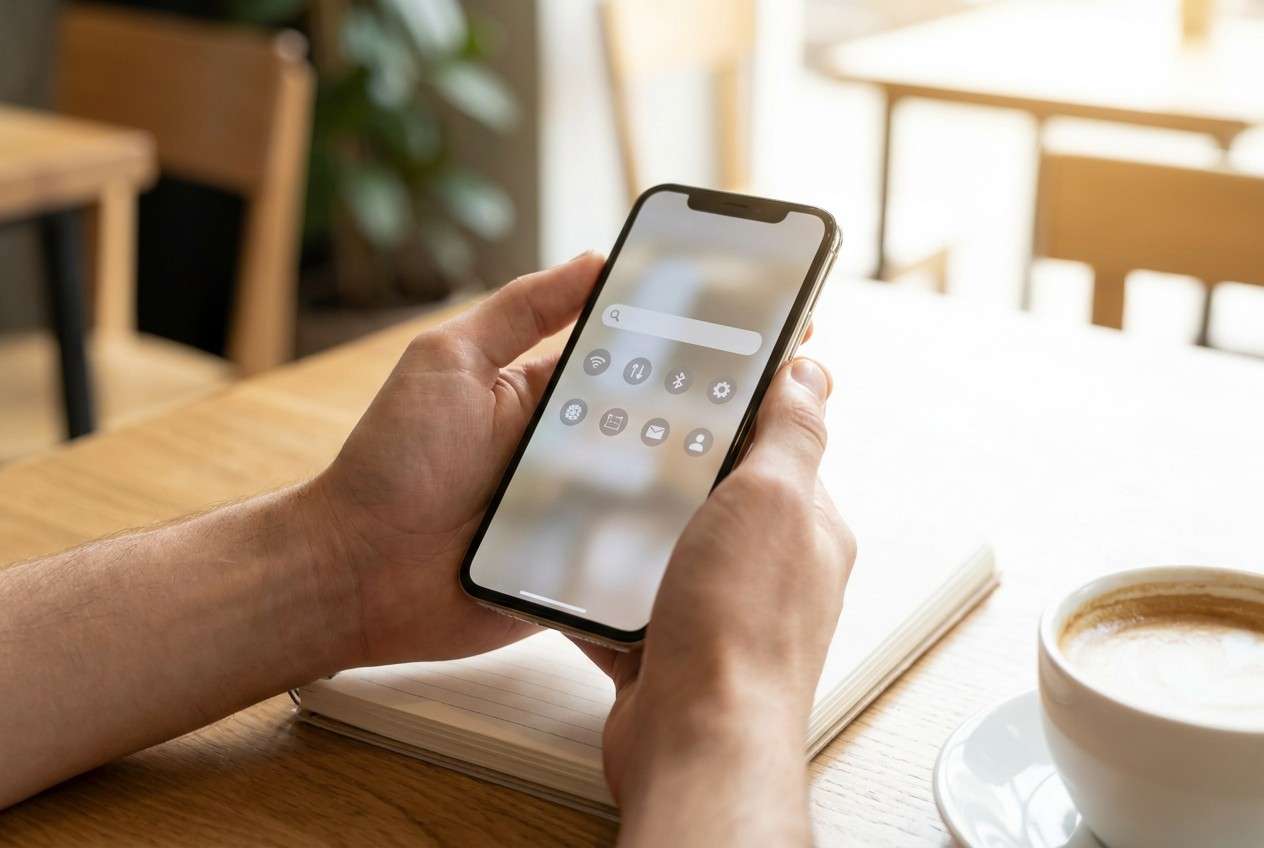
Most modern phones have deep accessibility menus, but the names, locations, and defaults vary—so it’s easy to miss the one setting that would have solved your daily pain point.
1-1. Why “best phone for accessibility” comparisons fail
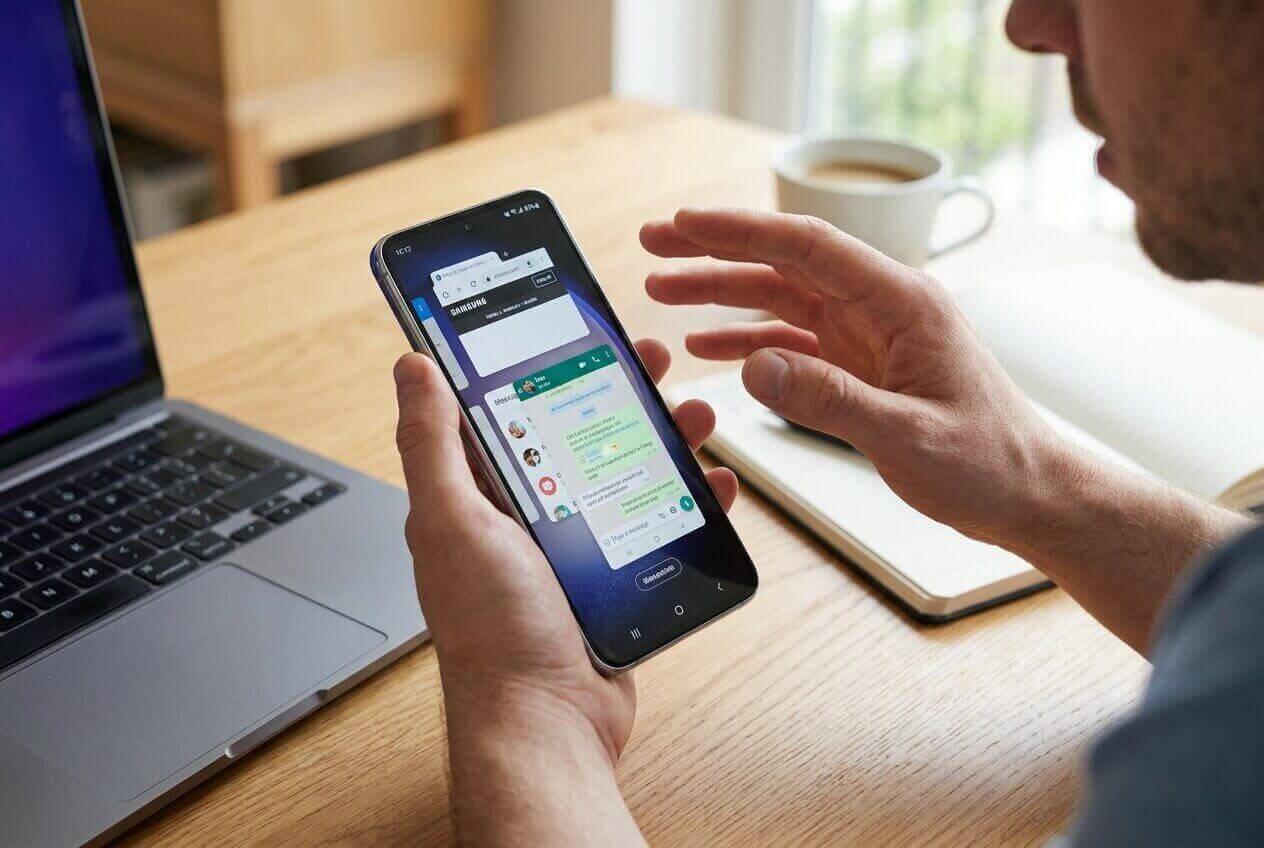
The usual uncertainty is not “which phone has accessibility,” but “which phone makes my accessibility actions faster and more reliable—every day”—especially if you rely on a screen reader, captions, hearing devices, switch access, magnification, or reduced motion.
1-2. What the AI needs from you
Share the options and what “accessible” means in your day-to-day, not just in theory.
- The two options you’re choosing between (e.g., iPhone (iOS) vs Android; or specific models if you already narrowed it)
- Your top 3 tasks that must be easy (calls, messaging, navigation, reading, camera, banking apps, work apps)
- Your key needs (pick what applies): screen reader, magnification, large text, color filters/contrast, reduced motion, voice control, switch control, hearing support, captions, sound recognition, one-handed use, haptic feedback
- Your “can’t tolerate” friction (missed taps, complex gestures, inconsistent UI, buried toggles, accidental touches)
- Accessories and constraints (hearing aids/BT devices, external keyboard, switch devices, car system, budget, carrier)
- Your switching tolerance (do you want minimal setup, or are you OK investing time to customize?)
1-3. The trade-offs that actually decide daily comfort
The real tension: one option may feel more consistent and predictable, while another may offer more customization and device variety—but cost you time in setup and troubleshooting.
1-4. How to frame a 20-minute real-world trial
AI can help you plan what to test, but the fastest way to avoid regret is a short trial focused on your top apps, your must-have accessibility feature, and the speed/reliability of the toggle or shortcut under stress (calls, navigation, noisy environments, one-handed use).
Part 2. Use AI prompts to evaluate iPhone vs Android more clearly
Use these prompts to force a trade-off-based comparison you can actually decide from.
2-1. Level 1: Basic Prompt
I’m choosing between [Option A] and [Option B] mainly for accessibility.
My top needs are [need 1] [need 2] [need 3], and I use my phone most for [task 1] [task 2].
Compare the options by likely day-to-day usability and point out the biggest trade-offs.
2-2. Level 2: Advanced Prompt
Help me decide between [Option A] and [Option B] for accessibility using my priorities.
My priorities (ranked) are: 1) [priority] 2) [priority] 3) [priority].
My deal-breakers are [deal-breakers] and my setup tolerance is [low/medium/high].
Give me:
- A side-by-side comparison focused on screen reader/magnification/captions/hearing support/shortcuts (only the areas I listed)
- “Who this suits better” for each option
- A short “what you gain / what you give up” summary for each option
2-3. Level 3: Evidence Prompt
Context: I have [vision/hearing/motor/cognitive] accessibility needs.
I currently use [current phone] and struggle most with [specific friction: e.g., missed taps, reading small text, phone calls, noisy environments, gesture complexity].
I’m choosing between [Option A] and [Option B].
My must-have features are [must-haves] and my nice-to-haves are [nice-to-haves].
I’m willing to spend [time] on setup and I rely on [apps/accessories].
Recommend one option and justify it with:
- What I gain and lose with each choice in real use
- The most likely regret point for each option
- One key assumption you’re making that—if false—would flip your recommendation (tell me how to test that assumption quickly)
2-4. Prompt Refinement (follow-ups)
List the top 5 questions you still need me to answer to avoid a vague recommendation, and explain why each question matters.
Give me a decision tree: if I prioritize speed of access vs depth of customization vs consistency across apps, which option tends to fit best—and where are the exceptions?
Identify the hidden friction points that don’t show up on spec sheets (gesture learning, shortcut discoverability, inconsistent app support, accessory pairing stability) and tell me what to watch for in a 20-minute trial.
Based on my needs, tell me which matters more: the accessibility feature existing or how fast I can toggle it, and how that changes the choice.
Write a “regret minimizer” plan: if I choose Option A, what should I test in the first 48 hours to confirm I won’t regret it?
Do the same for Option B.
Part 3. AI recommendation vs real-world fit
| likely AI recommendation or conclusion | what real-life use may change or reveal |
|---|---|
| “Choose the option that best matches your top need (screen reader vs captions vs hearing support vs motor access).” | Your most-used apps may behave differently with screen readers, large text, or voice control than the system menus suggest. |
| “If you want consistency and fewer variables, pick the more uniform ecosystem.” | The specific model, OS version, and default apps you rely on can still introduce friction (notifications, keyboards, gesture conflicts). |
| “If you want more customization and hardware choice, pick the more flexible option.” | More customization can mean more setup time—and more places for settings to reset or interact unexpectedly. |
| “Your deal-breaker is shortcut speed; choose the option with faster access to toggles.” | Shortcut speed may be offset by accidental triggers, lock-screen behavior, or how reliably the shortcut works during calls/navigation. |
AI can clarify likely fit and surface trade-offs, but hands-on use, workflow friction, and daily habits still decide satisfaction—especially when accessibility depends on speed, reliability, and muscle memory.
Part 4. When to stop researching and make the call
- You can name one primary outcome you’re optimizing for (e.g., “fast, reliable screen reader navigation” or “captions in noisy places”) and you know which option supports that outcome better for you.
- You’ve identified the single biggest trade-off you’re accepting (e.g., less customization for consistency, or more setup for flexibility) and you’re comfortable with it.
- You’ve listed two quick tests you’ll run in the first day (your top apps + your top accessibility toggle) to confirm the choice.
- You know what would make you switch back, and it’s unlikely given your priorities (your “flip factor” is understood).
At this point, you’re not missing information—you’re mainly deciding whether to accept the trade-off you already see.
Part 5. After choosing: switch or prepare smoothly with Dr.Fone
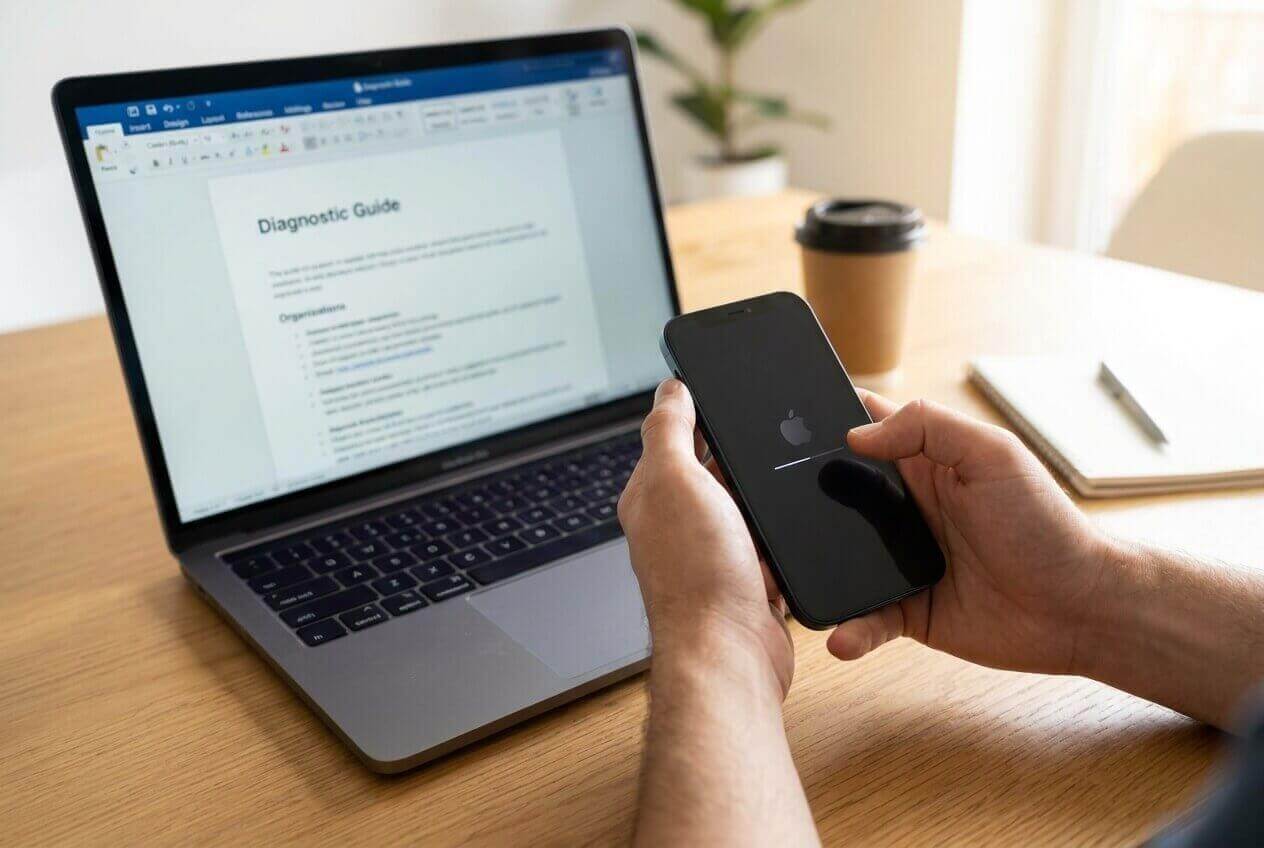
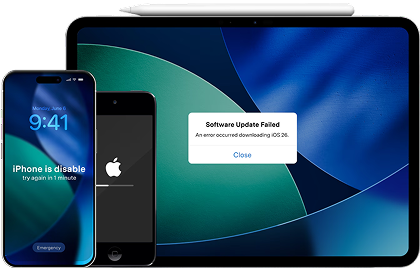
Once you’ve chosen, the next risk is not the decision—it’s losing time (or data) during switching, setup, or resale preparation, which can delay you from actually benefiting from the accessibility improvements. If you run into iOS setup friction (boot loops, stuck screens, or update failures), Dr.Fone - System Repair (iOS) can help you repair system-level issues so you can get back to configuring accessibility settings faster.
 Fix iOS issues, no data loss.
- One-click repair for all iOS problems.
- Solve recovery mode, Apple logo, black screen, etc.
- Upgrade or downgrade iOS without iTunes
5-1. Switch prep: move essentials, reduce clutter, and hand off safely
- Transfer what you truly need first: Move your essential data (contacts, photos, messages where supported, key files) so your first-day accessibility setup isn’t blocked by missing basics. Limitation: Some app data and certain content types may not transfer fully due to app/platform restrictions.
- Reduce clutter that slows accessibility workflows: Clean up duplicates or unnecessary media so search, sharing, and storage warnings don’t interrupt daily routines. Limitation: Cleanup still requires your review to avoid deleting items you rely on (especially reference photos, documents, or medical info).
- Prepare the old phone for handoff or resale: After confirming the new phone works, back up/export what matters, then proceed to reset so nothing important is left behind. Limitation: Always confirm you can access critical accounts and 2FA on the new device before wiping the old one.
5-2. If iOS system issues block setup, use System Repair (Standard Mode)
-
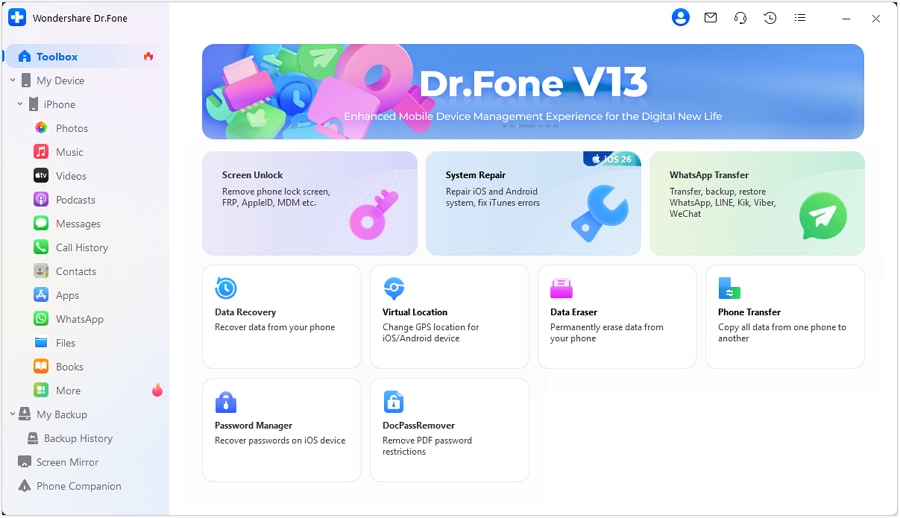
Step 1 Open Dr.Fone on your computer
Launch Dr.Fone so you can access the toolbox and select the repair workflow.
-
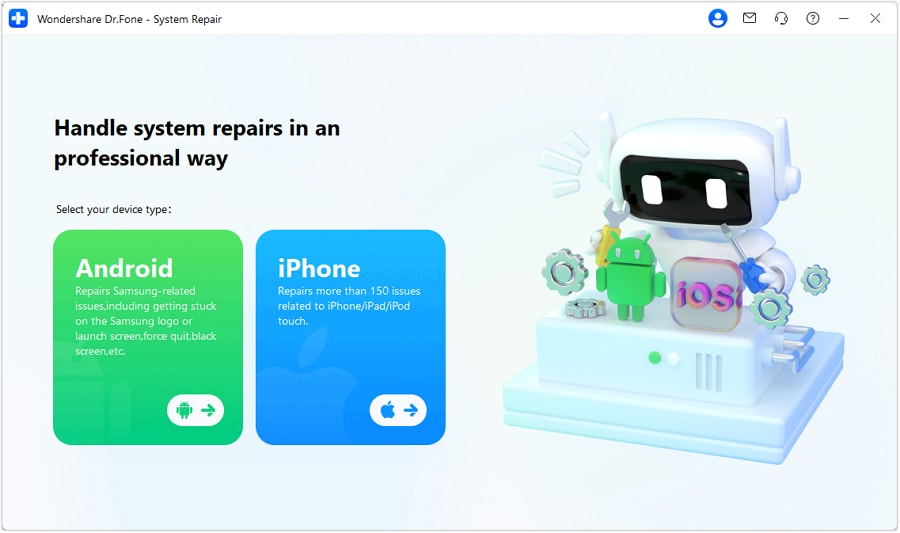
Step 2 Choose System Repair and select iOS
Enter the System Repair module and pick iOS to match the device you’re fixing.
-
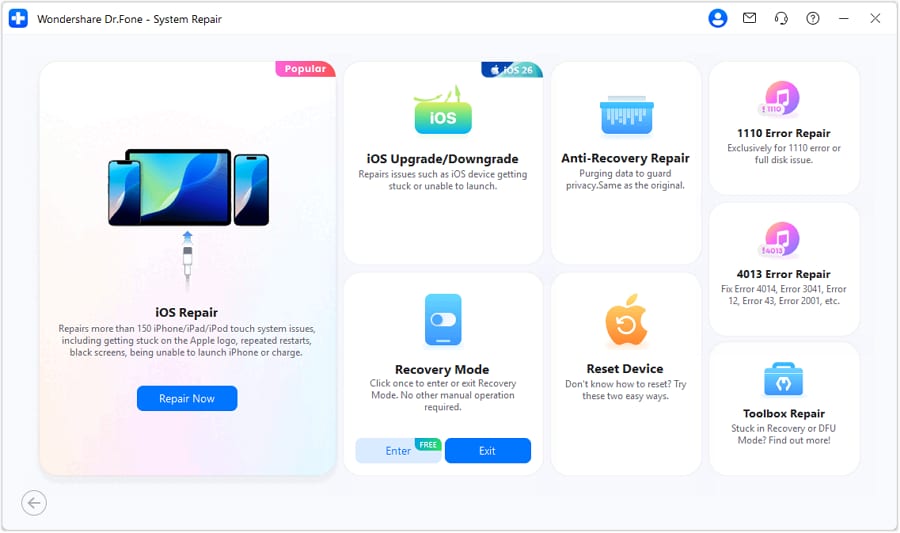
Step 3 Continue to iOS repair
Proceed through the iOS repair flow to let the tool prepare the correct repair path.
-
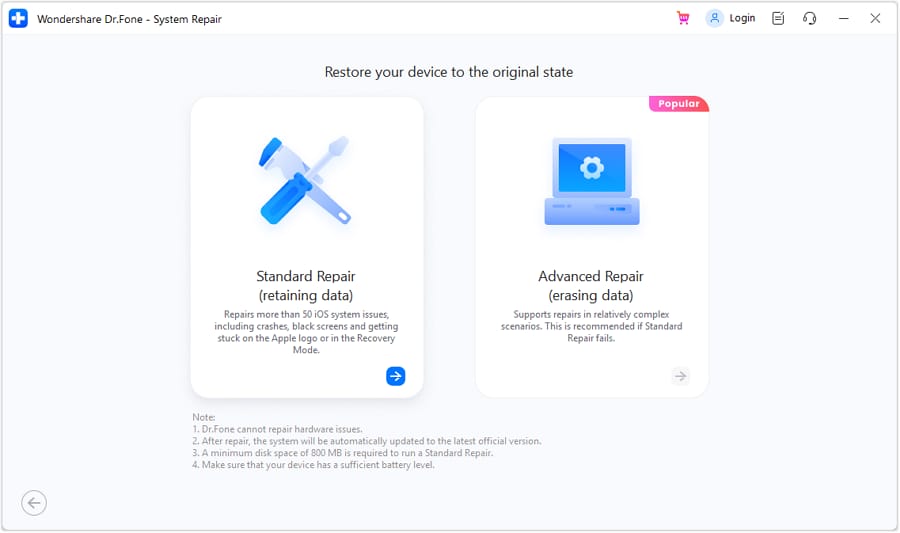
Step 4 Use Standard Mode to repair and resume setup
Choose Standard Mode and follow the on-screen instructions to repair system-level errors so you can return to finishing setup and configuring accessibility settings.




Conclusion
AI is best used to clarify priorities, expose trade-offs, and reduce decision ambiguity—but real use is the final proof; once you’ve chosen, tools like Dr.Fone help you execute the switch, cleanup, or resale prep smoothly so the accessibility benefits show up in daily life.
FAQ
-
Can I trust AI to compare accessibility fairly?
Use AI to structure trade-offs and questions, not to “verify” how a device feels. Treat its output as a decision framework you validate with a short hands-on test.
-
What’s the most important trade-off to decide early?
Usually: consistency and predictability vs customization and device variety. That single preference changes which option will feel easier every day.
-
How do I avoid getting stuck in spec-based comparisons?
Anchor the comparison on your top 2–3 tasks and one “speed requirement” (how quickly you must toggle magnification/captions/screen reader). If you can’t state those clearly, specs won’t help.
-
What should I test first after I choose?
Test your top apps with your must-have accessibility feature enabled (screen reader, captions, magnification, voice control, switch access) and check whether the shortcut/toggle is fast enough to use under stress.
-
If I’m switching phones, what should I prepare before moving data?
Make a short checklist: critical accounts, 2FA method, contacts, photos, and any accessibility settings you rely on (text size, audio routing, shortcuts). Plan to keep the old phone available until you confirm everything works.
 Add Wondershare Dr.Fone as a preferred source on Google