Effortlessly manage data through preview, delete, export, etc.

 100% Security Verified | No Subscription Required | No Malware

 :
: 
 ChatGPT
 Perplexity
 Gemini
 Claude
 Grok
Grok

I factory reset my Samsung and it still gets stuck at the logo or loops right back into setup. I thought a reset would fix it, but it’s basically the same problem again.
Samsung Community user
A factory reset is supposed to clear stubborn Android problems, but sometimes the same boot loops, crashes, or “Setup Wizard” failures return right after you tap Erase all data (factory reset) and reboot. It can happen on a Samsung Galaxy device, and it can feel especially confusing if you recently switched from an iPhone 13 or iPhone 14 and expected a reset to “just work.”

AI tools like ChatGPT or Gemini can help you analyze symptoms, narrow down likely causes (software corruption vs. firmware mismatch vs. hardware signs), and choose low-risk next steps based on what you can still access (Recovery Mode, Download Mode, Safe Mode).
AI can’t verify what’s truly happening inside your phone, and repeated trial-and-error (extra wipes, random button combos, risky flashing) can raise the chance of data loss or make the device harder to recover—so use prompts to guide decisions, then use purpose-built tools for execution.
In this article
- Part 1. Why factory reset doesn’t fix Android problems
- When a reset “does nothing”
- Common triggers after updates or crashes
- What category the failure likely falls into
- Before You Prompt the AI
- Part 2. Using AI prompts to diagnose Android issues after factory reset
- Part 3. When to stop troubleshooting persistent Android problems
- Part 4. Repair Samsung firmware issues with Dr.Fone System Repair
- Part 5. Quick checklist before you take action
Part 1. Why factory reset doesn’t fix Android problems
When a reset “does nothing,” it usually means the issue isn’t in the user data partition alone. For example, the phone may reset successfully, but it still reboots at the logo, freezes on Checking for updates, or fails during the initial setup.
A common trigger is resetting after a failed update, storage-full crash, malware-like behavior, or repeated forced restarts. You may notice nothing changes after 10–20 minutes, or it’s unclear whether the phone is stuck or still processing.
In these cases, you’re typically deciding between: system-level corruption, firmware/boot problems, account lock or setup blockage, or hardware symptoms that a reset won’t touch.
1-1. Before You Prompt the AI
Collect the basics first so the AI can classify the failure accurately:
- Phone brand/model (Samsung, Pixel, Xiaomi, etc.)
- Android version (if known) and what happened right before the problem
- Current state: boots fully, boot loop, stuck logo, stuck setup, random reboots
- Access you still have: Recovery Mode / Download Mode / Safe Mode / ADB
- Any on-screen errors (exact words), heat, swelling, or water-drop history
Part 2. Using AI prompts to diagnose Android issues after factory reset
2-1. Level 1: Basic Prompt
My Android phone still has issues after a factory reset. Ask me the minimum questions needed to identify the most likely cause, then suggest the safest next step that doesn’t increase data loss risk.
2-2. Level 2: Advanced Prompt
You are diagnosing an Android problem where a factory reset didn’t resolve it.
1) Give me a ranked list of the top 5 likely causes based on my symptoms.
2) For each cause, list the key evidence that would confirm/deny it.
3) Recommend the lowest-risk next step first, and flag any step that could increase data loss or trigger account locks.
Start by asking only the questions you truly need.
2-3. Level 3: Evidence Prompt
Help me diagnose why a factory reset didn’t fix my Android phone. Use my details to: (a) classify the failure type, (b) rank likely causes, (c) propose low-risk tests, and (d) tell me what to avoid.
Device info
- Brand/model: (e.g., Samsung Galaxy S21)
- Region/carrier: (if known)
- Android version: (e.g., Android 13)
- Storage before reset: (e.g., nearly full / unknown)
What happened before the reset
- Trigger event: (e.g., tapped Install Now for an update, then it restarted)
- Any drops/water/heat: (yes/no/unsure)
After the reset
- Current symptom: (boot loop / stuck on logo / stuck on setup / crashes)
- Time it stays on one screen: (e.g., 30 seconds, 10 minutes)
- Exact error text: (if any)
Access & modes
- Can enter Recovery Mode? (yes/no)
- Can enter Download/Fastboot mode? (yes/no)
- Can enter Safe Mode? (yes/no)
- Can a PC detect it? (yes/no/unsure)
Goal & constraints
- Priority: (get it booting / keep data if possible / just make it usable)
- What I already tried: (list)
Output format:
1) Failure category (one line)
2) Ranked causes with reasoning (bullets)
3) Low-risk next steps (numbered)
4) “Do not do” list (bullets)
2-4. Prompt Refinement
Use these follow-ups to make the AI’s answer more specific and safer:
What 3 missing details would most change your ranking, and why?
Separate your causes into: software corruption, firmware mismatch, account/setup blockage, and hardware indicators.
Rank the causes again assuming I can enter Recovery Mode, and then rank them assuming I cannot.
Which single observation on my screen is the strongest evidence, and what should I check next to confirm it?
What actions are highest risk for data loss or account locks in my situation?
2-5. AI Output vs Reality
AI can guide decisions, but it can’t validate the device state the way real tools can.
| What AI can suggest | What you still must verify |
|---|---|
| Likely cause ranking based on symptoms | Whether the phone can reliably enter key modes |
| Safer order of checks (lowest risk first) | Exact error messages and repeatability |
| What to avoid (risky loops, random flashing) | PC recognition, cable/port stability, drivers |
| Decision points (software vs. firmware vs. hardware signs) | Whether repair steps complete successfully |
AI closes the reasoning gap; execution still depends on what the phone actually allows (modes, detection, stability) and on using the right repair method for the device.
Part 3. When to stop troubleshooting persistent Android problems
If your prompts keep circling the same options, use these stop signals to avoid making the situation worse:
- The phone shows heat, swelling, burning smell, or liquid exposure signs.
- The device can’t stay powered long enough to complete any step (shuts off mid-boot repeatedly).
- You see new errors after each attempt (symptoms worsening after wipes/restarts).
- You’re about to try high-risk steps you don’t understand (random firmware packages, unknown tools, repeated wipes).
Once you’ve used AI to narrow the likely cause and the safest path, the next step is choosing an execution method that matches your device state (especially for Samsung firmware-level issues).
Part 5. Quick checklist before you take action
If you want better AI guidance (and fewer risky “guessing” steps), prepare these items and confirm what you can actually access.
- Your exact phone brand/model and (if you know it) Android version/region/carrier.
- What happened right before the failure (update attempt, storage-full crash, repeated restarts, unusual behavior).
- The current state (boot loop, stuck logo, stuck setup, random reboots) and how long it stays on one screen.
- Whether you can enter Recovery Mode, Download/Fastboot mode, Safe Mode, or whether a PC detects the device.
- Exact on-screen error text, plus any physical warning signs (heat, swelling, liquid exposure history).
Part 4. Repair Samsung firmware issues with Dr.Fone System Repair
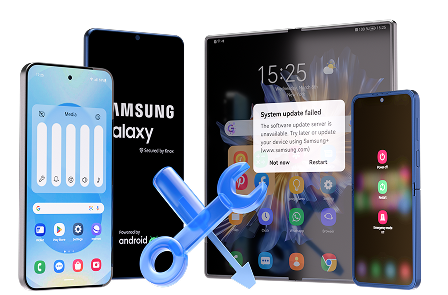
If your Android—especially a Samsung—still won’t boot or can’t finish setup after a reset, your AI diagnosis may be pointing to system/firmware-level damage rather than user-data problems. At this stage, you typically need a tool that can carry out a structured system repair workflow instead of repeating resets. Dr.Fone - System Repair (Android) is relevant here because it’s designed to execute guided repair steps for Samsung phone system issues, based on the device model and repair mode, rather than ad-hoc trial-and-error.
 Fix Android instantly – no skills needed.
- Solve boot loop, black screen, won’t turn on, etc.
- High success rate for all system issues.
- User-friendly interface with easy-to-follow steps.
-
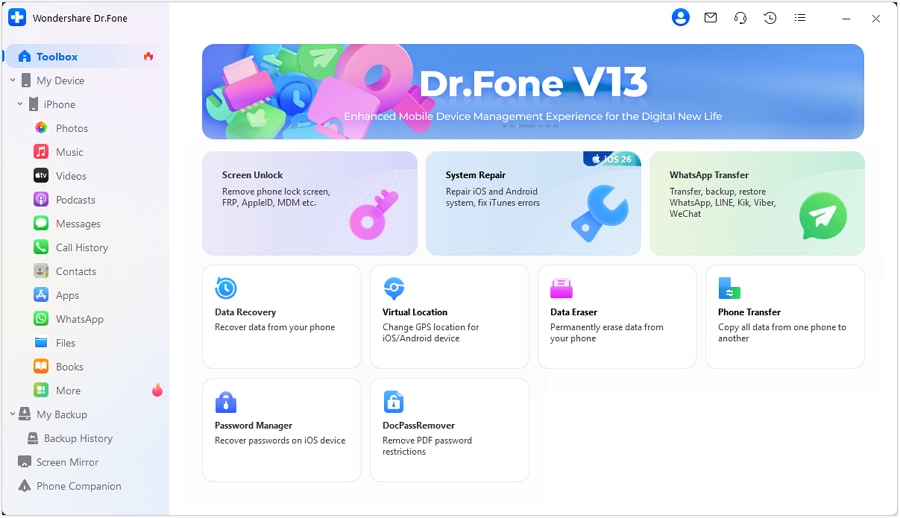
Step 1 Open System Repair (Android)
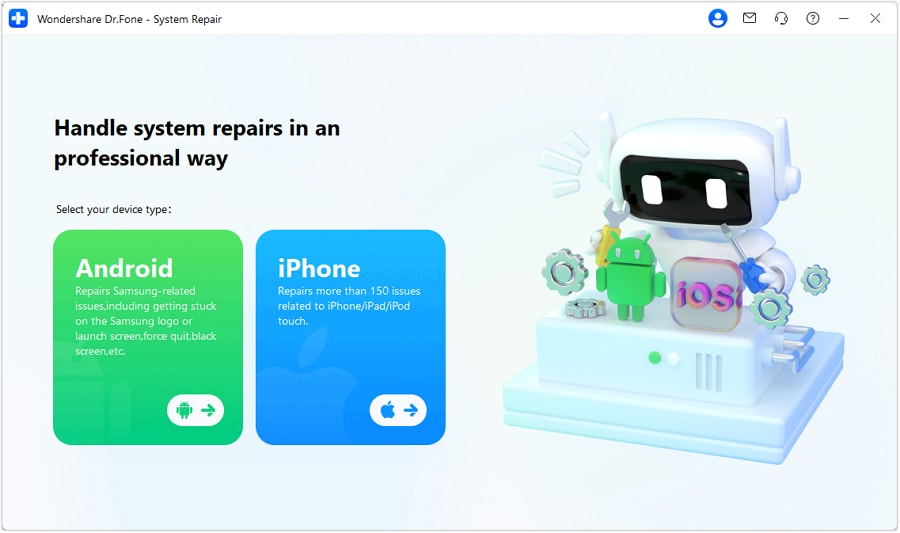
Launch Dr.Fone and select System Repair (Android), ensuring you choose the Android module (not iOS) and keep the phone charged to avoid interruptions.
-
Step 2 Connect the phone to a computer
Use a reliable USB cable/port and connect directly (avoid hubs) so the device stays stable during detection and mode switching.
-
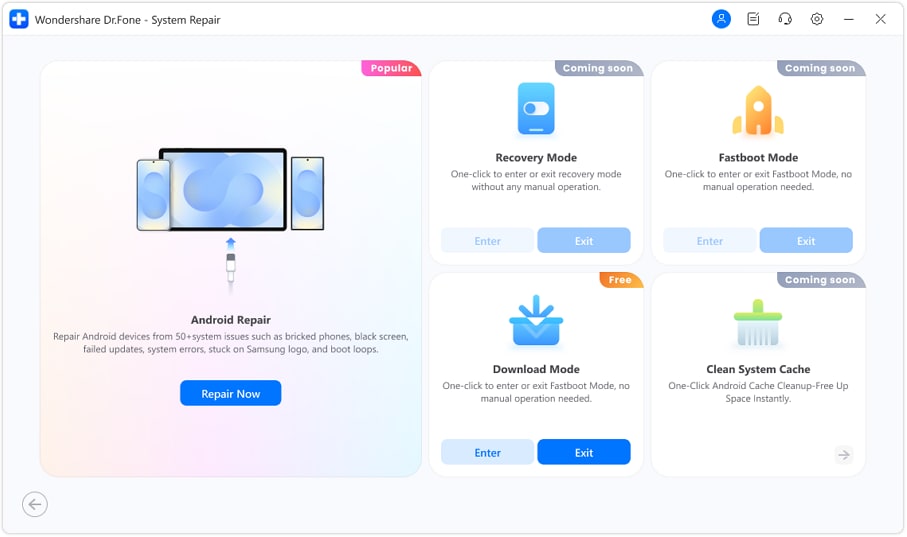
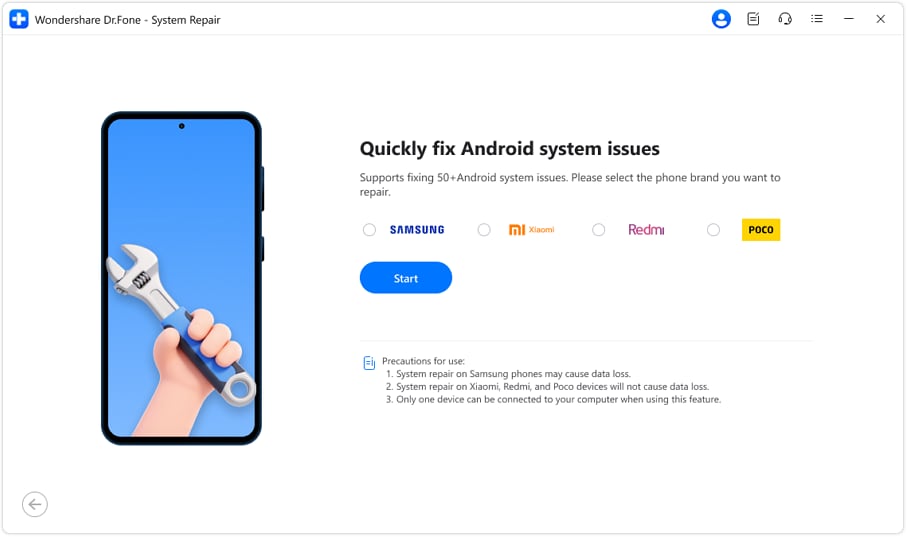
Step 3 Select the Samsung repair path
Choose the option aligned with Samsung phone issues and enter the requested device details carefully, since mismatched info can lead to incorrect packages.
-
Step 4 Enter the required device mode
Follow the on-screen steps to place the device into the appropriate mode (as guided) and don’t disconnect during transitions.
-
Step 5 Run the repair process and verify boot
Start the repair and wait for completion, then confirm the phone can boot and complete setup without looping.




Conclusion
Use AI prompts to turn “factory reset didn’t work” into a clearer diagnosis—what category the failure likely falls into, what evidence matters most, and what low-risk step comes next—then hand off execution to a dedicated process like Dr.Fone System Repair (Android) when the problem points to firmware/system-level causes rather than user-data issues.
FAQ
-
Why does my phone still boot loop after a factory reset?
A reset mainly clears user data; boot loops often point to system partition corruption, failed updates, firmware mismatches, or hardware instability. -
Can a factory reset fix firmware corruption on Android?
Sometimes minor issues improve, but deeper firmware/system damage often persists because the reset doesn’t reliably rebuild all system components. -
How do I know if it’s a setup wizard problem versus a deeper system issue?
If it consistently fails at the same setup step (Wi‑Fi, Google sign-in, “Checking for updates”) it may be setup-related; if it reboots, freezes at the logo, or can’t stay on, it’s more likely system-level. -
What should I avoid doing if a reset didn’t help?
Avoid repeated wipes, random firmware files, and unfamiliar flashing steps—especially if you can’t confirm the exact model/region/build compatibility. -
Does System Repair work for non-Samsung Android phones too?
Dr.Fone’s Android system repair capabilities can vary by brand/model; check the supported device scope in the product information before relying on a specific workflow.
 Add Wondershare Dr.Fone as a preferred source on Google