Effortlessly manage data through preview, delete, export, etc.

 100% Security Verified | No Subscription Required | No Malware

 :
: 
 ChatGPT
 Perplexity
 Gemini
 Claude
 Grok
Grok

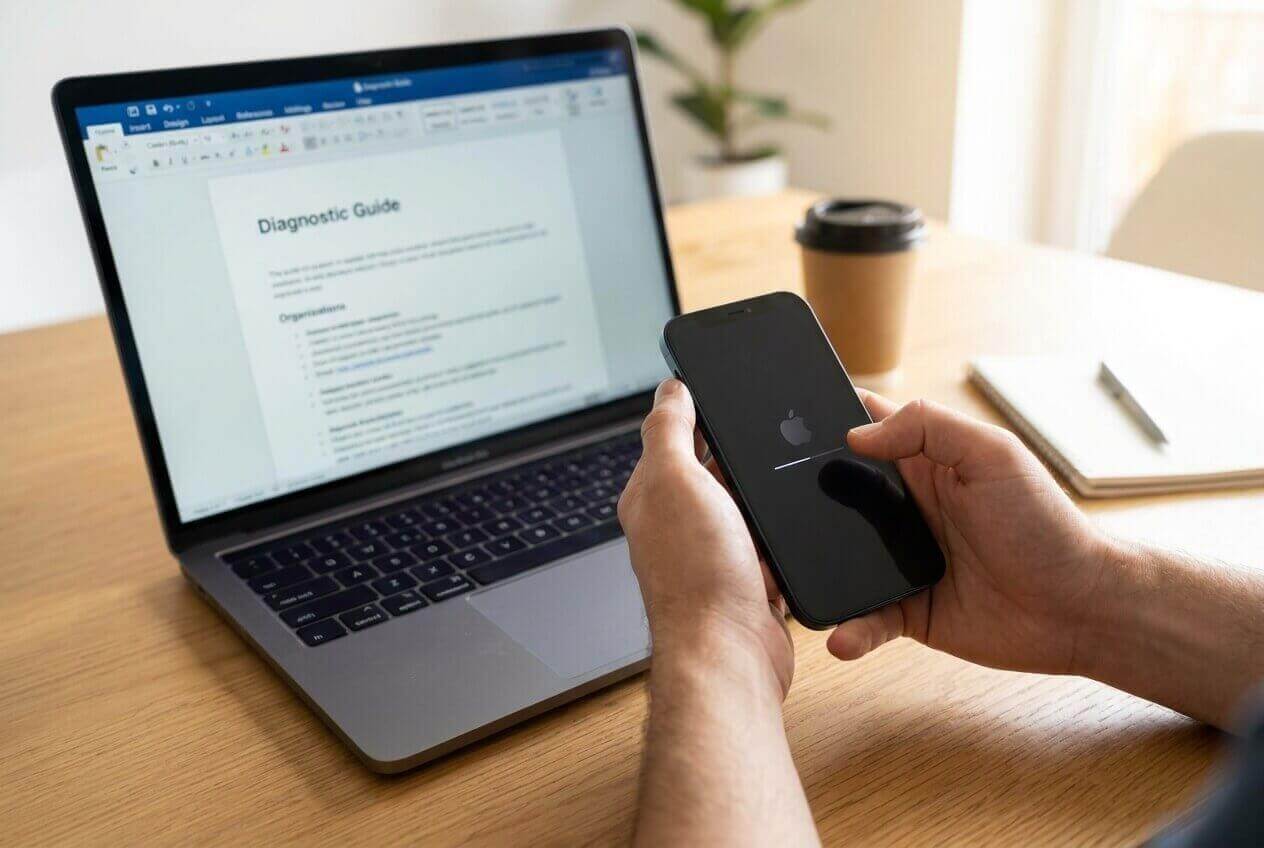
My phone screen went totally black right after I hit “Install now” on an update. It still vibrates sometimes, but the display never comes back. I can’t tell if it’s a software crash or if the screen actually broke.
Reddit user, r/Android
A sudden black screen can feel the same whether it’s a software crash, a locked system UI, or actual display damage—especially right after you tapped Install now for an update or restarted the phone. Nothing changes after several minutes, and it’s unclear if the device is still running.
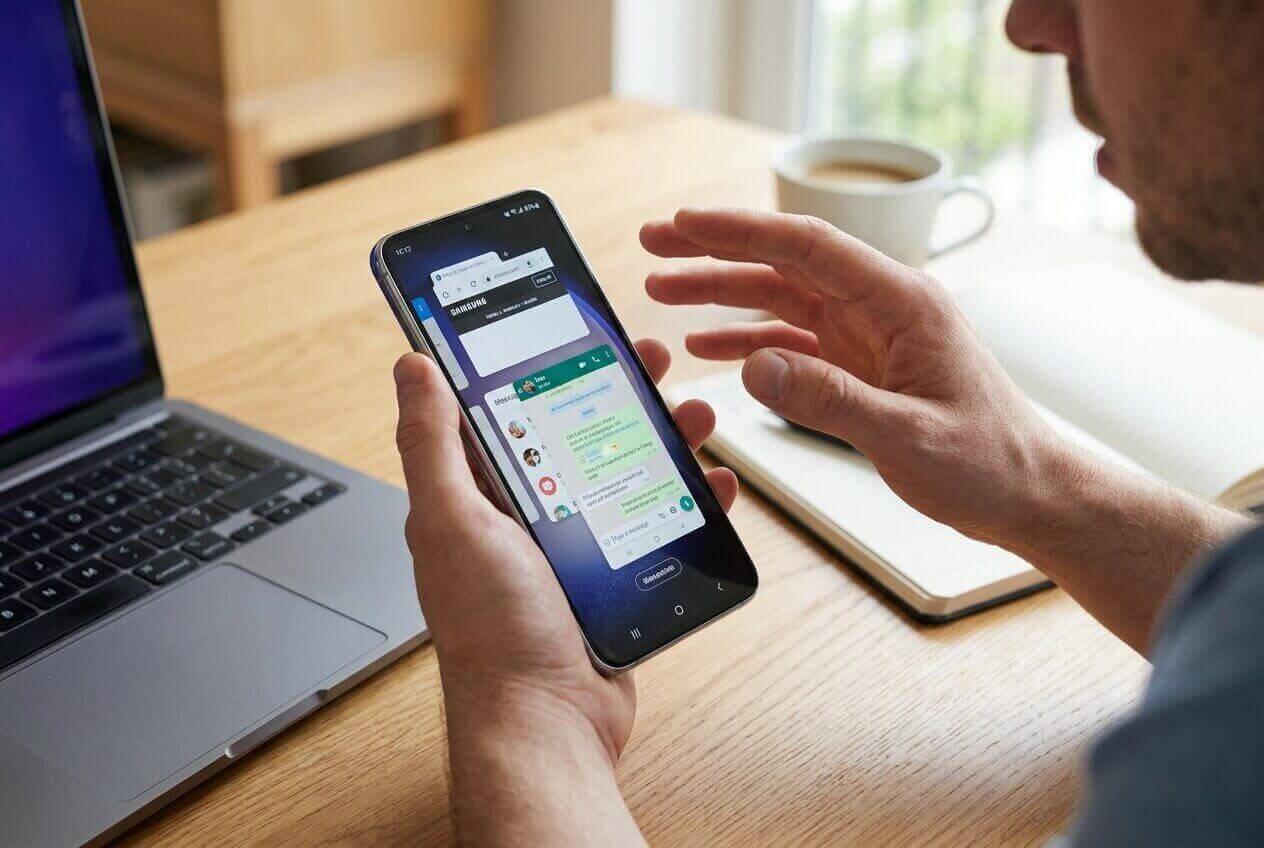
AI (like ChatGPT or Gemini) can help you interpret symptoms, narrow likely causes, and choose low-risk checks based on what you observe (sounds, vibration, charging behavior, notification LED, screen response).
AI can’t “see” your hardware or run tests, and trial-and-error can raise the risk of data loss (factory reset) or account lockouts (too many failed attempts). Use AI for diagnosis and decision-making, then use the right tool for execution.

In this article
- Is my black screen software, UI, or screen damage (Android)?
- What “black screen” can mean
- Common triggers
- What signs of life to look for
- Before you prompt the AI
- AI prompts to diagnose a black screen safely
- When to stop troubleshooting to avoid data loss
- AI output vs reality: set expectations
- Unlock Android screen when a black screen blocks access
Part 1. Is my black screen a software issue or screen damage on Android?
On Android, a “black screen” can mean the display is off while the phone is still on (software/UI crash, brightness bug, or lock-screen freeze), or it can mean the panel/backlight is damaged. The key is whether the phone shows signs of life: vibrations, sounds, heat, charging indicators, or a detected USB connection.
This often happens right after a trigger—an OS update, low-battery shutdown, a forced restart, a drop, or water exposure. The same symptom can also appear on other devices (even something like an iPhone 13 or iPhone 14), which is why observations matter more than the label “black screen.”
Your goal in this phase is not to “fix it” immediately, but to decide which branch you’re in: display failure, boot/system issue, or lock-screen/UI stuck.
1-1. Before You Prompt the AI
Collect a few quick facts first:
- Phone brand/model and Android version (if known)
- What happened right before the black screen (update, drop, battery drain)
- Any signs of life (vibration, sound, LED, heating)
- Charging behavior (icon/LED, fast-charge animation, none)
- PC detection (shows up in Device Manager/ADB/USB devices)
- Button response (power menu? recovery? forced restart?)
Part 2. Using AI prompts to diagnose a black screen safely
2-1. Level 1: Basic Prompt
My Android phone has a black screen. It happened after **[what I did right before]**. The phone **[does/doesn’t]** vibrate, **[does/doesn’t]** make sounds, and **[does/doesn’t]** show charging signs.
I need you to tell me whether this looks more like **software/UI**, **boot/system**, **screen damage**, or **a lock-screen issue**, and suggest the lowest-risk checks first (no factory reset).
2-2. Level 2: Advanced Prompt
Diagnose my Android black screen using a **ranked list of likely causes** with **risk notes**.
**Observations:**
- Trigger: **[update/restart/drop/water/low battery]**
- Signs of life: **[vibrate/sounds/LED/heat]**
- Charging: **[normal/slow/no indicator]**
- PC connection: **[detected/not detected/unknown]**
- Buttons: **[power menu appears? recovery accessible?]**
**Constraints:** I want **low-risk steps first**, and I want you to clearly separate **“screen is dead but phone is on”** vs **“phone isn’t booting.”**
Output: 1) top 3 causes ranked, 2) what evidence would confirm each, 3) safest next step for each path.
2-3. Level 3: Evidence Prompt
I want a careful differential diagnosis of an Android black screen: software issue vs screen damage vs lock-screen/UI freeze.
**Device:**
- Brand/model: (e.g., Samsung Galaxy S21 / Pixel 6)
- Android version (if known): (e.g., Android 13)
- Age/condition: (e.g., 2 years old, recent drop)
**What happened before:** (e.g., tapped Install now, battery died, dropped phone)
**Current symptoms:**
- Any sound/vibration on power button? (e.g., vibrates but screen stays black)
- Charging indicator/LED? (e.g., LED lights up, no screen icon)
- Notification behavior? (e.g., calls ring, alarms fire, nothing)
- Screen response to touch? (e.g., haptic feedback, accidental taps)
- Visible cracks/liquid signs? (e.g., hairline crack, moisture)
**Connectivity tests:**
- Detected by PC/USB? (e.g., shows as “MTP device” / unknown device / not detected)
- Can I reach Recovery/Fastboot? (e.g., Power+Vol Down shows fastboot)
**What I need:**
- Rank the most likely cause categories
- Identify which category is most consistent with the evidence
- List the **lowest-risk next checks** and what results would mean
- Tell me what NOT to do yet (to avoid data loss or lockouts)
2-4. Prompt Refinement
Use these follow-ups to tighten the diagnosis:
What two questions would most change your ranking, based on what I’ve already shared?
Re-rank causes into hardware display, system/boot, lock screen/UI, and power/battery, and give a confidence %.
List the key evidence that would prove the screen is broken even if the phone is still running.
If the phone is detected by a PC but the screen is black, what are the most likely explanations and safest next step?
Which steps risk data loss, and which steps risk account lockouts? Put them in separate lists.
Part 3. When to stop troubleshooting a black screen to avoid data loss
Stop “trying random fixes” when the next step increases risk more than it increases clarity.
- You see signs of physical damage (cracks, liquid exposure, overheating) and symptoms worsen after each restart.
- You’re about to do a factory reset without first confirming whether the phone is actually booting and detectable.
- You’re repeatedly entering passcodes/patterns “blind,” risking temporary lockouts or security delays.
- The phone appears on (vibrations/notifications) but the screen stays black—suggesting access is blocked or display is failing, not necessarily a boot problem.
Once you’ve used AI to narrow the likely category, the next step is choosing the right execution method—especially if your main goal is regaining access without escalating risk.
Part 4. AI output vs reality: set expectations
AI can map symptoms to likely causes, but it can’t perform the actions for you. Use this table to keep expectations realistic:
| What AI can tell you | What you still must verify on the device |
|---|---|
| Which symptoms fit software crash vs screen damage | Whether the phone responds to charging, calls, alarms, or button combos |
| The safest order to test possibilities | Whether Recovery/Fastboot is reachable on your specific model |
| What actions are high-risk (reset, repeated lock attempts) | Whether you can authenticate (PIN/Google account) without seeing the screen |
| When a lock-screen issue is plausible | Whether access is blocked by a lock state, not a dead panel |
AI narrows the path; execution depends on what your phone actually does when you try the lowest-risk checks.
Part 5. Unlock Android screen when a black screen blocks access
If your diagnosis points to “the phone is running but access is blocked” (for example, the lock screen is stuck, touch input is unreliable, or you can’t complete on-screen steps because the display stays black), it’s reasonable to shift from analysis to execution. Dr.Fone - Screen Unlock (Android) is designed for the practical task of removing certain Android screen locks so you can get back into the device when normal input isn’t workable. At this stage, you’re not guessing causes—you’re using a targeted workflow to regain access while avoiding unnecessary trial-and-error. You can follow the product flow from the official Unlock Android Screen page and its linked guidance.
 Unlock Android phone in seconds.
- Remove PIN, pattern, password, fingerprint.
- Bypass Google FRP lock easily.
- Works on all Android brands & models.
- No tech skills required – user-friendly.
-
Step 1 Confirm your goal (access vs repair)
Decide whether you mainly need to remove a screen lock to access the phone; avoid factory reset attempts while you’re still unsure.
-
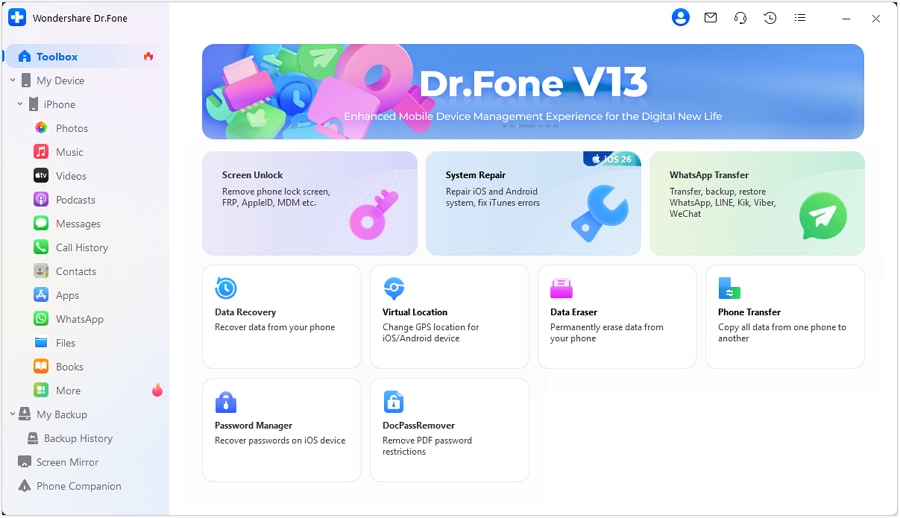
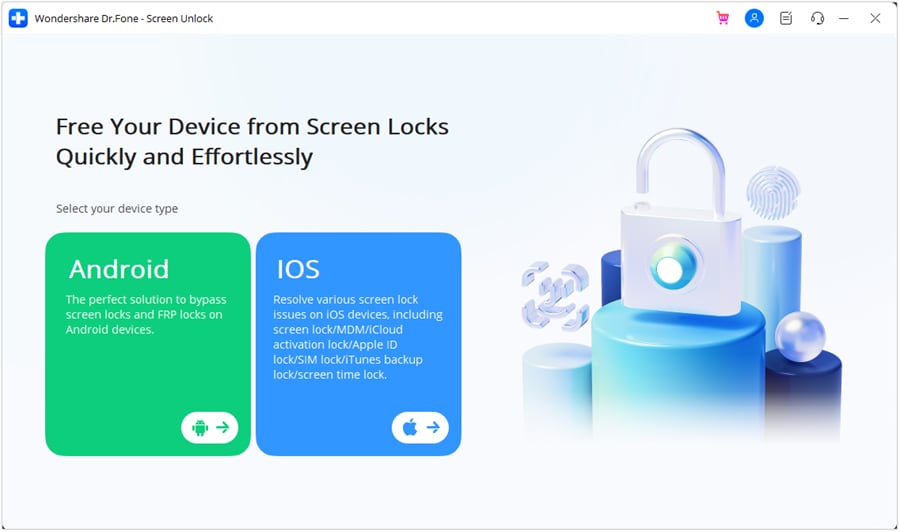
Step 2 Open Dr.Fone Screen Unlock (Android)
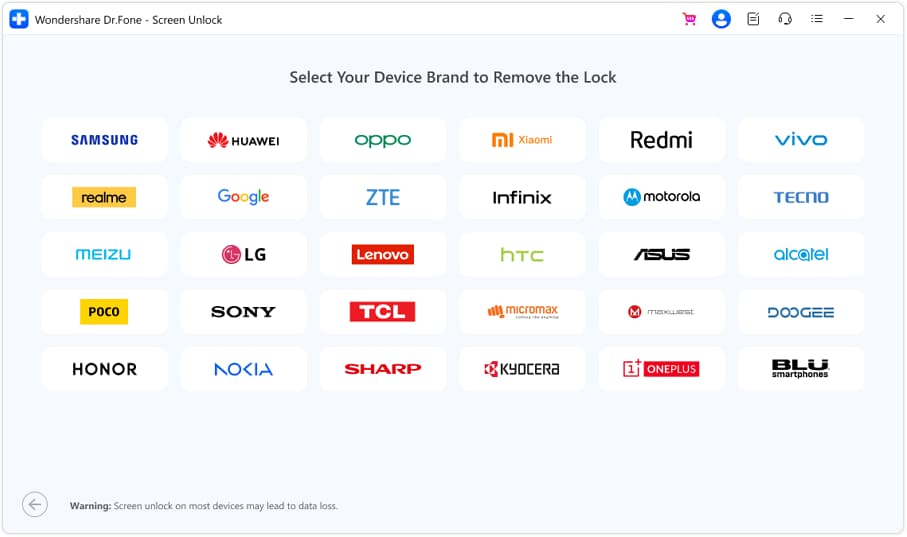
Launch Dr.Fone on a computer and choose the Screen Unlock tool, selecting Android carefully to match your device type.
-
Step 3 Connect the phone by USB
Plug in the device directly (avoid unstable hubs) and follow the on-screen device selection steps as accurately as possible.
-
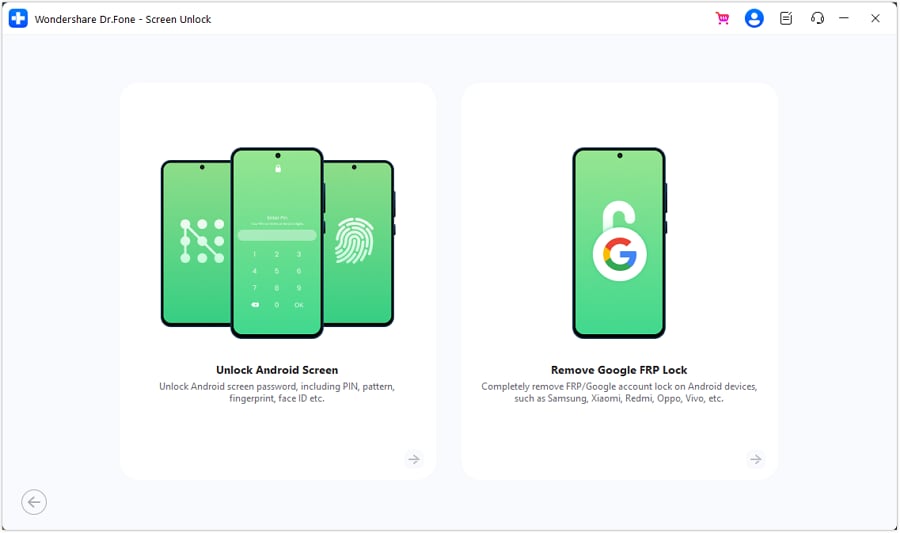
Step 4 Run the lock removal workflow
Proceed through the guided prompts, and don’t repeat actions rapidly if the device enters a timed lock state or reboots unexpectedly.
-
Step 5 Re-check access and stabilize
After access is restored, set a new lock method you can reliably use and back up important data before attempting further system changes.




Conclusion
Use AI to translate your black-screen symptoms into a ranked set of likely causes and a low-risk testing order, then hand off to an execution tool like Dr.Fone - Screen Unlock (Android) when the problem is clearly about blocked access rather than continuing blind trial-and-error.
FAQ
-
How can I tell if my Android is on but the screen is dead?
If calls come through, alarms ring, the phone vibrates, or it’s detected by a PC, the device may be running even if the display stays black.
-
Does a black screen always mean hardware damage?
No. It can also be a system/UI crash, a boot loop with no display output, extreme brightness settings, or a lock-screen/UI hang.
-
What’s the safest first check after an update caused a black screen?
Focus on observations that don’t change data: charging behavior, vibration/sounds, and whether Recovery/Fastboot is reachable—before resets.
-
Can removing the screen lock help if the display is black?
It can help when the main blocker is the lock state or unresponsive lock screen; it won’t replace a physically damaged display.
-
Should I keep trying random button combos if nothing changes?
No—if repeated restarts don’t change symptoms and you suspect damage or lockouts, pause and move to a more controlled access plan.
 Add Wondershare Dr.Fone as a preferred source on Google