Effortlessly manage data through preview, delete, export, etc.

 100% Security Verified | No Subscription Required | No Malware

 :
: 
 ChatGPT
 Perplexity
 Gemini
 Claude
 Grok
Grok

I deleted photos, emptied “Recently Deleted,” and now I can’t tell if I should restore from iCloud backup or try scanning the device. I’m scared I’ll make it worse.
Apple Support Community user
Deleted photos on an iPhone can turn into a confusing choice fast: do you rely on iCloud backup, or try a device scan? This often happens right after you tap Delete, empty Recently Deleted, or restart after an iOS update on an iPhone 13 or iPhone 14—and nothing seems to change after several minutes.
AI (like ChatGPT or Gemini) can help you map what’s still possible by asking the right diagnostic questions, narrowing likely paths (iCloud Photos, iCloud backup, local backups, third‑party copies), and highlighting low-risk next steps.
AI can’t “see” your iPhone, your iCloud, or what’s inside backups, and trial-and-error can make things worse (overwriting, unnecessary restores, lockouts). Use AI to plan, then use the right tool to execute carefully.

In this article
- Part 1. What iCloud backup can and can’t restore for deleted iPhone photos
- iCloud Backup vs iCloud Photos: why it matters
- Common triggers that create confusion
- Why confirming basics protects your data
- What to collect before asking AI
- Part 2. AI prompts to choose iCloud restore vs device scan
- Part 3. Prompt refinement + AI output vs reality
- Part 4. When to stop DIY photo recovery attempts on iPhone
- Part 5. Unlock Android screen to check for photo copies with Dr.Fone
Part 1. What iCloud backup can and can’t restore for deleted iPhone photos
1-1. Why “iCloud backup” isn’t the same as “iCloud Photos”
If photos were deleted, the best path depends on where they originally lived: iCloud Photos sync, an iCloud device backup, a computer backup, or only on-device storage. “iCloud backup” is not the same as “iCloud Photos”—and that distinction determines whether a restore can bring photos back.
A common trigger is deleting images, then later noticing they’re missing on all devices, or signing out of iCloud / changing Apple ID and photos don’t reappear. The uncertainty usually comes from not knowing whether the photos were synced, backed up, or already removed everywhere.
Before deciding on a device scan idea, it helps to confirm basic facts first—because restoring from a backup can overwrite current data, while repeated scanning or syncing changes can reduce your options.
1-2. Before you prompt the AI
Collect a few details first so the AI can triage accurately:
- iPhone model and iOS version
- Whether iCloud Photos is enabled (Settings → Photos)
- Whether you have an iCloud backup from before deletion (Settings → Apple ID → iCloud → iCloud Backup)
- Whether Recently Deleted was emptied and when
- Any other places copies might exist (Mac/PC Photos, Google Photos, WhatsApp, Messenger)
Part 2. AI prompts to choose iCloud restore vs device scan
2-1. Level 1: Basic Prompt
I deleted photos from my iPhone and need to decide between restoring from iCloud backup or attempting a device scan. Ask me the minimum questions needed, then tell me the safest next step and why.
2-2. Level 2: Advanced Prompt
Act as a risk-aware troubleshooting assistant. Based on my answers, rank the most likely ways to get deleted iPhone photos back (iCloud Photos, Recently Deleted, iCloud backup restore, computer backup restore, third-party app copies, other devices). For each option, list: probability (low/medium/high), data-loss risk (low/medium/high), time cost, and what evidence would confirm it. Avoid steps that overwrite current data unless clearly necessary.
2-3. Level 3: Evidence Prompt
Diagnose my “deleted iPhone photos” situation using only the evidence I provide. Then produce: (1) a short explanation of what likely happened, (2) a ranked options list, (3) the lowest-risk next 3 actions, and (4) what NOT to do.
Evidence:
- iPhone model: (e.g., iPhone 13 Pro)
- iOS version: (e.g., iOS 17.5)
- What I did right before noticing the issue: (e.g., deleted photos, emptied Recently Deleted, restarted, updated iOS)
- iCloud Photos status: (On/Off/Unsure)
- iCloud storage status: (enough space / full / unsure)
- Recently Deleted checked?: (yes/no) Result:
- iCloud Backup status: (On/Off) Last successful backup date:
- Other devices on same Apple ID: (yes/no) Any photos there?
- Mac/PC backup exists?: (Finder/iTunes backup yes/no) Date:
- Any third-party photo apps used: (e.g., Google Photos)
- Time since deletion:
- What I’m trying to avoid: (e.g., losing new photos/messages)
Part 3. Prompt refinement + AI output vs reality
3-1. Prompt Refinement (follow-up prompts)
If the AI answer feels too generic, tighten it with follow-ups:
What 5 missing questions would most change your recommendation in my case?
Separate my situation into categories: iCloud Photos sync deletion vs iCloud backup coverage vs local-only photos—then tell me which category fits best and why.
Rank the top 3 causes and show the specific evidence that would confirm or rule out each one.
What single check should I do first that has the lowest risk of making recovery harder?
If I must choose between “restore iCloud backup” and “don’t restore,” what is the decision rule based on backup date and data overwrite risk?
3-2. AI Output vs Reality
AI can outline decision logic, but it can’t verify what’s actually inside your backups or accounts.
| What AI can infer | What you must verify on devices/accounts |
|---|---|
| Whether iCloud Photos vs iCloud Backup is the relevant path | iCloud Photos toggle status and actual photo presence on iCloud.com/Photos |
| Whether a backup restore is worth the overwrite risk | Backup timestamp and whether it predates deletion |
| Whether “Recently Deleted” is still a candidate | Whether the photos are still there and not past retention |
| Whether copies likely exist elsewhere | Whether other devices/apps actually contain the originals |
AI helps you avoid the wrong branch; execution still requires careful checking, and some steps are irreversible once you restore or sync changes across devices.
Part 4. When to stop DIY photo recovery attempts on iPhone
If you’re uncertain, the safest approach is to pause actions that change storage or sync state while you confirm where copies might exist.
- You’re about to restore an iCloud backup but can’t confirm the backup date clearly predates deletion.
- You notice iCloud Photos is syncing and deletions appear across devices, suggesting changes are propagating.
- You’ve tried multiple sign-in/out or restore attempts and the situation is getting less predictable.
- You suspect photos may exist on another device/app, but you can’t access it due to a lock screen or lockout.
Once AI has helped you choose the lowest-risk path, the next step is execution—sometimes that means regaining access to a device that may hold copies of the photos.
Part 5. Unlock Android screen to check for photo copies with Dr.Fone
5-1. When a locked Android device becomes the missing evidence
If you previously transferred iPhone photos to an Android phone, used an Android device for Google Photos, or saved shared images there, a locked Android screen can block your last practical place to verify copies. At that point, AI can help you decide whether checking that Android device is a good lead, but you still need a reliable way to regain access to confirm what’s actually stored. Dr.Fone - Screen Unlock (Android) can be relevant here as an execution step for accessing an Android device so you can check for photo copies without guessing.
5-2. Steps to regain access and verify photo locations
-
Step 1 Confirm what you’re trying to access
Identify whether the Android device may contain photo copies (DCIM folder, Google Photos cache, downloads), and avoid repeated failed attempts that can trigger longer lockouts.
-
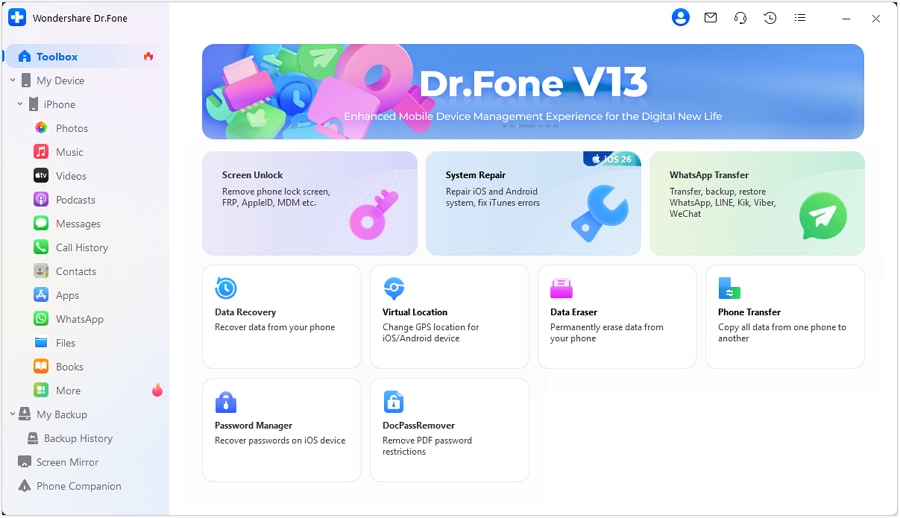
Step 2 Open Dr.Fone – Screen Unlock (Android)
Launch the Screen Unlock module and select the option to remove the Android lock screen, following the on-screen flow carefully for your device type.

-
Step 3 Connect the Android device by USB
Connect with a stable cable and keep the device powered to reduce interruption risk during the unlock process.
-
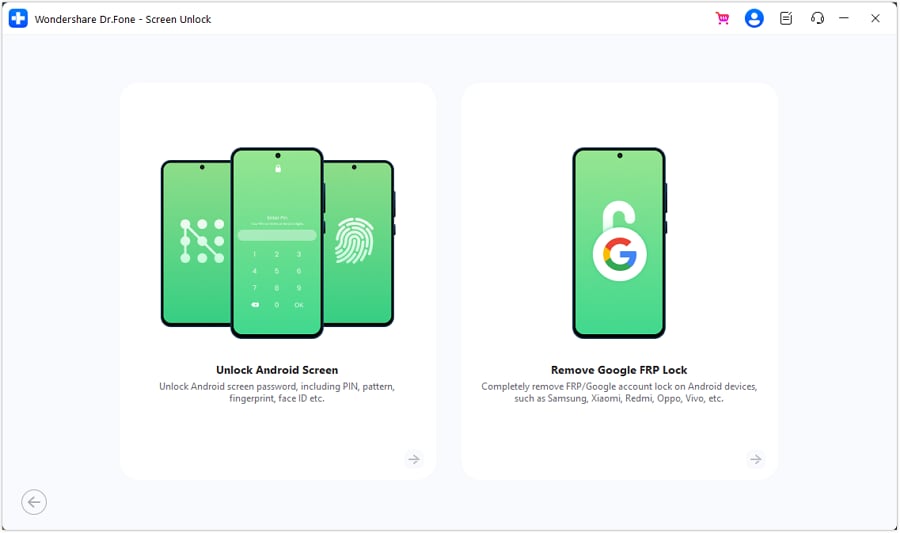
Step 4 Follow the guided device-specific steps
Complete the prompts in the official screen lock removal guide and double-check model/brand selections to avoid mismatched instructions.

-
Step 5 Verify photo locations immediately after access
Once you regain entry, check gallery folders and any cloud photo apps on the Android device before changing sync settings or deleting anything.

Recommended Tool
If your recovery plan depends on checking a locked Android device that may contain photo copies (gallery folders or cloud photo apps), a practical next step is using Dr.Fone to regain access so you can verify what’s actually stored before making more iCloud changes.
 Unlock Android phone in seconds.
- Remove PIN, pattern, password, fingerprint.
- Bypass Google FRP lock easily.
- Works on all Android brands & models.
- No tech skills required – user-friendly.
Use AI to decide whether checking that Android device is a strong lead, then follow a careful, device-specific unlock flow to avoid unnecessary lockouts or mistakes. After access, verify photo locations immediately before changing any sync settings.




Conclusion
Use AI to clarify whether deleted iPhone photos are more likely tied to iCloud Photos syncing, an iCloud backup point-in-time restore, or copies living elsewhere—and to choose the least risky next move. When the plan depends on checking a locked Android device that may hold copies, Dr.Fone provides the practical execution step to regain access and verify what’s actually there.
FAQ
-
Is iCloud backup the same as iCloud Photos for deleted photo recovery?
No. iCloud Photos syncs changes (including deletions) across devices, while iCloud backup is a point-in-time device backup that may help only if it captured the photos before they were deleted. -
Should I restore my iPhone from iCloud backup to get photos back?
Only if you confirm the backup date is before the deletion and you accept the overwrite risk to current on-device data since that backup. -
What’s the safest first check after I delete iPhone photos?
Check Recently Deleted and confirm whether iCloud Photos is on, because those answers determine whether deletions likely synced or might still be recoverable in-app. -
Why would a device scan not be the best first step?
If photos were synced via iCloud Photos, deletion may have propagated, and scanning attempts can waste time while you overlook easier sources like backups or other devices. -
How does unlocking an Android phone relate to deleted iPhone photos?
If you previously copied or synced photos to an Android device (manually, via messaging apps, or via Google Photos), regaining access can let you verify whether those photo copies still exist.
 Add Wondershare Dr.Fone as a preferred source on Google