Effortlessly manage data through preview, delete, export, etc.

 100% Security Verified | No Subscription Required | No Malware

 :
: 
 ChatGPT
 Perplexity
 Gemini
 Claude
 Grok
Grok

I can still see the file in the cloud on the web, but inside the Android app it’s just gone after I reinstalled. I don’t want to “fix” it and accidentally lose something.
Forum user
A file can look “gone” inside an Android app even though it still appears in your cloud storage. This often happens right after you reinstalled the app, changed accounts, cleared storage, or the phone restarted—and nothing changes after several minutes of syncing.
AI (like ChatGPT or Gemini) can help you describe the symptoms precisely, narrow down the most likely causes (sync state vs account mismatch vs local cache vs offline files), and decide the safest next checks before you touch anything that might overwrite data.
AI can’t see your device state or your cloud backend, and trial-and-error steps (like clearing app data or re-syncing aggressively) can sometimes make a recoverable local copy harder to retrieve. Use AI to diagnose and plan, then use purpose-built tools for execution if needed.
In this article
- Why it happens (and what it means)
- Account/workspace mismatch
- Cache/offline data reset
- Visibility vs availability vs sync blockage
- Before you prompt the AI
- Using AI prompts to diagnose safely
- When to stop troubleshooting (avoid risks)
- Resolve it safely with Dr.Fone
- FAQ

Part 1. Why file missing from app but still in cloud happens and what it means
1-1. The app may be pointing to a different account, space, or folder root
This usually means the cloud copy exists, but the app view you’re looking at isn’t pointing to the same account, folder, workspace, or sync state as before. For example, on a Samsung Galaxy S22 or Pixel 7, you might sign back in after an update and the app defaults to a different space (personal vs work) without making it obvious.
1-2. Cached/offline content or the local index may have been reset
Another common pattern: the app is showing cached content, “offline” files, or a local database that was reset when you tapped Clear storage, reinstalled the app, or enabled a new device. The cloud portal still lists the file, but the app hasn’t rebuilt its index yet—or it’s filtering it out.
1-3. It’s often a visibility/availability/sync-state problem (not immediate cloud loss)
The uncertainty is real: it can look like the file is missing, when the real problem is visibility (wrong account/folder/filter), availability (not downloaded offline anymore), or sync blockage (paused sync, battery optimization, background data restrictions).
1-4. Before you prompt the AI
Collect a few specifics first so the AI can separate “cloud visibility” from “local data loss”:
- Android phone model + Android version
- App name + app version (if known)
- Cloud service name (Google Drive, OneDrive, Dropbox, app-native cloud)
- What you did right before it happened (reinstall, update, logout/login, device transfer)
- Where the file appears (web portal vs another device vs only “Recent”)
- Whether the file was ever saved for offline use
Part 2. Using AI prompts to diagnose file missing from app but still in cloud safely
2-1. Level 1: Basic Prompt
My Android file is missing inside the app, but I can still see it in the cloud. Ask me the minimum questions needed to figure out whether this is a sync/account/folder/filter issue or a local storage issue, and suggest low-risk checks first.
2-2. Level 2: Advanced Prompt
Act as a cautious Android data triage assistant. Based on my symptoms, rank the top 5 likely causes of “file missing from app but still in cloud,” from most to least likely.
For each cause:
- Why it fits
- What evidence would confirm/deny it
- The safest next step (avoid actions that overwrite local data)
- Risk level: low / medium / high
End with a short “do-not-do” list (e.g., clearing storage) until we confirm whether a local copy might be recoverable.
2-3. Level 3: Evidence Prompt
Diagnose “file missing from app but still in cloud” using the details below. Provide:
1) A ranked list of likely causes
2) What I should check next (lowest-risk first)
3) What NOT to do yet if local recovery might be needed
4) A decision point: when to switch from troubleshooting to recovery steps
Details:
- Android phone model: (e.g., Samsung Galaxy S22)
- Android version:
- App name + version:
- Cloud service:
- File type + size (if known):
- Where I still see the file: (cloud web / another phone / desktop client)
- Where it’s missing: (app search / folder view / “Recent” / offline area)
- Account(s) signed in: (personal / work / multiple)
- Exact last action before issue: (e.g., reinstalled app, cleared cache, switched accounts)
- Network state: (Wi‑Fi / mobile / VPN)
- Battery optimization/background data limits enabled?:
- Storage space available on device:
- Any error messages: (copy exact text)
- Timestamp: when it was last visible in the app:
- Was it marked “available offline” before?:
2-4. Prompt Refinement
Use these follow-ups to force clarity and reduce guesswork:
What 10 questions do you need answered to distinguish “wrong account/folder/filter” from “sync/index corruption” from “local cache wiped”? Ask them in priority order.
Separate your diagnosis into three categories: cloud-side, app-side, and Android OS-side. Put each possible cause into only one category and explain why.
Rank the causes again, but this time weigh heavily: I recently reinstalled/cleared storage and I want to avoid overwriting any remaining local traces.
Tell me the single most important piece of evidence to collect next, and exactly where to find it in the app or Android settings.
If I can still open/download the file from the cloud web view, what does that imply—and what does it NOT imply—about local recovery?
2-5. AI Output vs Reality
AI can help you decide what’s most likely, but it can’t verify device state or run actions for you.
| What AI can infer | What you still must verify on the device |
|---|---|
| Account mismatch or workspace confusion | Which account is active in the app and whether the file lives in a different space |
| Filter/indexing issues inside the app | Whether the app is filtering by file type, “offline,” “recent,” or a different folder root |
| Sync constraints like background limits | Android battery optimization, background data, and permission state for that app |
| Risk of data overwriting from trial steps | Whether local remnants exist and whether new activity could reduce recoverability |
AI narrows causes and suggests low-risk checks, but execution depends on what your phone and app actually show—so treat AI output as a decision map, not a guarantee.
Part 3. When to stop troubleshooting file missing from app but still in cloud and avoid risks
If the file matters and you suspect a local copy might be involved, stop “random fixes” once signals point to potential data loss rather than mere visibility.
- You already cleared app storage/reinstalled once, and the file still won’t appear in-app
- You see signs of local-only content being reset (offline files gone, app history wiped)
- The app starts re-downloading/rebuilding data repeatedly without finishing
- You’re considering high-impact steps (factory reset, “cleaner” apps, storage optimizers)
Once you’ve used AI to narrow the likely category (account/folder/filter vs sync vs local loss), the next move is choosing an execution path that minimizes overwriting while you attempt retrieval.
Part 4. File missing from app but still in cloud: resolve it safely with Dr.Fone
If the diagnosis suggests the app’s local data was removed or the file existed on-device (offline/downloaded/exported) and is no longer visible, a focused recovery workflow can be the safer execution step—especially before you generate more new data on the phone. Dr.Fone - Data Recovery (Android) is relevant here because it’s designed to scan for recoverable data on Android devices and help you extract what’s still available, rather than relying on the app’s current index or sync view.
 Scan Android phones and tablets directly.
- Preview and recover only what you want.
- Supports WhatsApp, photos, videos, contacts, and more.
- Works with 6000+ Android devices.
-
Step 1 Stabilize the device state
Stop heavy use of the phone and avoid cleanup/optimization actions to reduce the chance of overwriting recoverable traces.
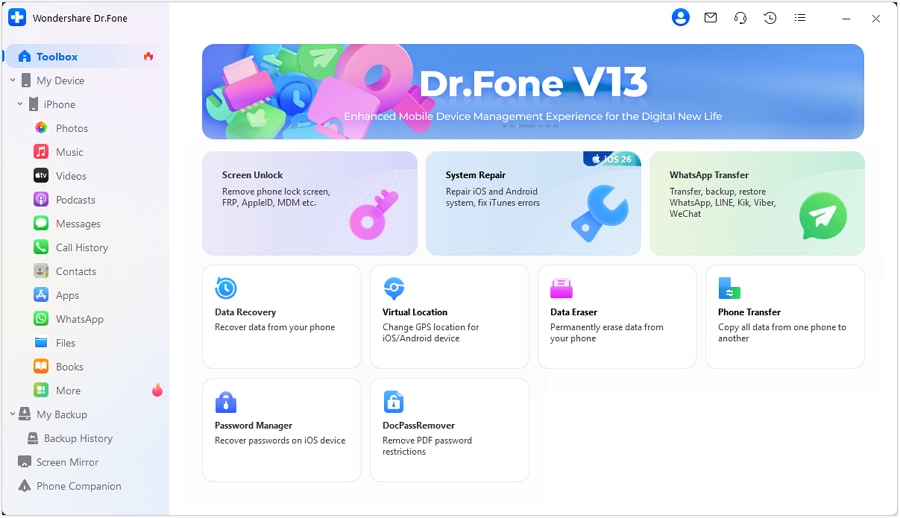
-
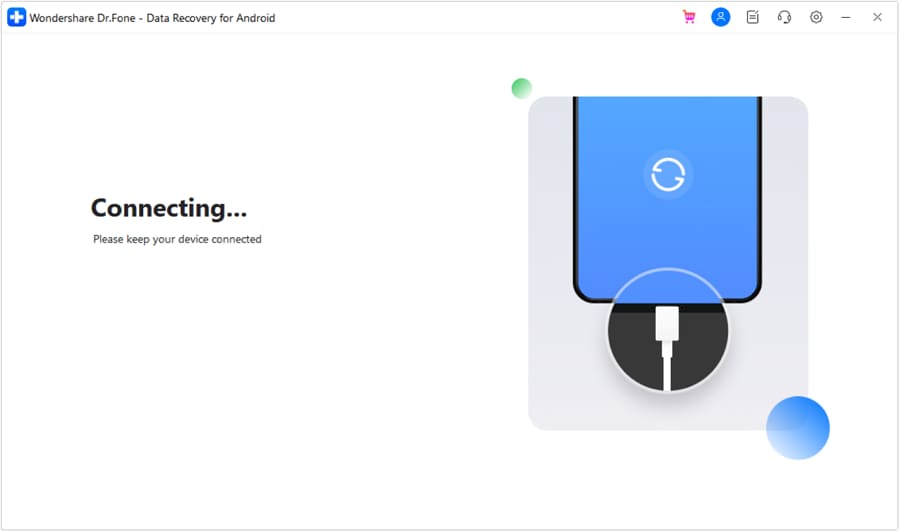
Step 2 Launch Android recovery workflow
Open Dr.Fone and select the Android data recovery option so you can target the device-based retrieval path.
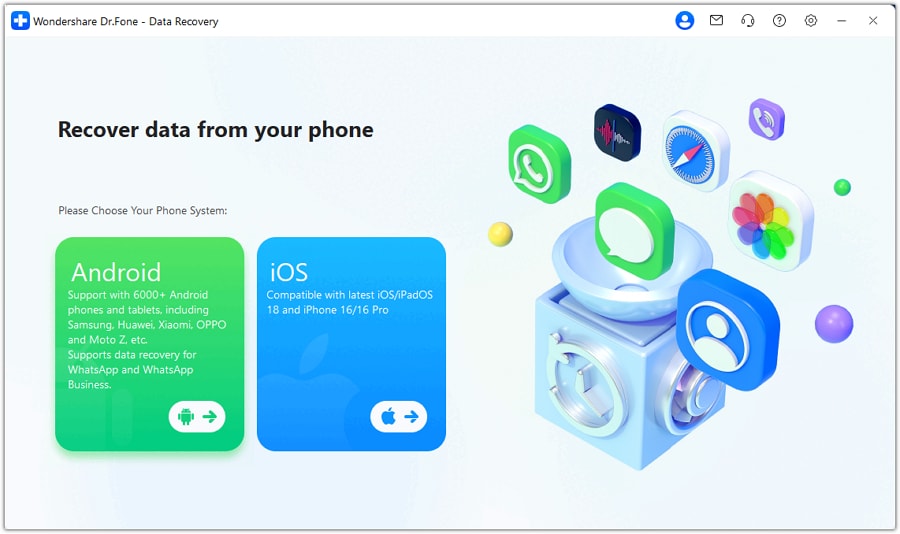
-
Step 3 Choose data types thoughtfully
Select only the file/data categories that match what’s missing to keep the scan focused and lower risk of unnecessary changes.
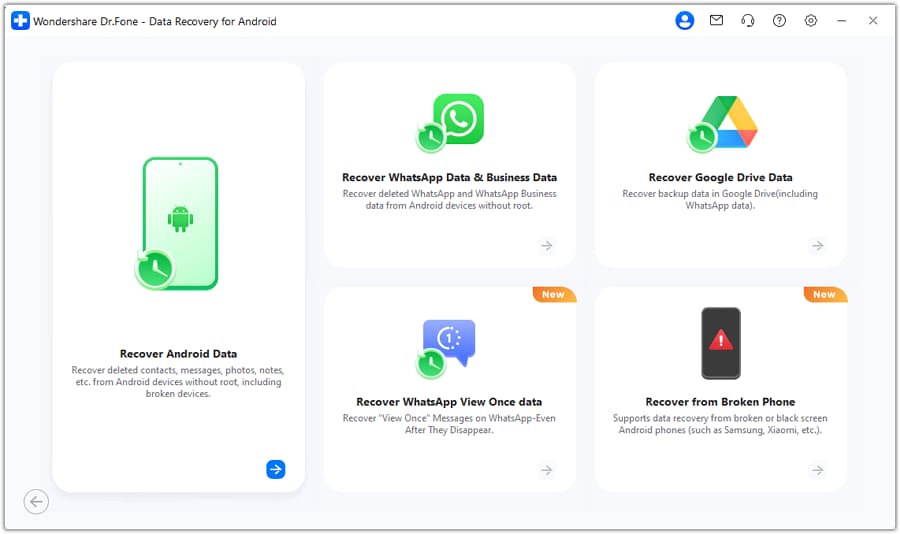
-
Step 4 Preview and verify candidates
Review what Dr.Fone finds and compare filenames, timestamps, and sizes to confirm you’re selecting the right items.
-
Step 5 Recover to a safe location
Save the recovered items to your computer or a designated safe folder rather than back into the same app path immediately.




Conclusion
Use AI prompts to classify the situation (visibility vs sync vs local loss), collect the right evidence, and avoid risky trial steps; if the signs point to device-side loss or wiped offline content, hand off execution to a recovery workflow like Dr.Fone - Data Recovery (Android) to extract what’s still recoverable without relying on the app’s current view.
FAQ
-
Why does the file show in cloud web but not in the Android app?
Most often the app is on a different account/workspace, a different folder root, or it hasn’t finished indexing/syncing; less often the app’s local database/cache was reset. -
Should I clear cache or clear storage to force the file to appear?
Clearing cache is usually lower risk than clearing storage, but if you suspect offline/local copies existed, clearing storage can remove local databases and reduce recovery options. -
If I can download the file from the cloud, do I still need recovery?
If the cloud copy is the only copy you need, downloading may be enough; recovery is more relevant when there was a local/offline version or additional unsynced edits. -
How do I tell if it’s an account mismatch versus a sync problem?
Account mismatch usually shows different folder structures, different “Recent” history, or missing shared/work items; sync problems often show stuck progress, repeated re-sync, or background restriction warnings. -
What’s the safest first check inside the app?
Confirm the signed-in account, then check the exact folder path plus any filters (file type, offline-only, recent-only) before changing settings or reinstalling.
 Add Wondershare Dr.Fone as a preferred source on Google