Effortlessly manage data through preview, delete, export, etc.

 100% Security Verified | No Subscription Required | No Malware
 :
: 
 ChatGPT
 Perplexity
 Gemini
 Claude
 Grok
Grok

My phone won't charge at all, and I urgently need to get my photos and chats off it. It sometimes turns on for a minute, but then dies again—what's the safest way to figure out what to do next without making it worse?
Forum user
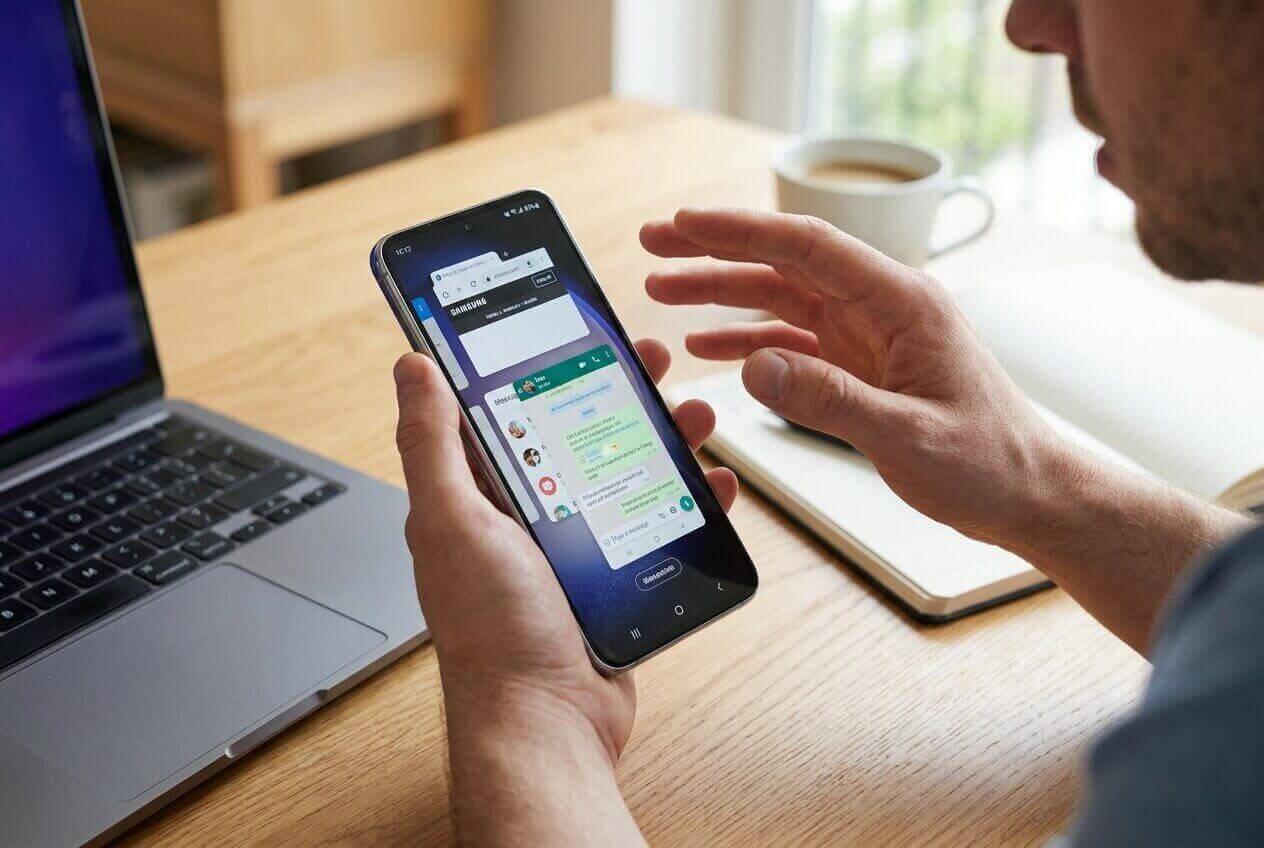
A phone that won't charge can turn into an urgent data problem fast—especially if you need photos, chats, or work files and the battery won't rise even after you plug it in. This can happen on many devices (from a Samsung Galaxy to an iPhone 13), and it often starts right after you connected a new cable, used a different charger, or restarted the phone.
AI tools like ChatGPT or Gemini can help you describe the symptoms clearly, narrow likely causes (power, port, battery, software, or access/lock issues), and choose low-risk next steps in the right order. But AI can't test your hardware, measure voltage, or confirm what's happening inside the phone—so trial-and-error can increase risk (overheating, port damage, or data loss) if you keep forcing charge attempts or doing random resets.
In this article
- Part 1. Why a phone won't charge affects data rescue outcomes
- Power path vs access path
- What to collect before troubleshooting
- Why uptime matters for data transfer
- When unlocking becomes the priority
- Part 2. Using AI prompts to diagnose charging-related data rescue safely
- Part 3. When to stop trying to charge a dead phone to avoid data loss
- Part 4. Plan your “short power-on window” for access-first data rescue
- Part 5. Recommended tool path: unlock Android screen fast to proceed with data rescue

Part 1. Why a phone won't charge affects data rescue outcomes
If your phone won't charge, “data rescue” depends on one basic question: can the phone stay powered on long enough to access storage or enable transfer? After plugging in (or after a restart), you might see no charging icon, a boot loop, or a battery symbol that never changes—nothing changes after several minutes, so it's unclear whether the phone is actually charging.
Two common realities drive your options:
- Power path problem (cable/adapter/port/battery/board): the phone can't reliably stay on.
- Access problem (screen lock, broken screen, USB settings): the phone can power on, but you can't unlock or authorize data access.
If it's an Android phone that does turn on briefly but you're locked out (forgotten PIN/pattern, unresponsive screen, or a damaged display), solving the access layer may be the difference between “can't reach anything” and “can pull essential data once it powers.”
1-1. Before you prompt the AI
Gather a few quick facts so the AI can triage accurately:
- Phone model + Android version (if known)
- What changed right before this (new cable/charger, drop, water exposure, restart)
- Charging behavior (no icon / flashing icon / heats up / intermittent)
- Port condition (lint, looseness, visible corrosion)
- Battery behavior (stuck at 0%, drains instantly, boots then dies)
- Lock/access status (forgot PIN, screen broken, USB debugging previously on/off)
Part 2. Using AI prompts to diagnose charging-related data rescue safely
2-1. Level 1: Basic prompt
My phone won't charge and I need to rescue my data. Ask me the minimum questions needed to identify whether this is (1) charger/cable, (2) port contamination/damage, (3) battery failure, (4) software issue, or (5) access/lock issue preventing transfer. Then give a low-risk step order that avoids making things worse.
2-2. Level 2: Advanced prompt
You are helping me triage a “phone won't charge” situation for data rescue.
1) List the top 5 most likely causes based on my symptoms and rank them with probabilities.
2) For each cause, propose one low-risk test and one stop condition (to avoid heat/short/port damage).
3) Separate steps into: “Safe checks,” “Moderate risk,” and “High risk / technician.”
4) Assume my goal is data access first, not experimenting. Ask clarifying questions before recommending resets.
2-3. Level 3: Evidence prompt
Diagnose my “data rescue from phone that won't charge” case using only the evidence below.
Device
- Phone model: (e.g., Samsung Galaxy S21 / Pixel 7)
- Region/carrier:
- Android version (if known):
- Age of device + battery health clues:
What happened right before it failed
- Last action: (e.g., restarted, installed an update, used a new charger)
- Drops/water/heat exposure in last 7 days:
Charging symptoms
- With known-good cable + adapter: (no icon / slow / intermittent / boots then dies)
- With PC USB:
- Any heat smell or unusual warmth:
- Port condition: (clean / lint / loose / corrosion)
Power-on symptoms
- Can it boot to lock screen?
- Battery percentage shown (if any):
- Does it shut off at a specific point:
Access constraints (data rescue blockers)
- Screen works? Touch works?
- Lock type: (PIN / pattern / password / fingerprint)
- Do I remember the code?
- Was USB debugging enabled before?
Goal & constraints
- What data matters most:
- Time sensitivity:
- What I refuse to do: (factory reset, opening device, etc.)
Now:
1) Rank the most likely causes with reasoning tied to evidence.
2) Give a step-by-step plan that prioritizes data access and minimizes risk.
3) Flag any step that could increase data loss risk.
2-4. Prompt refinement (follow-ups)
What 5 questions would change your ranking the most, and why?
Re-rank your top causes if the phone only charges when angled / only on wireless / only on PC USB.
Split your plan into hardware-path vs software-path vs access/lock-path, and keep them independent.
What single observation would best confirm a port issue vs a battery issue vs a charging IC issue?
Given my goal is data rescue, which steps are ‘do now' vs ‘do later' to avoid reducing my chances?
List stop conditions for each step (heat, smell, rapid battery drain, repeated boot loops).
2-5. AI output vs reality
AI can help you choose which path is safest; it can't verify the phone's physical condition.
| What AI can infer | What you still must verify |
|---|---|
| Symptom patterns that suggest cable/adapter vs port vs battery | Whether your specific charger/cable is truly known-good |
| Whether your behavior matches a risky scenario (heat, corrosion, swelling) | Whether there's internal damage requiring a technician |
| The safest order of checks to reduce accidental damage | Whether the device can stay on long enough to access data |
| When an access/lock issue is the main blocker | Whether unlocking is possible without triggering data wipe policies |
AI's “most likely” answer is still a hypothesis; execution requires careful observation, stopping when warning signs appear, and using the right tool for the job you're actually facing (power vs access).
Part 3. When to stop trying to charge a dead phone to avoid data loss
Stop and reassess if any of the following happen:
- The phone or charging area becomes hot, smells burnt, or you see swelling.
- The charge port shows corrosion/liquid residue, or the phone was recently wet.
- The phone boot-loops repeatedly or dies faster after each attempt.
- You're considering random resets, firmware flashing, or opening the device without a data-first plan.
If your AI triage suggests the phone can power on but access is blocked by a lock screen, shift from “charging experiments” to “access planning”—because once you get even brief power, you'll want the shortest path to unlock and retrieve what you can.
Part 4. Plan your “short power-on window” for access-first data rescue
When your phone won't charge reliably, the few minutes it does stay on matter. If the diagnosis points to an access bottleneck (forgotten lock, touch not responding, broken screen) rather than pure power failure, the practical goal becomes: use the next stable power-on window to unlock and transfer/backup immediately, without wasting battery on wrong paths.
- Decide the goal for the next power-on window (unlock → authorize/transfer → backup), not “keep experimenting.”
- Use only low-risk charging attempts (known-good cable/adapter, gentle inspection), and stop on heat/smell/instability.
- Avoid unrelated actions that can reduce uptime or increase data-loss risk (repeated power-cycling, random resets).
Part 5. Recommended tool path: unlock Android screen fast to proceed with data rescue
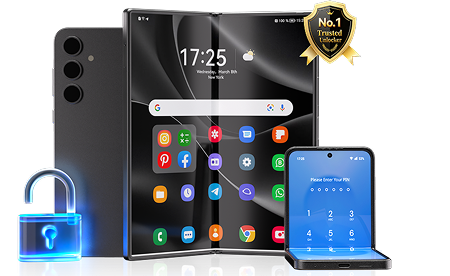
If you're dealing with an Android device that can power on briefly but you're blocked at the lock screen, Dr.Fone - Screen Unlock (Android) can help you remove the lock barrier quickly once the device powers up, so you can move straight into data transfer/backup during that limited uptime (details vary by brand/model, so follow the model-specific flow).
 Unlock Android phone in seconds.
- Remove PIN, pattern, password, fingerprint.
- Bypass Google FRP lock easily.
- Works on all Android brands & models.
- No tech skills required – user-friendly.
-
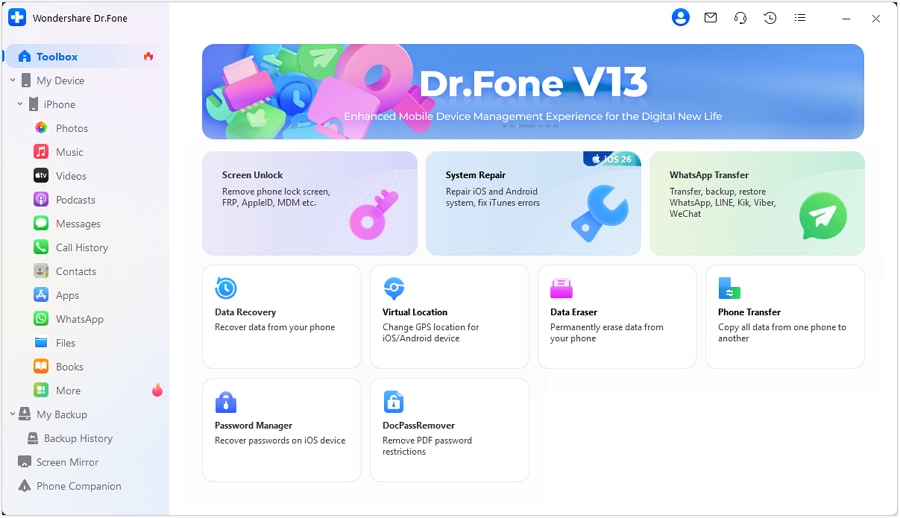
Step 1 Confirm the goal is access, not charging repair
Decide what you're trying to do in the next power-on window (unlock → transfer/backup), and avoid repeated power-cycling that shortens uptime.
-
Step 2 Prepare a stable power moment
Connect to a known-good charger/cable and wait for the device to stay on; stop if you notice heat, smell, or unstable charging behavior.
-
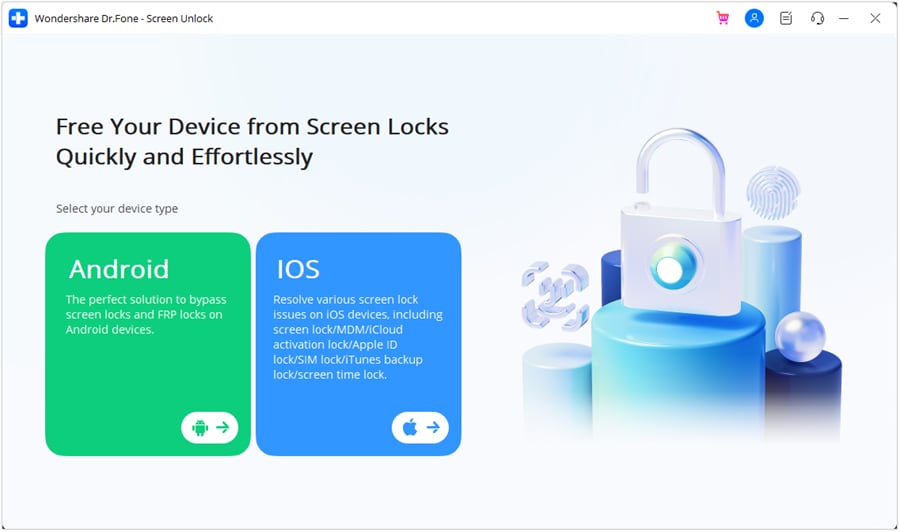
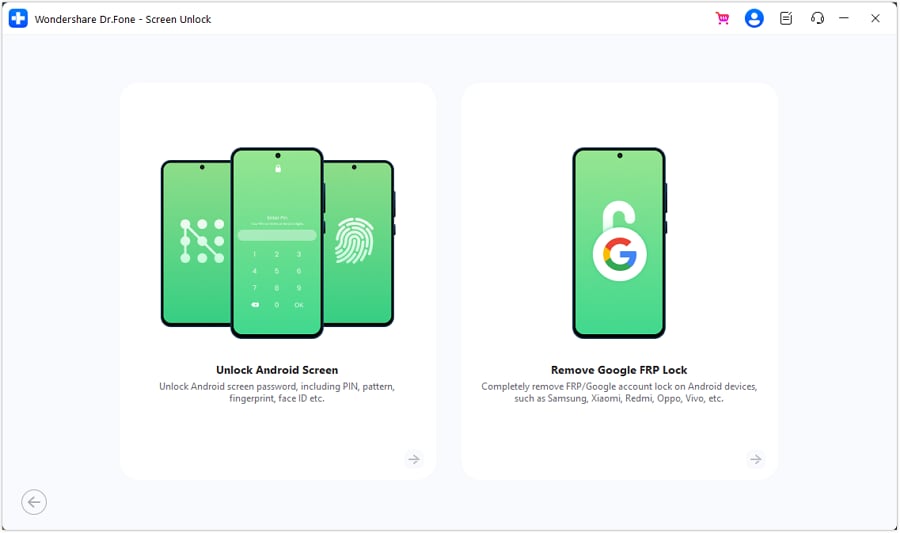
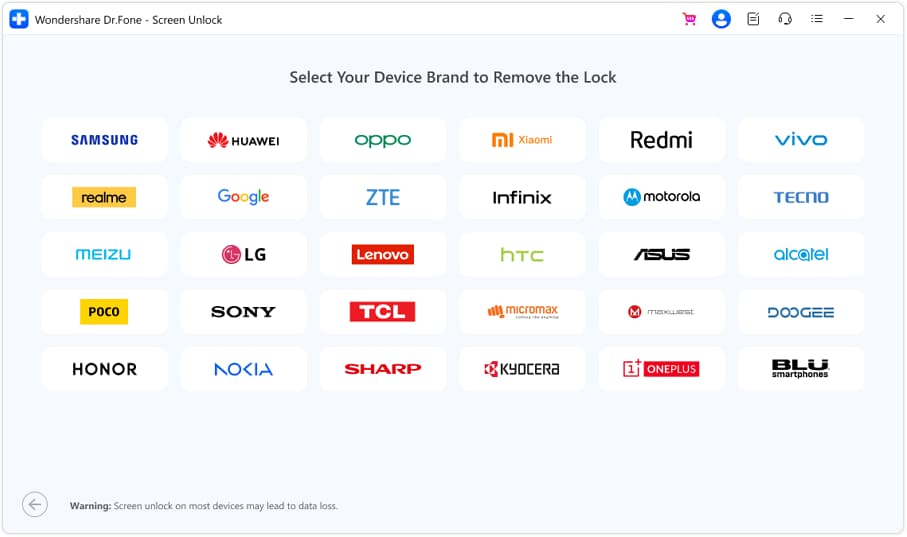
Step 3 Run Dr.Fone on a computer
Open the Screen Unlock module and follow the prompts to select the correct device brand/model so you don't waste limited battery time on wrong steps.
-
Step 4 Follow the on-screen unlock flow carefully
Complete the guided steps exactly as shown, and avoid unrelated actions (like factory reset prompts) if your priority is data rescue.
-
Step 5 Once access is available, switch immediately to data retrieval
Use your preferred transfer/backup method as soon as you can get into the device, because the phone may shut down again.




Conclusion
AI helps you triage a “phone won't charge” data rescue case by ranking likely causes, highlighting the safest sequence of checks, and clarifying whether power or access is the real blocker; once that diagnosis points to a lock-screen barrier during short power-on windows, Dr.Fone – Screen Unlock (Android) becomes the practical execution step to move from analysis to action.
FAQ
-
Why won't my phone charge but it still turns on sometimes?
This often points to an unstable power path (port contact, cable fit, battery aging) where brief power is possible but not sustained.OUR EXPERT
staff editor
Alice is a seasoned technology writer and Android specialist known for making complex mobile topics more accessible through clear, solution-oriented content.
 Add Wondershare Dr.Fone as a preferred source on Google