Effortlessly manage data through preview, delete, export, etc.

 100% Security Verified | No Subscription Required | No Malware

 :
: 
 ChatGPT
 Perplexity
 Gemini
 Claude
 Grok
Grok

I tapped “Install now,” my Pixel restarted, and now it’s stuck on the Google logo / overheating / draining fast. I can’t tell if it’s just settling after the update or if something actually broke.
Forum user
Pixel issues after a security update can show up as boot loops, overheating, battery drain, app crashes, or Wi‑Fi/Bluetooth problems—often right after you tapped Install now and the phone restarted. This can happen on devices like a Pixel 7 or Pixel 8, and it’s not always clear whether the update is still “settling” or something actually broke.
AI (like ChatGPT or Gemini) can help you describe symptoms precisely, narrow likely causes, compare possibilities, and decide which low-risk checks are worth trying first.
AI can’t see your phone’s real logs or guarantee what’s safe on your exact build, and repeated trial-and-error can make things worse (especially if it pushes you toward risky resets). Use prompts to diagnose carefully, then hand execution to a purpose-built tool when needed.
In this article
- Why Pixel issues after security update happens and what it means
- What changes after a security update
- Common post-update patterns
- Normal “settling” vs real fault
- Before you prompt the AI
- Using AI prompts to diagnose Pixel update problems safely
- When to stop troubleshooting Pixel after update and avoid data loss
- When a system-level repair workflow makes sense
- AI output vs reality: what to verify on your phone
Part 1. Why Pixel issues after security update happens and what it means
A security update can change drivers, permissions, radio firmware, or background optimization rules. If something conflicts (a corrupted update package, a buggy app, low storage, or unstable settings migration), the result can look like sudden “random” system instability.
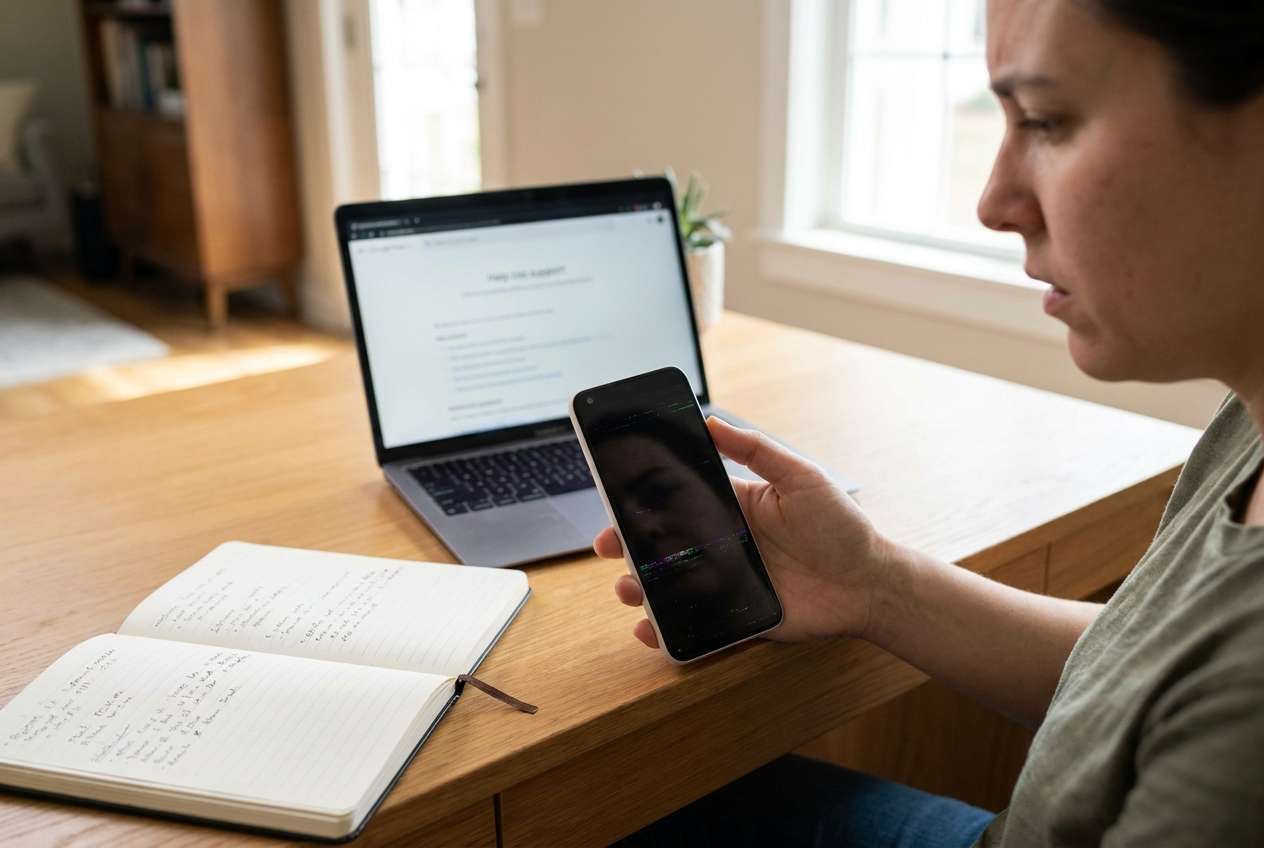
Common patterns include: the phone hangs on the Google logo, keeps restarting, drains fast, runs hot, drops network, or certain apps stop opening. Sometimes the phone is actually completing post-update tasks (indexing, optimizing apps), but the behavior shouldn’t remain severe for long.
If you’re unsure whether it’s normal post-update settling or a real fault, focus on what changed (immediately after the update) and what’s consistent (every boot vs. only on certain apps or networks).
1-1. Before You Prompt the AI
Capture a few specifics first so the AI can classify your case correctly:
- Pixel model and Android version/build (if you can access it)
- What you did right before the issue (installed update, rebooted, restored backup)
- Main symptom category (boot, battery/heat, apps, network, storage)
- Whether Safe Mode works and whether the issue repeats predictably
- Any recent app installs, VPNs, launchers, accessibility tools, or battery optimizers
Part 2. Using AI prompts to diagnose Pixel update problems safely
2-1. Level 1: Basic Prompt
My Pixel started having problems right after a security update. Ask me the minimum questions needed to narrow the cause, then suggest the safest next steps first (no data-wiping steps unless clearly justified). My symptoms are: [describe]. My Pixel model: [model]. Time since update: [time].
2-2. Level 2: Advanced Prompt
You are diagnosing “Pixel issues after security update.”
1) List the top 5 most likely causes for my symptoms and rank them by likelihood.
2) For each cause, rate the risk of common actions (low/medium/high) and recommend only low-risk checks first.
3) Separate what can be tested without restarting vs. requires a restart.
My details: Pixel model [ ], Android build [ ], storage free [ ], battery health concerns [ ], symptom timeline [ ], and whether Safe Mode changes anything [ ].
2-3. Level 3: Evidence Prompt
Help me triage Pixel issues after a security update using evidence.
Device info
- Pixel model: (e.g., Pixel 7 / Pixel 8)
- Android version + build number: (e.g., Android 14, AP1A.x)
- Security patch level month: (e.g., 2026-04)
- Storage free: (e.g., 8 GB free)
Trigger
- What I did right before it started: (e.g., tapped Install now, rebooted)
- Did it complete and boot normally once? (yes/no)
Symptoms (check all that apply)
- Boot loop / stuck on logo / random reboots
- Overheating / battery drain
- Wi‑Fi / Bluetooth / mobile data issues
- Apps crashing / Play Services errors
- Touchscreen / camera / sensors not working
What I’ve tried
- Restarted?
- Safe Mode?
- Cleared cache for a specific app?
- Uninstalled recent apps/VPN/launcher?
- Reset network settings?
Constraints
- I must avoid data loss: (yes/no)
- I can tolerate downtime: (minutes/hours)
Output:
A) The most likely category (software conflict vs update corruption vs hardware coincidence).
B) The next 3 lowest-risk steps.
C) The key evidence that would confirm/deny each top cause.
D) Clear “stop” conditions where I should not keep experimenting.
2-4. Prompt Refinement
If the AI’s answer feels generic, push it to become testable:
What one question would most change your ranking of causes, and why?
Separate causes into boot-level, system services, network stack, and third‑party app categories.
Rank my causes again, but only using evidence I provided; list what evidence is missing.
Which symptom is most diagnostic here: [boot loop / heat / Wi‑Fi drop / app crash]? Explain what it points to.
Give me a decision tree that avoids data loss and stops before any factory reset.
Part 3. When to stop troubleshooting Pixel after update and avoid data loss
Stop experimenting and switch to a structured recovery/repair approach if you see any of these:
- The Pixel is stuck in a boot loop or can’t stay on long enough to back up
- Overheating is persistent or the battery drops rapidly even when idle
- You’re locked out of critical accounts/apps (2FA, work profile) and repeated attempts risk lockouts
- Any next “DIY step” you’re considering involves wiping data and you’re not fully backed up
Once you’ve used AI to narrow the likely cause and identify the lowest-risk path, the next step is choosing a controlled execution method that matches your constraints (especially “avoid data loss”).
Part 4. When a system-level repair workflow makes sense
If your Pixel is unstable after a security update and your AI triage points to a system-level problem (boot loop, repeated crashes, corrupted update behavior), a dedicated repair workflow can be more predictable than repeated manual retries.
A purpose-built tool like Dr.Fone - System Repair (Android) is designed to run structured system repair steps from a computer, which is most relevant when basic checks don’t hold and you need a guided process. Compatibility can vary by brand/model, so confirm your device support before you begin.
Part 5. AI output vs reality: what to verify on your phone
AI can guide reasoning, but your device may behave differently under real constraints.
| AI suggests | Reality to verify on your phone |
|---|---|
| “It’s probably an app conflict” | Safe Mode may still reboot if the issue is deeper than apps |
| “Just wait—post-update optimization” | Severe heat/drain for hours can indicate a loop or runaway service |
| “Reset network settings” | This can remove saved Wi‑Fi/Bluetooth pairings and disrupt access |
| “Clear cache / restart a few times” | Repeated reboots during instability can worsen corruption symptoms |
AI is best at triage: turning vague symptoms into a short list of likely causes and low-risk checks. Execution (especially anything involving repair flows) is where you should switch from prompting to a controlled process.
Recommended Tool: Dr.Fone System Repair (Android)
If you’ve identified strong signs of system-level instability (like boot loops, repeated crashes, or update corruption behavior), using a structured workflow can help you avoid endless trial-and-error and reduce the chance of escalating risk.
 Fix Android instantly – no skills needed.
- Solve boot loop, black screen, won’t turn on, etc.
- High success rate for all system issues.
- User-friendly interface with easy-to-follow steps.
-
Step 1 Install Dr.Fone (System Repair)
Download and install Dr.Fone on your computer, and close other phone-management tools to reduce connection conflicts.
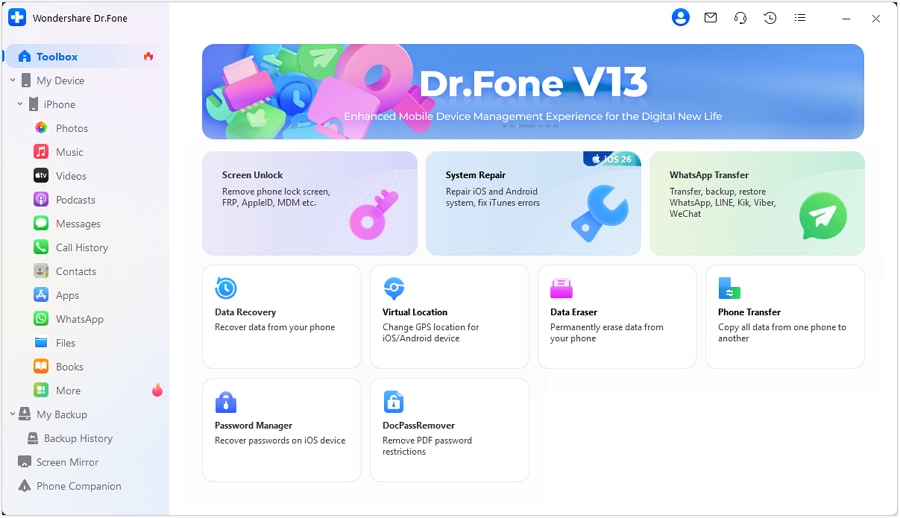
-
Step 2 Connect your Android device
Plug the Pixel into the computer with a reliable cable, and keep the phone charged to avoid interruptions mid-process.
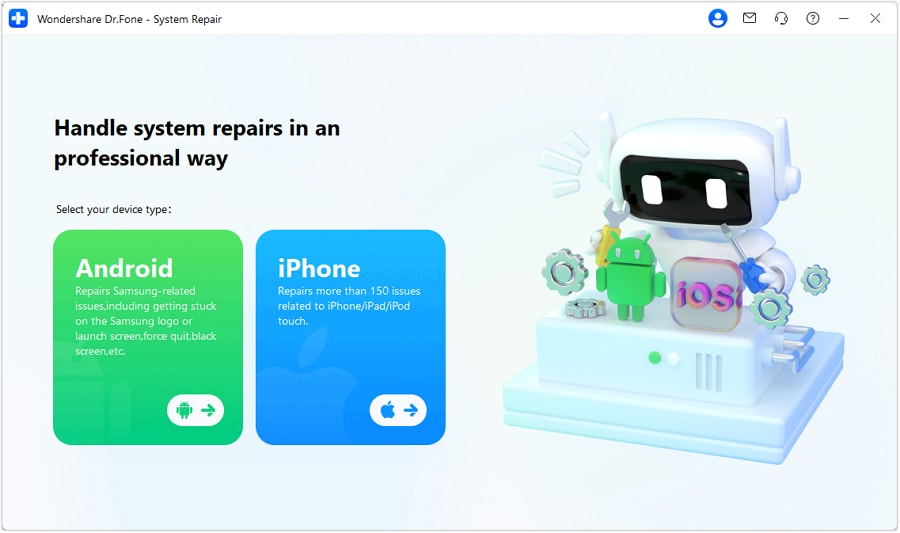
-
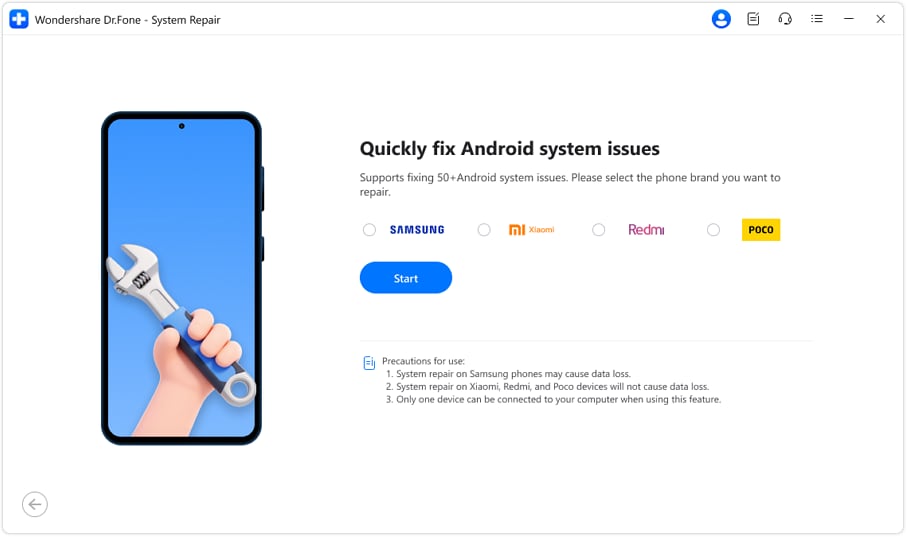
Step 3 Open System Repair (Android) and select the repair option
In Dr.Fone, choose System Repair (Android) and follow the on-screen selections carefully to avoid choosing a path that implies data loss unless you accept that risk.
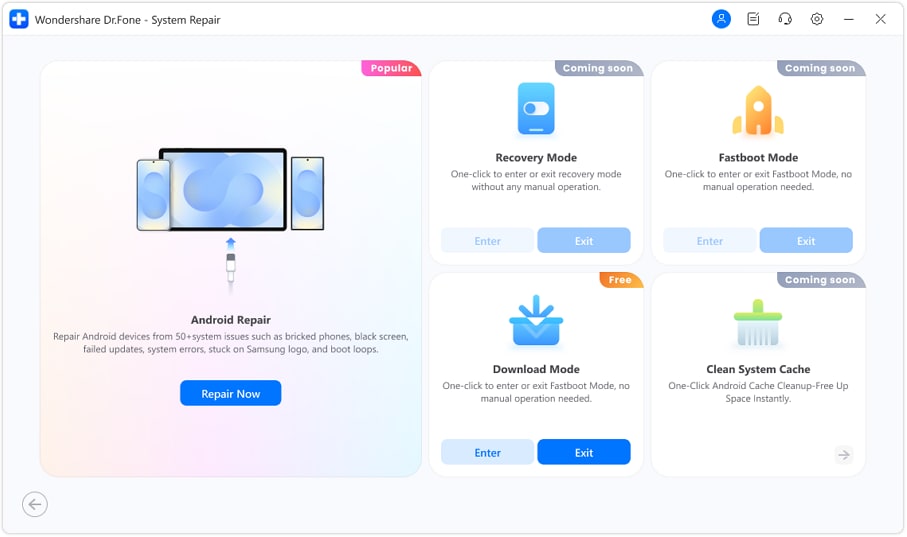
-
Step 4 Follow the guided repair flow
Enter the requested device details accurately and proceed step-by-step; incorrect device info can lead to mismatched firmware actions.
-
Step 5 Restart and re-check the failing symptoms
After the process completes, verify the original failure (boot stability, heat/drain, Wi‑Fi, app crashes) before reinstalling “suspect” apps or restoring settings.




Conclusion
Use AI to turn “Pixel issues after security update” into a clear symptom profile, ranked likely causes, and low-risk next steps—then switch to a controlled execution method like Dr.Fone System Repair (Android) when the problem looks system-level and trial-and-error starts adding risk.
FAQ
-
Why is my Pixel overheating after a security update?
It can be post-update background work (indexing/optimizing), a stuck process (Play services, media scanning), or an app/setting conflict triggered by the update; if heat is persistent for hours with fast drain, treat it as abnormal. -
How long should I wait after a Pixel security update before worrying?
Mild warmth and slightly higher drain for a short period can be normal, but repeated reboots, extreme heat, or rapid battery drop that doesn’t improve is a sign to stop waiting and start structured triage. -
Does Safe Mode help diagnose Pixel problems after updates?
Yes—if symptoms improve in Safe Mode, third‑party apps or launchers become more likely; if nothing changes, suspect system services, update corruption, or deeper configuration issues. -
Will resetting network settings fix Wi‑Fi issues after a Pixel update?
Sometimes, but it also removes saved networks and Bluetooth pairings; it’s best used after confirming the problem is network-specific (only Wi‑Fi/Bluetooth/mobile data) rather than a broader system instability. -
When is a factory reset justified for Pixel issues after a security update?
Only when evidence strongly suggests configuration corruption and you have a verified backup; it’s a high-impact step and shouldn’t be the first move for unclear symptoms. -
What if the Pixel is stuck in a boot loop after the update?
Treat it as a system-level failure: minimize repeated reboots, identify whether you can access recovery/limited modes, and use a controlled repair approach if basic stabilization steps don’t work.
 Add Wondershare Dr.Fone as a preferred source on Google