Effortlessly manage data through preview, delete, export, etc.

 100% Security Verified | No Subscription Required | No Malware

 :
: 
 ChatGPT
 Perplexity
 Gemini
 Claude
 Grok
Grok

I deleted an app to free up space and later realized the downloads weren’t actually in the cloud. Is there a safe way to check what’s truly backed up before I remove anything?
Apple Support Community user
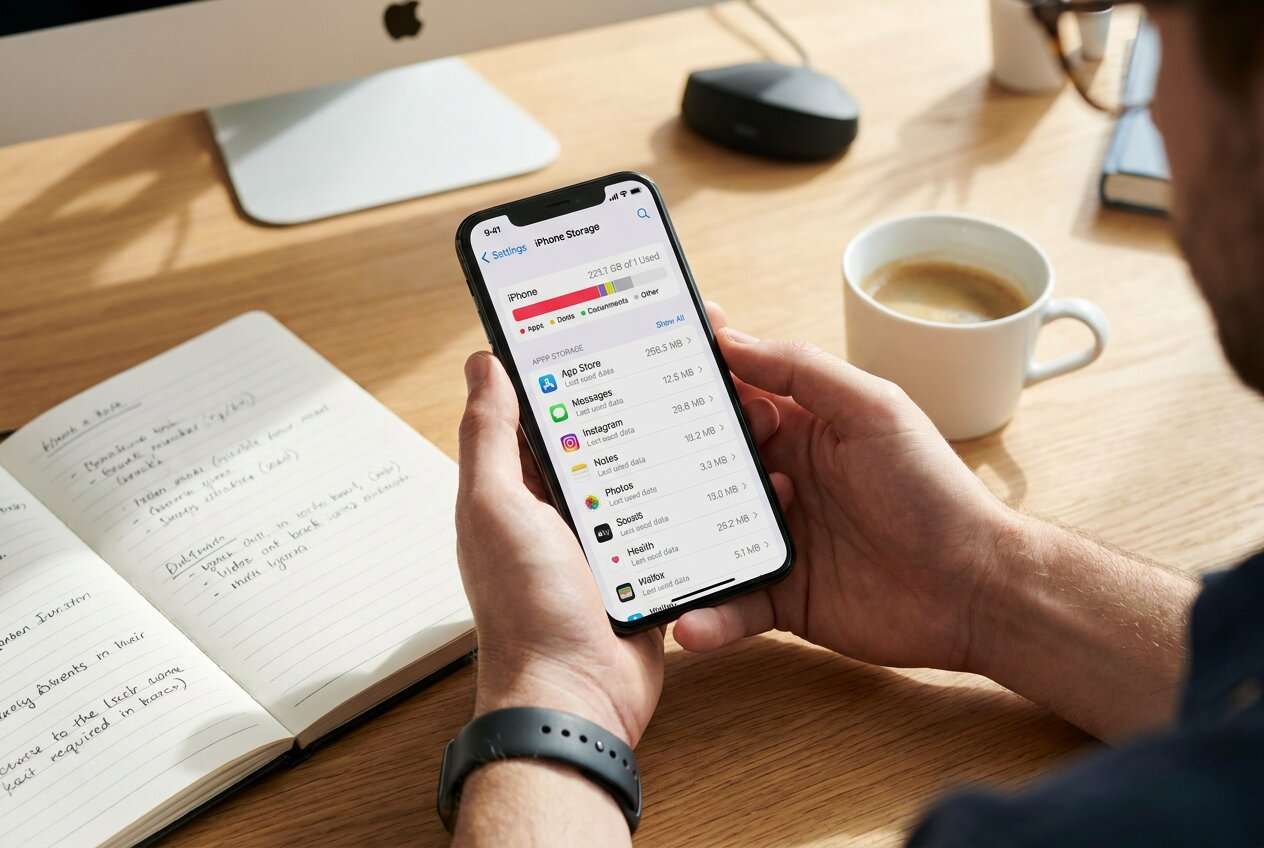
Auditing iPhone apps that take too much storage sounds simple, but missing one step can lead to deleting the wrong data, losing offline files, or wiping app content you assumed was “in the cloud.”
AI helps by turning a vague goal (“free space”) into a clear workflow: what to check first, what to verify, what’s safe to remove, and what requires backups or proof before you touch anything.
AI can’t see your iPhone’s actual storage breakdown or confirm what’s synced, cached, or locally stored—so execution still needs real device tools once the plan is locked.
In this article
- How to plan the audit without missing critical steps
- Why “iPhone Storage” can be misleading
- What’s most likely to cause permanent loss
- Verification gates before any deletion
- When you’re ready to stop planning
- What the AI needs to know
- Using AI prompts to build a safer workflow
- AI plan vs. real device constraints
- Execute the workflow safely with Dr.Fone
Part 1. How to Plan audit iphone apps taking too much storage Without Missing Critical Steps
You’re low on iPhone storage, the phone is lagging, and “Settings > General > iPhone Storage” shows a few apps dominating space—but it’s unclear what’s safe to remove versus what will permanently erase data you care about.
1-1. Why generic advice fails
AI answers like “delete unused apps” often skip sequencing and verification: which app categories are risky, how to confirm iCloud sync, and how to tell “documents & data” from reinstallable cache.
1-2. The most common “point of no return”
The point of no return usually happens when you delete an app (or its in-app downloads) assuming it’s synced—then later discover those files were only local (common with messaging apps, media editors, offline maps, podcast downloads, and cloud drives with offline folders).
1-3. Build verification gates before execution
Before you remove anything, define what counts as proof (backup timestamps, sync toggles, “last backup” screens, available cloud space) and what actions are forbidden until proof is confirmed.
1-4. Define your success and rollback criteria
Pick a target (for example, “free 10 GB”) and write down how you will recover if something goes wrong (for example, “create a full backup first, then only proceed app-by-app after verification”).
Part 2. What the AI Needs to Know
Share a few facts so the plan can be specific and verifiable.
- iPhone model and iOS version (e.g., iPhone 13, iOS 17.5)
- Current free space and total storage (e.g., 2 GB free of 128 GB)
- The top 5 storage-hog apps and their sizes as shown in iPhone Storage
- Whether you use iCloud for Photos, Messages, Drive, WhatsApp backup, etc.
- Any “must-not-lose” data (e.g., WhatsApp chats, voice notes, offline files, game progress)
- Your acceptable risk level (free space quickly vs. preserve everything)
- Whether you have a computer available and enough external storage for backups
Part 3. Using AI Prompts to Build a Safer audit iphone apps taking too much storage Workflow
Use the prompts below to make the workflow explicit before you touch anything.
3-1. Level 1: Basic Prompt
I need a planning checklist to audit iPhone apps taking too much storage and free space safely. Build the safest sequence of checks first, then identify the lowest-risk cleanup actions. Do not give execution steps until verification steps are defined.
3-2. Level 2: Advanced Prompt
Create a structured workflow to audit iPhone apps taking too much storage with three phases: Preparation, Execution, and Verification.
Mark steps as critical vs optional, and call out “point of no return” actions (like deleting an app or clearing downloads) that must not happen before I confirm what’s backed up or synced.
3-3. Level 3: Evidence Prompt
Design a safer audit plan for my iPhone storage situation using the details below, and include checks before / during / after each risky action.
Context: iPhone (iPhone 12, iOS 17.4), storage (1.8 GB free of 64 GB), top apps: Photos (18 GB), WhatsApp (9 GB), YouTube (6 GB), Instagram (4 GB), Files/Drive (3 GB). I use iCloud Photos (On), and I’m unsure if WhatsApp is backed up. I cannot lose chat history or offline work files. I have a laptop available and can do a full backup if needed.
Output: (1) risk map by app type, (2) verification checks, (3) cleanup options ranked by safety, and (4) a “stop sign” list of actions not allowed until evidence is confirmed.
3-4. Prompt Refinement
Give me a table with columns: App, What typically consumes space, What’s safe to remove, What can cause permanent loss, How to verify it’s backed up, Rollback plan.
Rewrite the workflow as if/then rules (e.g., “If WhatsApp backup is not confirmed, then do not delete the app; instead do X.”).
List the minimum evidence I must collect (screenshots/values) before any deletion (e.g., iCloud sync toggles, last backup timestamps, app storage breakdown screen).
Create a “verification-first” order for the top 5 apps and explain why that order reduces irreversible mistakes.
Part 4. AI Plan vs. Real Device Constraints
| Planning task | AI can help | Real constraint | What to do |
|---|---|---|---|
| Identify risky apps and irreversible actions | Yes—risk mapping and sequencing | AI can’t see your actual storage details | Use iPhone Storage screens to supply exact numbers |
| Define verification checks (sync/backup proof) | Yes—checklists and decision rules | AI can’t confirm backups are real or current | Verify timestamps, toggles, and available cloud space yourself |
| Choose a minimal-loss cleanup strategy | Yes—rank actions by risk | App behavior varies by version/account | Validate inside each app’s settings before deleting anything |
| Confirm results and roll back if needed | Yes—post-check list | AI can’t restore data or run device tools | Use real backup/restore tooling and documented rollback steps |
AI improves planning, but cannot execute changes on your iPhone, confirm backup integrity, or recover data after a mistaken deletion—those require real device actions and tools.
Part 5. Audit iphone apps taking too much storage: Execute the Workflow Safely with Dr.Fone
Execution matters now because storage cleanup is where irreversible mistakes happen; the goal is to reduce risk by acting only after your verification gates are satisfied. For hands-on device management, you can use Dr.Fone Basic - Data Manager to back up key data, review large items, and remove content in a controlled order.
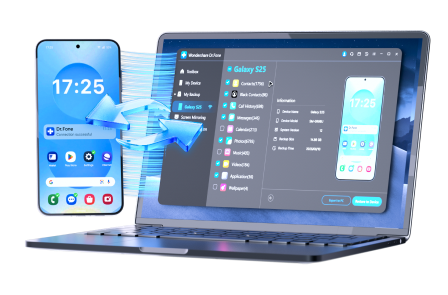
 Easily manage data through preview, delete, export, etc.
- Transfer all data between devices.
- Robust backup solutions for reliable data protection.
- Mirror screens to PC for meetings, teaching, and control.
Before you delete apps or clear downloads, prioritize rollback protection (a current backup), then do targeted cleanup only after you confirm the backup/sync evidence you defined during planning.
-
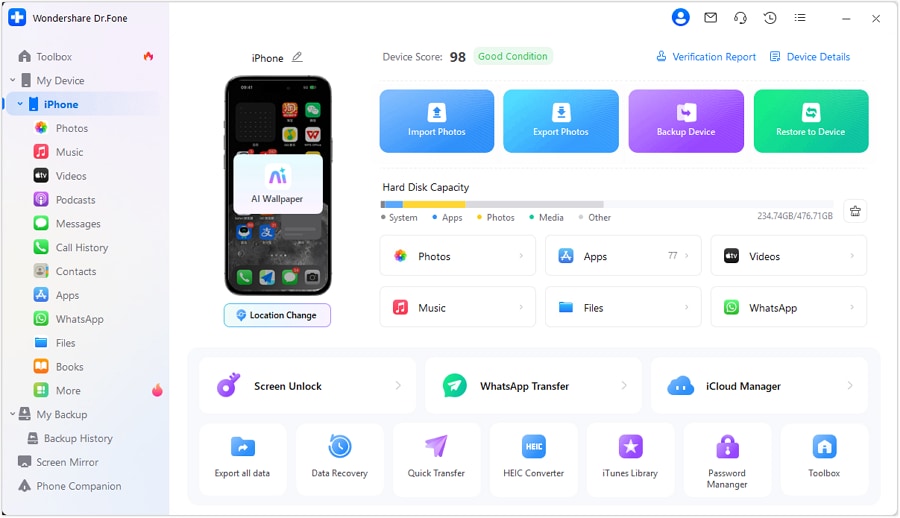
Step 1 Connect your iPhone and capture a baseline
Connect your iPhone to the computer so you can back up and manage data before any irreversible cleanup actions.
-
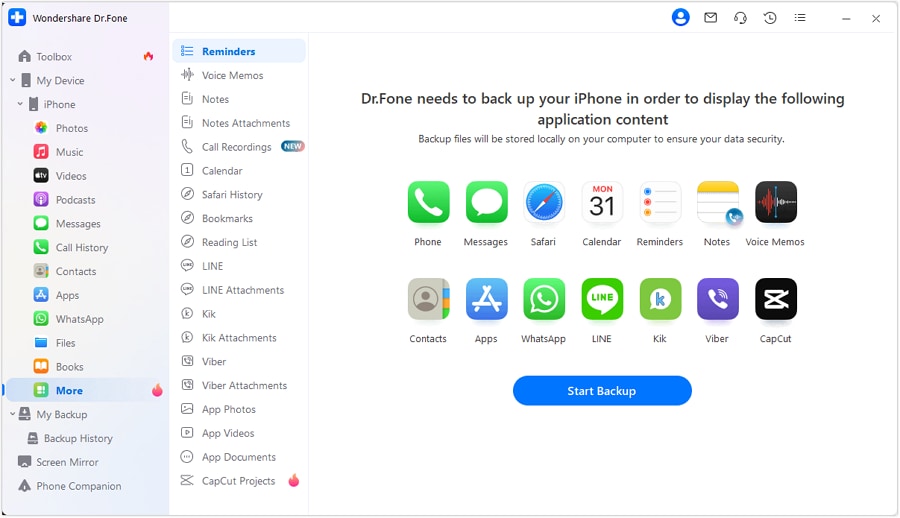
Step 2 Back up what you can’t afford to lose (rollback protection)
Create a current backup of critical data first, then confirm the backup completes and you have enough storage to keep it.
-
Step 3 Perform targeted cleanup only after verification
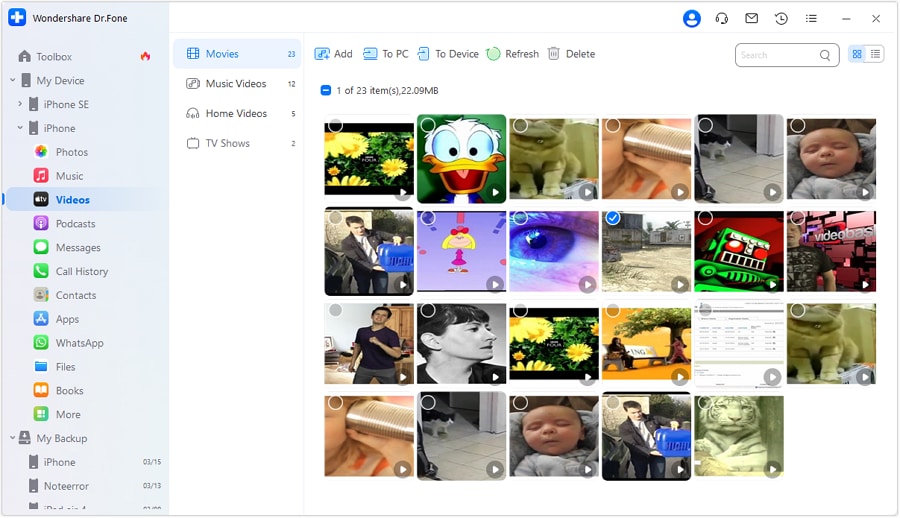
Follow your verified checklist and clean up the specific categories you planned (for example, large videos or downloads), avoiding any “point of no return” action until proof is confirmed.

-
Step 4 Validate outcomes and stop if results diverge
After each action, re-check space recovered and open critical apps to confirm important content (chats, photos, offline files) is intact before proceeding to the next item.




Conclusion
Use AI to plan the audit with verification gates, risk ranking, and a clear stop list—then use a real tool like Dr.Fone to execute only after you’ve confirmed backups/sync status, because AI can’t validate or recover your data if an irreversible step goes wrong.
FAQ
-
What’s the riskiest moment in this workflow?
Deleting an app or clearing in-app downloads before confirming a current backup/sync proof (especially for messaging apps, cloud drives with offline files, and editors). -
Is “Offload App” safer than deleting the app?
Usually yes, because it typically removes the app binary while keeping documents/data, but you still need to verify what will be retained for that specific app and iOS version. -
What should I verify before touching WhatsApp (or similar apps)?
Confirm the backup method you rely on is enabled and current (backup toggle + last backup timestamp + enough cloud space). If you can’t confirm, treat deletion as a no-go. -
How do I know if Photos storage can be reduced safely?
Verify iCloud Photos is enabled, confirm the device is fully synced (not stuck uploading/downloading), and avoid deleting originals until you’ve confirmed what’s stored in iCloud. -
When should I stop mid-cleanup?
Stop if storage numbers don’t change as expected, if a critical app shows missing content, or if you realize a verification step was skipped—restore/rollback before continuing.
 Add Wondershare Dr.Fone as a preferred source on Google