Effortlessly manage data through preview, delete, export, etc.

 100% Security Verified | No Subscription Required | No Malware

 :
: 
 ChatGPT
 Perplexity
 Gemini
 Claude
 Grok
Grok

I tapped Install (or accepted a system update) and now my old Android is suddenly super laggy—missed taps, keyboard delay, random freezes. I can’t tell if it’s still working or silently stuck.
Reddit user, r/Android
An old Android phone can become suddenly sluggish and unresponsive right after you tapped Install on an app, accepted a system update, or restarted to “speed things up”—and then everything feels delayed, frozen, or randomly non-responsive. Nothing seems to change even after several minutes, so it’s unclear whether it’s still “working” or silently stuck.
AI (like ChatGPT or Gemini) can help you describe the symptoms precisely, narrow the most likely causes, and choose low-risk next steps based on what you observe (storage, overheating, app conflicts, system corruption, battery health, etc.).
AI can’t verify what’s happening inside your specific device in real time, and trial-and-error actions (factory resets, clearing the wrong data, repeated forced restarts) can increase data loss or make the phone harder to stabilize—so use AI to decide, then switch to a safer execution method.
In this article
- Part 1. Why an old Android phone suddenly sluggish and unresponsive happens and what it means
- Common triggers on older devices
- What “sluggish and unresponsive” can mean
- Why the symptom pattern matters
- Before you prompt the AI
- Part 2. Using AI prompts to diagnose Android sluggishness safely
- Part 3. AI output vs reality: what to verify
- Part 4. When to stop troubleshooting Android lag and avoid data loss
- Part 5. Old Android phone performance issues: resolve it safely with Dr.Fone

Part 1. Why an old Android phone suddenly sluggish and unresponsive happens and what it means
This often shows up on older devices (for example, a Samsung Galaxy S9 or Pixel 3) after a trigger like a new app install, a Play Store app update batch, enabling battery saver, or completing an Android update and reboot. You may notice long app launch times, missed taps, keyboard lag, or the screen not responding while audio still plays.
1-1. What “sluggish and unresponsive” can mean
“Sluggish and unresponsive” can mean different things: low free storage, thermal throttling, RAM pressure, a runaway app, SD card issues, battery voltage dips, or system-level damage after an update. The correct next step depends on which pattern you’re seeing (random freezes vs. freeze only in one app vs. freezes after unlocking).
1-2. Why the symptom pattern matters (especially if you also use iPhone)
If you’re also an iPhone user (say an iPhone 13 or iPhone 14), the feeling is similar to iOS “lag,” but on Android the root cause is more often tied to storage/RAM pressure, background services, or a corrupted system component—so you’ll want to capture a few clues first.
1-3. Before You Prompt the AI
Collect these basics so the AI can narrow causes quickly:
- Phone brand/model and Android version (if known)
- What changed right before it started (update, install, restart, new SD card)
- Symptoms pattern (always laggy vs. only after unlock vs. only in certain apps)
- Heat, charging state, battery %, and whether it happens on Wi‑Fi/cellular
- Storage free space estimate and whether an SD card is inserted
- Any on-screen warnings (System UI not responding, app not responding)
Part 2. Using AI prompts to diagnose Android sluggishness safely
2-1. Level 1: Basic Prompt
My old Android phone became suddenly sluggish and unresponsive. Ask me the minimum set of questions to identify the most likely causes, then suggest the lowest-risk next steps that avoid data loss.
2-2. Level 2: Advanced Prompt
Act as a mobile triage assistant. Based on my answers, rank the top 5 likely causes of sudden Android lag/freezing (from most to least likely).
Constraints: prioritize steps that are reversible and low-risk; flag any step that could cause data loss or worsen instability.
Output format:
1) Quick clarification questions (max 8)
2) Ranked causes with “why it fits” and “what evidence would confirm”
3) A staged plan: Stage A (no-risk checks), Stage B (low-risk changes), Stage C (stop and use a repair tool / service)
2-3. Level 3: Evidence Prompt
Diagnose my Android sluggish/unresponsive issue using the evidence below, and tell me what it most likely is (ranked) plus the safest next actions.
Device info
- Brand/model: (e.g., Samsung Galaxy S9)
- Android version: (e.g., Android 10 / unknown)
- Storage free: (e.g., ~1 GB free / 20% free)
- SD card: (e.g., yes/no; size; new/old)
- Battery health clues: (e.g., shuts down at 20%, gets hot, swollen, fast drain)
Trigger
- What happened right before: (e.g., installed a launcher, system update, restored backup, restarted)
Symptoms
- What exactly is unresponsive: (touch, specific apps, keyboard, home screen, notifications)
- Frequency: (constant / intermittent / only after unlocking)
- Heat: (cool/warm/hot)
- Error messages: (e.g., “System UI isn’t responding”)
What I already tried
- (e.g., reboot, safe mode attempt, clearing cache of one app, removing SD card)
Goal & constraints
- Priority: (save data / fastest stabilization / both)
- Data backup available: (yes/no)
Now: 1) rank causes, 2) list the 3 most decisive checks, 3) give a low-risk plan, 4) tell me when to stop and avoid damage.
2-4. Prompt Refinement
Use these follow-ups to force clearer, more reliable triage:
Ask missing questions:
What 5 answers would change your diagnosis the most, and why?
Rank causes:
Re-rank your causes assuming I have less than 2 GB free storage, and explain the shift.
Separate categories:
Separate likely causes into: storage/RAM, overheating/power, app-level conflict, hardware aging, and system corruption—then map my symptoms to each.
Identify key evidence:
What single observation (that I can safely check) would best distinguish “bad battery/thermal throttling” from “system corruption”?
Part 3. AI output vs reality: what to verify
AI can guide decisions, but it can’t directly verify device state or safely apply changes for you.
| What AI suggests | What you should verify in reality |
|---|---|
| “It’s probably low storage” | Confirm free space and whether the phone is stuck indexing/media-scanning |
| “A third-party app is causing freezes” | Check if the issue persists in Safe Mode or only in one app context |
| “Overheating or battery issues” | Observe heat, charging behavior, sudden drops, shutdown patterns |
| “System files may be corrupted” | Note update timing, repeated “System UI” errors, boot/lockscreen lag patterns |
AI is strongest at triage logic (what fits your pattern and what to check next). Execution still needs careful, device-appropriate actions—especially if symptoms point to system-level corruption.
Part 4. When to stop troubleshooting Android lag and avoid data loss
Stop “trying random fixes” when the pattern suggests risk is rising faster than clarity.
- The phone repeatedly freezes on the lock screen or shows “System UI isn’t responding” multiple times per day.
- You see overheating, battery swelling, burning smell, or rapid temperature spikes while idle/charging.
- Storage is critically low and the device can’t stay stable long enough to back up essential data.
- Forced restarts are increasing in frequency, or the phone begins failing to boot reliably.
Once you’ve used AI to narrow the likely cause to a system issue (not just one misbehaving app), it’s usually time to move from diagnosis to a controlled execution path.
Part 5. Old Android phone performance issues: resolve it safely with Dr.Fone
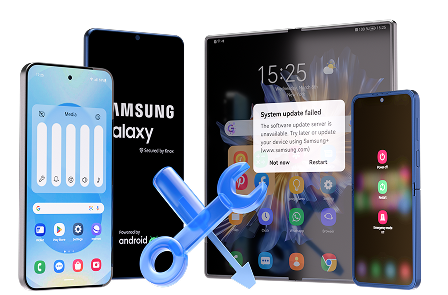
If AI triage points to system instability (especially after updates, repeated “not responding” errors, or lockscreen-level lag), a practical next step is using a dedicated execution tool such as Dr.Fone - System Repair (Android) to apply a guided repair workflow—particularly for Repair Samsung Phone Issues—instead of cycling through high-risk manual attempts that may worsen freezes or jeopardize data.
 Fix Android instantly – no skills needed.
- Solve boot loop, black screen, won’t turn on, etc.
- High success rate for all system issues.
- User-friendly interface with easy-to-follow steps.
-
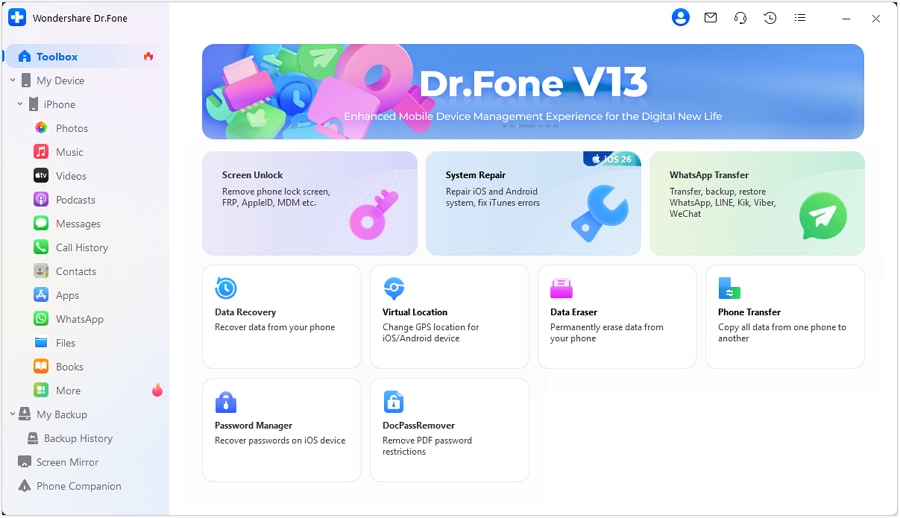
Step 1 Confirm device scope
Open Dr.Fone and choose System Repair (Android), verifying your exact brand/model to avoid mismatched repair actions.
-
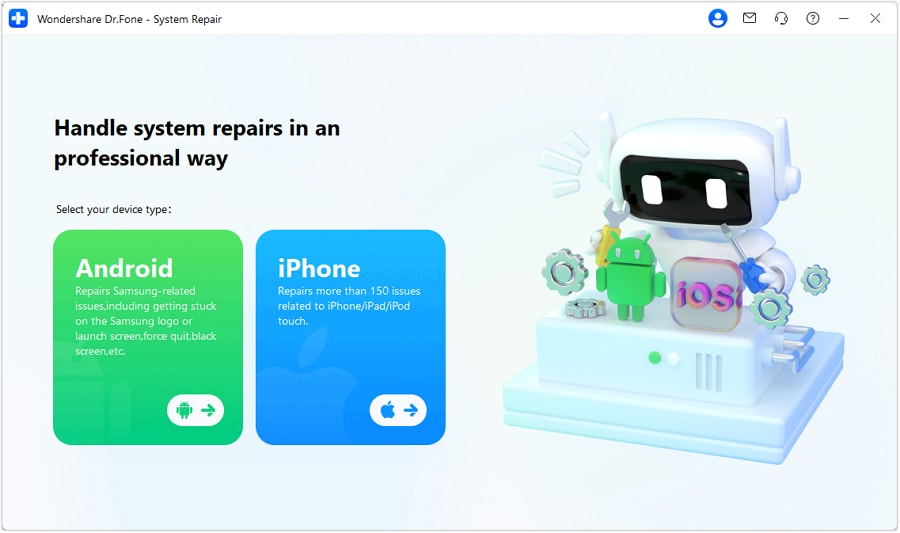
Step 2 Choose Android System Repair
Select the Android repair option and proceed carefully if the phone is unstable, keeping it connected and avoiding interruptions.
-
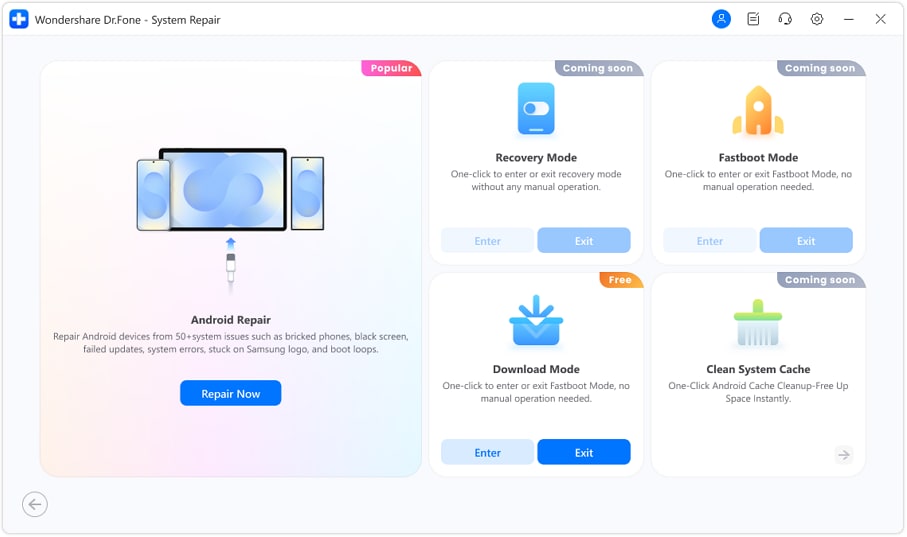
Step 3 Enter the required device mode
Follow the on-screen steps to put the device into the correct mode (don’t unplug mid-process, as that can increase failure risk).
-
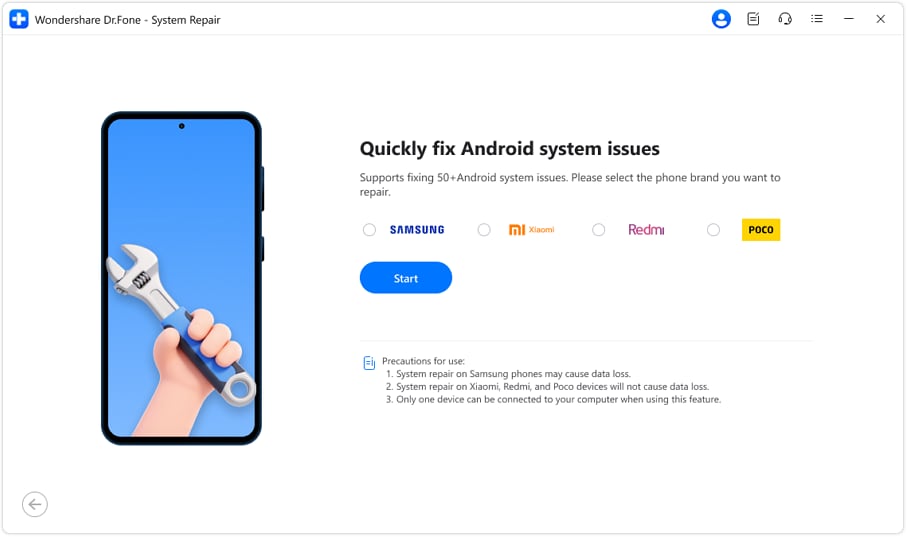
Step 4 Run the guided repair flow
Start the repair and wait for completion, watching for prompts that indicate compatibility or firmware selection requirements.
-
Step 5 Re-check stability after restart
After the phone boots, confirm responsiveness before reinstalling apps or restoring settings that may reintroduce the trigger.




Conclusion
Use AI to turn vague “sluggish and unresponsive” behavior into a ranked set of likely causes and a low-risk decision path, then hand off execution to a controlled repair workflow like Dr.Fone when the evidence points to system-level instability rather than everyday app or storage housekeeping.
FAQ
-
Why did my Android phone become sluggish all of a sudden?
Common triggers include critically low storage, a problematic app update, background indexing after an update, an aging battery causing power throttling, or system corruption after a failed/partial update. -
How can I tell if an app is causing the unresponsive behavior?
If the lag happens mainly inside one app or right after installing/updating an app, that’s a strong clue; AI can help you decide which safe checks to run before removing anything important. -
Is it safe to keep force-restarting a frozen phone?
Repeated forced restarts can increase instability and may risk data integrity; use them sparingly and focus on identifying a repeatable symptom pattern first. -
What symptoms suggest system corruption instead of normal aging?
Frequent “System UI isn’t responding,” lockscreen-level freezes, and worsening behavior right after an OS update are stronger indicators than gradual slowdowns over months. -
Does Dr.Fone System Repair (Android) work for Samsung phones?
It includes a workflow designed to Repair Samsung Phone Issues, which can be relevant when AI triage suggests the OS is unstable rather than a single app problem.
 Add Wondershare Dr.Fone as a preferred source on Google