Effortlessly manage data through preview, delete, export, etc.

 100% Security Verified | No Subscription Required | No Malware

 :
: 
 ChatGPT
 Perplexity
 Gemini
 Claude
 Grok
Grok

I turned sync on across my phone, tablet, and laptop and suddenly had duplicates everywhere—and some newer edits looked like they got overwritten. I wish I had a checklist and a “don’t cross this line yet” step before I started.
Apple Support Community user
Syncing notes across a phone, tablet, and laptop sounds simple until one missed step creates duplicates, overwrites newer edits, or wipes a local notebook.
AI helps you plan a safer workflow: what to check first, what order to do things in, where conflicts happen, and how to verify you’re getting the same notes everywhere before you commit.
AI can’t see your devices, confirm what’s really synced, or perform transfers and backups; once your plan is solid, you’ll need real tools to execute the steps and validate the results.

In this article
- How to plan a note sync workflow without missing critical steps
- Why “sync” is a chain of actions
- Choosing the right sequence
- Define the point-of-no-return
- How to make verification possible later
- What the AI needs to know
- Using AI prompts to build a safer workflow
- AI plan vs. real device constraints
- Execute the workflow safely with Dr.Fone
Part 1. How to Plan Phone Tablet and Laptop Note Sync Workflow Without Missing Critical Steps
You might be moving from one notes app to another, adding a new tablet, or trying to merge years of notes spread across devices and accounts. The risk is that “sync” isn’t one action—it’s a chain of actions with hidden state (accounts, local-only notes, conflicts, offline caches).
Even after you ask AI what to do, you can still feel unsure about sequence: should you sign in everywhere first, export first, merge first, or clean duplicates first? The wrong order can make later verification impossible.
The point-of-no-return moment is when you enable sync or import into the “destination” account/app and it starts propagating changes everywhere—at that point, a bad merge can spread duplicates or deletions across all devices.
Part 2. What the AI Needs to Know
Share just enough detail for the AI to map a safe sequence and verification checks.
- Devices and OS versions (phone model + iOS/Android version; tablet; laptop + Windows/macOS version)
- Notes apps involved (current app(s) and target app), plus whether they support cloud sync
- Accounts involved (Apple ID, Google account, Microsoft account) and whether you can log into all of them
- Where notes currently live (local-only vs cloud; multiple accounts in one app)
- Note types to preserve (text, images, handwriting, checklists, attachments, tags/folders)
- Volume and age (approx. number of notes; oldest note date; any very large attachments)
- Current problems (duplicates, missing notes, conflicts, slow sync, “some notes only on one device”)
- Constraints (must keep work/personal separate; limited storage; weak Wi‑Fi; deadline)
- Your tolerance for change (okay to switch apps, or must stay within one ecosystem)
Part 3. Using AI Prompts to Build a Safer Phone Tablet and Laptop Note Sync Workflow
Use prompts to force a clear order of operations, define verification gates, and delay any irreversible sync/merge until you’ve proven your inventory and backups.
3-1. Level 1: Basic Prompt
Help me plan a safe workflow to sync notes across my phone, tablet, and laptop without losing anything or creating duplicates.
I need the correct sequence of actions and the checks I should do before I turn on syncing everywhere.
Don’t give device instructions—focus on planning, risks, and verification.
3-2. Level 2: Advanced Prompt
Design a structured workflow for my phone–tablet–laptop note sync with three phases: Preparation, Execution, and Verification.
In each phase, list critical steps vs optional steps, and call out the point-of-no-return step I must not do until all pre-checks pass (e.g., enabling sync that propagates deletions or importing into the destination account).
Also include a “conflict & duplicate handling” strategy and a rollback plan.
3-3. Level 3: Evidence Prompt
Here’s my context—build a plan with checks before, during, and after, and specify what evidence I should record at each step (counts, screenshots, timestamps, sample-note checks).
- Devices: phone (iPhone 13, iOS 17), tablet (iPad, iPadOS 17), laptop (Windows 11)
- Current notes: mixed between local notes and cloud notes; some notes only on the phone
- Accounts: Apple ID (personal), Google account (work)
- Target outcome: all personal notes available on all three devices; work notes remain separate
- Data: ~1,200 notes, includes images and PDFs
- Known issues: duplicates exist; some notes missing on the laptop
Requirements: define a verification checklist (e.g., total note count per folder, 10 “sentinel notes” to spot-check, attachment opening test) and clearly mark the irreversible step I should delay.
3-4. Prompt Refinement (Follow-up Prompts)
Ask me 10 specific intake questions you need answered to remove ambiguity, grouped by Accounts / Storage location / Note types / Current sync status / Risks.
Produce a single table with columns: Step, Goal, Required evidence, Failure signals, Stop/rollback action—no narrative.
Give me two alternative workflows: (A) “least change” keeping current notes app, (B) “migration” to a new app—then state which is safer under my constraints and why.
Define sentinel notes for verification: tell me how to choose 10 notes (date ranges, attachments, tags) and exactly what to check on each device.
Write a conflict-resolution policy I can follow consistently (e.g., newest edit wins vs manual review) and list when that policy is unsafe.
Part 4. AI Plan vs. Real Device Constraints
| Planning item (AI can help) | What real devices/tools must do |
|---|---|
| Map the safest sequence and “no-return” gates | Perform actual backups, exports, imports, and device sync actions |
| Define verification evidence (counts, spot checks, attachment tests) | Display true sync status, conflicts, and what actually arrived on each device |
| Identify risk scenarios (local-only notes, multi-account mixing, cache delays) | Access account settings, permissions, storage, and network conditions |
| Create a rollback strategy and decision rules | Restore data from backups and confirm restoration integrity |
AI improves planning, but it cannot execute or confirm real sync outcomes; you still need device access and reliable tools to carry out and verify the workflow.
4-1. When to Stop Planning and Start Execution
- You have a written sequence with a clearly marked point-of-no-return step and you know how to avoid reaching it early.
- You can name exactly what “success” looks like (counts per folder, sentinel notes, attachments opening) and how you’ll prove it on each device.
- You have a rollback path that does not depend on memory (where backups are, what date, how to verify restore).
- You’ve resolved key ambiguity: which account is authoritative, which notes are local-only, and how duplicates/conflicts will be handled.
If all four are true, you’re no longer guessing—you’re choosing to move from planning to controlled execution.
Part 5. Phone Tablet and Laptop Note Sync Workflow: Execute the Workflow Safely with Dr.Fone
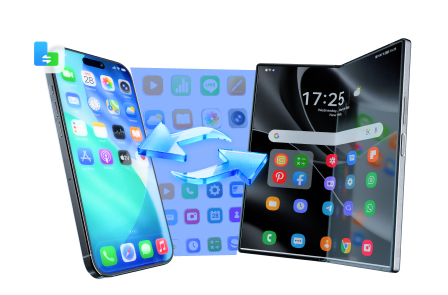
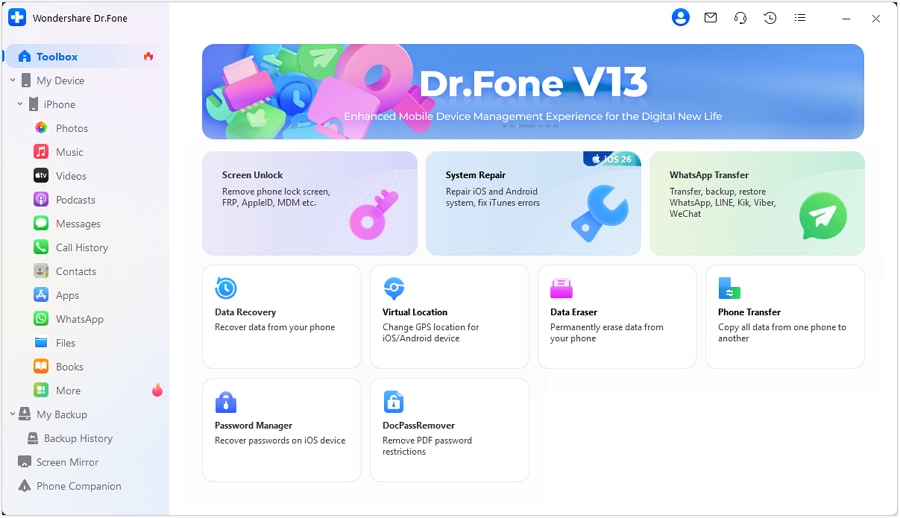
Execution is where most losses happen, because actions can propagate across devices quickly. Once your verification gates are defined, you can use Dr.Fone - Phone Transfer as the execution layer to back up, transfer, and restore with less manual handling.
 Move data between iOS to Android and vice versa.
- Transfer contacts, SMS, photos, videos, music, and more types.
- Available with all phones with Android and iOS versions.
- Simple, click-through process.
-
Step 1 Lock in a recoverable baseline
Action: Use Dr.Fone to create a backup of the source data before any sync/merge/import steps, and label it with date/time so you can identify it later.
Limitation: AI cannot confirm your backup is complete or restorable; you must verify the backup output and storage location yourself.
-
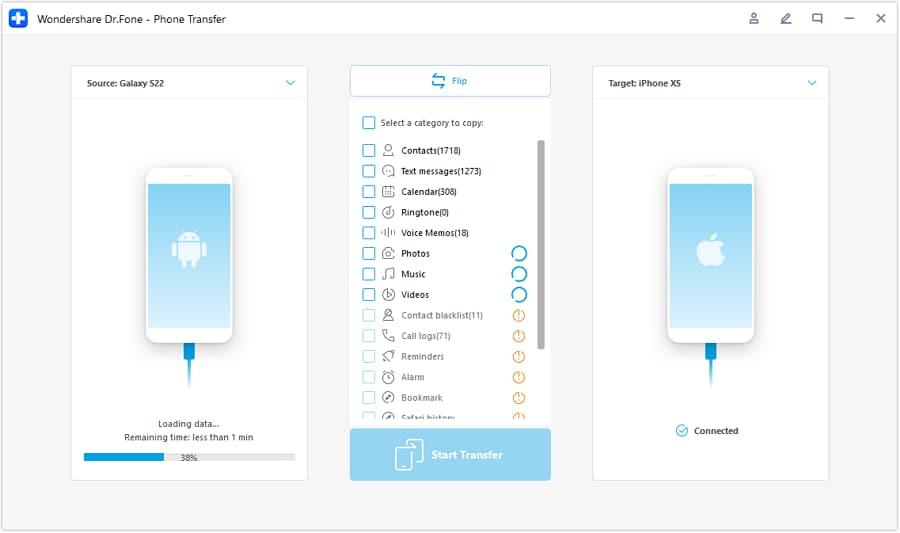
Step 2 Perform the controlled transfer/sync change
Action: Use Dr.Fone to carry out the planned transfer or device-side changes in the exact order you defined, stopping before the point-of-no-return unless all prerequisites are met.
Limitation: AI cannot see real-time conflicts, account prompts, or device-specific warnings—pause if anything differs from your planned conditions.
-
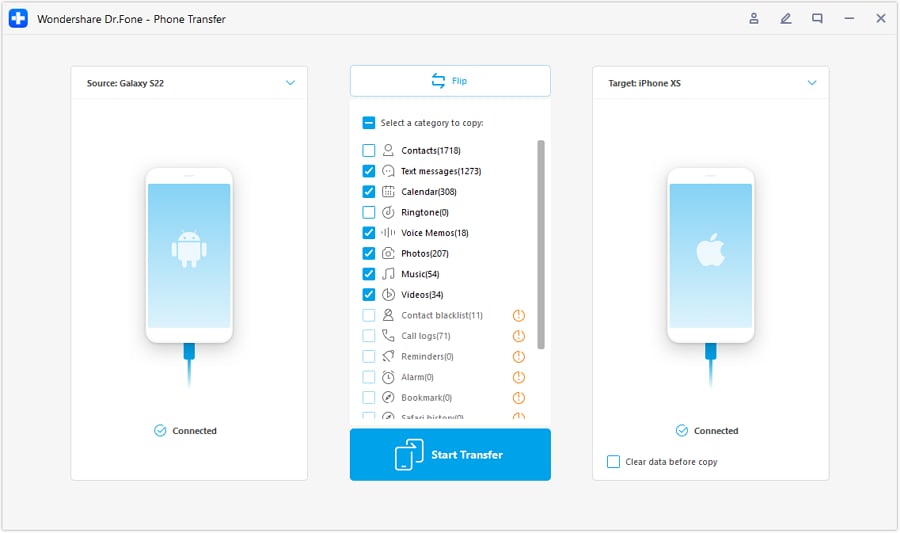
Step 3 Verify with your evidence checklist
Action: Verify using your evidence checklist (folder counts, sentinel notes, attachment open tests) and record results (counts, screenshots, timestamps) so you can compare across devices.
Limitation: AI can help interpret your verification results, but it cannot validate what’s truly on each device—your on-device checks are the final authority.
-
Step 4 Only then commit irreversible actions
Action: After verification passes, proceed to any irreversible step (like enabling sync everywhere or importing into the destination account that propagates changes).
Limitation: AI cannot confirm the “commit” is safe in real time; if outcomes differ from expectations, stop and use your rollback plan.




Conclusion
Use AI to design the sequence, define verification gates, and identify the point-of-no-return before you touch your data; then use Dr.Fone to execute the backup/transfer steps while you validate outcomes on real devices.
FAQ
-
What’s the biggest risk when syncing notes across three devices?
An early “commit” that propagates deletions/duplicates everywhere—especially when some notes are local-only or tied to a different account. -
How do I avoid duplicates without deleting something important?
Don’t dedupe until you’ve completed an inventory and set a conflict policy; verify with counts and sentinel notes first, and keep a recoverable backup you can restore from. -
How long should I wait before deciding sync is “done”?
Wait until verification passes twice: once immediately after the change, and once after a reasonable delay (e.g., after all devices have been online and charging) to catch delayed uploads and cached data. -
What should I verify besides “I can see my notes”?
Counts per folder/notebook, last-updated timestamps, attachments open correctly, search finds known keywords, and sentinel notes match on all devices. -
Can AI tell me whether my notes are local-only or actually synced?
No. AI can tell you what to check and where issues usually hide, but only your devices/apps can reveal the real storage and sync state.
 Add Wondershare Dr.Fone as a preferred source on Google