Effortlessly manage data through preview, delete, export, etc.

 100% Security Verified | No Subscription Required | No Malware

 :
: 
 ChatGPT
 Perplexity
 Gemini
 Claude
 Grok
Grok

I cleared “cached data” and cleaned my Downloads to free space, and then realized I deleted the only copy of a PDF I needed—and I also got logged out of everything. I wish I had a checklist before tapping “clear.”
Reddit user, r/techsupport
Skipping one small check when clearing cache or downloads can erase something you actually needed (a saved PDF, an installer, or a login state you can’t easily recreate).
AI is useful here because it can turn a vague goal (“clean up storage”) into a sequenced plan with checkpoints, edge cases, and a clear “stop before you delete” moment.
AI can’t see what’s on your device or click the right buttons safely; once you delete downloads or clear site data, recovery may be difficult or impossible without backups and proper tools.
In this article
- How to plan a safe cache + Downloads cleanup
- Why sequence matters
- Define “point of no return” actions
- Choose minimum effective cleanup
- Set verification checks
- What the AI needs to know
- AI prompts to build a safer workflow
- When to stop planning and start execution
- Execute safely with Dr.Fone (backup first)
How to plan clear browser cache and downloads without losing essentials (without missing critical steps)

1. Don’t delete first—plan the sequence and the stop point.
Decide the exact order (inventory → backup → verify → delete → clear cache) and define a “stop before irreversible actions” moment like “Clear storage” or “Empty Trash.”
2. Treat cache vs cookies/site data as different risk levels.
Cache-only is usually lower risk; cookies/site data may log you out and remove offline content, so only include it when you’re prepared to re-authenticate.
3. Verification is the safety net (not the backup itself).
Backups only help if you can open them: confirm counts/sizes and open a few representative files from the backup location before deleting anything permanently.
You’re running low on storage, your browser feels slow, and your Downloads folder is full of “maybe important” files. You want to clear browser cache and delete downloads, but you’re not sure what’s safe to remove.
After an AI answer, it’s still easy to feel stuck on sequence: do you export downloads first, clear cache first, or verify passwords and logins first? The uncertainty usually isn’t what to do—it’s when to do it and how to confirm you won’t regret it.
The point of no return is when you tap actions like “Clear storage,” “Clear browsing data,” or permanently delete items from Downloads (including emptying Trash/Recently Deleted). You should not reach that moment until you’ve verified what must be kept and where it’s backed up.
What the AI needs to know
Share the details below so the AI can produce a safer, device-specific plan with clear verification steps.
- Device type and OS (e.g., Android 14 on Samsung, iOS 17 on iPhone)
- Browser(s) involved (Chrome/Safari/Firefox/Edge) and whether multiple profiles are used
- What “essentials” means for you (PDF tickets, work docs, APK/EXE installers, images, audio, offline pages)
- Where downloads usually go (Downloads folder, Files app, iCloud Drive, Google Drive, SD card)
- Whether you rely on saved logins/sessions (banking, work SSO, 2FA apps, passkeys)
- Your backup options right now (PC/Mac available, cloud storage access, cable/Wi‑Fi transfer)
- Storage pressure and urgency (how much free space you need and by when)
- Any constraints (no password access, no PC, limited data, work-managed device)
Using AI prompts to build a safer workflow
Use the prompts below to make the plan precise before you delete anything.
Level 1: Basic prompt
Help me plan how to clear my browser cache and delete downloads without losing anything important.
I want a step-by-step sequence with a short checklist of what to verify before I delete.
Level 2: Advanced prompt
Design a structured workflow to clear browser cache and remove downloads safely.
Include Preparation / Execution / Verification, and label steps as critical vs optional.
Add a ‘stop point’ before irreversible deletion and list exactly what I must confirm at that stop point.
Level 3: Evidence prompt
I’m on (Android 14, Chrome + Samsung Internet). My Downloads include (tax.pdf, boardingpass.png, installer.apk) and I need to keep anything work-related.
Create a workflow with checks before/during/after clearing cache and downloads: what to inventory, what to back up, what to delete first, and how to confirm the backup is readable (e.g., open 3 sample files) before I hit ‘Clear storage’ or empty Trash.
Prompt refinement (follow-up prompts)
Ask me exactly 10 questions that determine whether clearing cache will log me out or remove something I can’t recover, then produce the workflow based on my answers.
Output two separate plans: one for Chrome cache only and one for Chrome cache + cookies/site data, with risks and verification checks for each.
Create a ‘keep list’ and a ‘safe-to-delete list’ for Downloads based on file types and age (e.g., keep: .pdf/.docx; review: .apk; delete: duplicates), and include a review checklist.
Add a fail-safe: define a backup method, a file-spot-check method (open files on another device/PC), and a rollback note for anything that can be restored.
AI plan vs. real device constraints
| Planning vs reality | What AI can do | What real tools must do |
|---|---|---|
| Inventory & risk mapping | Propose what to review (file types, sites, logins) and where risks hide | Only your device/tools can show actual files, sizes, and account states |
| Backup & deletion execution | Define the safest sequence and verification checkpoints | A real tool must copy/export data and perform deletions/clears |
AI improves the plan and reduces avoidable mistakes, but it cannot see your actual downloads, confirm a backup is readable, or perform the clearing/deleting actions for you.
When to stop planning and start execution
- You can name your essentials and where they will be stored after cleanup (PC folder / cloud drive / external storage).
- You’ve identified the exact point-of-no-return action you must not trigger early (e.g., “Clear storage” or “Delete permanently/Empty trash”).
- You have a verification method (open a few backed-up files; confirm counts/sizes; confirm account access/2FA).
- You’ve chosen the minimum effective cleanup (cache only vs cache + cookies/site data; selective download deletion vs wipe).
Once those are true, planning is done—and you can move into careful execution.
Clear browser cache and downloads without losing essentials: execute the workflow safely
Execution matters now because the biggest risks happen during copying and deletion—your goal is to create a confirmed safety net before you remove anything. If you want a tool-assisted way to back up and manage key files, Dr.Fone Basic - Data Manager can help you export essentials to a safer location so you can delete with more confidence.
 Easily manage data through preview, delete, export, etc.
- Transfer all data between devices.
- Robust backup solutions for reliable data protection.
- Mirror screens to PC for meetings, teaching, and control.

-
Step 1 Back up essentials first (create the safety net)
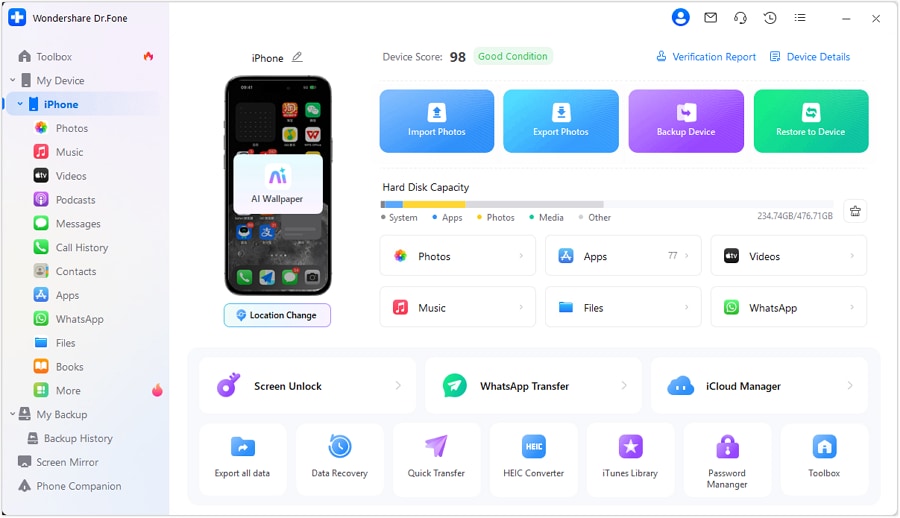
Connect your device to a computer and open the data management view so you can export items you marked as essential (documents, installers, images, and other “must keep” files) to a safe location.
 Note: Don’t treat “copied” as “safe” until you verify the backup is readable (for example, open a few representative files from the backup location).
 -
Step 2 Verify the backup before any deletion
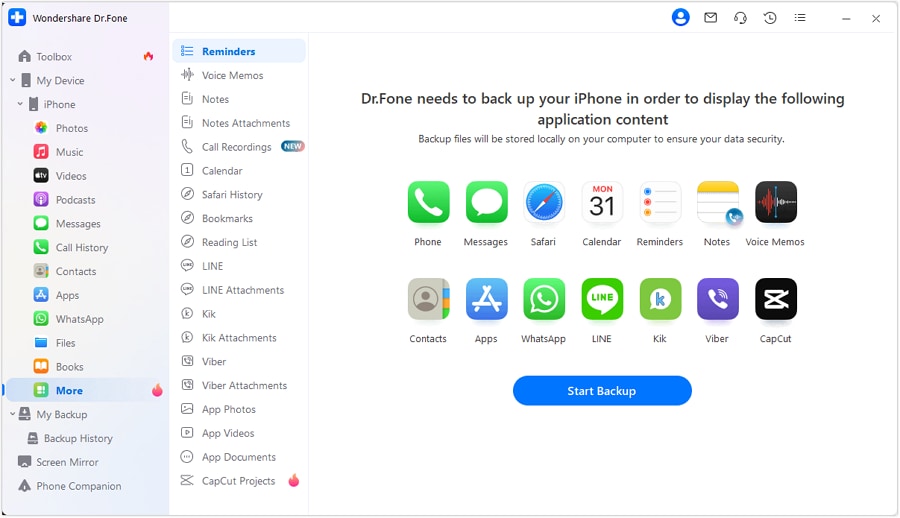
Use a spot-check method: confirm counts/sizes look right, then open a small sample set from the backup destination (e.g., 1 PDF + 1 image + 1 installer/document). This is your “stop point” gate before irreversible actions.
-
Step 3 Remove downloads you don’t need (only after verification)

After backups are confirmed, delete non-essential items from your Downloads location. Avoid emptying Trash/Recently Deleted until you’re sure nothing is missing and you’ve rechecked the keep list.
-
Step 4 Clear browser cache with the least-destructive option
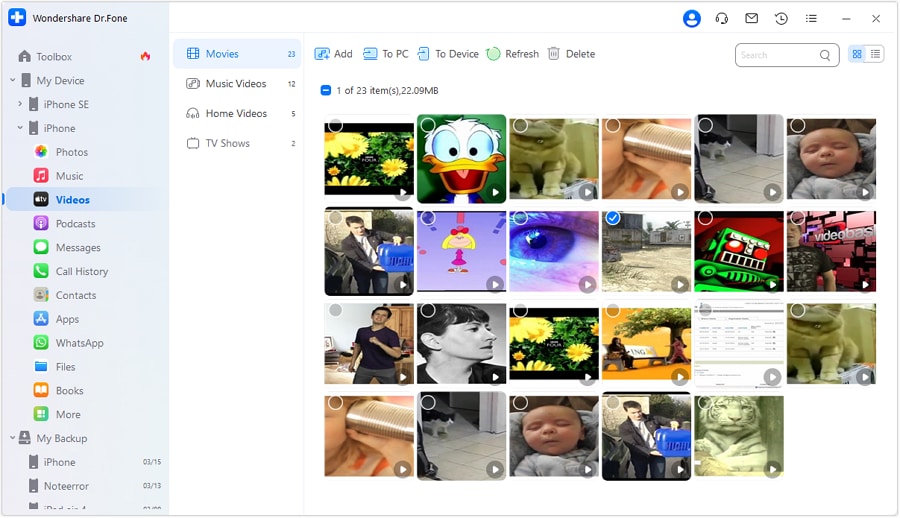
Clear browser cache first (the least disruptive option). Only include cookies/site data if you knowingly accept logouts and potential loss of offline content/site preferences. Then verify by revisiting key sites and checking that storage has improved.
Limitation reminder: a tool can help you copy/export and organize files, but it can’t decide what’s essential for you—and clearing browser data still happens inside your browser settings on your specific device.




Conclusion
Use AI to define what to keep, the safest sequence, and the checks that prevent irreversible loss; then use real tools for execution—Dr.Fone helps you create and verify a backup so you can clear cache and downloads with less risk.
FAQ
-
Will clearing cache delete my saved passwords?
Usually no if passwords are stored in a password manager or browser sync, but clearing cookies/site data can log you out; verify your password manager/sync status before you clear anything. -
What’s the biggest irreversible mistake in this workflow?
Permanently deleting Downloads (including emptying Trash/Recently Deleted) or clearing site data without a verified backup and verified account access. -
Should I delete downloads first or clear cache first?
Back up essentials first, then handle Downloads cleanup, then clear cache; this avoids deleting the only copy of something important. -
How do I verify my backup is “good enough”?
Confirm file counts/sizes look right and open a small sample set (e.g., 1 PDF, 1 image, 1 document/installer) from the backup location—not from the original folder. -
When should I clear cookies/site data, not just cache?
Only if you’re troubleshooting site issues that cache alone doesn’t solve and you’re prepared to re-login (with 2FA ready) and possibly lose site preferences/offline data.
 Add Wondershare Dr.Fone as a preferred source on Google