Effortlessly manage data through preview, delete, export, etc.

 100% Security Verified | No Subscription Required | No Malware

 :
: 
 ChatGPT
 Perplexity
 Gemini
 Claude
 Grok
Grok

I deleted some files, realized there’s no backup, and now I’m afraid every step I take on the phone will overwrite what I’m trying to recover. I don’t even know what the safest next move is.
Reddit user, r/AndroidQuestions
Losing data on an Android phone with no cloud backup can feel like a dead end—especially after you just tapped Delete, Factory reset, or restarted after an update and realized key files are gone. Nothing seems to change no matter how many times you check the Gallery or Files app.
AI can help you analyze symptoms, narrow likely causes, and choose the lowest-risk next step by asking the right questions (for example, with ChatGPT or Gemini). This is most useful when you’re unsure whether the data is truly deleted, just not indexed, or stored somewhere unexpected.
AI can’t verify what’s physically recoverable on your specific device, and trial-and-error can make outcomes worse (overwriting storage, triggering encryption changes, or causing app data churn). Treat AI as a decision aid, then use a purpose-built tool for the actual recovery attempt.
In this article
- Why the “best recovery path” matters with no backup
- What makes “first-hour” actions critical
- Common triggers that cause data loss
- Why uncertainty is normal
- Before you prompt the AI
- Using AI prompts to diagnose safely
- AI output vs reality: inference vs execution
- When to stop DIY to avoid overwriting
- Move from triage to controlled recovery workflow

Part 1. Why best recovery path when no cloud backup exists matters after Android data loss
When there’s no Google Drive/Photos backup, the “best recovery path” is mainly about preventing overwrites and choosing the right recovery angle (internal storage vs SD card vs app-specific data). What you do in the first hour matters more than which method you try first.
A common trigger is: you deleted photos/messages, an app crashed and cleared data, or you performed a factory reset—then you kept using the phone (downloading apps, taking photos, receiving media), which can overwrite previously deleted blocks.
This uncertainty is normal: the phone may look “fine,” but the missing items don’t reappear after minutes or even after a reboot, and it’s unclear whether the data is gone or just no longer visible. (Even if you’re helping someone with an iPhone 13 or iPhone 14 too, the core idea is similar: minimize changes until you pick a path.)
1-1. Before You Prompt the AI
Collect a few facts first so the AI can narrow causes quickly:
- Android brand/model (e.g., Samsung Galaxy S22)
- Android version (if known)
- What was lost (photos, WhatsApp, contacts, documents)
- Where it was stored (internal storage vs SD card)
- Trigger event (deleted, reset, update, app reinstall)
- Time since loss + what you did afterward (downloads, camera use, updates)
- Lock/encryption state (screen lock on? work profile?)
Part 2. Using AI prompts to diagnose Android data loss without cloud backup safely
2-1. Level 1: Basic Prompt
I lost data on my Android phone and I have no cloud backup. Ask me the minimum questions needed to identify the safest recovery path, focusing on preventing overwrite and avoiding steps that reduce recovery chances.
2-2. Level 2: Advanced Prompt
Act as a data-loss triage assistant for Android. Based on my answers, (1) list the top 5 likely scenarios, (2) rank them by probability, (3) rate the risk of common actions (restarts, updates, installing apps, using “cleaner” tools), and (4) propose the lowest-risk next steps first. If details are missing, ask targeted follow-up questions before recommending actions.
2-3. Level 3: Evidence Prompt
Help me decide the best recovery path with no cloud backup using evidence-based reasoning.
Device info:
- Android brand/model: (e.g., Samsung Galaxy S22)
- Storage: (e.g., 128GB internal + 64GB SD)
- Android version: (e.g., Android 13)
- Encryption/lock: (PIN/pattern? work profile? unknown?)
What’s missing: (photos / WhatsApp / contacts / documents / other)
Where it lived: (Gallery/DCIM, WhatsApp Media, Downloads, SD card, app folder)
Trigger: (accidental delete / factory reset / update / app reinstall / phone crashed)
Time since loss: (e.g., 2 hours / 3 days)
What I did after: (took photos, installed apps, OS update, rebooted, moved files)
Symptoms: (files vanished, thumbnails remain, “0 bytes,” apps show empty history, SD not detected)
Output format I want:
1) Clarifying questions (max 8)
2) Likely causes ranked with brief reasoning
3) “Do now / Don’t do” list to reduce overwrite risk
4) Recovery options by source (internal, SD, app data) with risk level (low/medium/high)
5) What evidence would change the recommendation
2-4. Prompt Refinement
Use these follow-ups to make the AI’s guidance more actionable and safer:
“What are the 3 most important missing details you need from me to avoid a wrong recovery path?”
“Separate possibilities into categories: deleted files, account/sync issue, storage not mounted, app-specific database loss, factory reset—then rank within each.”
“For each likely cause, what’s the single strongest piece of evidence I should check next (and where do I check it)?”
“Rank my next actions by overwrite risk from lowest to highest, and explain why.”
“Given my trigger event, what should I stop doing immediately to preserve recoverability?”
Part 3. AI Output vs Reality
AI can guide decisions, but it can’t confirm what’s recoverable on-device without running a recovery workflow.
| What AI can infer | What still requires real execution |
|---|---|
| Whether your actions likely caused overwrite risk | Scanning storage and extracting recoverable items |
| Whether the loss matches deletion vs reset vs sync mismatch | Accessing recoverable remnants and previewing results |
| Whether SD card failure/mount issues are plausible | Reading the SD card safely and checking file system damage |
| Which next step is lowest-risk | Performing recovery attempts with the right tool and method |
AI closes the reasoning gap (what to try first, what to avoid); a recovery tool closes the execution gap (scan, preview, export what’s found).
Part 4. When to stop DIY recovery steps and avoid overwriting Android storage
If the goal is maximum recovery chance, there’s a point where experimenting does more harm than good.
- You’re still using the phone normally (new photos, downloads, social apps), and the missing data is from internal storage
- The loss followed a factory reset or major update and you’re unsure what’s encrypted/erased
- You’re considering “cleaner/booster” apps, repair utilities, or repeated cache-clearing to “make files come back”
- The device is unstable (boot loops, freezing), and each reboot risks more changes or corruption
Once AI has helped you pick the safest route, shift from diagnosis to controlled execution—minimizing device activity and using a dedicated recovery workflow.
Part 5. Move from triage to a controlled recovery workflow
After you’ve identified the most likely loss scenario and the safest next move, the practical need is to attempt recovery in a controlled way—without adding more trial-and-error on the phone.
Recover data from Android device safely with Dr.Fone - Data Recovery (Android)
That’s where Dr.Fone - Data Recovery (Android) becomes relevant: it’s designed to run a structured recovery process to recover data from an Android device, aligning with the plan you already validated using AI prompts. If you want to proceed, follow the official product flow and keep your device usage minimal until you’ve completed the attempt.
 Scan Android phones and tablets directly.
- Preview and recover only what you want.
- Supports WhatsApp, photos, videos, contacts, and more.
- Works with 6000+ Android devices.
-
Step 1 Install Dr.Fone
Install Dr.Fone on a computer and avoid installing extra apps on the phone to reduce overwrite risk.
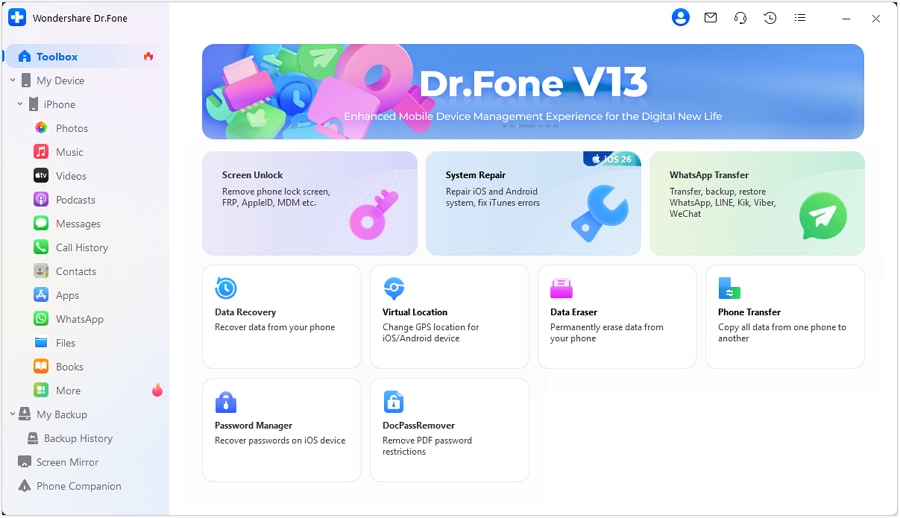
-
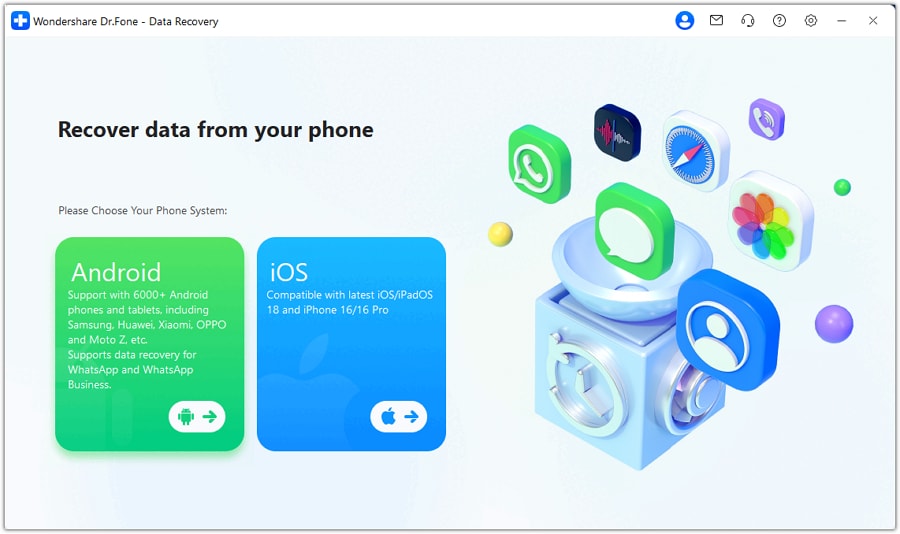
Step 2 Connect your Android device
Connect via USB and keep the connection stable (avoid loose cables/hubs that can interrupt detection).
-
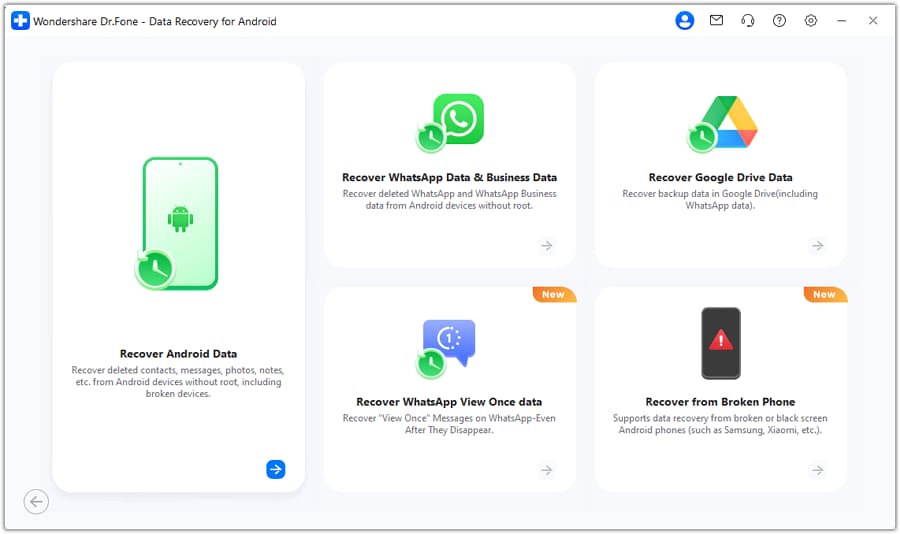
Step 3 Select Data Recovery (Android)
Choose the Android data recovery module and select the data types you need to prioritize.
-
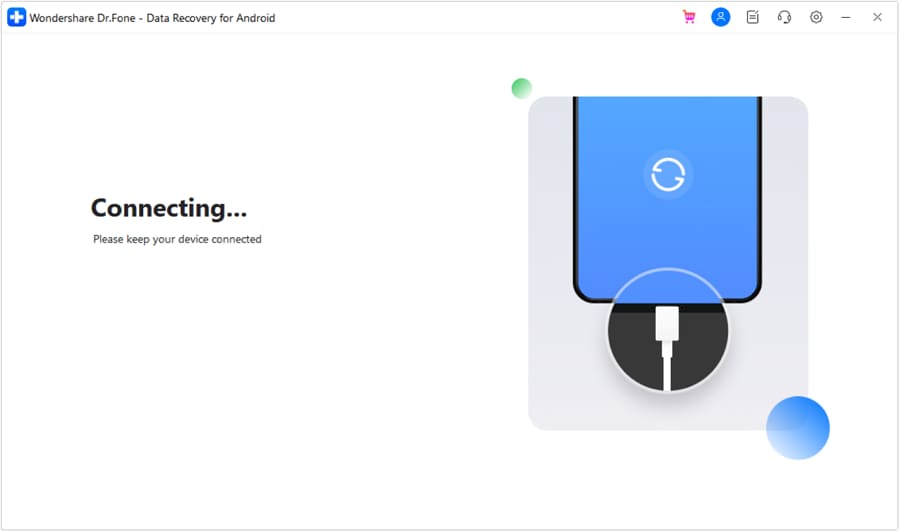
Step 4 Scan and preview
Run the scan and preview what’s found first so you can validate results before exporting.
-
Step 5 Export recovered items
Save recovered files to the computer (not back onto the phone) to avoid writing new data to the same storage.




Conclusion
Use AI to triage what happened, identify the most likely causes, and choose low-risk next steps that minimize overwriting; then hand off the execution to a dedicated workflow like Dr.Fone’s Android data recovery process to scan, preview, and export what’s still recoverable.
FAQ
-
What should I do immediately after I notice data loss with no backup?
Stop using the phone for non-essential tasks (photos, downloads, app installs) and document what happened so you can choose a low-risk recovery path. -
Can AI tell me whether my deleted files are definitely recoverable?
No—AI can only estimate likelihood based on symptoms and behavior; actual recoverability depends on device storage, encryption, and overwrite activity. -
Does restarting my Android phone reduce recovery chances?
It can, especially if the system performs housekeeping, app syncing, or database updates; if you must restart, do it once and avoid repeated cycles. -
Is SD card recovery different from internal storage recovery?
Yes—SD cards may be removable and recoverable via different methods, while internal storage recovery is more sensitive to encryption and overwrite. -
Should I log into accounts or re-sync apps to “bring data back”?
Only if AI diagnosis strongly suggests it’s a sync/visibility issue; otherwise, syncing can overwrite app databases and complicate recovery.
 Add Wondershare Dr.Fone as a preferred source on Google