Effortlessly manage data through preview, delete, export, etc.

 100% Security Verified | No Subscription Required | No Malware

 :
: 
 ChatGPT
 Perplexity
 Gemini
 Claude
 Grok
Grok

After I transferred data to my new iPhone, it keeps restarting over and over. I can sometimes see the Home Screen for a second, then it reboots again—no idea if it’s still finishing the transfer or stuck.
Apple Support Community user
An iPhone that keeps restarting right after a data transfer can feel like it’s stuck in a loop—especially if it happened after you tapped Transfer or Install Now and the phone rebooted. This can show up on models like iPhone 13 or iPhone 14, and it’s often unclear whether the device is still “working in the background” because nothing seems to change after several minutes.
AI (like ChatGPT or Gemini) can help you organize symptoms, narrow likely causes, and choose low-risk checks based on what you see (progress bar, storage full, overheating, app migration, iCloud sync, etc.).
AI can’t see your device state directly, and repeated trial-and-error can raise risk (battery drain, data corruption, or getting locked out of the source phone you need for re-transfer). Use prompts to decide what’s most likely—then use the right tool for the execution step.
In this article
- Why iPhone keeps restarting after data transfer (and what it means)
- Typical causes
- How the restart loop looks
- What details matter most
- Before you prompt the AI
- AI prompts to diagnose iPhone restart loop after transfer safely
- AI output vs reality: what AI can (and can’t) do
- When to stop troubleshooting to avoid data-loss risks
- Unlock Android screen to re-run data transfer after iPhone restarts
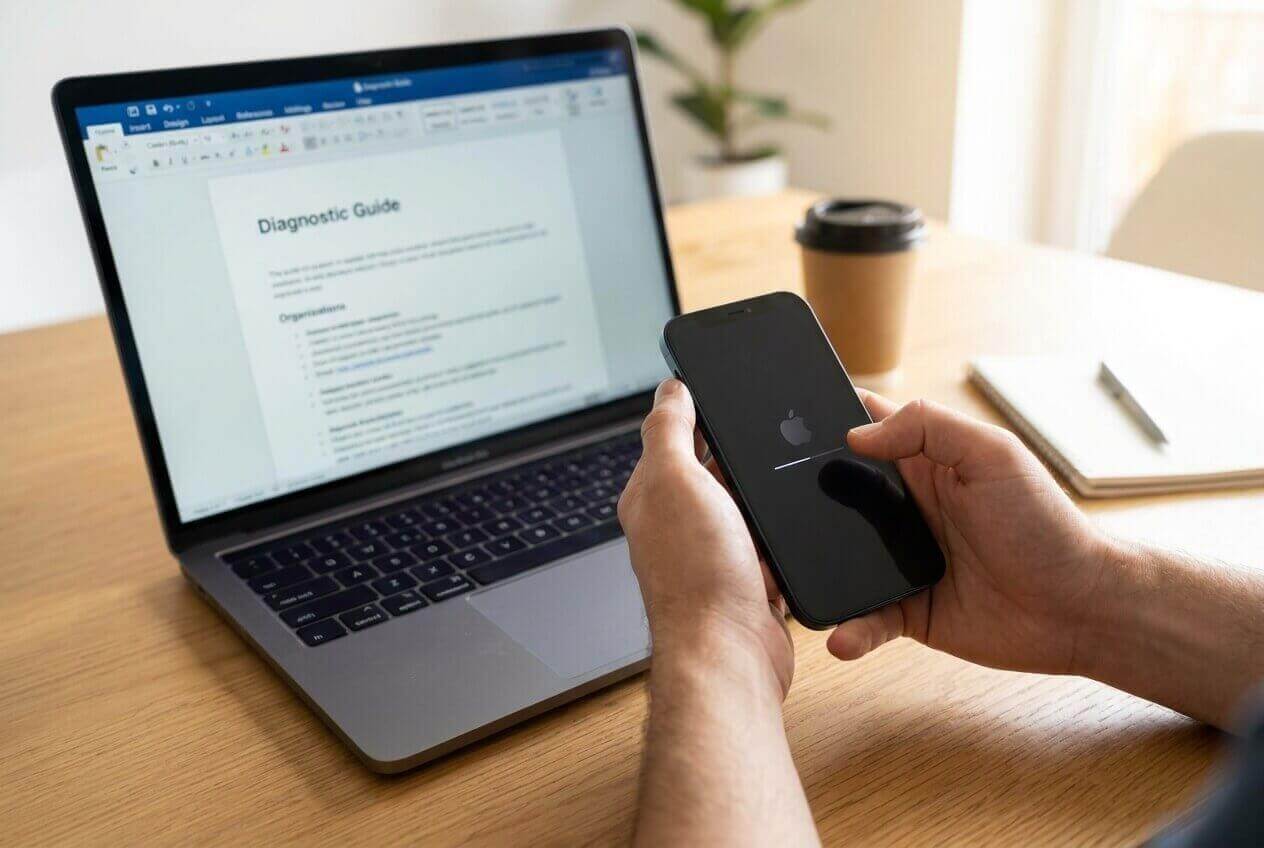
Part 1. Why iPhone keeps restarting after data transfer happens and what it means
If your iPhone starts rebooting repeatedly after moving data (from another iPhone, iCloud backup, Finder/iTunes restore, or Move to iOS), it usually indicates the setup/restore process hit a conflict—commonly storage pressure, an iOS glitch during post-restore indexing, a problematic app/data chunk, or a stalled migration task.
The “restart loop” can look different: the Apple logo flashes, the home screen appears briefly then reboots, or it restarts every few minutes. Sometimes the phone is not truly “stuck”—it may be struggling through background tasks (photo library rebuild, encryption, app re-download), but frequent restarts suggest it’s failing to complete them.
What matters most is the timing (immediately after transfer vs. hours later), heat/battery behavior, and whether you can reach Settings long enough to check storage and iOS version.
Before You Prompt the AI
Collect the basics first so the AI can triage accurately:
- iPhone model and iOS version (if known)
- Transfer method (Quick Start / iCloud / Finder / Move to iOS)
- When it started (during transfer, right after, or later)
- On-screen state (Apple logo, progress bar, home screen flashes)
- Battery level, heat, and whether it reboots while charging
- Storage situation (was the phone near full before transfer?)
Part 2. Using AI prompts to diagnose iPhone restart loop after transfer safely
Level 1: Basic Prompt
My iPhone started restarting repeatedly after a data transfer. Ask me the minimum questions needed to narrow it to the top 3 likely causes, and suggest the safest first checks that don’t risk data loss.
Level 2: Advanced Prompt
Diagnose my iPhone restart loop that began after data transfer.
Output format:
1) Rank the most likely causes (with probabilities).
2) For each cause: what evidence would confirm/deny it.
3) List “lowest-risk next steps” first, and label any step that could increase data-loss risk.
4) Tell me what not to do yet.
Context: I want to preserve data and avoid making the loop worse.
Level 3: Evidence Prompt
Help me triage an iPhone that keeps restarting after data transfer using only safe diagnostics.
Device & history
- iPhone model: (e.g., iPhone 13 Pro)
- iOS version (if known): (e.g., iOS 17.x)
- Transfer type: (Quick Start / iCloud restore / Finder restore / Move to iOS)
- What I did right before it started: (e.g., tapped Transfer, then it rebooted)
Symptoms
- Loop pattern: (Apple logo only / home screen flashes / reboots every X minutes)
- Any progress bar/spinner: (yes/no)
- Heat: (cool/warm/hot)
- Battery + charging behavior: (percent + reboots more/less while charging)
- Can I open Settings briefly? (yes/no)
Constraints
- Data priority: (high/medium/low)
- I have another device/computer available: (Mac/Windows/none)
Deliverables
- Rank likely causes, separated into software vs storage vs hardware indicators
- A safe decision tree for the next 30 minutes
- Stop signals that mean I should pause and switch strategy
Prompt Refinement
Use these follow-ups to tighten the diagnosis:
What 5 questions would you ask that most change the probability between software glitch, storage pressure, and hardware instability?
Separate the possible causes into: post-restore indexing, iOS update conflict, app/data corruption, battery/thermal issues, and storage constraints.
Based on my answers, rank the top 3 causes again and explain what single piece of evidence would most confirm each.
What’s the lowest-risk way to check storage state or crash clues if I only get 10–20 seconds on the home screen?
Which actions could make things worse right now, and why?
AI Output vs Reality
AI can help you reason, but it can’t verify device internals or execute device-level actions.
| AI can help you decide | You still need in the real world |
|---|---|
| Which cause is most consistent with your symptoms | The actual device checks (settings access, computer connection, logs) |
| Which steps are lowest-risk first | The correct tool/workflow to perform those steps safely |
| When your pattern looks like software vs hardware | Confirmation via observed behavior and available diagnostics |
| Whether to pause to prevent compounding issues | A practical recovery plan based on what you can access |
Treat AI output as a triage map: it narrows options and sequences next steps, but the outcome depends on what the device and your available tools allow.
Part 3. When to stop troubleshooting iPhone rebooting after data migration and avoid risks
If you’re in a reboot loop after transfer, the goal is to avoid turning a recoverable situation into a harder one by repeating random actions.
- The iPhone is getting hot or rebooting faster while charging.
- You can’t keep the phone on long enough to complete any single check (reboots within ~1 minute repeatedly).
- You’ve attempted multiple restarts/force restarts and the pattern is unchanged for 30–60 minutes.
- You risk losing access to the source phone needed for re-transfer (e.g., your Android is locked and you can’t authenticate accounts).
Once AI helps you decide what’s most likely, shift from “diagnosis” to “execution” with the right next step—especially if continuing to experiment could cut off access to the data you need.
Part 4. Unlock Android screen to re-run data transfer after iPhone restarts
If your iPhone keeps restarting after a transfer attempt from Android, one practical way to reduce risk is to make sure you can still access the Android source device—so you can verify what transferred, re-authenticate accounts, or restart the migration later without being blocked by a locked screen. That’s where Dr.Fone - Screen Unlock (Android) becomes relevant: it’s an execution tool to help you regain access to the Android phone you may need for recovery steps around the transfer workflow, while AI remains focused on analyzing the iPhone-side symptoms.
 Unlock Android phone in seconds.
- Remove PIN, pattern, password, fingerprint.
- Bypass Google FRP lock easily.
- Works on all Android brands & models.
- No tech skills required – user-friendly.
-
Step 1 Confirm the source device you need access to
Identify the Android phone used for the transfer and ensure it has enough battery before you proceed.
-
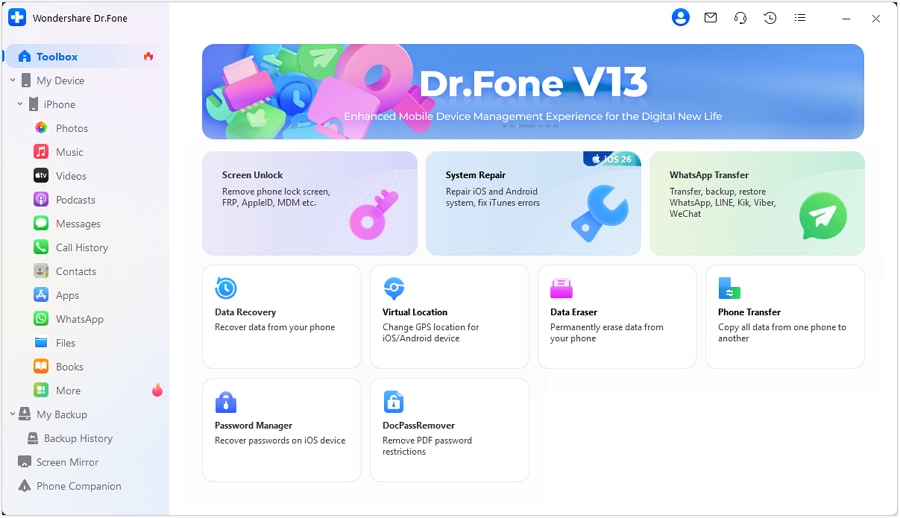
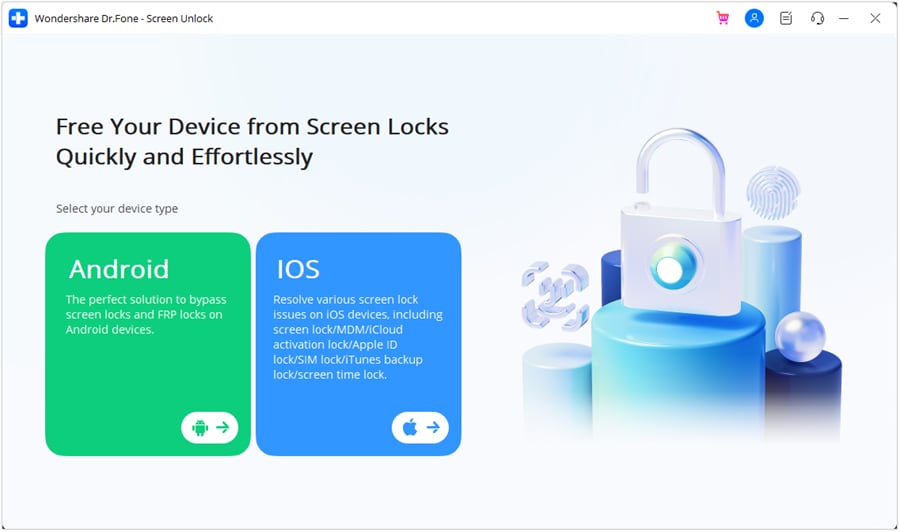
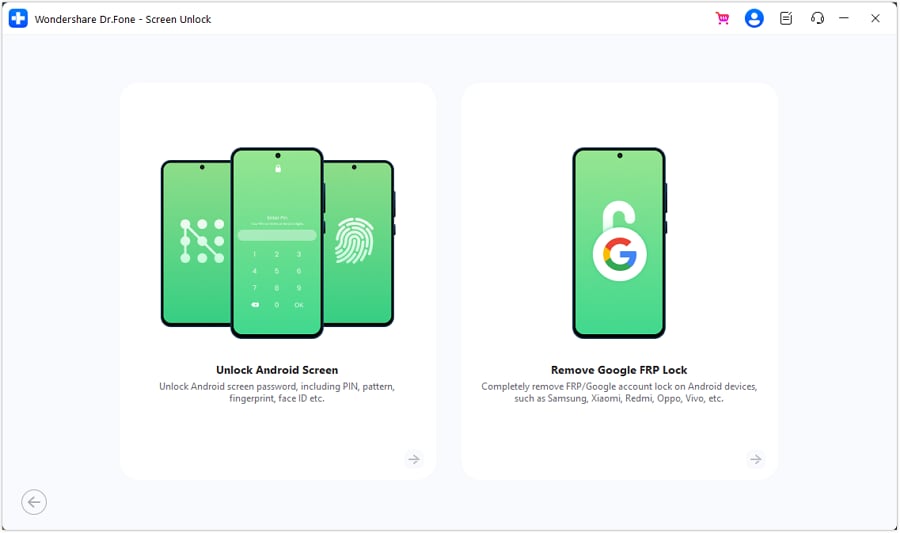
Step 2 Open Dr.Fone and choose Android screen unlock
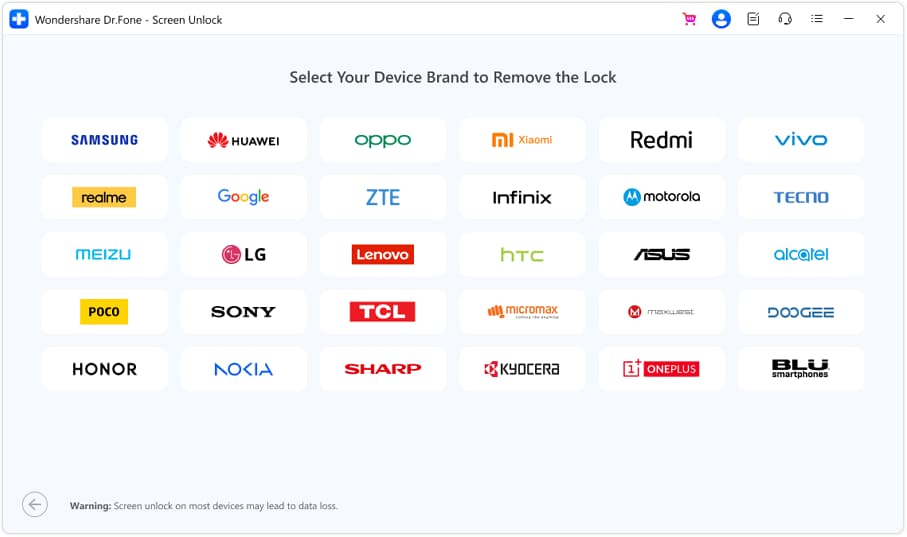
On your computer, select the screen unlock option for Android and follow the on-screen device selection carefully to avoid choosing the wrong model path.
-
Step 3 Connect the Android device by USB
Use a reliable cable and keep the connection stable, because interruptions can force you to restart the process.
-
Step 4 Follow the guided unlock flow
Proceed through the guided steps to remove the lock screen so you can access apps/accounts needed to re-check transfer settings.
-
Step 5 Re-check transfer prerequisites
Once inside Android, confirm account sign-ins, network stability, and any prompts required by the transfer method before attempting another migration.




Conclusion
Use AI prompts to classify the restart loop by timing, loop pattern, heat, storage, and transfer method—then shift from reasoning to execution with the right tool for the part you can control (including regaining access to the source Android device if needed) while you plan the safest next move for the iPhone.
FAQ
-
Why does my iPhone keep restarting right after data transfer finishes?
Common patterns include post-restore indexing strain, storage pressure, a corrupted app/data item brought over, or an iOS conflict that surfaces during first boot after migration.
-
How long should I wait before assuming the iPhone is stuck in a restart loop?
If the restart pattern repeats consistently for 30–60 minutes with no progress changes (and especially if the phone heats up), treat it as a loop rather than “normal background processing.”
-
Is force restart safe during a reboot loop after migration?
A force restart is often a reasonable low-risk check, but repeating it many times without any change can add stress and reduce battery—use it as a single diagnostic step, not a loop strategy.
-
What information should I give AI to narrow the likely cause fastest?
Transfer method, exact loop pattern (Apple logo vs home-screen flash), storage situation, heat/battery behavior, and whether you can access Settings briefly are usually the highest-impact details.
-
Why would I need Android screen unlock tools if the problem is on iPhone?
If your source phone is Android and becomes inaccessible, you may lose the ability to re-authenticate accounts, verify what data is available, or re-run the transfer cleanly after you stabilize the iPhone plan.
 Add Wondershare Dr.Fone as a preferred source on Google