Effortlessly manage data through preview, delete, export, etc.

 100% Security Verified | No Subscription Required | No Malware

 :
: 
 ChatGPT
 Perplexity
 Gemini
 Claude
 Grok
Grok

I restored my chat backup and the messages are back, but the photos/videos/voice notes are missing—thumbnails are blurry and tapping media says “file not found.”
Forum user
Chats came back after a backup restore, but photos, videos, voice notes, or documents are missing. This often shows up right after you tap Restore during an app setup on Android (for example, on a Samsung Galaxy S22 or Google Pixel 7), and nothing seems to change even after waiting.
AI (like ChatGPT or Gemini) can help you describe the symptoms clearly, narrow the most likely causes, and decide what to check first—without guessing or jumping into risky steps.
AI can’t see your phone or verify what’s actually on storage, and trial-and-error can overwrite data or break app indexes. The goal is to diagnose safely, then hand off execution to a purpose-built tool if needed.
In this article
- Why chats restore but media is missing happens (and what it means)
- What restored vs. what didn’t
- Common “file not found” patterns
- Why you should confirm the media source first
- Before you prompt the AI
- AI prompts to diagnose safely (Level 1–3)
- Prompt refinement + AI output vs. reality
- When to stop troubleshooting and avoid risks
- Fix it safely with Dr.Fone (guided recovery steps)
Part 1. Why backup restored chats but media is missing happens and what it means

1-1. What restored vs. what didn’t
When chats restore but media doesn’t, it usually means the message database restored, but the media files didn’t get re-downloaded or weren’t included in the backup in the first place. On Android, media can also be stored in device folders that don’t restore cleanly if permissions, storage location, or app settings changed.
1-2. Common “file not found” patterns
Another common pattern: the restore finishes quickly, chats appear, but thumbnails stay blurry, downloads fail, or tapping media shows “file not found.” It can be unclear whether media is still syncing in the background or if it’s gone.
1-3. Why you should confirm the media source first
This doesn’t automatically mean the media is permanently lost. It does mean you should confirm where the media should be coming from (cloud re-download vs. local device storage vs. SD card) before doing actions that may overwrite leftovers.
1-4. Before you prompt the AI
Gather a few details so the AI can narrow causes without guesswork:
- Phone brand/model and Android version
- Which chat app and backup type (cloud vs local)
- Restore trigger (new phone setup, reinstall, reset, or app update)
- Whether you used an SD card or changed storage location
- What “missing” looks like (thumbnails gray, “download” icon, “file not found,” etc.)
- Any recent cleanup actions (storage cleaner, file manager move, encryption, app permissions changes)
Part 2. Using AI prompts to diagnose backup restored chats but media is missing safely
2-1. Level 1: Basic Prompt
My Android chat backup restored messages, but media (photos/videos/voice notes) is missing. Ask me the minimum questions needed to identify whether the media should re-download from the cloud, is stored locally on the device/SD card, or was never included in the backup. Then give me the safest next 3 checks that don’t overwrite data.
2-2. Level 2: Advanced Prompt
Diagnose why chats restored but media is missing on Android.
Task: Provide a ranked list of likely causes (most to least likely), and for each cause: what evidence would confirm it, and the lowest-risk check I can do first.
Constraints: Avoid steps that could overwrite data or clear caches unless you flag them as higher risk.
Output format:
1) Cause (probability)
- Evidence to look for
- Safe check
- What NOT to do yet
2-3. Level 3: Evidence Prompt
Help me troubleshoot “backup restored chats but media is missing” on Android using the evidence below. Please:
1) Separate causes into Cloud restore issues, Local storage/path issues, Permissions/app issues, and Data loss/overwrite risk.
2) Rank the top 5 causes with reasoning tied to my evidence.
3) Give a safe decision tree (IF/THEN) with the first 5 actions only.
Evidence
- Android phone model: (e.g., Galaxy S22 / Pixel 7)
- Android version: (e.g., Android 13/14)
- Chat app: (name + version if known)
- Backup type: (cloud backup / local backup / both)
- Restore moment: (after reinstall / new phone setup / factory reset / update)
- Media state: (e.g., thumbnails blurred, “download” icon, “file not found”)
- Network: (Wi‑Fi/mobile; any restrictions)
- Storage: (free space; internal vs SD card)
- Permissions: (Photos/Files access granted? yes/no/unsure)
- File manager actions: (moved/deleted folders? yes/no)
- Any cleaners/optimizers used: (yes/no)
- Encryption/secure folder/work profile: (yes/no/unsure)
- What I already tried: (list)
- What I want to protect most: (specific media types / date range)
Part 3. Prompt refinement + AI output vs reality
3-1. Prompt Refinement (follow-ups)
Use these follow-ups to force clarity and reduce risky trial-and-error:
“What 3 questions would change your ranking the most, and why?”
“Separate what could be caused by cloud sync delays vs. what indicates local files are missing.”
“List the key folder paths on Android that typically store chat media, and what evidence would show they’re intact.”
“Rank actions by risk of overwriting recoverable data, and mark any action that could make recovery harder.”
“Tell me exactly what screenshots or error messages would be the highest-value evidence to collect next.”
3-2. AI Output vs Reality
AI can guide analysis, but it can’t confirm what’s physically on your device storage.
| What AI can infer | What you still must verify on the device |
|---|---|
| Whether symptoms match cloud re-download vs local file loss | Whether media folders actually exist in internal storage/SD card |
| Which permissions/settings commonly block media access | Whether the app has Files/Photos permission and storage access enabled |
| Whether the restore behavior matches a partial backup | Whether the backup truly contained media for the date range you expect |
| Which next steps are low-risk vs high-risk | Whether any attempted “cleanup” already deleted or overwrote files |
AI helps you choose safer checks and interpret results; execution still depends on device state, app behavior, and whether files remain recoverable.
Part 4. When to stop troubleshooting backup restored chats but media is missing and avoid risks
If your checks start pushing you toward destructive actions, pause and protect what’s left.
- You’re about to clear app storage/cache, reinstall again, or “optimize/clean” storage to “force” downloads.
- You suspect files were deleted and you’ve continued using the phone heavily (new photos/videos, large downloads) since noticing the issue.
- The missing media involves an SD card that was removed, reformatted, or used in another device.
- You see repeated “file not found” for older media across many chats, suggesting the underlying files are missing—not just slow syncing.
At this point, you’ve likely done enough diagnosis to decide whether you’re dealing with a sync/config issue or a potential data-loss scenario—so it’s time to switch from prompting to careful execution.
Part 5. Backup restored chats but media is missing: fix or resolve it safely with Dr.Fone
Once AI helps you narrow the likely cause to missing local files (rather than simple cloud re-download delays), a practical next step is to use Dr.Fone - Data Recovery (Android) with the Recover Data from Android Device feature to attempt retrieval of remaining media from device storage in a controlled way. This matters because repeated reinstalls, cleaners, or heavy phone use can reduce what’s recoverable, while Dr.Fone focuses on execution steps designed for Android data retrieval scenarios.
 Scan Android phones and tablets directly.
- Preview and recover only what you want.
- Supports WhatsApp, photos, videos, contacts, and more.
- Works with 6000+ Android devices.
-
Step 1 Stop high-write activity on the phone
Put the device in a low-usage state (avoid recording new videos or downloading large files) to reduce overwrite risk before attempting recovery.
-
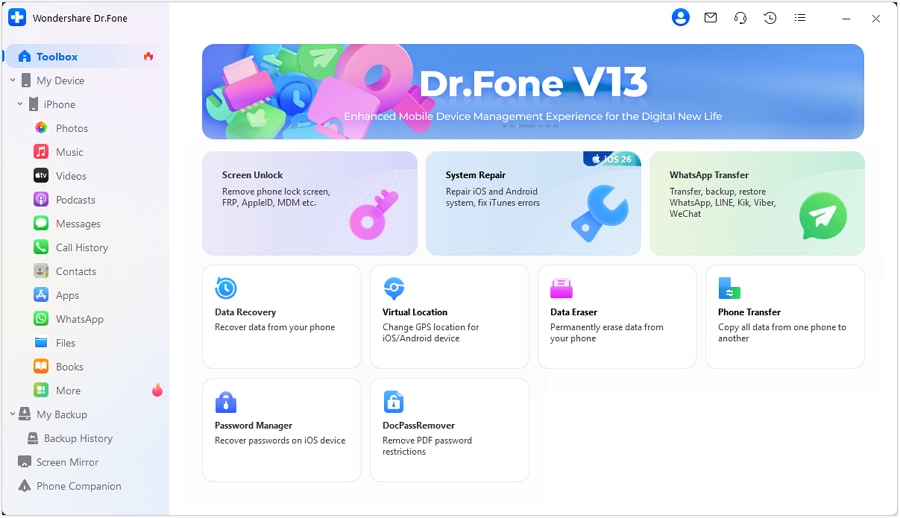
Step 2 Launch Dr.Fone and open Android Data Recovery
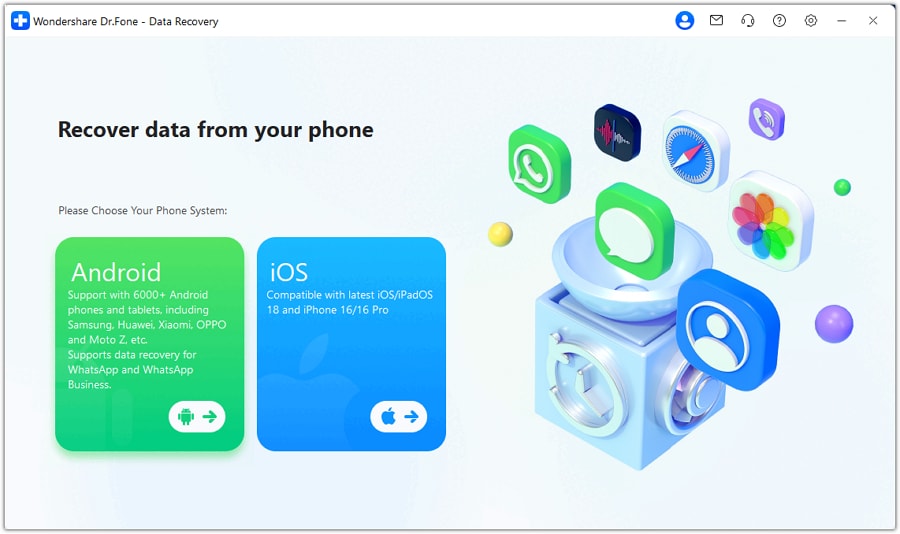
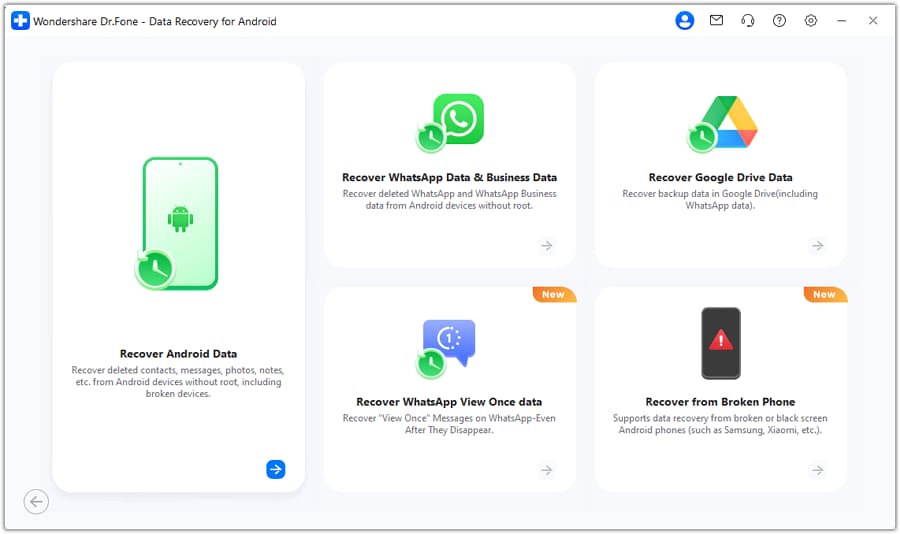
On your computer, open Dr.Fone and select Data Recovery (Android), then choose Recover Data from Android Device while following on-screen connection prompts carefully.
-
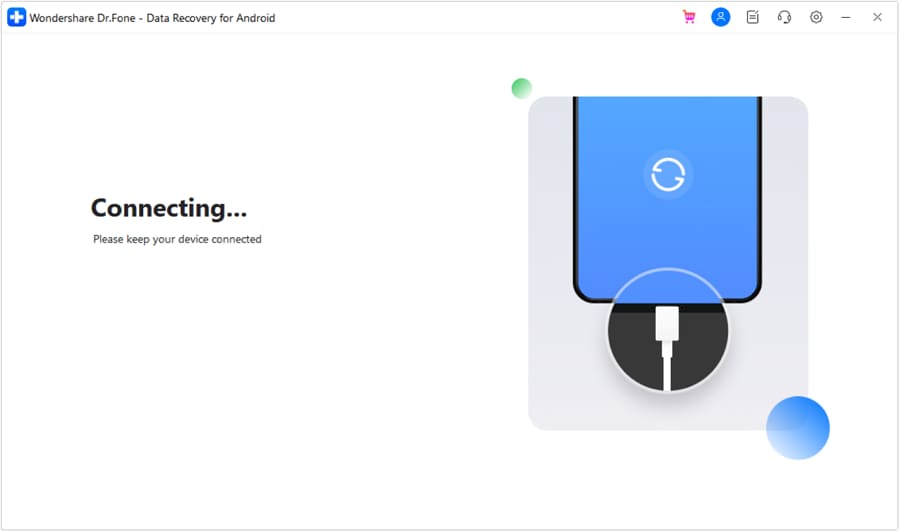
Step 3 Connect the Android device and allow required access
Connect via USB and grant any requested permissions; if prompted for access modes, choose the option that best matches your device state and avoid unnecessary resets.
-
Step 4 Scan for missing media categories
Select relevant file types (photos, videos, audio, documents) and run a scan, watching for previews that match the missing chat media timeframe.
-
Step 5 Recover selected items to your computer first
Save recovered files to the computer (not back to the phone immediately) to avoid overwriting additional recoverable data.




Conclusion
Use AI to turn “chats restored but media missing” into a clear diagnosis: what likely happened, what evidence matters, and which checks are lowest risk; then, if the signs point to missing local files, hand off execution to Dr.Fone for a structured Android recovery attempt.
FAQ
-
Why did my chats restore but not the photos and videos?
Because the message database can restore independently from media files; media may require separate cloud re-download, may live in local folders that weren’t restored, or may never have been included in the backup. -
How long should I wait for media to re-download after restore?
If nothing changes after a reasonable wait on stable Wi‑Fi and power (and media shows persistent “file not found”), treat it as more than a sync delay and start evidence-based checks. -
Does “file not found” mean the media is permanently gone?
Not always—it often means the app can’t reach the original file path. The file could be missing, moved, on an SD card, or blocked by permissions. -
Is reinstalling the chat app again a safe way to bring media back?
It can be risky: repeated restores and app resets may overwrite remnants or change local indexes. Use AI to confirm lower-risk checks first. -
Can Dr.Fone recover missing chat media on Android?
It can help execute an Android data recovery attempt by scanning for recoverable media files on the device, which is most relevant when the issue points to missing local storage rather than cloud download delays.
 Add Wondershare Dr.Fone as a preferred source on Google