Effortlessly manage data through preview, delete, export, etc.

 100% Security Verified | No Subscription Required | No Malware

 :
: 
 ChatGPT
 Perplexity
 Gemini
 Claude
 Grok
Grok
If your new iPhone is stuck and the iphone to iphone transfer not working during setup, you are not alone. This guide walks you through practical fixes for Quick Start and device-to-device transfer issues, plus safe alternative ways to move your data so you can finish setup without losing anything. By the end, you will know How to Fix iPhone-to-iPhone Transfer Not Working During Setup with clear, step-by-step options that work on any recent iPhone.
In this article
- Before you start
- Method 1: Fix Quick Start when iPhone-to-iPhone transfer is not working
- Method 2: Use iCloud or iTunes/Finder backup when direct transfer fails
- Method 3: Transfer data after setup using a computer-based tool
- Compare iPhone-to-iPhone transfer options
- Common problems and fixes
- Why Dr.Fone users may find this helpful
- Conclusion
Before you start
Before retrying any transfer, get both iPhones and your network ready. This reduces random failures and makes it easier to see whether Quick Start or another method is the best choice.
Check power and basic setup
Make sure both iPhones are charged to at least 50 percent or, even better, plugged into power for the whole time. Sudden shutdowns or low-battery performance mode can interrupt a transfer.
- Charge both iPhones to 50% or more, or leave them plugged in.
- Have your Apple ID and password ready for iCloud and App Store access.
- Keep both devices physically close together on a stable surface.
Verify Wi-Fi and Bluetooth
Most iPhone-to-iPhone transfers during setup depend on a reliable local connection. In any country or carrier, the key is a stable Wi-Fi network and enabled Bluetooth.
- On each iPhone, go to Settings and turn on Wi-Fi and Bluetooth.
- Connect both devices to the same Wi-Fi network.
- Avoid guest or heavily restricted networks when possible.
Confirm iOS version and storage
Compatibility issues are common when one iPhone is running a much older iOS version than the other, or when the new device does not have enough free storage for your data.
- On both iPhones, go to Settings > General > Software Update and install any available updates.
- On the new iPhone, go to Settings > General > iPhone Storage to confirm there is more free space than the data size on your old device.
- Delete unneeded content (such as large videos) from the old iPhone if storage is tight.
Understand timing and network limits
In regions with slower internet or busy hours, transfers and restores may seem stuck while they are just very slow. That is normal, but you should still know when to treat it as a real problem.
- Transfers with large photo libraries or videos can easily take over an hour.
- If there is no visible progress for 60–90 minutes, the process is likely frozen.
- Local computer-based transfers or wired methods are often faster on slow internet.

Method 1: Fix Quick Start when iPhone-to-iPhone transfer is not working
This method is for situations where the Quick Start screen appears, but the transfer will not start, keeps failing, or gets stuck on Preparing to Transfer or at a certain percentage.
-
Step 1 Update both iPhones and prepare the connection
On your old iPhone, go to Settings > General > Software Update and install the latest iOS. Do the same on the new iPhone if an update is offered during setup. Turn on Wi-Fi and Bluetooth on both devices, join the same Wi-Fi network, place the phones side by side, and plug them into power to prevent interruptions.
-
Step 2 Restart the Quick Start setup correctly
If the transfer already failed, on the new iPhone tap the back button until you see the Apps & Data screen, then pick Transfer Directly from iPhone (wording may vary slightly). When the animated pattern appears on the new iPhone, use the old iPhone to scan it, confirm your Apple ID, and follow the prompts. Keep both screens unlocked and do not leave the transfer screen until it completes.
-
Step 3 Fix transfers stuck on preparing or at a percentage
If the process is stuck on Preparing to Transfer or frozen at the same percentage for over an hour, cancel the transfer on both devices. Restart both iPhones (press and hold the power button, slide to power off, then turn them back on), reconnect them to Wi-Fi, and retry Quick Start in a location with stronger signal. Avoid streaming video or downloading large files on the same network while the transfer runs.
If Quick Start still fails repeatedly, you can skip the device-to-device transfer during setup and instead restore from an iCloud or computer backup, or complete setup and move your data later with a computer-based transfer tool.
Method 2: Use iCloud or iTunes/Finder backup when direct transfer fails
If you see messages like new iPhone data transfer failed or cannot transfer data to new iPhone, a full backup-and-restore path is usually more reliable, especially on unstable Wi-Fi.
-
Step 1 Create a fresh backup on the old iPhone
On your old iPhone, go to Settings > [your name] > iCloud > iCloud Backup and tap Back Up Now. Make sure you have enough iCloud storage. If you prefer a computer backup, connect the old iPhone to a Mac (Finder) or Windows PC (iTunes), select your device, and click Back Up Now. Choose an encrypted backup if you want to include Health data and saved passwords.
-
Step 2 Reset or restart setup on the new iPhone
If the new iPhone is stuck in setup, power it off and on again to re-enter the setup assistant. If it is already configured but you want to start over, go to Settings > General > Transfer or Reset iPhone > Erase All Content and Settings. After the erase, follow the prompts until you reach the Apps & Data screen.
-
Step 3 Restore the new iPhone from the backup
On the Apps & Data screen, choose Restore from iCloud Backup, sign in with your Apple ID, and select the most recent backup of your old iPhone. If you used a computer, choose Restore from Mac or PC, connect the new iPhone via cable, select it in Finder or iTunes, and restore the latest backup. Keep the device connected to power and Wi-Fi until all apps, photos, and other data have fully finished downloading.
Backup-based restores often handle large data sets more consistently than direct device-to-device transfers, though very large backups can still take several hours depending on your internet speed and Apple server load in your region.
Method 3: Transfer data after setup using a computer-based tool
If you already skipped the transfer or it keeps failing during setup, you can complete setup as a new device and then move data afterward using a computer, which does not depend on Wi-Fi speed.
-
Step 1 Finish basic setup on the new iPhone
On the new iPhone, choose to set up as new (or use only minimal restore) so you can reach the Home screen quickly. Sign in with your Apple ID so you can redownload apps and access iCloud, but skip any additional transfer options for now.
-
Step 2 Connect both iPhones to a computer
Use USB cables to connect your old and new iPhones to a Windows PC or Mac. Unlock both devices and tap Trust when prompted so the computer can access their data. Having both devices connected at the same time makes it possible to manage and move content between them through a dedicated transfer tool.
-
Step 3 Use Dr.Fone Basic to move data between iPhones
Install Dr.Fone Basic on your computer and open the program. Choose the module for phone management or transfer, set your old iPhone as the source and your new iPhone as the target, then pick which data types (for example photos, contacts, messages, and media) you want to move. Start the transfer and keep both devices connected and awake until everything completes.
A computer-based transfer bypasses many of the Wi-Fi issues that cause iphone to iphone transfer taking forever, and it gives you more control if your new iPhone has less storage than the old one.
Compare iPhone-to-iPhone transfer options
Each transfer method has different requirements and strengths. Use this overview to decide which one best fits your situation if Quick Start is unreliable.
| Method | Requires Wi-Fi | Speed | Best For | Notes |
|---|---|---|---|---|
| Quick Start device-to-device transfer | Medium; can be slow on weak networks | New iPhone setup when both phones are nearby and Wi-Fi is stable | May get stuck on preparing or a fixed percentage if the network is unstable or the data set is very large. | |
| iCloud or iTunes/Finder backup restore | iCloud: / Computer restore: | Medium; depends on backup size and internet speed | Users comfortable with backups who want a near-complete copy of the old iPhone | Generally more reliable than direct transfer if Quick Start keeps failing. |
| Computer-based transfer with Dr.Fone Basic | for core transfer (uses USB) | Fast and stable over cable | Users who already finished setup or face repeated transfer errors | Allows selective transfer and avoids most Wi-Fi-related issues. |
Common problems and fixes
If your iphone to iphone transfer not working issue persists, match your symptoms to one of these common situations and apply the suggested fix.
- iPhone transfer stuck on Preparing to Transfer for more than an hour: Cancel the transfer on both devices, restart both iPhones, reconnect them to a strong Wi-Fi network, and try Quick Start again. If it still stays on Preparing, switch to restoring from an iCloud or computer backup instead of device-to-device transfer.
- New iPhone data transfer failed with an error during Quick Start: Make sure both iPhones have the latest iOS, sufficient battery, and are connected to the same Wi-Fi with Bluetooth enabled. Confirm that the new iPhone has more free storage than the total data size on the old one, then restart setup and retry Quick Start or use a backup restore.
- iPhone-to-iPhone transfer taking forever and not moving past a certain percentage: Leave the devices connected to power and Wi-Fi for at least another hour to see if it is just slow. If there is still no progress, cancel the transfer, restart both phones, and either switch to a faster network or use an iCloud or computer-based restore.
- Cannot transfer data to new iPhone because one device locks or disconnects: On both iPhones, go to Settings > Display & Brightness > Auto-Lock and choose a longer duration temporarily. Keep the devices plugged in and on the transfer screen, and avoid moving them far apart or using other apps while the transfer is running.
Why Dr.Fone users may find this helpful
If you are still facing iphone to iphone transfer not working issues after trying Quick Start and backup-based restores, using a computer-based manager like Dr.Fone Basic can simplify the job. It lets you move data between iPhones without relying on Wi-Fi during setup and gives you more control over exactly what gets copied.
With Dr.Fone Basic installed on your PC or Mac, you can connect both iPhones, preview data such as photos, contacts, messages, and media, and then transfer them in a few clicks. Besides direct device-to-device moves, it can also back up important content to your computer and help delete or organize data to free up space before you migrate to the new device. You can learn more or download it from the official Dr.Fone Basic page.
 Easily manage data through preview, delete, export, etc.
- Transfer all data between devices.
- Robust backup solutions for reliable data protection.
- Mirror screens to PC for meetings, teaching, and control.
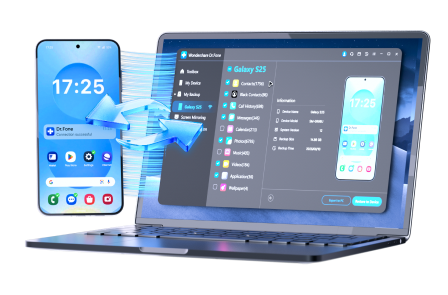
When standard setup options fail or feel too limiting, a desktop helper like Dr.Fone Basic lets you complete the move to your new iPhone smoothly and on your own schedule.




Conclusion
When iphone to iphone transfer not working during setup ruins the excitement of a new device, the most effective approach is to stay methodical: stabilize your Wi-Fi, update both phones, keep them powered and unlocked, and restart the Quick Start transfer properly. If it still gets stuck or fails, switching to an iCloud or computer backup restore, or using a computer-based tool like Dr.Fone Basic, gives you reliable alternative paths to move everything over. With these options, you can finish setup confidently and start using your new iPhone without worrying about lost data.
FAQ
-
1. Why is my iPhone-to-iPhone transfer not working during setup?
Common causes include outdated iOS versions on one or both devices, weak or unstable Wi-Fi, Bluetooth being turned off, not enough free storage on the new iPhone, or one device locking or disconnecting during the transfer. Updating iOS, keeping both phones on the same strong Wi-Fi, plugging them into power, and leaving them unlocked and close together usually resolves the problem. -
2. How do I fix Quick Start when it is stuck on preparing to transfer to my new iPhone?
If Preparing to Transfer lasts more than about an hour with no progress, cancel the transfer on both iPhones, restart them, reconnect to a strong Wi-Fi network, and try Quick Start again. Make sure Bluetooth is enabled, both devices are on the latest iOS, and neither phone is being used for other tasks. If it keeps getting stuck, restore from an iCloud or computer backup instead. -
3. What should I do if my iPhone to iPhone transfer keeps failing or canceling by itself?
First check battery levels, Wi-Fi strength, and available storage on the new iPhone. Disable Low Power Mode, keep both phones plugged in, and temporarily increase Auto-Lock time so the screens stay awake. If errors persist after restarting both devices and the router, skip the direct transfer and use iCloud, iTunes/Finder, or a computer-based tool to complete the migration. -
4. How long should iPhone to iPhone transfer take and when is it considered stuck?
Most transfers take between 10 minutes and over an hour, depending on how much data you have and your network speed. If the screen is stuck on Preparing to Transfer or the same percentage for more than 60–90 minutes with no visible change, it is likely stuck. At that point, cancel, restart both iPhones, and either retry on a stronger network or switch to a backup-based method. -
5. Can I skip iPhone to iPhone transfer during setup and move my data later?
Yes. You can set up the new iPhone as a new device during setup and skip the direct transfer. Later, you can restore from an iCloud or iTunes/Finder backup, or use a computer-based tool such as Dr.Fone Basic to copy selected data types from the old iPhone to the new one without erasing your current configuration. -
6. How do I transfer data to my new iPhone if the device to device transfer will not complete?
If repeated Quick Start attempts fail, back up your old iPhone to iCloud or to a computer using iTunes/Finder, then restore that backup to the new iPhone from the Apps & Data screen. If you have already finished setup, you can instead connect both phones to a computer and use a transfer tool like Dr.Fone Basic to move important items such as photos, contacts, and messages after setup.
 Add Wondershare Dr.Fone as a preferred source on Google