Effortlessly manage data through preview, delete, export, etc.

 100% Security Verified | No Subscription Required | No Malware

 :
: 
 ChatGPT
 Perplexity
 Gemini
 Claude
 Grok
Grok
In this article
If your iphone restore from icloud backup stuck screen has been sitting on estimating or remaining time for ages, it is easy to worry about losing photos, chats, and apps. In this guide on How to Fix iPhone Restore From iCloud Backup Stuck, you will see how to check whether the restore is truly frozen, what actions are safe, and when it is better to restart or redo the restore instead of waiting forever.
Before you start
Before changing any settings or erasing your iPhone, it helps to prepare a few basics so you can fix the restore issue with as little risk as possible. This section walks you through checking whether the process is actually stuck, getting your network and power ready, confirming compatibility, and understanding what data is really at stake.
Check if the restore is really stuck
Sometimes a restore looks frozen, but it is just moving very slowly because of a large backup or a congested regional network.
- On the iPhone, go to Settings > [your name] > iCloud > iCloud Backup.
- Look for Restoring from iCloud and any time remaining or progress bar.
- Leave the phone on power and Wi-Fi for at least 30–60 minutes and see if the bar or time changes at all.
If there is even small but steady progress, it may be safer to wait longer before taking more drastic steps.
Prepare a strong network and power
A weak or unstable connection is one of the most common reasons an iCloud restore appears stuck, no matter which country or region you are in.
- Use a reliable home or office Wi-Fi, not public or hotel Wi-Fi with log-in portals.
- Place the iPhone close to the router and avoid moving around while restoring.
- Keep the iPhone plugged into a charger so Low Power Mode or a shutdown does not interrupt the process.
Confirm iCloud, storage, and iOS compatibility
Compatibility and free space can also affect whether your restore completes successfully.
- Check Apple System Status on another device to make sure iCloud Backup is available.
- Confirm your iPhone has enough free storage to hold the full backup size.
- If possible, update to the latest iOS version before starting the restore so it matches or exceeds the version used when the backup was created.
Understand what data is at risk
Knowing what lives inside your backup versus in separate iCloud services helps you decide how bold you can be when fixing a stuck restore.
- Data in iCloud Photos, Contacts, Notes, and iCloud Drive is usually safe in the cloud and can be re-downloaded later.
- Items only inside the device backup (like some app data or settings) can be lost if the backup is corrupted or skipped.
- Having an extra computer backup or exported copies of key data gives you more flexibility when troubleshooting.

Method 1: Check status and fix Wi-Fi when iCloud restore seems slow
This method is best if your screen shows Restoring from iCloud, Remaining time, or Estimating time remaining, and you are not sure whether it is truly frozen. Here you will confirm the status, improve the network, and check Apple servers.
-
Step 1 Confirm the restore status and wait a reasonable time
On your iPhone, open Settings > [your name] > iCloud > iCloud Backup and look for Restoring from iCloud or a similar message. Keep the iPhone on a charger and connected to Wi-Fi for 30–60 minutes and watch whether the progress bar or time remaining changes. Large photo libraries, messaging apps, or WhatsApp data can make the restore appear frozen even while it is slowly working.
-
Step 2 Test and switch to a stronger Wi-Fi network
Go to Settings > Wi-Fi and make sure you are on a stable network. If you have another network available, connect to that one. On a second device using the same Wi-Fi, run an internet speed test; if downloads are very slow, unstable, or keep dropping, restart your router or move closer to it. Avoid captive networks such as hotels, cafes, or office guest Wi-Fi that require you to re-confirm access in a browser.
-
Step 3 Check Apple System Status for iCloud issues
On another device, search for Apple System Status and open Apple's official page. Verify that iCloud Backup and iCloud Account & Sign In show as available. If there is an outage or degraded performance, your restore may be stuck because Apple's servers are busy, and you may only be able to wait until the issue is resolved.
If, after several hours on good Wi-Fi, the time remaining and progress bar have not changed at all, move on to Method 2.
Method 2: Safely restart and resume a frozen iCloud restore
If your iPhone is clearly stuck on the same restoring screen or estimating time remaining for hours even on a strong connection, a safe restart and iCloud re-sign can often unfreeze it without deleting existing data.
-
Step 1 Force restart your iPhone (this does not erase data)
Use the correct force restart sequence for your model. For Face ID models, quickly press Volume Up, then Volume Down, then press and hold the Side button until the Apple logo appears. This only reboots the system; it does not erase restored data. After restart, unlock the phone, connect to Wi-Fi and power, and see if the restore automatically resumes or completes.
-
Step 2 Sign out of iCloud and sign back in
If the restore does not resume, open Settings > [your name], scroll down, and tap Sign Out. Enter your Apple ID password and follow the prompts, choosing to keep a copy of data on this iPhone where helpful. Then sign back in with the same Apple ID, return to Settings > [your name] > iCloud > iCloud Backup, and check if the device offers to continue restoring from your backup.
-
Step 3 Update iOS to the latest version
If you can reach the Home screen, go to Settings > General > Software Update. Download and install any available update. Once the iPhone restarts, connect it to Wi-Fi and a charger again and revisit Settings > [your name] > iCloud > iCloud Backup to see whether the restore is progressing past the point where it was stuck.
If your iPhone remains frozen or the same backup fails repeatedly after these steps, the backup itself or the network conditions may be preventing a full restore. In that case, continue with Method 3.
Method 3: Erase, redo the restore, or switch to a computer backup
This method is suitable if the restore has been stuck for many hours or days, or you have already tried restarting, re-signing into iCloud, and updating iOS without success. You will erase the device, try a different backup, or move to a computer-based restore using Finder or iTunes.
-
Step 1 Erase all content and settings to restart setup
If you can open Settings, go to Settings > General > Transfer or Reset iPhone > Erase All Content and Settings. Confirm the action, enter your passcode and Apple ID when prompted, and wait for the iPhone to restart to the Hello screen.
-
Step 2 Restore from a smaller or more recent iCloud backup
When setting up again, choose Restore from iCloud Backup and sign in with your Apple ID. On the list of available backups, select a more recent or slightly smaller backup if possible, especially if your previous one was extremely large. Keep the device on a strong Wi-Fi connection and plugged into power, and avoid heavy use until the restore is complete.
-
Step 3 Use a computer-based restore and re-sync iCloud data
If your iphone restore from icloud backup is still frozen or fails repeatedly, connect the iPhone to a Mac (Finder) or Windows PC (iTunes). Choose Restore iPhone to install a fresh copy of iOS and, if you have it, a local backup stored on the computer. After the restore and setup, turn on iCloud Photos, Contacts, Notes, and iCloud Drive in Settings so your cloud content downloads again in the background.
Computer-based restores are often faster and more reliable than large iCloud restores, especially on slower or unstable networks.
Method comparison and common problems
This section compares the three main approaches and then looks at frequent issues such as an iPhone stuck overnight, remaining time that never finishes, and apps or photos stuck on loading.
Comparison of ways to fix a stuck iCloud restore
| Method | When to Use | Pros | Cons |
|---|---|---|---|
| Check status and fix Wi-Fi (Method 1) | Restore appears slow but may still be moving, or network quality is uncertain | No risk to existing data, easy to do anywhere, often all that is needed | May still require a lot of waiting, does not fix corrupted backups |
| Restart and resume restore (Method 2) | iPhone restore from iCloud backup seems frozen for hours on the same screen | Safe for data already restored, can clear minor system glitches and sign-in issues | May not help if backup or network is fundamentally problematic |
| Erase and redo restore or use computer (Method 3) | Stuck for a very long time, repeated failures, or suspected backup corruption | Fresh start, option to pick a smaller backup or switch to computer restore | Requires setup from scratch and relies on backups or iCloud services to get data back |
Common problems and quick fixes
- iPhone stuck on restoring from iCloud overnight: First, make sure the device is still on Wi-Fi and power, then perform a force restart and connect again. If the same screen returns and does not progress for several more hours, sign out and back into iCloud, or erase and try a new restore from iCloud or a computer.
- iCloud backup restore stuck at remaining time that keeps jumping: Move to a faster, more stable Wi-Fi, avoiding captive or public hotspots. Check Apple System Status and, if the backup is very large, consider restoring from a smaller backup or switching to a computer-based restore instead.
- iPhone restore from iCloud frozen but internet seems fine elsewhere: Update iOS on the iPhone, then force restart. If that does not help, sign out of iCloud, sign back in, and attempt to resume. Persistent failure may indicate backup corruption; choose a different backup or restore with Finder/iTunes and then sync iCloud services.
- Restore completes but apps and photos stay on loading or waiting: Keep the iPhone awake, on Wi-Fi, and on power. Tap any app stuck on Waiting to retry the download. For photos and app data, toggle iCloud Photos or the relevant app's iCloud options off and back on in Settings. If needed, go to Settings > General > Transfer or Reset iPhone > Reset > Reset Network Settings to clear network-related glitches.
Why Dr.Fone users may find this helpful
If your iphone restore from icloud backup stuck problem keeps coming back or you want more control over what is saved, combining iCloud with a computer-based tool can give you an extra safety net. Instead of depending only on one large cloud backup, you can maintain selective local copies of your most important data.
Dr.Fone Basic lets you preview, export, and back up your iPhone data directly to a computer, then restore or transfer it when you change or reset devices. You can manage photos, videos, and other files more flexibly, keep faster local backups for future restores, and even mirror your iPhone screen to a PC when you want to demonstrate or troubleshoot settings. You can learn more on the official Dr.Fone Basic page.
 Easily manage data through preview, delete, export, etc.
- Transfer all data between devices.
- Robust backup solutions for reliable data protection.
- Mirror screens to PC for meetings, teaching, and control.
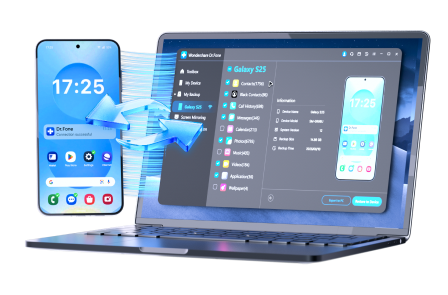
After you get past the stuck iCloud restore and your iPhone is working normally again, setting up a regular local backup routine with Dr.Fone Basic can make future upgrades and resets smoother and less dependent on network conditions.




Conclusion
When an iphone restore from icloud backup stuck screen refuses to move, the most important thing is not to panic. Confirm whether the restore is genuinely frozen, make sure your Wi-Fi and power are stable, then work through safe restarts, iCloud re-signing, and finally a clean restore from iCloud or a computer when necessary. By combining iCloud with an additional local backup strategy, you can get your iPhone running again and reduce the chances of running into the same restore problems the next time you upgrade or reset.
FAQ
-
1. Why is my iPhone restore from iCloud backup stuck on estimating time remaining?
This often happens when your Wi-Fi is slow or unstable, the backup is very large, or Apple's servers are under heavy load. It can also occur if the backup was created on a different iOS version or includes problematic app data. Start by checking Wi-Fi quality, Apple System Status, and waiting at least 30–60 minutes. If nothing changes for several hours, try a force restart, then consider redoing the restore from a different backup or using a computer-based restore. -
2. How long should restoring from iCloud backup take and when is it considered stuck?
Most restores finish in 30 minutes to a few hours, depending on backup size and network speed. If the progress bar or time remaining does not move at all for 3–4 hours while you are on a strong Wi-Fi connection, or your iPhone is stuck on the same Restoring from iCloud screen overnight, you can treat it as stuck and follow the restart and re-restore methods in this guide. -
3. What can I do if my iPhone is stuck on restoring from iCloud overnight?
First, check that the iPhone is still connected to Wi-Fi and power. Then perform a force restart and let it reconnect to the same or a better Wi-Fi network. If it gets stuck again for several hours, sign out and back into iCloud, or erase the device and attempt a fresh restore from iCloud. If repeated attempts fail, restore the iPhone with Finder/iTunes on a computer and then re-enable iCloud services to download your cloud data. -
4. Can I stop an iCloud backup restore without losing all my data on iPhone?
You cannot partially cancel a specific iCloud device backup restore and keep resuming it later, but you can safely force restart the phone or erase and set it up again. Any data that has already been restored will stay on the device until you erase it, and information stored in iCloud Photos, Contacts, Notes, and iCloud Drive remains in your account. After erasing, you can choose the same or a different iCloud backup, or restore from a computer backup instead. -
5. How do I fix iCloud backup restore stuck after setting up a new iPhone?
If your new iPhone gets stuck soon after you choose an iCloud backup during setup, check Wi-Fi strength and move closer to the router, then wait 30–60 minutes. If there is no progress, perform a force restart, reconnect to Wi-Fi, and see if the restore resumes. Persistent failure may mean the backup is too large or corrupted; erase the device, then try restoring from a smaller or more recent backup, or connect to a computer and restore from Finder/iTunes instead. -
6. Why is my iPhone restore from iCloud backup stuck but my internet is fine and how do I fix it?
Even if other devices work fine, your iPhone may be dealing with a huge backup, a momentary glitch signing into iCloud, or a compatibility issue between iOS versions. Update iOS if possible, force restart the device, and sign out and back into your Apple ID. If that does not help and only one specific backup fails repeatedly, choose a different iCloud backup or restore using a computer, then turn on iCloud services to pull your data down again.
 Add Wondershare Dr.Fone as a preferred source on Google