Effortlessly manage data through preview, delete, export, etc.

 100% Security Verified | No Subscription Required | No Malware

 :
: 
 ChatGPT
 Perplexity
 Gemini
 Claude
 Grok
Grok
Updated your iPhone and suddenly all your Safari tabs look like they are gone? You are not alone. After an iOS update, the browser layout or settings can change, making it seem like your pages have disappeared. This guide walks you through practical ways to restore safari tabs iphone after update issues so you can quickly get back to your work, research, or personal browsing without panicking about lost data.
In this article
Before you start
Before you jump into recovery steps, take a minute to prepare your iPhone and understand what is realistically recoverable. These quick checks apply worldwide because they rely only on built-in iOS and iCloud features.
Confirm your iOS and Safari environment
Make sure your iPhone is running a recent iOS version and that Safari opens normally.
- Open Settings > General > About to see your iOS version.
- Tap the Safari icon and confirm it launches without crashing.
- If the address bar appears at the top, know that this is normal on newer iOS versions; you can still access the Tabs button, usually at the bottom.
Check iCloud account and connectivity
If you use Safari on multiple Apple devices, iCloud can help recover or rebuild some of your browsing session.
- Open Settings and confirm you are signed in with your Apple ID at the top.
- Ensure you have a stable Wi-Fi or mobile data connection so tab syncing can work.
- On other Apple devices (Mac, iPad, another iPhone), confirm they are also signed in with the same Apple ID.
Review Safari settings that affect tabs
Some Safari settings directly control whether old tabs stay around after an update.
- Go to Settings > Safari > Close Tabs and note whether it is set to Manually, After One Day, After One Week, or After One Month.
- In the same Safari settings page, note the Clear History and Website Data option, but do not tap it unless you intentionally want to erase browsing data.
- If you often use Private Browsing, remember those tabs behave differently and are more fragile during updates or restarts.
Understand what cannot be recovered
Not every lost tab is recoverable, and knowing these limits will save you time and stress.
- Tabs from Private Browsing usually cannot be restored once the session closes, the phone restarts, or iOS is updated.
- If you have recently used Clear History and Website Data, Safari removes associated closed-tab lists and much of your browsing history.
- Tabs that were auto-closed long ago by the Close Tabs feature may be permanently gone.

Method 1: Restore recently closed Safari tabs on iPhone
This method is best if you updated iOS on the same iPhone and your active Safari tabs suddenly disappeared or closed, but you have not cleared history yet.
-
Step 1 Open Safari and go to the Tabs screen
Tap the Safari icon to open the browser. At the bottom of the screen, tap the Tabs button (two overlapping squares). If you do not see the bottom bar, scroll up slightly on a webpage and the bar (including the Tabs icon) should reappear.
-
Step 2 Open the Recently Closed Tabs list
While you are on the Tabs screen, press and hold the + (plus) icon near the bottom bar. After a second or two, a Recently Closed Tabs list should pop up, showing pages you had open before they closed, including many that may have vanished during the iOS update.
-
Step 3 Reopen important missing tabs
Scroll through Recently Closed Tabs and tap any site you want to reopen. Each page opens in a new tab. Repeat this for every important page until you have rebuilt the set of tabs you were using before the update.
If long-pressing the + icon does not show any list, Safari either has no record of recently closed tabs or the data was cleared. In that case, move on to the iCloud-based and settings-based methods below.
Method 2: Find missing Safari tabs with iCloud sync
If you also browse on a Mac, iPad, or another iPhone, iCloud can help you reopen some of the tabs you lost on the updated device.
-
Step 1 Make sure iCloud Safari sync is enabled
On your iPhone, go to Settings > [your name] > iCloud. Scroll until you see Safari and confirm the switch is turned ON. This lets your iPhone sync open tabs and history with your other Apple devices using the same Apple ID.
-
Step 2 Check that other devices are also syncing Safari
On your Mac, open System Settings (or System Preferences) > Apple ID > iCloud and enable Safari. On an iPad or another iPhone, go to Settings > [your name] > iCloud and toggle Safari ON. Stay connected to the internet for a moment to let syncing complete.
-
Step 3 View iCloud tabs from other devices in Safari
Back on your updated iPhone, open Safari and go to the Tabs screen. Scroll down below your local tabs. At the bottom, you should see sections like "From My Mac" or "From My iPad" listing tabs that are currently open on those devices.
-
Step 4 Reopen useful tabs from iCloud
Tap any tab listed under another device to open that page on your iPhone. Use this to rebuild research sessions, workspaces, or reading lists that were active across devices before the update.
If you do not see any other devices or tabs in this area, double-check that all devices share the same Apple ID, have Safari enabled in iCloud settings, and are actively connected to the internet.
Method 3: Stop Safari tabs auto-closing after updates
This approach does not bring back tabs that are already gone, but it is crucial to prevent your Safari tabs from disappearing again after a future iOS update.
-
Step 1 Open Safari settings
On your iPhone, go to Settings and scroll down until you see Safari. Tap Safari to open the browser configuration options. These settings work the same worldwide regardless of carrier or region.
-
Step 2 Set Close Tabs to Manually
In Safari settings, find Close Tabs and tap it. Choose Manually instead of After One Day, After One Week, or After One Month. With Manually selected, iOS stops automatically clearing older tabs, which reduces the chance that an update will leave you with an apparently empty tab list.
-
Step 3 Use Private Browsing and history clearing carefully
Still in Safari settings, locate Clear History and Website Data. Do not tap it unless you are sure you want to erase your history and related data. Remember that Private Browsing tabs are more fragile: once you close the session, restart the device, or update iOS, those tabs usually cannot be restored.
Method comparison: Which Safari tab recovery option to use?
Use this comparison to decide which method is most likely to help in your situation and what its limitations are.
| Method | Where tabs come from | What it can recover | When it will not work |
|---|---|---|---|
| Recently Closed Tabs on iPhone | Local Safari history on the same iPhone | Tabs closed recently, including many that disappeared right after an iOS update | If history was cleared, Private Browsing was used, or Safari has no stored recently closed tabs |
| iCloud synced tabs from other devices | Open tabs on your Mac, iPad, or another iPhone signed in with the same Apple ID | Tabs still open on other devices that you want to continue on your updated iPhone | If iCloud Safari is disabled, devices use different Apple IDs, or tabs were already closed on the other device |
| Change Close Tabs to Manually | Safari settings on the same iPhone | Prevents future auto-closure so tabs stay open across restarts and updates | Does not recover tabs that were auto-closed or lost before changing the setting |
Common problems and fixes
If the methods above are not working as expected, these targeted tips can help.
- Long-pressing the + icon shows nothing: Make sure you are on the Tabs screen before you long-press +. If the list is still empty, your iPhone may have no recently closed tabs stored or you may have cleared Safari history and website data.
- iCloud tabs from other devices are missing: On each device, confirm you are signed in with the same Apple ID and that Safari is enabled under iCloud. Restart the devices, open Safari on each one, wait a minute, and then check the bottom of the Tabs screen again for "From My Mac" or "From My iPad".
- Private tabs are gone after updating iOS: Private Browsing does not save history or closed-tab data. Once the session ends or the device restarts, those tabs generally cannot be recovered. Keep important long-term pages in normal (non-private) tabs instead.
- Safari keeps closing old tabs automatically: Open Settings > Safari > Close Tabs and set it to Manually. Tabs cleared by a previous auto-close schedule cannot usually be brought back, but new tabs will be safer going forward.
Why Dr.Fone users may find this helpful
If you depend on Safari tabs to access research, client portals, or study materials, learning How to Restore Lost Safari Tabs on iPhone After an Update is only part of staying safe. A dedicated data management and backup tool such as Dr.Fone Basic can help you protect the photos, messages, and documents that sit behind those links, especially before major iOS upgrades.
With Dr.Fone Basic, you can back up key iPhone content to your computer, selectively export important data, and even mirror your iPhone screen to a PC to reorganize tabs and related files more comfortably. Adding this kind of backup routine means that even if an update disrupts Safari, the underlying information you rely on is still safe and accessible.
 Easily manage data through preview, delete, export, etc.
- Transfer all data between devices.
- Robust backup solutions for reliable data protection.
- Mirror screens to PC for meetings, teaching, and control.
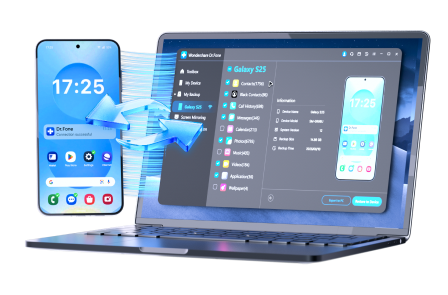
Before your next iOS update, consider including Dr.Fone Basic in your routine so that even if Safari tabs vanish again, the information that matters most on your iPhone is securely backed up and easy to restore.




Conclusion
When Safari tabs appear to vanish right after an iOS update, they are often not truly gone. By checking Recently Closed Tabs, looking for iCloud-synced tabs from your other Apple devices, and setting Close Tabs to Manually, you can usually restore safari tabs iphone after update changes and avoid the same scare in the future. Just keep in mind that private browsing sessions and data wiped with Clear History and Website Data typically cannot be recovered, so use those options carefully and combine them with a solid backup routine.
FAQ
-
1. How do I restore all my Safari tabs on iPhone after an iOS update?
Open Safari and tap the Tabs icon, then long-press the + button to view Recently Closed Tabs and tap any site to reopen it. If you also use Safari on a Mac or iPad, enable iCloud > Safari on all devices, then scroll to the bottom of the Tabs screen on your iPhone to reopen tabs that are still open on those devices. Finally, set Settings > Safari > Close Tabs to Manually so future updates do not auto-close them. -
2. Why did my Safari tabs disappear after updating my iPhone and can I get them back?
Tabs can disappear after an update if Safari is set to auto-close old tabs, if the interface layout changes, or if you recently cleared history and website data. You may be able to get them back by using Recently Closed Tabs (long-press the + icon in the Tabs view) or by restoring iCloud tabs from other devices. However, tabs from private browsing or from sessions where history was cleared are usually not recoverable. -
3. Can I recover recently closed Safari tabs on iPhone if they vanished after an update?
Yes, if Safari still has your recently closed tabs stored, you can recover them. Open Safari, go to the Tabs view, and long-press the + icon to open Recently Closed Tabs. From there, tap any page to reopen it in a new tab. If the list is empty, your phone may have cleared history or no longer has stored data for those tabs. -
4. How do I find missing iCloud Safari tabs from my other Apple devices after updating iOS?
On each device, confirm you are signed in with the same Apple ID and that Safari is enabled in iCloud settings. Then, on your updated iPhone, open Safari > Tabs and scroll down below your local tabs. Look for sections like "From My Mac" or "From My iPad". Tap any tab listed there to open it on your iPhone. -
5. Is there a way to restore private Safari tabs on iPhone that were lost after an update?
In most cases, private Safari tabs cannot be restored once they are closed, the device restarts, or iOS is updated. Private Browsing is designed not to keep history or a closed-tab list, so those pages will not appear in Recently Closed Tabs or iCloud. For any page you might need later, use a normal tab and consider bookmarking it. -
6. How can I stop Safari tabs from closing automatically on my iPhone after an update?
Go to Settings > Safari > Close Tabs and set it to Manually. This stops iOS from auto-closing tabs after a day, week, or month. While it will not restore tabs that were already removed, it will protect new tabs from being cleared automatically during everyday use or future system updates.
 Add Wondershare Dr.Fone as a preferred source on Google