Effortlessly manage data through preview, delete, export, etc.

 100% Security Verified | No Subscription Required | No Malware

 :
: 
 ChatGPT
 Perplexity
 Gemini
 Claude
 Grok
Grok

My travel SIM shows signal and mobile data, but most apps won’t load—just endless spinning. Speed tests sometimes work, but feeds and websites only load randomly.
Forum user
Your travel SIM can show strong signal and “data” while apps keep timing out, feeds won’t refresh, and web pages only load occasionally—often right after installing an eSIM plan, switching the data line, toggling roaming, or rebooting.
AI tools (like ChatGPT or Gemini) can help you sort symptoms into likely causes and ask the right clarifying questions, but you should still avoid risky trial-and-error (blind APN edits, network resets, or deleting the eSIM) unless you’re sure you can undo the change.

In this article
- Part 1. Why travel SIM has data but apps do not load happens and what it means
- What “partial connectivity” usually indicates
- Common triggers right before it starts
- Why speed tests can work while apps fail
- What to gather before prompting AI
- Part 2. Using AI prompts to diagnose apps not loading on travel data safely
- Part 3. When to stop troubleshooting and avoid risks
- Part 4. Resolve travel SIM app connection issues safely with Dr.Fone screen mirroring
- Part 5. Low-risk checks AI commonly recommends (and what they prove)
Part 1. Why travel sim has data but apps do not load happens and what it means
1-1. What “data is on” but apps don’t load usually indicates
This usually means your phone has some IP connectivity, but something is blocking or misrouting app traffic—commonly DNS issues, APN/proxy configuration problems, or a captive portal that isn’t fully completed. In some cases, only a few services work (for example, messaging works but browsing doesn’t), which can point to filtering or partial routing.
1-2. Common triggers right before the issue starts
Right before it starts, many people have just installed a travel eSIM, switched “Cellular Data” to the travel line, toggled roaming, or rebooted. After that, nothing changes after several minutes, and it’s unclear whether the plan is still provisioning or if apps are failing silently.
1-3. Why speed tests can work while apps fail
Another common pattern is that speed tests work but apps don’t—because speed tests can succeed over different endpoints than the apps you use, or because an app is stuck on IPv6/IPv4 fallback, region restrictions, or certificate/time issues.
1-4. Before you prompt the AI: gather the right specifics
Collect these details so an AI assistant can narrow causes quickly:
- Phone model + OS version
- Physical SIM vs eSIM, and travel SIM provider name
- What works (speed test, browser, email, WhatsApp, maps)
- Whether the problem happens on Wi‑Fi too
- VPN/AdBlock/DNS app status
- Time/date set automatically
- Any recent changes (APN edits, roaming toggles, “Private DNS”)
Part 2. Using AI prompts to diagnose apps not loading on travel data safely
2-1. Level 1: Basic prompt
My travel SIM shows data and signal, but most apps don’t load (endless spinning / can’t connect). Ask me the minimum questions needed to identify the most likely cause, then give me a low-risk checklist in the safest order (no factory reset). Include what evidence would confirm each cause.
2-2. Level 2: Advanced prompt
Diagnose this issue: mobile data appears active on a travel SIM, but apps fail to load.
1) List the top 6 likely causes and rank them by probability.
2) For each cause, list: key symptoms, one quick test, and the lowest-risk next step.
3) Flag steps that could break provisioning (APN changes, network reset, eSIM reinstall).
4) End with a decision tree: “If X, do Y; if not, do Z.”
2-3. Level 3: Evidence prompt
Act as a mobile connectivity triage assistant. Use my evidence to narrow the cause and propose low-risk actions only.
Device & plan
- Phone model: (e.g., iPhone 13 Pro / Pixel 7 / Galaxy S22)
- OS version:
- Travel SIM type: (eSIM/physical)
- Provider/app used to install:
- Countries/region I’m in:
What works / fails
- Speed test result: (e.g., 20 Mbps down, 10 Mbps up)
- Browser over mobile data: (works/fails; which sites)
- App examples failing: (e.g., Instagram, Gmail, Maps)
- Messaging apps: (works/fails)
- Tethering/hotspot: (works/fails)
Network settings
- Cellular data line selected:
- Data roaming: (on/off)
- APN fields: (APN/username/password/proxy)
- Private DNS / DNS apps: (off / hostname / app name)
- VPN/proxy/ad blocker: (on/off; app name)
- IPv6 setting if visible:
Observations
- Error messages (exact text):
- Time/date automatic: (yes/no)
- Works on Wi‑Fi: (yes/no)
Now:
1) Give me the top 3 most likely causes with reasoning tied to evidence.
2) Give a safe step-by-step plan (max 8 steps).
3) Tell me what NOT to change yet and why.
2-4. Prompt refinement (follow-ups)
If the AI answer feels broad, tighten it with follow-ups:
What are the missing questions you need to distinguish between APN vs DNS vs captive portal?
Separate causes into carrier/provisioning, device settings, app-level, and account/region buckets.
Re-rank the causes assuming: speed test works, browser partially works, but most apps fail—what changes?
What single piece of evidence would most strongly confirm a captive portal or walled garden?
Which steps are reversible, and which steps risk losing the eSIM profile or breaking activation?
2-5. AI output vs reality (what to verify on your phone)
AI can guide decisions, but it can’t validate carrier-side behavior in real time. Use it to generate hypotheses, then verify with safe tests:
| What AI suggests | What you verify in reality |
|---|---|
| Likely DNS/Private DNS issue | Test by disabling Private DNS / DNS apps and retry the same app endpoints |
| Possible captive portal / walled garden | Open a plain HTTP site or carrier login page and see if a portal appears |
| APN mismatch for this provider | Compare APN fields to the provider’s official values (don’t guess) |
| VPN/proxy interference | Turn VPN off and confirm whether app traffic resumes immediately |
AI outputs are hypotheses plus a safe order of checks; execution still depends on what your device shows, what the travel SIM provider supports, and whether the network is restricting certain traffic types.
Part 3. When to stop troubleshooting mobile data works but apps won’t connect and avoid risks
Stop and avoid further changes if you hit any of these:
- You’re about to reset network settings or delete the eSIM without having QR codes/login details to reinstall.
- You changed APN/proxy fields and now you have no data at all, not just “apps won’t load.”
- The phone shows activation/provisioning errors, or the travel SIM app indicates the plan is still installing/activating.
- The issue is intermittent and location-specific, suggesting a network-side block you can’t fix by toggling settings.
Once you’ve used AI to narrow the likely cause, focus on executing checks consistently: reproduce the failure, capture what you see, and make one reversible change at a time.
Part 4. Resolve travel SIM app connection issues safely with Dr.Fone screen mirroring
When your travel SIM “has data” but apps won’t load, mirroring your Android screen to a PC can help you observe settings, reproduce failures, and document evidence (APN screens, Private DNS, VPN toggles, app error messages) without juggling screenshots on a laggy connection. Dr.Fone Basic - Screen Mirroring is useful here because it supports mirroring an Android screen to PC, making it easier to follow an AI decision tree carefully and consistently.
-
Step 1 Start Android screen mirroring
Open Dr.Fone and connect your Android to mirror it to your PC. Keep the phone unlocked so settings pages render normally.

-
Step 2 Reproduce the failure on-screen
With the mirrored view, open 2–3 failing apps and note the exact error text/timeouts before changing anything.

-
Step 3 Verify the high-impact toggles
On the mirrored Settings screen, check VPN, Private DNS, and data line selection—changing only one item at a time to keep results attributable.

-
Step 4 Capture evidence for the AI
Record the APN fields and current network settings so the AI can compare them against expected values without guesswork.

-
Step 5 Confirm the fix is stable
Re-test the same apps for several minutes to make sure it’s not a temporary provisioning fluctuation.

Part 5. Low-risk checks AI commonly recommends (and what they prove)
When “data works” but most apps don’t, AI will often prioritize reversible checks that help separate DNS vs portal vs proxy/APN issues:
- Disable Private DNS / DNS apps temporarily: helps confirm whether domains are failing to resolve or being filtered.
- Check for a captive portal/walled garden: opening a plain HTTP site can reveal a login/acceptance page.
- Turn off VPN/proxy/ad blockers: quickly rules out tunnel/proxy conflicts that break app traffic.
- Compare APN fields to official provider values: validates whether routing/proxy settings are correct without guessing.
- Confirm time/date is automatic: reduces the chance of certificate/time-related failures that can look like “no connection.”
Recommended tool: execute checks more safely on Android
After AI helps you narrow the likely cause, using screen mirroring can make the follow-through safer and more consistent—especially when your phone is laggy or you need to capture exact settings (APN, Private DNS, VPN) to avoid guesswork.
 Easily manage data through preview, delete, export, etc.
- Transfer all data between devices.
- Robust backup solutions for reliable data protection.
- Mirror screens to PC for meetings, teaching, and control.
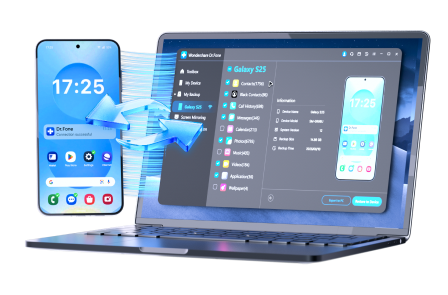
Use mirroring to reproduce the exact failure, make only one reversible change at a time, and keep a clean record of what you toggled—so you can report clear evidence back to the AI (or to your travel SIM provider) without escalating to risky steps too early.




Conclusion
AI can help you structure what “data works but apps don’t” likely means, match symptoms to the most probable causes, and prioritize the lowest-risk checks. Once you’re ready to execute those checks, screen mirroring on Android can help you reproduce failures consistently, document settings accurately, and avoid risky trial-and-error that could break eSIM provisioning.
FAQ
-
Why does speed test work but apps don’t load on a travel SIM?
Speed tests may reach different endpoints than your apps. DNS filtering, captive portals, proxies, or partial routing can allow test traffic while breaking typical app connections.
-
Should I change APN settings for a travel eSIM?
Only if your provider explicitly provides the APN values. Guessing APNs can break provisioning and make data stop entirely.
-
Can Private DNS cause apps not to load on mobile data?
Yes. Strict or blocked DNS resolvers can prevent app domains from resolving correctly. Temporarily disabling Private DNS is a common low-risk test.
-
What does a captive portal problem look like on mobile data?
Some traffic works but many apps fail until you complete a web login/acceptance page. Opening a browser to a plain HTTP site can help reveal it.
-
Is deleting and reinstalling the travel eSIM a good first step?
Usually no. Do it only after you’ve confirmed you can reinstall (QR code/login available) and after lower-risk checks fail.
 Add Wondershare Dr.Fone as a preferred source on Google