Recover photos, messages, WhatsApp, and more — no backup
needed.


 100% Security Verified | No Subscription Required | No Malware

 :

 ChatGPT
 Perplexity
 Gemini
 Claude
 Grok
The seating-plan link still opens, but it now shows a different table arrangement and the LINE discussion about a last-minute seat swap is gone. On Google Pixel 11 Pro Fold, a current PDF cannot automatically tell you what the group was looking at when that missing conversation took place.
Dr.Fone - Data Recovery (Android) helps you look for the available discussion and actual attachments without an earlier LINE backup. Preview can bring the relevant wording into view, separate attachment results help locate found plans or photos, and selective saving keeps the useful records on a Windows PC. If you also own the linked PDF in Drive, inspect any retained version separately so a changing cloud file is not mistaken for a fixed historical attachment.
In this article
Before you start
Check the precise Pixel 11 Pro Fold record
The confirmed Google Pixel 11 Pro Fold entry lists Android 16 and Kernel 6.12 / 6.12.69. Keep that exact named-model scope and both listed Kernels. Its folding screen is not a different recovery mechanism. Advanced Recovery is Windows-only; follow the product's actual connection, detection and access prompts rather than assuming every Pixel configuration is supported.
Keep phone data and source documents unchanged
Prepare a Windows PC, USB data cable and private output folder. Keep LINE installed and avoid clearing storage, cleanup, resetting, bootloader unlocking, flashing or downgrading. When checking a retained Drive document, do not upload a replacement, delete a version or alter the current seating plan. The LINE scan saves selected found data to a PC, not back into LINE or Google Drive.
Limit the optional Drive check to a file you already own
Use this check only if the PDF was already stored in your own Drive and an older file version is actually accessible. An ordinary shared link alone does not grant version-management rights. A missing LINE backup is separate from the existence of an individually uploaded file; the local LINE scan does not require that upload and does not access Drive through this workflow.
Inspect an available older version of your own linked PDF
This optional computer-side check is for an existing non-Google file, such as a PDF, that you own in Google Drive. It checks retained file versions without replacing the current document.
Step 1 Distinguish a live link from an actual saved attachment
Establish whether your reference is a currently opening Drive link or an actual downloaded PDF copy. A linked file may have changed since the LINE discussion. A separately saved file contains its own available contents, but neither source alone establishes the missing agreement about the seat swap.
Step 2 Open the existing file's version list on the computer
On your computer, open Google Drive and select the PDF you own. At the top right, choose More > File information > Manage versions. Inspect any retained versions shown. Google treats these uploaded-file versions differently from Google Docs, Sheets and Slides history; do not apply this PDF route to those native document types.
Step 3 Download an available reference instead of replacing the current plan
If the relevant older version and download control are available, use More > Download beside that version to save a separate computer copy. Open it to compare the actual names and table positions. Do not upload it over the current file, and do not assume its presence proves that it was the version seen or accepted in LINE.
- Google says an older version might be permanently deleted after 30 days or if 100 newer versions exist. Inspect only versions actually retained; no older-version recovery or unlimited history is promised.
- This is Google Drive's own retained-file capability, not Dr.Fone cloud recovery. A historical PDF can clarify an earlier layout, while the deleted LINE exchange remains a separate local-data question.
A current plan, an older file and a chat message are different evidence
| Source you can inspect | Useful answer | What it does not establish |
|---|---|---|
| The currently opening Drive PDF | The layout that file displays now | Which layout appeared when the deleted LINE discussion took place. |
| An accessible older Drive file version | The actual older file contents | That everyone saw, agreed to or acted on that version. |
| A separately downloaded plan | The contents of that particular copy | Its place in the decision sequence without supporting context. |
| A found LINE seat-swap exchange | The available wording and replies | A current venue arrangement unless independently confirmed. |
| A plan photo, clip or file in LINE Attachments | The actual found media content | An automatic match to the final swap or an unavailable cloud version. |
Common problems and fixes
Manage versions is not available for the linked file
Do not change sharing settings or request additional account access just to follow this optional check. The file may not be yours or may be a native Google document with a different history system. Use your actual retained copy if one exists, and continue the independent LINE scan for missing wording.
Only the latest PDF version is listed
An old version may no longer be retained. Do not present the current file as the missing historical plan. Review any actual file results from LINE Attachments and ask an authorized organizer for a retained copy if necessary, keeping a freshly supplied copy distinct from a recovered local one.
Two plans show different seat assignments
Compare the available conversation for a proposal, explicit acceptance and later changes. Do not infer the final agreement from version order, filename or a highlighted seat alone. Dr.Fone does not automatically reconcile cloud revisions with chat decisions.
How to use Dr.Fone - Data Recovery (Android)
Dr.Fone - Data Recovery (Android) gives you a focused way to look for the LINE context behind a changing seating-plan file. Its Windows-only Advanced Recovery mode scans supported local app data without a previous LINE backup, offers separate conversation and attachment previews, and saves selected results to your PC. You can inspect the actual swap wording alongside usable found plans and photos, then preserve the relevant records without modifying the live shared document.
- Available LINE conversation review helps distinguish a suggested seat swap from a readable reply accepting or changing it.
- LINE Attachments lets you inspect actual found photos, videos and files rather than treating a live link as a recovered PDF.
- Selected PC output lets you keep useful historical discussion and supporting files separate from the current cloud plan.
 Scan Android phones and tablets directly.
- Preview and recover only what you want.
- Supports WhatsApp, photos, videos, contacts, and more.
- Works with 6000+ Android devices.
Follow the official Advanced Recovery workflow
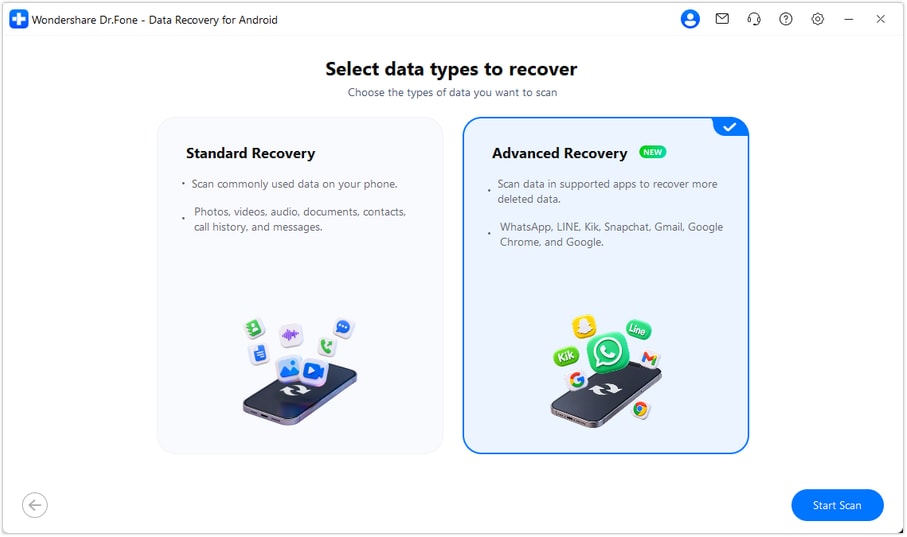
Step 1 Choose Advanced Recovery and connect the Fold
Launch Dr.Fone on Windows, then open Toolbox > Data Recovery > Android > Recover Android Data. Select Advanced Recovery and click Start Scan. Connect the supported Pixel 11 Pro Fold by USB when prompted and follow the instructions until it is detected.
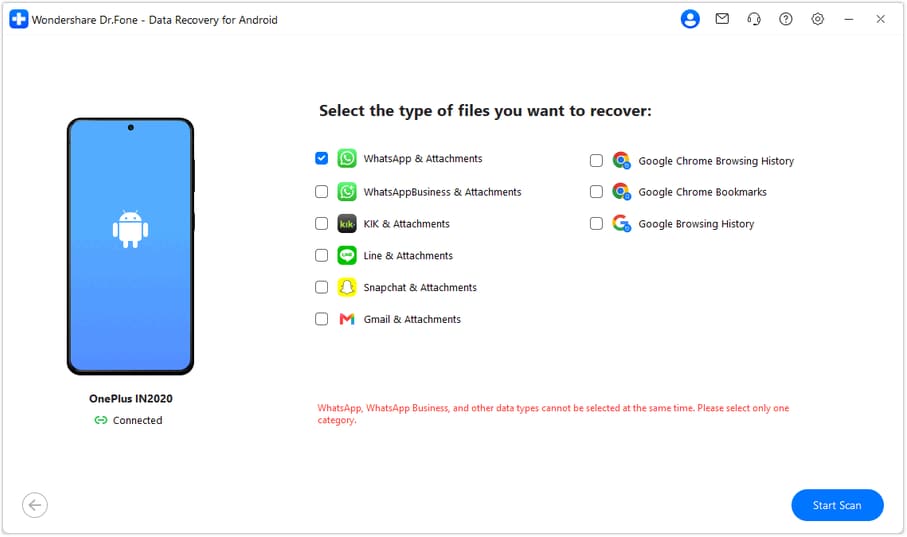
Step 2 Select LINE app data to scan
Choose LINE from the available categories and click Start Scan. The guide requires WhatsApp and WhatsApp Business to be scanned separately from the other categories. Use the LINE category for this missing conversation.
Step 3 Keep the phone connected throughout scanning
Allow Advanced Recovery to scan while keeping the USB connection stable. Click Cancel before disconnecting if you must stop. If the phone is temporarily unresponsive after scanning or recovery, use the on-screen restart instructions.
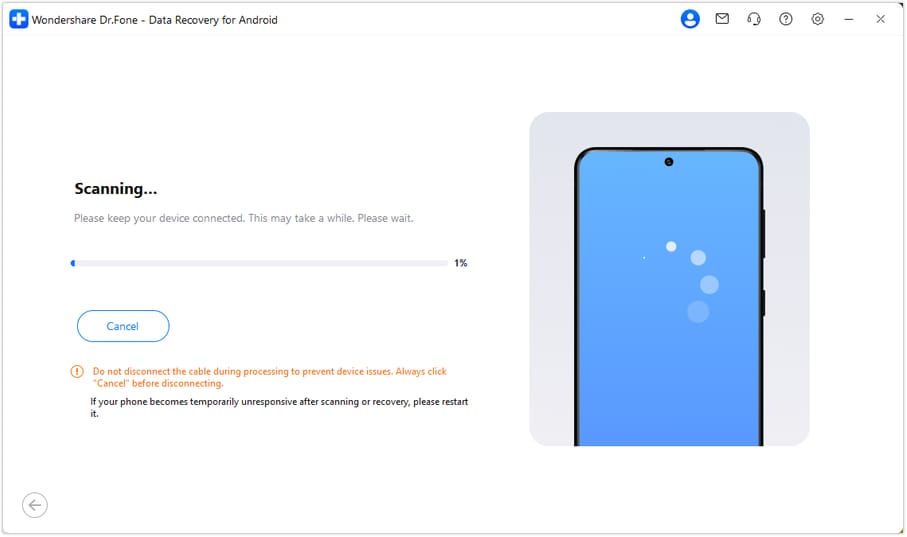
Step 4 Preview the seat-swap discussion and found files
Choose LINE in the sidebar and inspect available conversations, using search and filters where offered. Look for actual wording and readable replies, then open LINE Attachments separately to inspect found plans, photos or videos. Select relevant usable records rather than assuming that a file mentioned in a message has also been found.
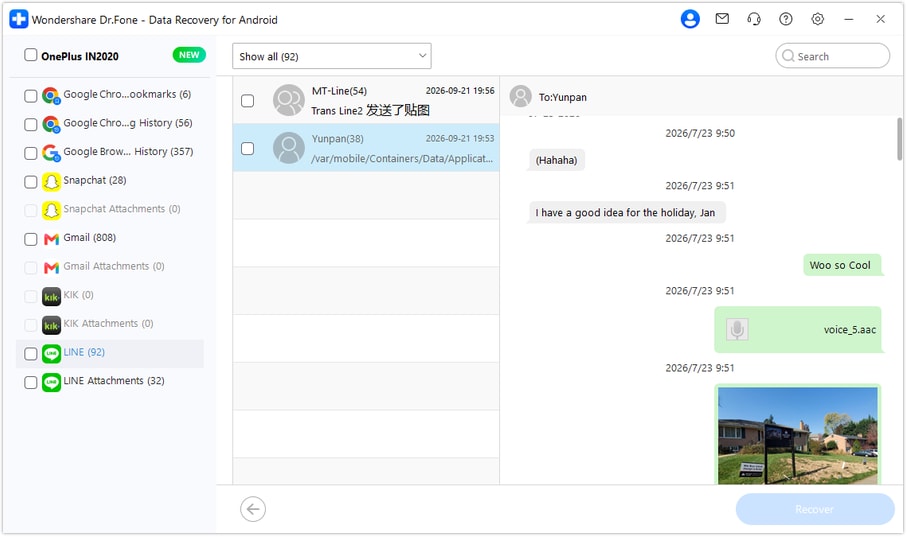
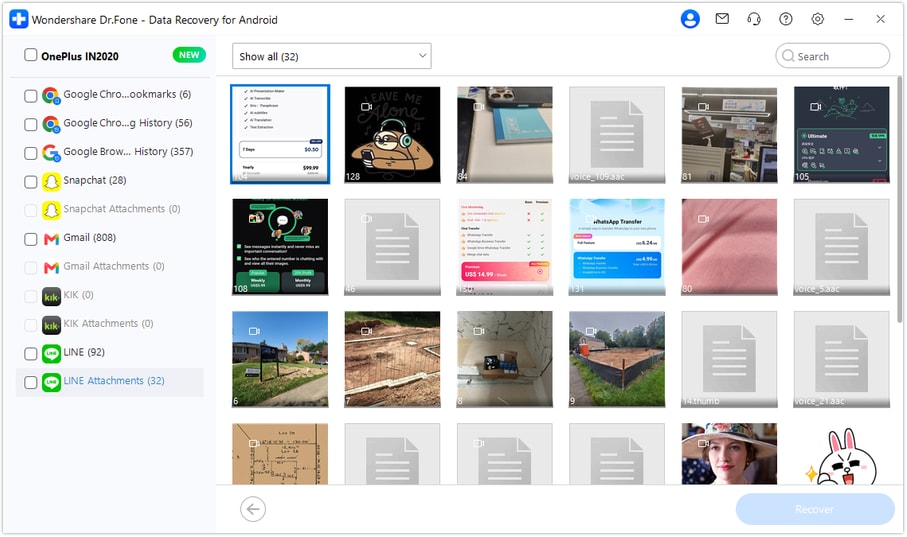
Step 5 Save the selected results on your computer
Click Recover and follow the prompts to choose a computer folder. Save the selected discoverable results, then inspect the saved text and actual files. This is a separate PC copy; it does not restore the LINE thread, replace a Drive file or alter the current seating arrangement.




Conclusion
Dr.Fone - Data Recovery (Android) helps Google Pixel 11 Pro Fold users look for missing LINE decision wording, preview actual supporting plans and media, and save selected useful results to a PC. Download Dr.Fone for Windows and start the supported LINE scan to preserve the available conversation context alongside the files that matter.
FAQ
1. Can I recover deleted LINE messages on Pixel 11 Pro Fold without a backup?
Dr.Fone - Data Recovery (Android) offers a supported Windows Advanced Recovery route that scans local LINE data without an existing LINE backup. Review what the scan finds in LINE and LINE Attachments and save selected records to your PC.2. Does the Drive version check require a LINE backup?
No. It applies only to a separate file already stored in your Drive, where an older version remains accessible. If you never uploaded that file or cannot access its version list, skip the check. The local LINE scan does not depend on Drive.3. Can Dr.Fone retrieve missing Google Drive versions through this scan?
That is not the workflow described here. Drive's retained-version controls belong to Google Drive. Dr.Fone Advanced Recovery scans the connected phone's supported app data and saves selected available results to a PC; it does not recover missing cloud versions or automatically match them to LINE messages.4. Can I use a new LINE backup or Premium Backup to undo the deletion?
No. A usable Standard Backup must predate deletion, and Standard Backup covers text rather than original chat media. Premium Backup does not roll manually deleted conversations back. The no-backup method here is the local scan, not creating a new backup or subscription.5. Does the folding screen change the recovery process?
No special folding-screen recovery mechanism is claimed. This article uses the confirmed Pixel 11 Pro Fold conditions, Android 16 and Kernel 6.12 / 6.12.69, and follows the same official five-stage Windows Advanced Recovery workflow.
 Add Wondershare Dr.Fone as a preferred source on Google