Recover photos, messages, WhatsApp, and more — no backup
needed.


 100% Security Verified | No Subscription Required | No Malware

 :

 ChatGPT
 Perplexity
 Gemini
 Claude
 Grok
A glossary may say how to translate a name but omit the LINE discussion explaining when to keep the original spelling. After the project group disappears from your phone, that missing exception can be harder to reconstruct than the translated document itself. If you want to recover deleted LINE messages on Samsung Galaxy Z Fold 5 without a backup, focus on the terminology decision and the source passage it applied to.
Dr.Fone - Data Recovery (Android) lets you look for discoverable local LINE conversations, preview available glossary files and reference media, and keep selected results on a PC. First establish whether you left the group or deleted its chat: those situations have different retained-source checks. Then use the five-step scan to look for data from the exchanges the phone actually received.
In this article
Before you start
Check the Galaxy Z Fold 5 entry
The supplied support record names Samsung Galaxy Z Fold 5 with Kernel 5.15; no Android-version restriction is listed for this model. Record the model, Android version and Kernel information before connecting. Preserve the supplied 5.15 condition without treating it as proof of every firmware combination or applying a different Fold model's entry.
Prepare Windows while protecting existing data
Advanced Recovery is Windows-only and saves selected discoverable results to a PC, not directly into LINE. Prepare a USB data cable and a private output folder. Keep LINE installed and avoid clearing its storage, resetting the Fold 5 or following generic Root, flash or bootloader-unlock instructions. Follow the actual product prompts for the supported device.
List the term, source passage and lost discussion period
Record the source-language expression, any transliteration, the chapter or page reference and the approximate date. LINE's Standard Backup would require a backup made before deletion and primarily preserves text; Premium Backup is not a manual-deletion rollback. Since this article assumes no such backup, neither backup route is presented as the working solution.
Check whether the old translation group was left or its chat was deleted
This check identifies where an existing copy might still be available. It does not require leaving, rejoining or changing the group.
Step 1 Establish your present access without altering it
If you can still open the group normally, inspect the existing conversation and any deliberately posted glossary Note. If you know you left or were removed, do not treat the absence of its Notes or Albums from your phone as proof that every member lost the content.
Step 2 Ask for one authorized retained extract if appropriate
A remaining member may still have the past posts, Notes or Albums. If sharing is appropriate for the project, ask them to check the exact term, its exception and the source passage, and voluntarily send only that relevant material. Ask them to distinguish the old text they can actually read from a new explanation written from memory.
Step 3 Keep received copies separate from a local recovery
Label a member's extract with its source and the date you received it. If you cannot obtain the original decision, continue with the local scan for messages previously received on the Fold 5. Neither receiving an extract nor scanning creates group membership or reopens inaccessible shared content.
- LINE says leaving a group removes your access to past posts, Albums and Notes, while your past posts remain visible to the members who stay. Do not leave a group as a troubleshooting step.
- A hidden chat is different: if still present in Home > Settings > Chats > Hidden chats, use Edit > Unhide chat. Deleting the chat removes its old history; a new message does not bring that history back.
Turn recovered translation records into a useful reference
| Record available | Useful result | Interpretation |
|---|---|---|
| A LINE terminology discussion | The chosen term, rejected alternative or exception | Read the qualification and source context, not only the isolated translated word. |
| A glossary document in LINE Attachments | The terminology recorded in that particular file | Inspect the content and revision label; a later exception may exist only in chat. |
| A source-page image or usable reference clip | Context for the passage under discussion | Match the visible passage or actual clip; an attachment's display order does not establish a page reference. |
| An authorized extract from a remaining member | A retained project record you can compare with local findings | Keep original quoted text distinct from that member's current interpretation. |
Common problems and fixes
A remaining member can open the glossary Note but you cannot
If you left or were removed from the group, that difference is consistent with LINE's access rules. Request an appropriate voluntary extract rather than trying to bypass access or assuming your own PC login supplies the missing history. Use the local scan only for discoverable data on your supported phone.
The translated term is found but the exception is missing
Inspect nearby messages and look for the source expression or chapter reference using available search and filters. A glossary row can be useful on its own, but it does not establish whether the group accepted a later exception. Preserve the row and mark that qualification unresolved.
The same source passage appears with two different translations
Compare the complete statements, including whether each is a proposal, a question or an accepted replacement. Review the actual file revision as well. If the sequence remains incomplete, keep both references instead of treating the last visible fragment as a complete decision.
How to use Dr.Fone - Data Recovery (Android)
Dr.Fone - Data Recovery (Android) helps you look beyond a surviving glossary for the discussion that made the wording meaningful. Its Windows-only Advanced Recovery scans selected LINE app data on the supported Galaxy Z Fold 5 without requiring a previous backup. Review discoverable conversations, inspect available LINE Attachments and save the records you need to a PC as a separate terminology reference.
- Targeted LINE scanning to look for discoverable local messages from the earlier project discussion.
- Separate previews for decision wording and supporting files, photos or videos that actually remain available.
- Selective PC recovery to keep the relevant term and context together for manual comparison.
 Scan Android phones and tablets directly.
- Preview and recover only what you want.
- Supports WhatsApp, photos, videos, contacts, and more.
- Works with 6000+ Android devices.
Follow the official Advanced Recovery workflow
Step 1 Connect the Fold 5 to Advanced Recovery
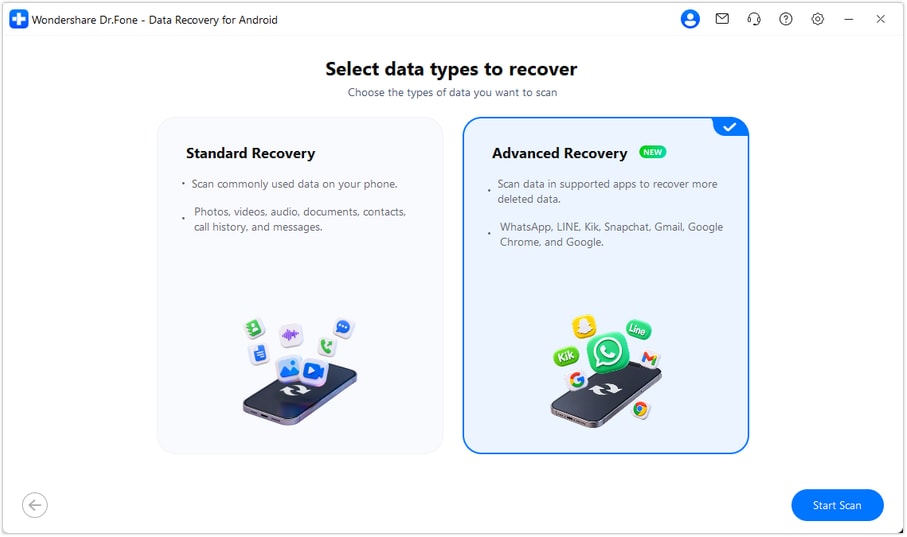
On Windows, launch Dr.Fone and open Toolbox > Data Recovery. Choose Android > Recover Android Data, select Advanced Recovery and click Start Scan. Connect the supported Fold 5 by USB when prompted and follow the displayed instructions until device detection completes.
Step 2 Choose LINE data for the terminology search
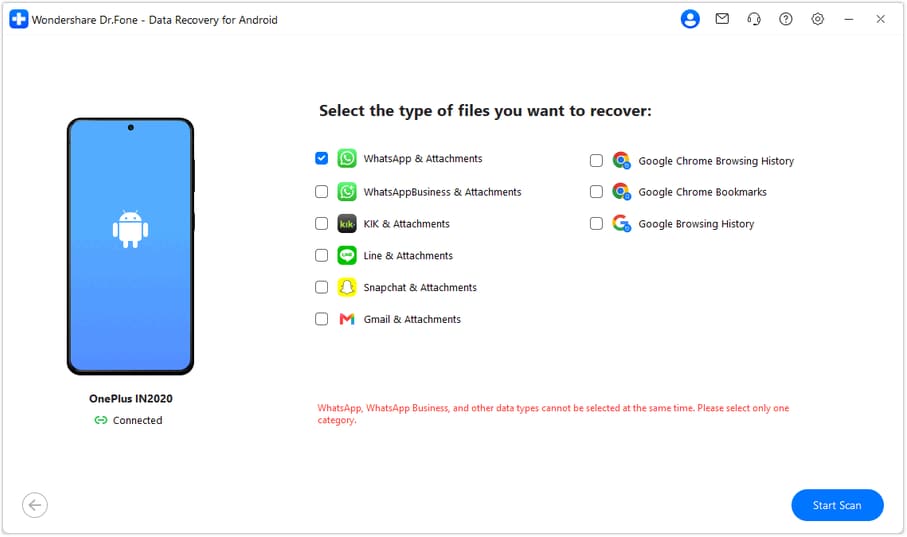
Select LINE from the available app-data categories and click Start Scan. This is the app containing the earlier terminology discussion and its available attachments.
Step 3 Wait while the phone data is scanned
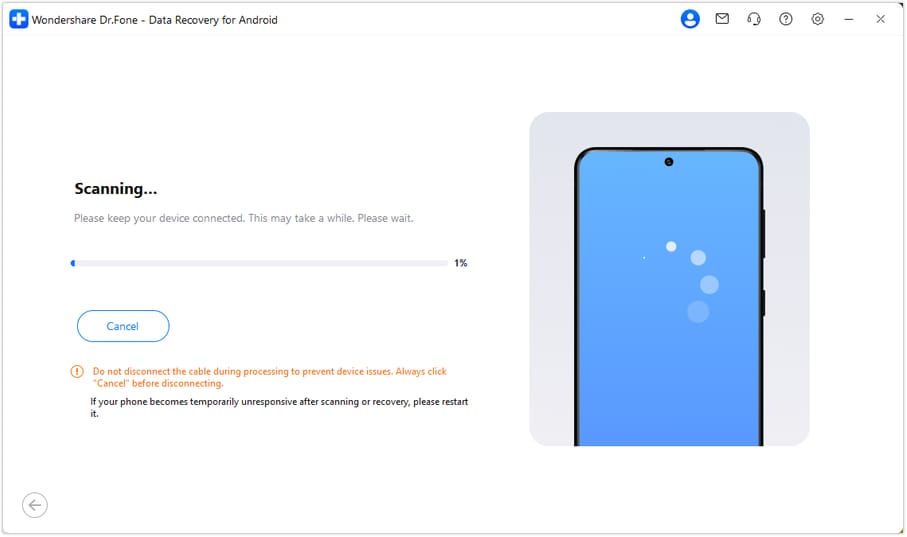
Keep the phone connected throughout the scan. If you must interrupt it, click Cancel before unplugging the cable. Follow the on-screen restart instruction if the Fold 5 is temporarily unresponsive after scanning or recovery.
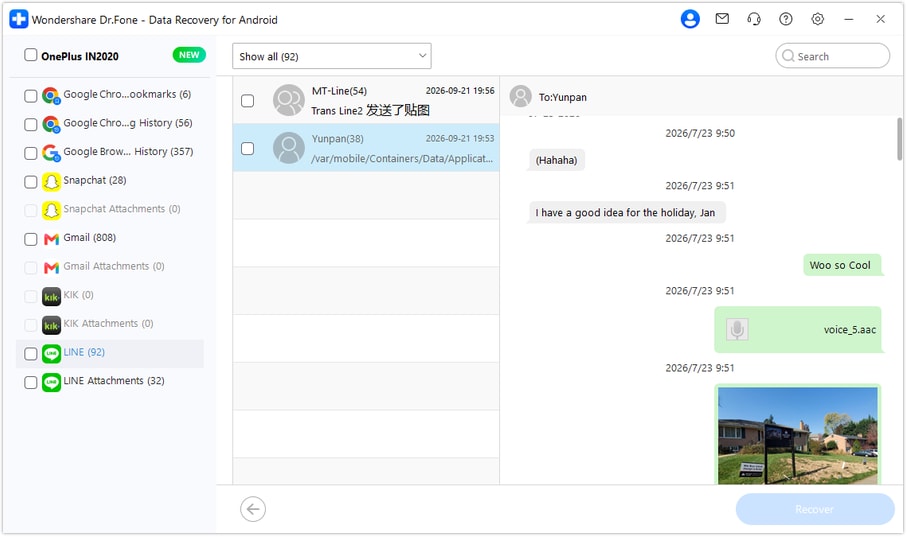
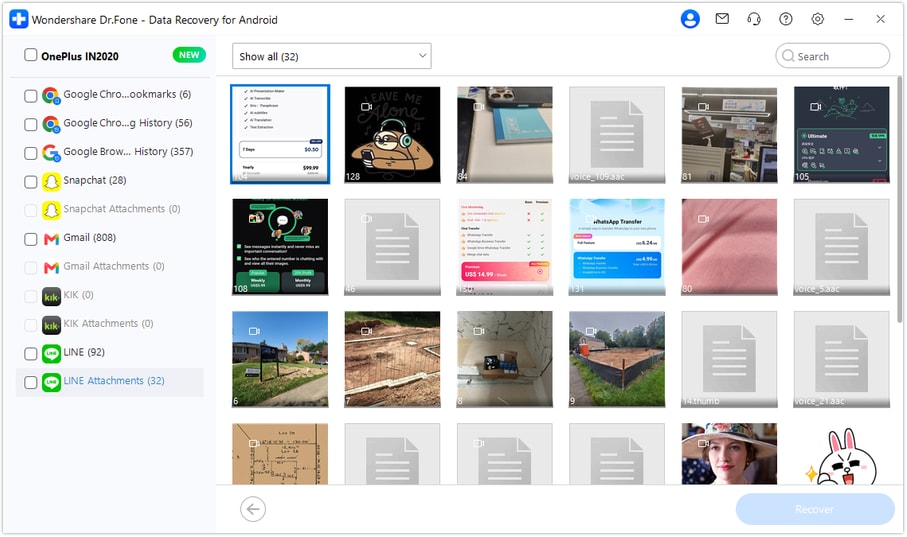
Step 4 Preview terminology decisions and source material
Open LINE in the results sidebar and inspect available conversations for the original term, proposed translation and relevant exception. Use search or filters where offered. Then choose LINE Attachments separately to browse the available glossary files, source-page photos, videos and other results, and select the useful items.
Step 5 Save a selected project reference to your PC
Click Recover, choose a folder on the computer and finish the save prompts. Open the saved output and compare the selected discussion with the available source files. Recovery creates a PC copy; it does not rejoin the group or write messages back into LINE.




Conclusion
The wording behind a translation choice can be as valuable as the finished glossary. Dr.Fone - Data Recovery (Android) gives you a focused way to look for that LINE context, preview supporting material and save selected references to your PC. Download Dr.Fone for Windows and start the guided scan on your supported Samsung Galaxy Z Fold 5.
FAQ
1. Can I recover deleted LINE messages on Galaxy Z Fold 5 without a backup?
Use Dr.Fone - Data Recovery (Android) to scan the supported Fold 5 with Windows Advanced Recovery. Select LINE, review discoverable conversation and attachment results and recover your choices to a PC. It does not require a LINE backup, but the useful output depends on what the local scan finds.2. Does leaving a LINE group delete my posts for everyone?
LINE says your past posts, Albums and Notes remain visible to members who stay, while you lose access after leaving. That is why a remaining member's authorized retained copy can be a useful separate source. Do not assume a current member has every deleted message or that your account can reopen the old content.3. Will Dr.Fone restore the old group or its deleted Notes?
This workflow is not group restoration or a Notes database recovery feature. It scans supported local app data and saves selected discoverable results to a PC. Inspect only shared Notes you can normally access or appropriate copies a remaining member voluntarily provides.4. Can I recover deleted LINE photos, videos and glossary attachments?
Check LINE Attachments separately from LINE conversations and select usable media or files found there. A source-page image can help identify the passage even when a whole document is unavailable. The scan does not reconstruct expired originals or translate missing text.5. Can a recovered glossary prove which translation was finally accepted?
It shows the wording in the available file. To establish the project's decision, compare any discoverable discussion of acceptance, exceptions or later replacements. Keep unresolved choices separate from confirmed wording so the recovered material remains a useful, clearly sourced reference.
 Add Wondershare Dr.Fone as a preferred source on Google