Recover photos, messages, WhatsApp, and more — no backup
needed.


 100% Security Verified | No Subscription Required | No Malware

 :

 ChatGPT
 Perplexity
 Gemini
 Claude
 Grok
Your application email may still be sitting in Gmail Drafts, complete with your proposed wording, while the LINE exchange with a referee has disappeared. That leaves an important gap: what did the referee actually offer to provide, and which details were only in your unsent plan? To recover deleted LINE messages on OPPO Reno10 Pro+, focus on the actual conversation and any reference documents, not on treating a draft as a received reply.
Dr.Fone - Data Recovery (Android) can look for available local LINE records, let you read found exchanges and inspect photos, videos and files separately, and save the useful selections to your Windows PC. If you had already copied notes into an email draft, you can inspect that independent copy too, without sending it. The draft check is optional; the supported LINE scan does not require an earlier LINE backup or access to Gmail.
In this article
Before you start
Match the Reno10 Pro+ support record
The confirmed entry names OPPO Reno10 Pro+ with Kernel 5.10.236. No Android-version restriction is listed for this named model. Keep the plus variant and Kernel condition intact rather than applying the entry to every Reno10 or every OPPO firmware. Check the connected phone's displayed model and Kernel details and follow Dr.Fone's actual eligibility and access prompts.
Keep LINE and the original local history intact
Use the phone that held the exchange, with LINE still installed and signed in. Do not clear app storage, reinstall, reset, flash or unlock the bootloader for recovery. Prepare a Windows computer and USB data cable, and follow the product's connection prompts rather than a generic Root tutorial.
Protect the private application material
Choose a private PC folder for the selected output and review only information you are authorised to access. If an independent Gmail draft exists, inspect it without sending, discarding or rewriting it. A referee's contact details in your draft do not authenticate the author of a missing LINE message, and a blank placeholder is not a retained copy of the promised reference.
Do not create a backup after the fact
LINE Standard Backup is text-only and same-OS; native restoration requires a suitable backup from before manual deletion. A Standard copy made afterwards or Premium Backup does not roll the deleted chat back. The no-backup scan here saves selected discoverable local LINE data to PC, not into LINE or a cloud mailbox. It cannot promise unavailable expired originals.
Inspect a separately retained Gmail draft without sending it
You had already copied application notes or prepared a message outside LINE and need to distinguish your own unsent plan from the referee's actual response.
Step 1 Open the existing draft in the correct account
On your computer, open Gmail with the account in which you prepared the application. Use the Drafts label and open the relevant existing draft. Google identifies Drafts as the location for email drafts; an absent sent message may simply never have been sent. This is a retained-mail check, not a LINE restore.
Step 2 Read what is actually retained
Inspect the draft's text for the copied wording or the notes you personally wrote. Separate any apparent quotation from your proposed request and from a placeholder such as reference to follow. Check whether a promised document is actually present and accessible rather than merely named in the prose. Leave Send, discard and editing controls alone.
Step 3 Use the draft to frame the missing conversation question
A draft may remind you which role, deadline or document to look for, but it does not show that the addressee received the message or accepted the request. Compare it with the original LINE response only if that response is available in the scan. If the draft was discarded, Google says it cannot be recovered; do not treat ordinary email Trash as a discarded-draft recovery method.
- No Gmail scan is required in the LINE workflow below. The draft is an independent optional source, not a backup of every LINE exchange or an additional Dr.Fone cloud feature.
- Keep a newly written summary or fresh referee confirmation separate from both the old unsent draft and any recovered original message.
Separate your application plan from the actual response
| What is available | Useful information to keep | Do not assume |
|---|---|---|
| An existing Gmail draft | Your retained wording, copied notes and genuinely present references | That the addressee received or agreed to the unsent email |
| A placeholder naming a reference document | The name of an item you intended to obtain | That the document was attached, sent or ever received |
| A found LINE response from the referee | The actual offer, scope or qualification visible in the message | A broader commitment than the words actually state |
| Available LINE photos, videos or files | The supporting content you can actually inspect and save | A reference author's identity or consent merely from a filename |
| No retained draft but useful LINE results | The original conversation records found by the local scan | That a discarded Gmail draft is necessary for LINE recovery |
Common problems and fixes
The draft contains a proposed deadline but no reply
Treat it as your plan, not an agreement. In LINE results, read the referee's available wording and any visible qualification independently. Do not send the old draft as a recovery test; if you later seek a fresh confirmation, keep that new answer separate from the historical exchange.
You remember a draft, but it is no longer in Drafts
Confirm the relevant existing account and avoid assuming the draft was sent. If it was discarded, Google's help says it cannot be recovered. Do not clear app data or rely on Trash to retrieve a discarded draft. The independent LINE scan can still be used without that source.
LINE results show a document name but the attachment is missing
Open LINE Attachments separately and inspect only actual available files and media. A filename or promise in the conversation is not a substitute for the document's contents. Save useful conversation text even if the file is absent, and avoid treating an empty placeholder as a recovered reference.
How to use Dr.Fone - Data Recovery (Android)
Dr.Fone - Data Recovery (Android) helps you look for what the referee actually said, beyond the application wording you still have in a draft. Its Windows-only Advanced Recovery workflow scans supported local LINE data on OPPO Reno10 Pro+, offers available conversation reading and separate LINE attachment previews, and saves selected records to PC. You can preserve the actual response and useful supporting files without sending the draft or trying to restore the entire app history.
- Local LINE discovery without a pre-existing LINE backup or an independent email copy.
- Separate previews for available conversation wording and photos, videos or documents, so a proposed request and an actual response are not confused.
- Selective PC output to keep the relevant private application exchange rather than every unrelated record.
 Scan Android phones and tablets directly.
- Preview and recover only what you want.
- Supports WhatsApp, photos, videos, contacts, and more.
- Works with 6000+ Android devices.
Follow the official Advanced Recovery workflow
Step 1 Start Advanced Recovery and connect the Reno10 Pro+
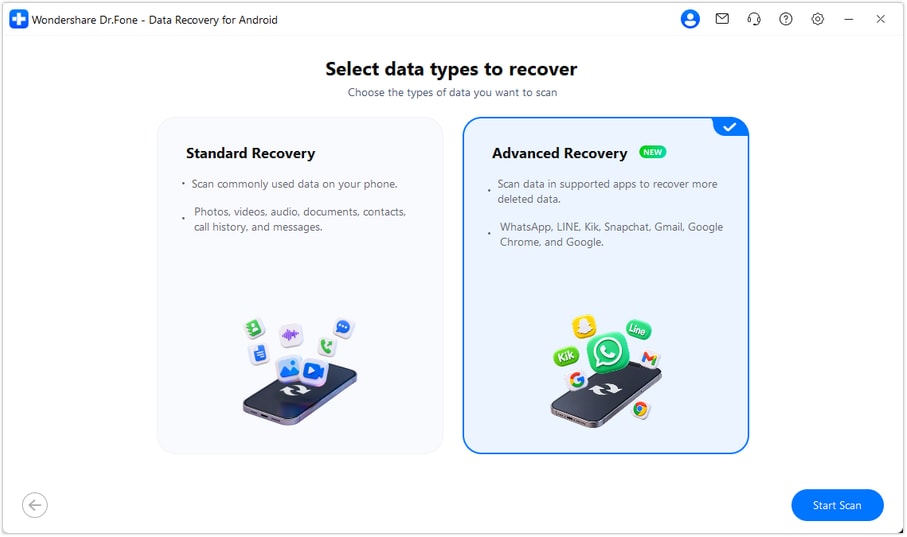
Launch Dr.Fone on Windows and open Toolbox > Data Recovery. Choose Android > Recover Android Data, select Advanced Recovery and click Start Scan. Connect your supported OPPO Reno10 Pro+ over USB when requested and follow the on-screen instructions until it is detected.
Step 2 Choose LINE for the recovery task
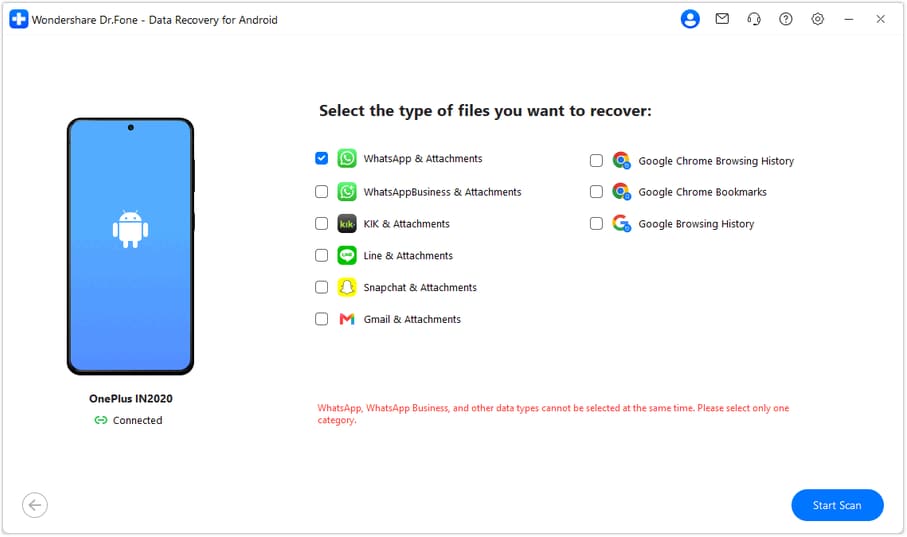
Select LINE from the supported app-data categories and click Start Scan. This task uses LINE, not Gmail. The official guide requires WhatsApp and WhatsApp Business to be scanned separately from other data types if you also need those apps.
Step 3 Wait for the connected-phone scan
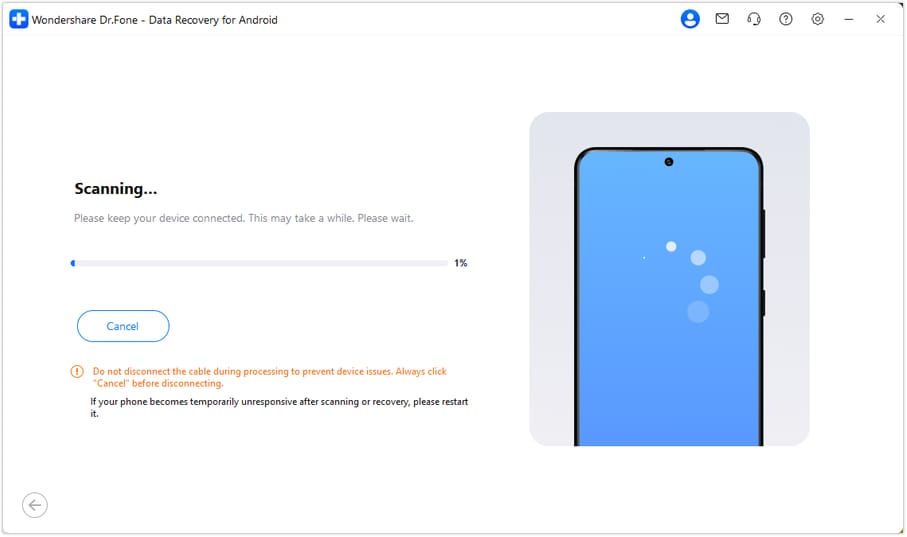
Keep the phone connected while Advanced Recovery scans the selected data. If you need to stop, click Cancel before unplugging it. If it is temporarily unresponsive after scanning or recovery, follow the restart instruction displayed by the product.
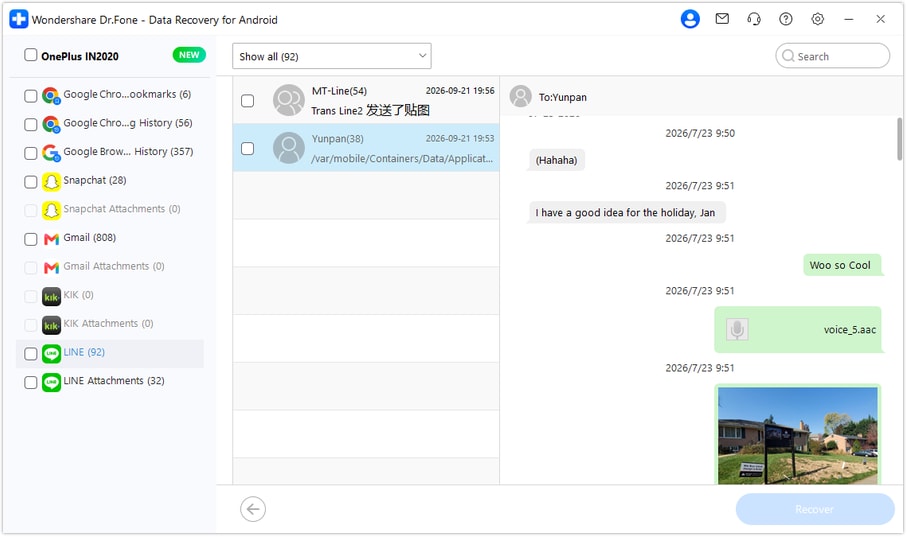
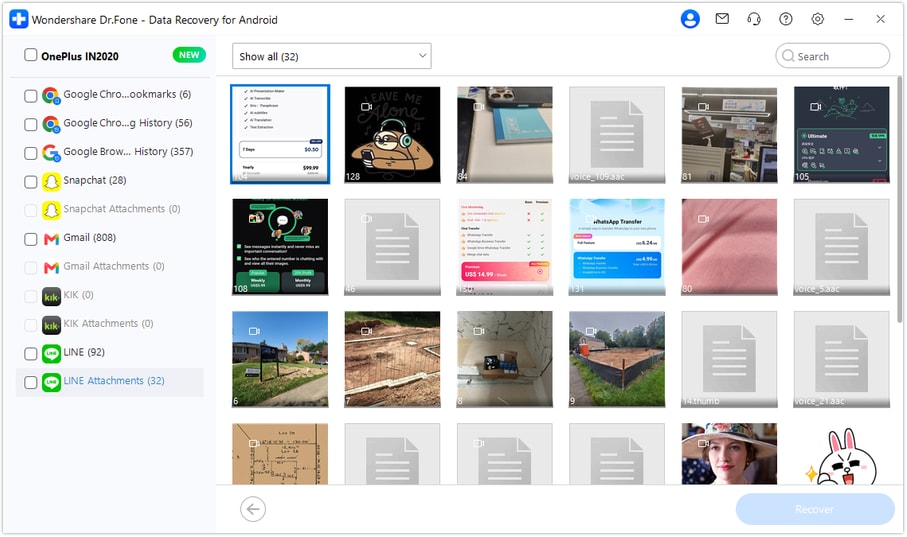
Step 4 Read the response and inspect supporting files
Open LINE in the results sidebar and inspect available conversations for the referee's actual wording. Use search or filters where available, then read the complete visible qualification. Open LINE Attachments separately to preview found photos, videos and files; select the relevant response and genuinely useful supporting content.
Step 5 Save your selected application records to PC
Click Recover and follow the prompts to select a computer folder and save the chosen data. Inspect the output on the PC. This creates a separate copy of the discoverable LINE records; it does not reinsert messages into LINE, recover a Gmail draft or send an application email.




Conclusion
The most useful application record is the actual response, supported by the files you can inspect. Dr.Fone - Data Recovery (Android) helps you read available LINE exchanges, preview the relevant attachments and keep a focused private PC copy. Download it for Windows, connect your supported OPPO Reno10 Pro+ and start looking for the conversation and references you need.
FAQ
1. How can I recover deleted LINE messages on OPPO Reno10 Pro+ without a backup?
Use Dr.Fone - Data Recovery (Android) on Windows and select Advanced Recovery and LINE. The named Reno10 Pro+ entry lists Kernel 5.10.236 with no Android-version restriction listed for this model. Preview the available conversations and LINE Attachments, then save selected discoverable results to PC; an earlier LINE backup is not needed for this scan.2. Can a Gmail draft prove that my referee agreed?
No. It may retain your independently written or copied notes, but an unsent email is not evidence that the addressee received it or accepted its terms. Look for the actual LINE response and read its complete available wording rather than inferring agreement from your proposed message.3. Can I recover a discarded Gmail draft by following this LINE workflow?
No. Google's help states that a discarded draft cannot be recovered, and this article scans LINE data rather than Gmail or a cloud mailbox. You do not need the draft in order to use the supported LINE scan.4. Will recovered LINE files be placed back on my phone?
No. Advanced Recovery saves the selected found records to a folder on your Windows PC. Review LINE Attachments for the photos, videos and files actually available; a named but absent document is not guaranteed, and the output does not rebuild the LINE thread.
 Add Wondershare Dr.Fone as a preferred source on Google