Recover photos, messages, WhatsApp, and more — no backup
needed.


 100% Security Verified | No Subscription Required | No Malware

 :

 ChatGPT
 Perplexity
 Gemini
 Claude
 Grok
You saved a place under a personal note such as collection desk, but the LINE exchange explaining which branch to use and when staff would release the item is gone from your Vivo X200 Pro. A public map result shows the shop's main entrance and opening hours. That is useful location information, but it does not recover the private arrangement or the reference photo that made it clear.
Dr.Fone - Data Recovery (Android) gives you a focused way to look for the actual instructions without an earlier LINE chat backup. Its Windows-only Advanced Recovery workflow lets you inspect conversations and attachments discovered on a supported phone, then save selected results to PC. Use the optional Maps check for an existing place clue and the scan for the original wording, found photos, videos and files.
In this article
Before you start
Keep the X200 Pro Kernel condition
The approved Vivo X200 Pro record lists Kernel 6.6.57 and no Android-version restriction for this named model. Do not replace it with the base X200's Kernel 6.6.89 or assume the Ultra's parallel list applies. Keep the current device details ready for compatibility checks without installing different firmware.
Preserve LINE and prepare Windows
Keep the original LINE installation, login and local storage intact. Use a Windows PC, a reliable USB data cable and a writable destination folder. Do not clear storage, reinstall, log out, reset the phone or unlock the bootloader as recovery steps. Follow Dr.Fone's displayed device-access instructions, not a guessed Root process.
Define the missing instruction rather than just the place
Note the contact, approximate exchange date, branch and any remembered reference. Distinguish the place identity from the collection entrance, staff availability and actual release condition. The scan does not require Maps records or an earlier chat backup, saves only selected discoverable results to PC and does not update LINE, Maps or a booking system.
Optionally search an existing Maps place by your own note
Use this only when the relevant personal content already exists in your own Google Maps account and the documented controls are available. Skip it if not; do not enable history, location tracking or new sharing for the LINE scan.
Step 1 Open the existing Your places view
In Google Maps on Android, tap You > See all. Under Your places, tap Search at the top left. The official help says you can search by the place name or a personal note you added to it.
Step 2 Try the remembered note rather than a guessed business name
Enter the actual note or a remembered place name and inspect the best matching existing result. A private note can be a better clue than a public shop name when you used shorthand for a branch. Do not add a new note and mistake it for a recovered old one.
Step 3 Separate a place record from a visit or collection agreement
The You view can include places searched for, viewed, used for directions or saved. Their presence does not establish that you visited, collected the item or received a particular LINE message. Read any note actually retained, then use the scan to look for the private entrance, time or release condition missing from that note.
- Google is rolling out settings changes, so documented controls may differ. Use only your already available personal content; an absent result is not proof of LINE deletion.
- This check finds a retained place reference. It does not restore location history, track another person or turn current public opening hours into an older private arrangement.
What makes a collection reference useful?
| Available item | Useful information | Missing context to look for |
|---|---|---|
| An existing Maps note and place | The location and personal wording actually retained | Whether this was the correct branch for the particular collection |
| A current public place page | The public details currently displayed | An older private staff window or entrance instruction |
| A found LINE exchange | The actual branch, condition and time stated in the available text | Any later change or reply not included in the found records |
| A found frontage photo, video or file | The usable identifying details actually visible in the attachment | That the pictured entrance was the agreed one or that collection occurred |
Common problems and fixes
Searching the public business name finds too many branches
If your existing Maps Your places search is available, try the personal note you actually used. Compare the retained address and note rather than choosing the closest public match. Keep that clue separate from the missing LINE instruction about which branch applied.
The Maps record is present, but no visit is shown
A place can appear because you searched for, viewed, requested directions to or saved it. Do not activate tracking or infer a visit from that record. For the historical arrangement, review the actual LINE conversation results and any independently available reference files.
The recovered instruction names a staff window outside public opening hours
Preserve the historical wording as written rather than replacing it with today's public hours. If you need to collect something now, confirm the present arrangement with the provider. That fresh operational confirmation is separate from the historical text saved to PC.
How to use Dr.Fone - Data Recovery (Android)
Dr.Fone - Data Recovery (Android) helps you look for the private collection details that a public map page cannot replace. Its Windows-only Advanced Recovery mode scans supported Vivo X200 Pro local LINE data without an earlier chat backup, previews available conversations and LINE Attachments separately, and saves selected useful records to PC. You can concentrate on the branch instruction, the actual condition and usable reference media rather than unrelated place suggestions.
- Read found LINE conversations for actual branch, entrance and timing wording.
- Inspect available photos, videos and files as separate references, not automatic proof of a visit or collection.
- Save selected useful communication and media to PC without changing Maps content or rebuilding the phone's LINE history.
 Scan Android phones and tablets directly.
- Preview and recover only what you want.
- Supports WhatsApp, photos, videos, contacts, and more.
- Works with 6000+ Android devices.
Follow the official Advanced Recovery workflow
Step 1 Open Advanced Recovery for the X200 Pro
Start Dr.Fone on Windows and choose Toolbox > Data Recovery. Select Android > Recover Android Data, choose Advanced Recovery and click Start Scan. Connect the supported Vivo X200 Pro by USB when requested and follow the on-screen detection instructions.
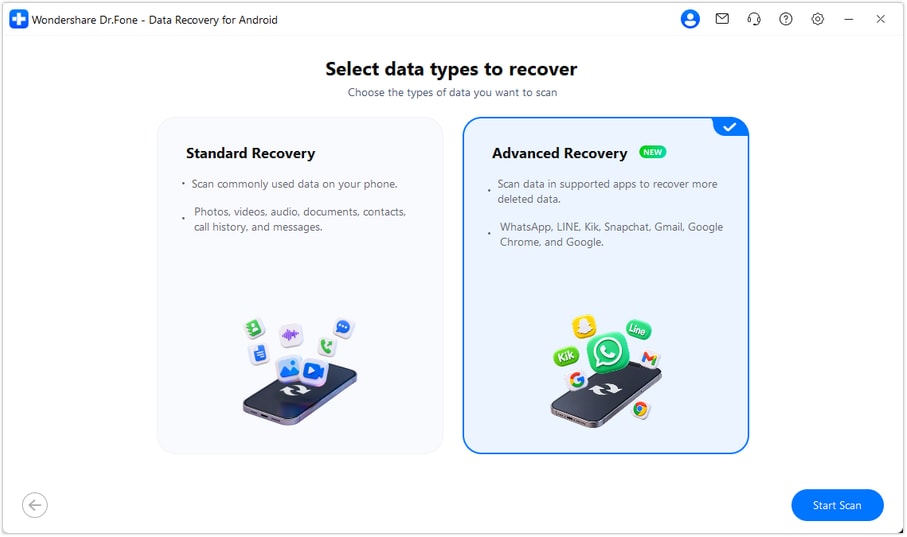
Step 2 Choose LINE data and begin scanning
Select LINE from the available categories and click Start Scan. The connected phone's app data is the recovery source; the optional Maps note is only a clue for your own result review.
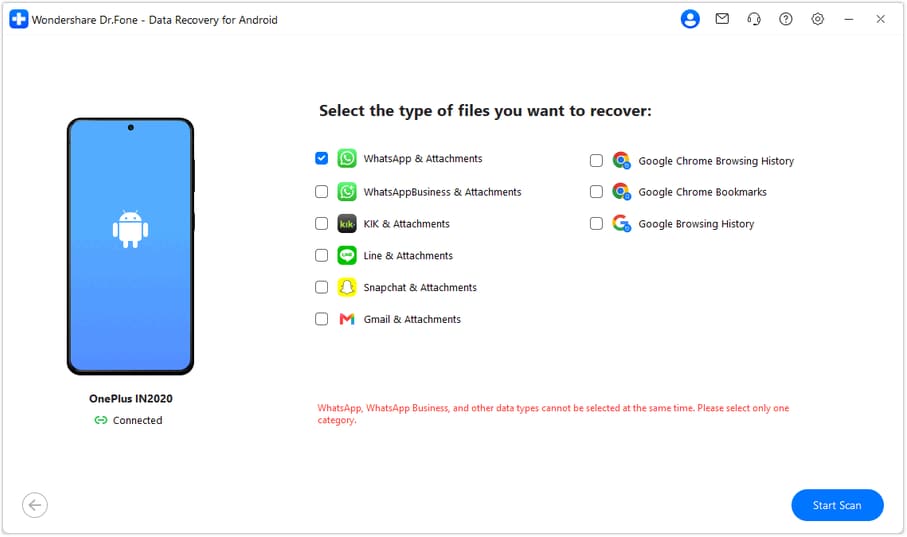
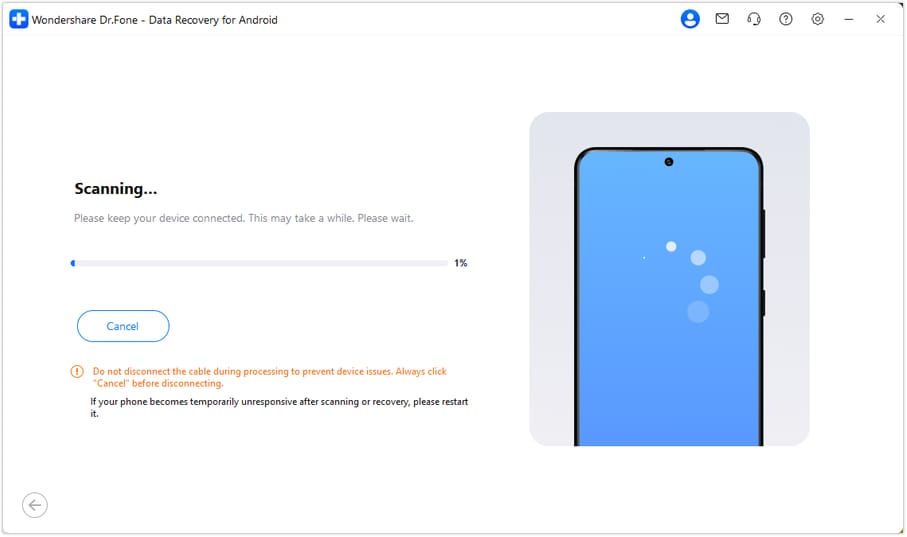
Step 3 Maintain the phone connection through the scan
Keep the X200 Pro connected while scanning progresses. If you must interrupt, click Cancel before removing the USB cable. If the device is temporarily unresponsive after scanning or recovery, follow the restart instruction displayed by the product.
Step 4 Read collection instructions and preview found reference media
Choose LINE in the sidebar and inspect available conversations for the relevant contact and collection wording. Use search or filters where available. Select LINE Attachments separately to browse found photos, videos and files, then select the useful actual text and attachments without assuming an automatic location match.
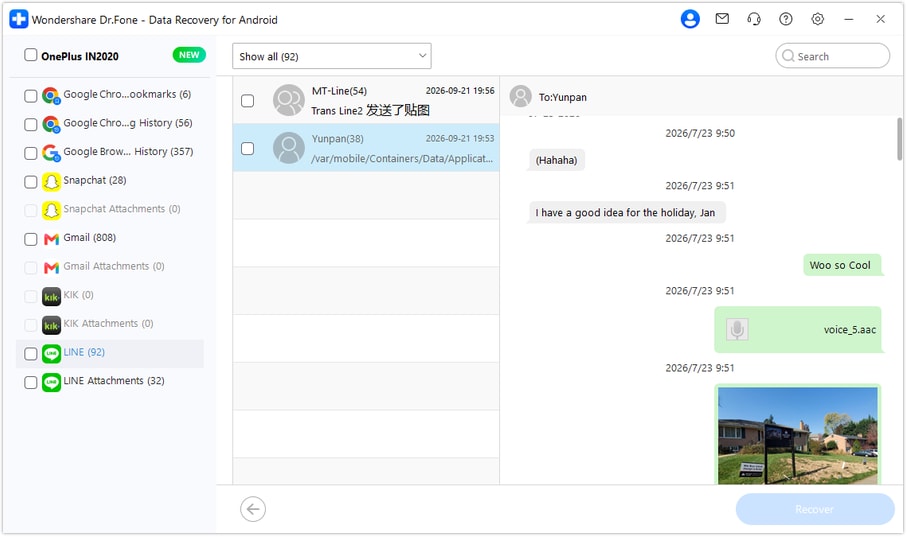
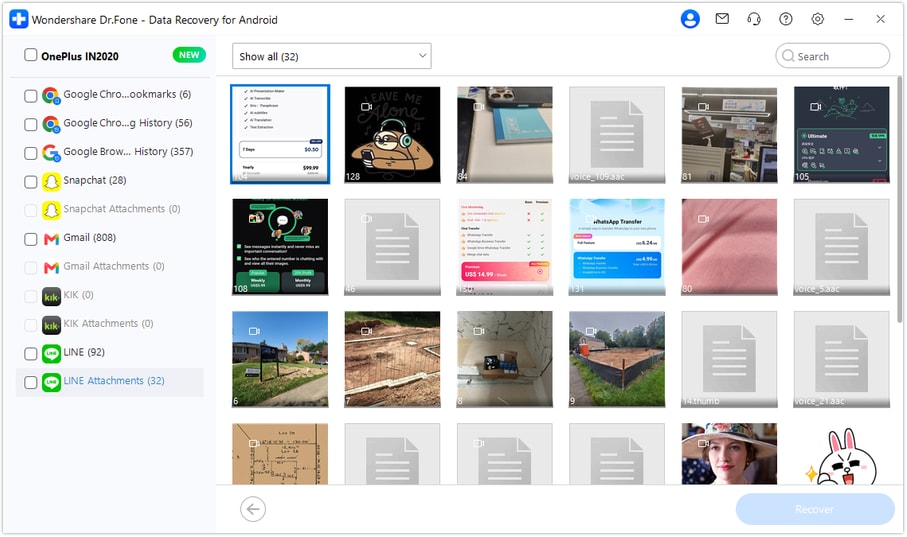
Step 5 Recover the selected collection records to PC
Click Recover and follow the prompts to choose a folder on your computer. Finish saving and open the output to inspect the selected instruction and reference files. Advanced Recovery saves to PC, not back into LINE, Google Maps or the provider's records.




Conclusion
For missing collection details on a supported Vivo X200 Pro, Dr.Fone - Data Recovery (Android) helps you look for actual LINE instructions, preview useful location-reference attachments and keep selected records on PC. Download Dr.Fone for Windows and start the guided scan to preserve the private context a public place page cannot supply.
FAQ
1. How do I recover deleted LINE messages on Vivo X200 Pro without a backup?
Use Dr.Fone - Data Recovery (Android) on Windows to scan supported local LINE app data, review LINE conversations and LINE Attachments separately, and save selected results to PC. Retain the exact X200 Pro Kernel 6.6.57 condition; no Android-version restriction is listed for this named model.2. Can I search Google Maps using a personal note?
Google's Android help documents You > See all, then Search under Your places, using the place name or a personal note you added. Use only existing available content. A result can identify a reference, but it does not recover deleted LINE text, prove a visit or establish a private agreement.3. Can a new LINE backup restore my manually deleted collection chat?
No. A suitable Standard Backup must predate the manual deletion; it saves text only and is for same-OS transfer. LINE says a Standard copy made afterward or Premium Backup does not restore that manually deleted history. The local scan here is a separate no-backup route.4. Can Dr.Fone recover deleted LINE photos and videos for the collection?
Check LINE Attachments for the actual usable photos, videos and files found by scanning. Save useful selected items to PC and assess them separately from the text. A familiar image does not guarantee its associated message, every file or an expired original with no discoverable local data.
 Add Wondershare Dr.Fone as a preferred source on Google