Recover photos, messages, WhatsApp, and more — no backup
needed.


 100% Security Verified | No Subscription Required | No Malware

 :

 ChatGPT
 Perplexity
 Gemini
 Claude
 Grok
A co-writer's LINE feedback can contain the one sentence that explains why a story ending did not work. After deleting part of the conversation, you may still have the manuscript but not the feedback, and a half-written reply in the input field can make it harder to remember what was actually exchanged.
If you need to recover deleted LINE messages on Samsung Galaxy S23 without a backup, Dr.Fone - Data Recovery (Android) offers a supported-device scan with conversation preview and separate attachment review. That lets you look for the actual feedback and any available reference files, then save selected records to a PC. First distinguish sent discussion from unsent writing so you know which information you are trying to find.
In this article
Before you start
Use the Galaxy S23 support record, not another model's entry
Samsung Galaxy S23 is listed with Kernel 5.15.153, and no Android-version restriction is listed for this model. Retain the kernel condition and note the exact model and software information before connecting. If Advanced Recovery is not offered, provide those identifiers to Dr.Fone support rather than changing the firmware to resemble a different support entry.
Protect the current chat and writing files
Have a Windows PC, USB data cable and private output folder available. Advanced Recovery is Windows-only and saves selected discoverable records to PC; it does not restore messages into LINE. Keep the existing app and storage unchanged. Avoid clearing cache or storage, reinstalling, logging out, resetting or flashing, and follow the product's on-screen access instructions instead of an unverified Root procedure.
Define the missing feedback, not just the missing file
Write down the co-writer, discussion date, story title and a remembered phrase. Distinguish the feedback you received from the reply you were composing. A manuscript or a draft reply may survive without the deleted discussion, and the scan can save only available records it finds; it is not a version-control system or an erased-draft recovery guarantee.
Check sent discussion and an existing unsent draft separately
You remember writing or receiving a passage, but are uncertain whether it was sent, left in the composer or deleted from the conversation.
Step 1 Inspect an existing draft indicator without sending the text
LINE's help explains that an edit icon on the chat list indicates a message saved as a draft in that chat's text input field. If that icon is present, open the chat and inspect the existing composer text. Preserve a private copy outside the input field if needed; do not press Send merely to see whether it is the missing feedback. The draft is retained unsent text, not a received message.
Step 2 Search the actual chat history for the feedback
Use the search icon at the top of the conversation and search a distinctive phrase from the story or comment. Use the calendar icon to check the relevant day. Look for actual message bubbles and surrounding discussion, rather than treating similar composer text as evidence that the reply was delivered.
Step 3 Check the co-writer's retained discussion and your own manuscript copy
If a passage is truly missing, ask the co-writer for the specific feedback they still possess and the manuscript passage it refers to. Compare an already saved manuscript or annotated image with that wording. A newly written explanation can help you continue the work, but keep it separate from a preserved copy of the original feedback.
- The draft indicator describes current unsent text only. Its absence does not prove that the wording was sent, and it is not a menu for retrieving erased drafts.
- For a thread that was hidden rather than deleted, use Home > Settings > Chats > Hidden chats > Edit > Unhide chat. A scan is a separate step for the missing local conversation records.
Writing feedback: keep the source of each passage clear
| What you find | Useful interpretation | Do not infer |
|---|---|---|
| Text still in LINE's composer | Your retained unsent draft in that chat | That the co-writer received or agreed with it |
| A received feedback message | The comment actually present in that exchange | Which manuscript revision it addresses unless the context identifies it |
| A manuscript or annotated screenshot | The writing or markings visible in that file | The complete missing discussion or the author's intended revision |
| A new explanation from the co-writer | Fresh guidance you can use now | A verbatim recovery of the earlier comment |
Common problems and fixes
The remembered sentence exists only in the input field
Treat it as a retained draft. Preserve it privately if it is useful, but do not describe it as a recovered sent message. If the required item is the co-writer's missing response, keep looking in the actual conversation or available scan results.
The recovered comment refers to an earlier story revision
Compare the passage named in the message with the manuscript copy you possess. Keep the earlier feedback with its associated revision instead of applying it automatically to the latest file. Dr.Fone does not choose the intended ending or reconcile manuscript versions for you.
You find an annotated image but the explanatory message is missing
Inspect LINE results as well as LINE Attachments. Markings may identify a paragraph without explaining the reason for a change. Save the usable image and any actual wording found, then ask the co-writer to clarify the unresolved point rather than inventing the missing explanation.
How to use Dr.Fone - Data Recovery (Android)
Dr.Fone - Data Recovery (Android) helps you look for the actual LINE exchange behind a surviving manuscript. Its Windows-only Advanced Recovery workflow scans supported Galaxy S23 devices without relying on a chat backup, lets you review available conversation records and LINE Attachments separately, and saves your chosen results to PC. You can concentrate on the feedback and reference material that matter to your writing rather than collecting unrelated phone files.
- Preview available conversation wording to identify the relevant comment and surrounding discussion.
- Review found photos, videos and files separately when the feedback referred to a marked page or manuscript attachment.
- Save selected useful records to a PC folder for manual reading alongside your own writing files.
 Scan Android phones and tablets directly.
- Preview and recover only what you want.
- Supports WhatsApp, photos, videos, contacts, and more.
- Works with 6000+ Android devices.
Follow the official Advanced Recovery workflow
Step 1 Open the Windows recovery workflow
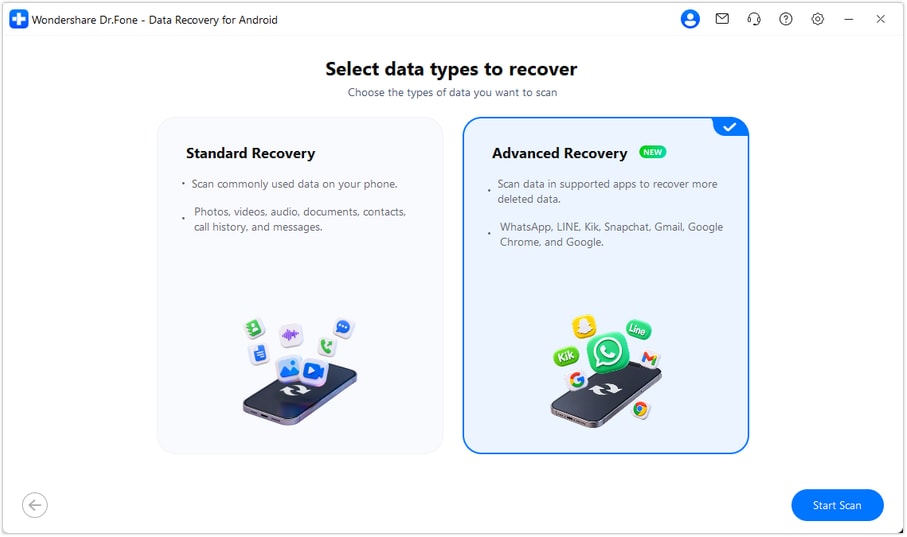
Launch Dr.Fone and open Toolbox > Data Recovery on Windows. Choose Android > Recover Android Data, select Advanced Recovery and click Start Scan. Connect your supported Galaxy S23 with a USB cable when prompted and follow the instructions until it is detected.
Step 2 Select LINE for the scan
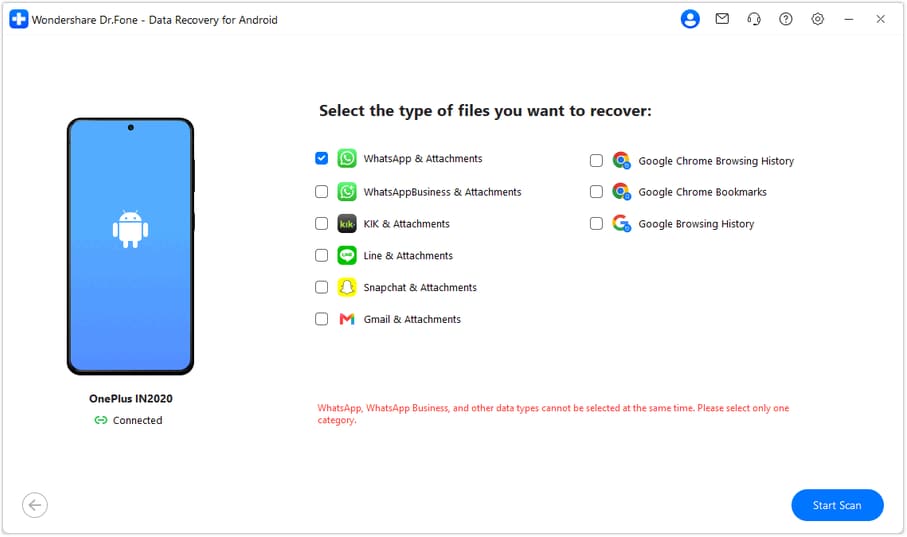
Choose LINE from the supported app-data categories and click Start Scan. This targets the app data for the missing feedback discussion and associated files.
Step 3 Wait with the Galaxy S23 connected
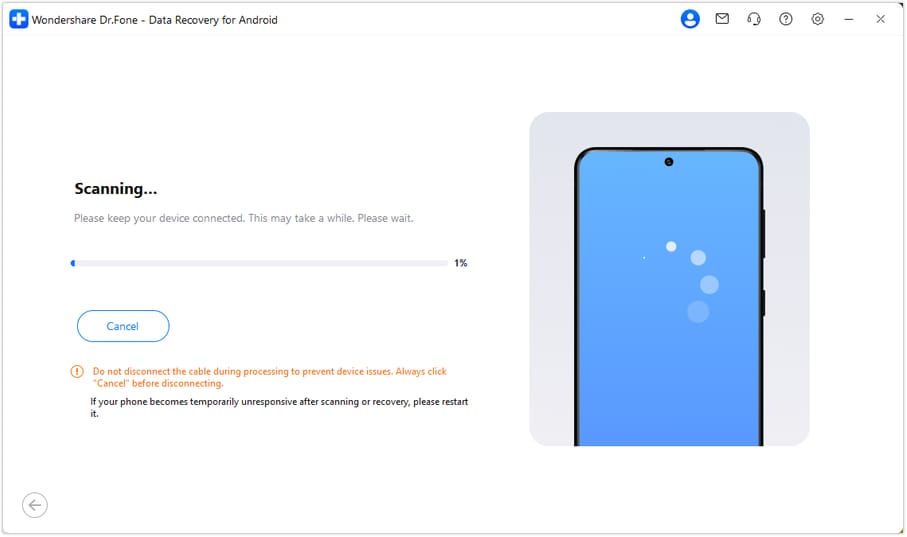
Maintain the USB connection while the scan runs. To stop, click Cancel before disconnecting the phone. Follow the displayed restart instructions if the phone becomes temporarily unresponsive after scanning or recovery.
Step 4 Review the conversation and file results separately
Open LINE in the results sidebar and inspect the available feedback conversations. Use search and filters where offered. Then choose LINE Attachments to review available photos, videos and files, selecting the results relevant to the passage you want to understand.
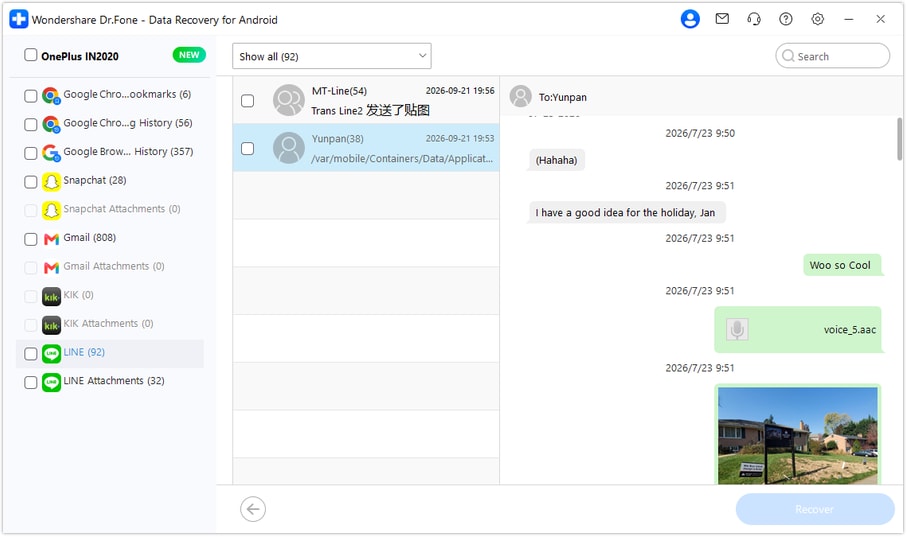
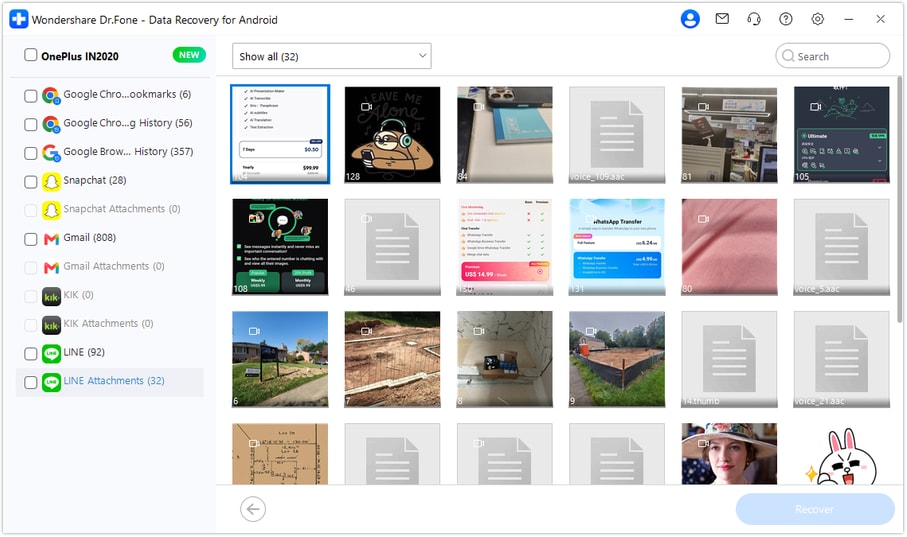
Step 5 Recover the selected writing references to PC
Click Recover and follow the prompts to choose a computer folder. Save your selection and open the output to check the wording and files. These are PC records, not messages placed back into LINE or changes merged into your manuscript.




Conclusion
The manuscript, your unsent reply and the feedback you received are different pieces of a writing discussion. Dr.Fone - Data Recovery (Android) gives supported Galaxy S23 users a clear route to preview available LINE conversations, inspect supporting attachments and save selected useful records to PC. Download Dr.Fone for Windows and start the guided scan to look for the feedback that helps you move the work forward.
FAQ
1. Can I recover deleted LINE messages on Samsung Galaxy S23 without a backup?
Use Dr.Fone - Data Recovery (Android) on a supported Galaxy S23 configuration to scan for available LINE data. Advanced Recovery runs on Windows and lets you preview conversation and attachment results before saving selected found items to PC. The results depend on what remains discoverable.2. Does LINE's draft icon mean my reply was sent?
No. LINE says the edit icon indicates text saved as a draft in that chat's input field. Inspect the composer without sending it if you want to preserve the wording. A retained draft is not proof of delivery or of the other person's response.3. Can this method recover a draft I already erased?
Erased-draft recovery is not an established capability of the LINE workflow described here. The draft check is only for text that is still present. The product steps concern available LINE conversations and attachments, not guaranteed retrieval of every unsent edit.4. Can a backup made now bring back the deleted feedback?
A post-deletion backup cannot recreate the missing messages. Standard Backup requires a suitable earlier text backup for restoration, and Premium Backup does not roll back a manually deleted conversation. That is why this article uses a separate device-scan route.5. Can I also recover deleted LINE photos, videos and manuscript files?
Review the available LINE Attachments results separately from LINE conversations. Save the usable photos, videos or files the scan actually finds. A message naming a manuscript, or a visible thumbnail, does not guarantee that the original file is recoverable.
 Add Wondershare Dr.Fone as a preferred source on Google