Recover photos, messages, WhatsApp, and more — no backup
needed.


 100% Security Verified | No Subscription Required | No Malware

 :

 ChatGPT
 Perplexity
 Gemini
 Claude
 Grok
When digitising old recordings, a filename such as Side A can stop being useful after files are renamed or moved. If the LINE message explaining where one recording ends and the next begins is deleted, the folder alone may no longer tell you how to interpret the material. To recover deleted LINE messages on OPPO Find X9 Ultra, look for that actual mapping instruction as well as any usable reference files.
Dr.Fone - Data Recovery (Android) can scan the supported phone's local LINE data, let you read the conversations found and inspect available media and files, then save a selected PC copy. A quick check of existing Google Drive Activity can separately tell you whether a reference file was renamed or moved. Use available activity to locate the reference and the local LINE scan to look for the actual explanation; the two sources answer different parts of the problem.
In this article
Before you start
Keep the exact Ultra model and Kernel condition
The confirmed record lists OPPO Find X9 Ultra with Kernel 6.12.58. No Android-version restriction is listed for this named model; this does not remove its Kernel condition or extend the entry to Find X9 Pro, every OPPO phone or arbitrary firmware. Compare the detected model and Kernel with the record and follow the product's eligibility prompts.
Leave the recording phone's LINE data intact
Keep the original LINE installation and login. Do not clear storage, reinstall, factory-reset, flash or unlock the bootloader while looking for deleted data. Prepare a Windows PC and USB data cable, and use only the product's displayed connection and access instructions. No unverified Root procedure is part of this guide.
Identify what was actually in the conversation
Note the person, the old filename and any remembered reference such as a side label or transition. If a recording or document lived only in Google Drive and was never local LINE attachment data, a LINE scan is not a way to download it. For available media, inspect the formats and preview the product actually provides; do not assume automatic transcription, audio reconstruction or joining of separate recordings.
Use the right recovery route and destination
Standard Backup saves LINE text only and supports same-OS restoration from a suitable earlier copy. A Standard Backup made after manual deletion or Premium Backup does not undo that deletion. This no-backup Advanced Recovery workflow is Windows-only and saves selected discoverable results to PC, not back into LINE or into Drive. Missing expired originals are not guaranteed.
Check whether the reference was renamed or moved in Google Drive
You already have authorised access to the project in Drive, but an old LINE filename no longer matches what you see. This checks retained file activity, not deleted LINE history.
Step 1 Open My Drive and the information panel
On your computer, open Google Drive with the existing account that holds the relevant project. Click My Drive on the left, then click Info at the upper right. Use this available source as it is; there is no need to upload, move, rename or reshare a file to investigate what happened.
Step 2 Read Activity for the relevant scope
Click Activity and scroll through the right-hand panel for available changes. For a particular file or folder, click that item to inspect its activity. Look for an actual rename or move entry connected with the reference, rather than assuming a missing old filename means the file was deleted.
Step 3 Use operations to locate the source, not infer the recording map
If an entry helps identify the currently accessible item, inspect that actual item. A rename or move says something about the file operation, not which spoken passage the original LINE sender meant or whether two recordings should be combined. If the relevant activity or item is unavailable, leave that part unresolved and review the phone's LINE results for the mapping instruction.
- The same official Drive help also describes file versions, but this check uses Activity only. It does not download an older version, replace a file or claim that all historical activity will be available.
- The account associated with a file operation is not automatically the author of the missing LINE instruction. Keep file operations, recording content and conversation wording as separate references.
What each project record can actually resolve
| Available record | Practical use | Keep this question separate |
|---|---|---|
| A Drive rename or move entry | Connect an old reference with an accessible current item when the entry supplies that information | Where the spoken segment starts or ends |
| The currently accessible recording or reference document | Inspect its actual content using the available viewer or player | Whether the missing LINE sender intended this item or another revision |
| A found LINE mapping message | Read the side, transition and complete qualification actually stated | Any missing segment or instruction not found by the scan |
| Available LINE media or file attachments | Keep usable supporting content separately from the text | An old cloud link is not itself a downloaded recording |
| A new explanation from a project participant | Use it as a new clarification when appropriate | It is not the recovered original wording or an automatic transcription |
Common problems and fixes
Drive Activity shows a rename but the target content is unavailable
Treat the entry as a retained operation record only. Do not bypass permissions or assume that a log contains the recording itself. You can still review the phone's available LINE wording and attachment results; a useful mapping message can be saved even if the corresponding cloud item is inaccessible.
The Find X9 Ultra is recognised but Advanced Recovery is not offered
Check that you are using Windows and compare the exact model and Kernel with the Find X9 Ultra entry, Kernel 6.12.58. Preserve the displayed compatibility or access message for Dr.Fone support. Do not substitute the Pro model's configuration or change firmware to force recovery.
Two discovered files have similar names but the missing segment boundary is unclear
Inspect their actual available content and read the LINE instruction if found. Use the product's search and filters where offered, not an assumed speech-search or matching feature. Save the useful results separately and keep the boundary unresolved unless the available records establish it; file order alone does not join recordings.
How to use Dr.Fone - Data Recovery (Android)
Dr.Fone - Data Recovery (Android) helps you look for the explanation that a renamed project folder cannot provide. Its Windows-only Advanced Recovery mode scans supported local LINE data on OPPO Find X9 Ultra, presents the conversations found and separates LINE Attachments for further review. You can read the actual mapping words, inspect available reference media or documents, and save selected results to PC without reorganising the live Drive project.
- A local LINE recovery route without an existing LINE backup, focused on supported app data remaining on the connected phone.
- Conversation reading and separate attachment review, so a filename, an instruction and a usable file can be assessed independently.
- Selective PC recovery to keep the useful mapping exchange and supporting content without exporting all unrelated results.
 Scan Android phones and tablets directly.
- Preview and recover only what you want.
- Supports WhatsApp, photos, videos, contacts, and more.
- Works with 6000+ Android devices.
Follow the official Advanced Recovery workflow
Step 1 Select Advanced Recovery on your Windows computer
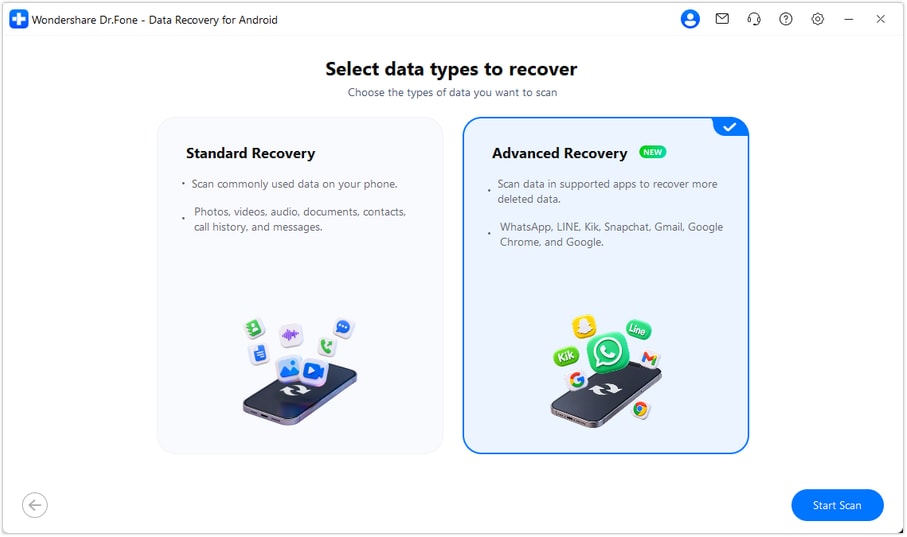
Launch Dr.Fone and navigate to Toolbox > Data Recovery. Select Android > Recover Android Data, choose Advanced Recovery and click Start Scan. Connect the supported OPPO Find X9 Ultra by USB when prompted and complete the on-screen device-detection instructions.
Step 2 Choose the LINE app category
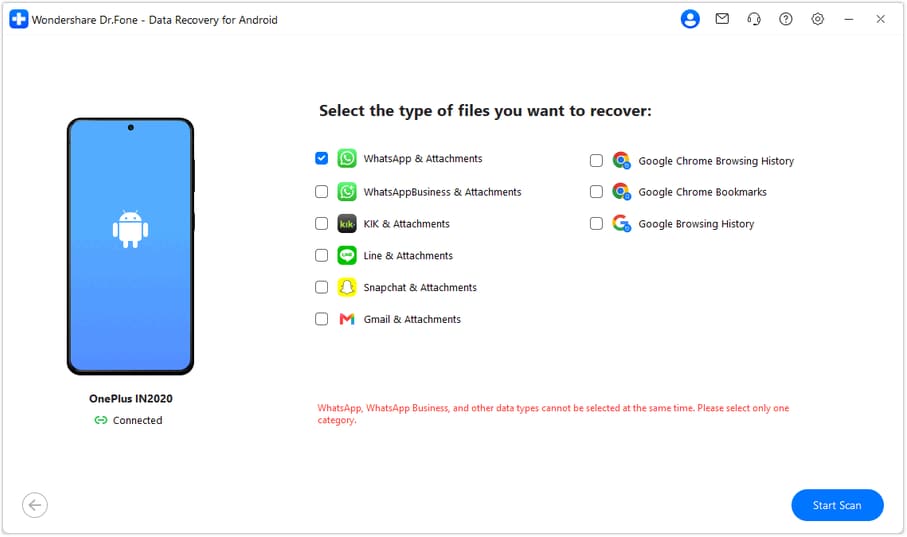
Select LINE among the app data categories shown for the device and click Start Scan. If you also have a WhatsApp or WhatsApp Business recovery task, follow the guide's separate-scan rule for those categories instead of combining them with the other data types.
Step 3 Wait with the connection intact
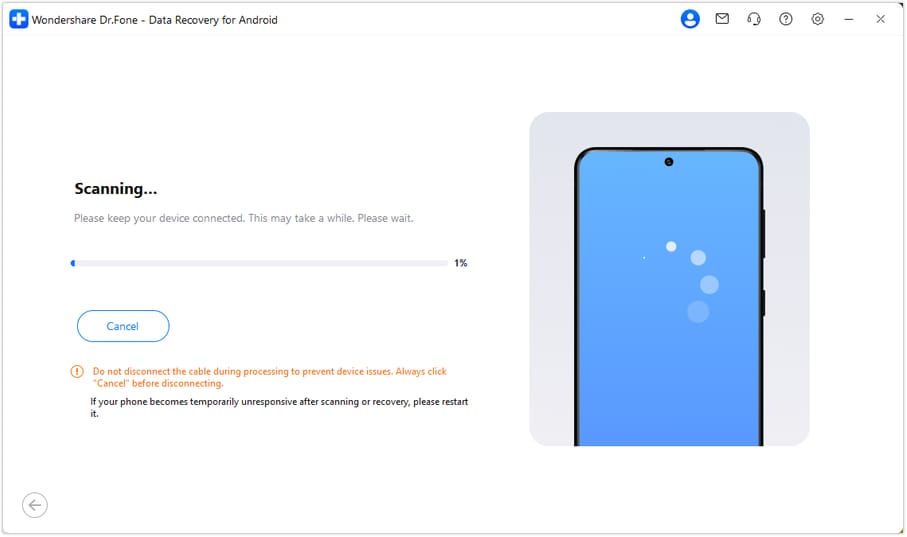
Keep the phone connected throughout the scan. To end scanning early, click Cancel before disconnecting the USB cable. If the phone becomes temporarily unresponsive after scanning or recovery, restart it as directed on screen.
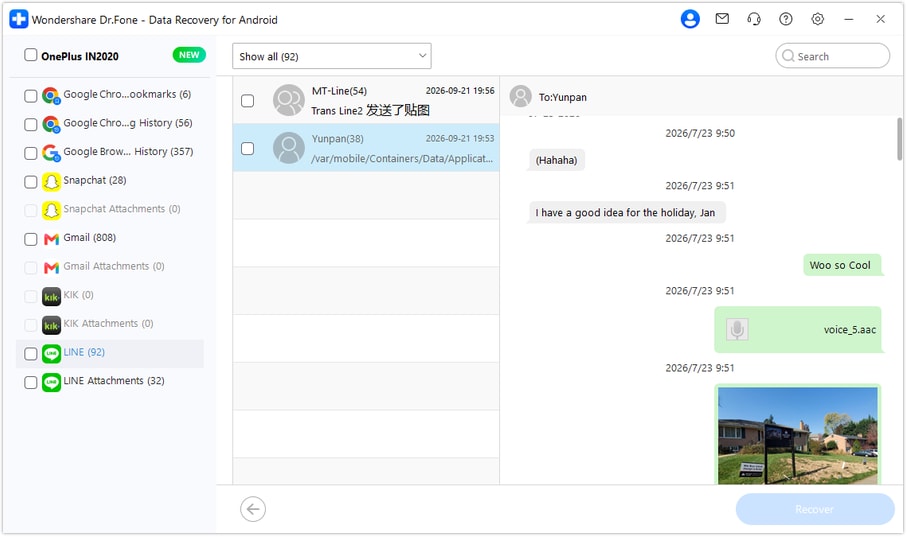
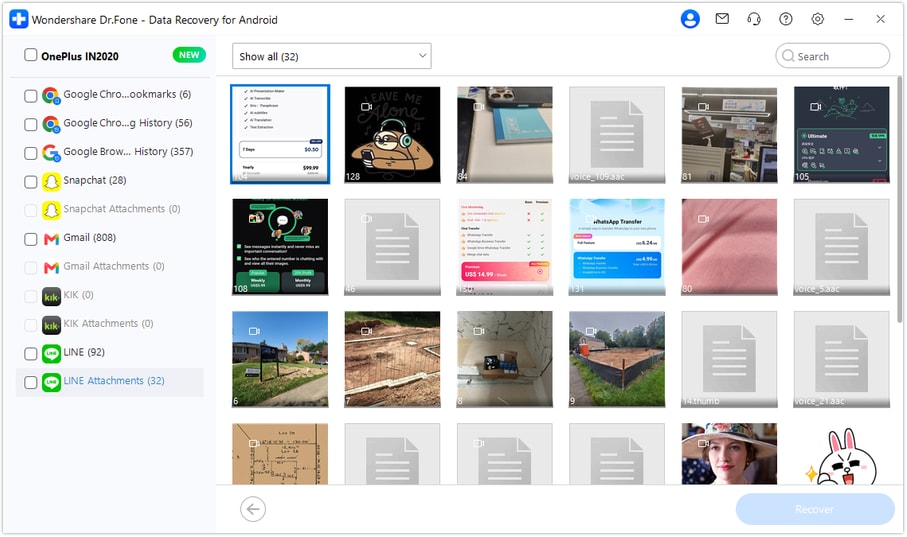
Step 4 Review the mapping discussion and available attachments
Choose LINE in the results sidebar to read the available conversations. Search or filter where those controls are available and inspect the actual side-label or transition wording. Open LINE Attachments separately for found photos, videos and files; inspect the previews offered and select useful items rather than assuming every filename has usable content.
Step 5 Save the selected records to a PC folder
Click Recover and choose the computer destination through the displayed prompts. Save and inspect the output on your PC. This preserves selected discoverable LINE records as a separate copy; it does not rebuild the LINE thread, join recordings or restore Google Drive files.




Conclusion
A clear recording map starts with the actual instruction, not a guess based on a renamed file. Dr.Fone - Data Recovery (Android) gives you available LINE conversation previews, separate supporting-media review and selective PC saving for the records that matter. Download it for Windows, connect your supported OPPO Find X9 Ultra and start a focused scan for the missing exchange.
FAQ
1. Can I recover deleted LINE messages on OPPO Find X9 Ultra without a backup?
Use the supported local scan in Dr.Fone - Data Recovery (Android) on Windows. The named Find X9 Ultra entry lists Kernel 6.12.58 with no Android-version restriction listed for this model. Choose Advanced Recovery and LINE, review what is found and recover selected results to PC; this does not guarantee every deleted message.2. Is Google Drive Activity the same as a deleted LINE message backup?
No. Activity records available changes such as file renames, moves and uploads. It may help locate a retained project item, but it does not preserve the missing LINE explanation, restore a chat or reveal inaccessible file content.3. Can Dr.Fone recreate the recording order or transcribe a missing clip?
This guide does not claim either feature. Read the actual conversation results and inspect the media or files the scan finds using the previews available. A side label or reference filename is not enough to reconstruct absent audio or an unstated segment order.4. Where do recovered LINE photos, videos and files go?
Select useful items in LINE Attachments, then save them with the other selected results to the PC folder you choose. The workflow does not place them back into LINE or restore the original cloud file behind an old Drive link.
 Add Wondershare Dr.Fone as a preferred source on Google