Recover photos, messages, WhatsApp, and more — no backup
needed.


 100% Security Verified | No Subscription Required | No Malware

 :

 ChatGPT
 Perplexity
 Gemini
 Claude
 Grok
The sample photographs are still in LINE, but the message choosing the blue-speckled cup rather than the similar plain one has disappeared. Zooming into a thumbnail may not reveal the handwritten sample code, and the prettiest image is not necessarily the one you selected. If you need to recover deleted LINE messages on Samsung Galaxy Z Flip 6 without a backup, look for the actual choice as well as a usable reference image.
Dr.Fone - Data Recovery (Android) helps you inspect discoverable LINE conversations, preview available photos, videos and files, and save selected records to a PC. The retained-Album check below can establish which image you already have; the local scan then looks for the missing discussion explaining the choice. Together, useful text and media can give you a clearer reference for the commission.
In this article
Before you start
Check the exact Flip 6 condition
The supplied device list names Samsung Galaxy Z Flip 6 with Kernel 6.1.145; no Android-version restriction is listed for this model. Record the model, Android version and Kernel information before connecting. Do not borrow the Flip 7's condition or infer that the same entry covers every Galaxy Z device.
Preserve the local data and prepare a Windows folder
Advanced Recovery is Windows-only and saves selected discoverable results to a PC, not directly back into LINE. Have a USB data cable and a private destination folder ready. Keep LINE installed and avoid clearing its storage, resetting the phone or changing firmware, bootloader or Root settings. Use the actual product prompts for connection and access.
Keep sample identity separate from image quality
Write down any remembered sample code, shape, approximate discussion date and the image you want. A larger image can make a label easier to inspect but cannot establish which sample was accepted. Standard Backup requires a prior backup and preserves text rather than a full media archive; Premium Backup does not undo a manually deleted chat. Neither supplies the no-backup scan used here.
Inspect the retained Album image before searching for a deleted original
Use this check only if someone deliberately added the ceramic samples to an Album that you can still access normally. It may provide a usable reference without recovering a deleted chat attachment.
Step 1 Open the actual sample Album
Open the relevant chat on your LINE main device and use its top menu > Albums. Select the Album containing the samples and open the matching photo. Compare visible sample labels and the cup shape instead of relying on the Album name or the position of the thumbnail.
Step 2 Check the image's reported resolution
With the Album photo selected, open its options menu and choose Details to inspect the resolution. LINE documents this check for smartphone and tablet Album items. Read any visible sample code in the actual image; the displayed resolution describes the available item, not the content of a missing message.
Step 3 Preserve the usable reference and identify the remaining gap
Keep an accessible image copy if it contains the detail you need, and note the unresolved question separately: which sample was selected, whether a later message changed it, or which shape the code referred to. Continue to the scan for that conversation rather than repeatedly enlarging a low-detail picture.
- Standard-quality Album photos are different from original-quality uploads. Original-quality uploads require LYP Premium in Japan or LINE Premium in Taiwan and Thailand; uploaded content can be viewed by chat members regardless of their own membership.
- LINE says some metadata can be lost even for original-quality uploads. After the uploader's eligible membership expires, original-quality Album photos convert to standard quality after 30 days unless they re-subscribe within that period. A subscription or a scan is not an image-upscaling or lost-metadata reconstruction method.
Which LINE result helps identify the selected ceramic sample?
| Available record | What you can use | How to use it accurately |
|---|---|---|
| A readable Album photo | The sample label, shape and visible reference detail | Compare it with the selection wording before identifying it as the accepted sample. |
| A discoverable LINE selection message | The chosen code, shape or replacement instruction | Use it as a choice record; look for a separate delivery exchange if you also need to identify the delivered item. |
| A usable photo or video in LINE Attachments | The reference content actually present in that file | Open the usable file to inspect its actual detail rather than inferring color, original quality or metadata from a thumbnail. |
| A sample-sheet document | A code-to-sample reference within that file version | Match its sample codes with the separate message recording the choice. |
Common problems and fixes
The Album image has enough pixels but the sample code is unreadable
A high reported resolution does not ensure the label was in focus or fully visible. Check another genuinely available view or sample-sheet file. Save the useful photo and review the LINE conversation for the code written as text rather than treating enlarged pixels as recovered lettering.
Two nearly identical samples appear in the results
Compare the full message wording, sample codes and shape references. Look for an explicit replacement rather than assuming the last attachment shown was the selected item. Keep ambiguous candidates separate until the actual record or maker's new clarification resolves the choice.
The picture is available, but the agreement is absent
Keep the usable picture as a reference and review LINE separately from LINE Attachments for the choice and follow-up. If that wording is not found, ask the maker for current confirmation before relying on an old selection. Record any new reply as new information, not recovered history.
How to use Dr.Fone - Data Recovery (Android)
Dr.Fone - Data Recovery (Android) helps you look for the written selection that a surviving sample photo cannot supply. Its Windows-only Advanced Recovery scans selected app data on the supported Galaxy Z Flip 6 without requiring an existing LINE backup. Review discoverable LINE conversations and available LINE Attachments separately, then recover the useful choices and reference files to a PC.
- A LINE-focused scan for discoverable deleted discussion rather than a photo-only search.
- Separate previews to compare sample codes and choice wording with available images, videos or sample sheets.
- Selective PC recovery so you can keep a focused reference for the commission instead of saving every result.
 Scan Android phones and tablets directly.
- Preview and recover only what you want.
- Supports WhatsApp, photos, videos, contacts, and more.
- Works with 6000+ Android devices.
Follow the official Advanced Recovery workflow
Step 1 Start Advanced Recovery and connect the Flip 6
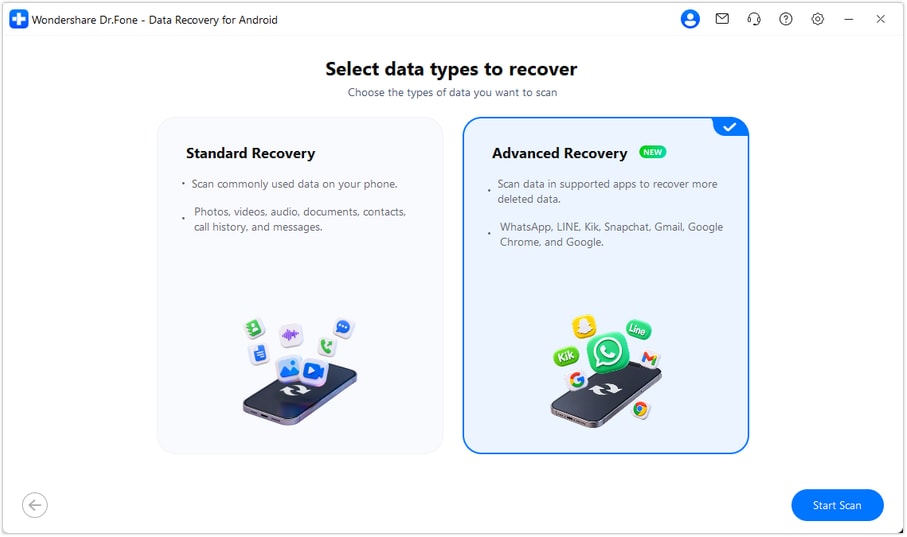
Launch Dr.Fone on Windows and open Toolbox > Data Recovery. Choose Android > Recover Android Data, select Advanced Recovery and click Start Scan. Connect the supported Flip 6 by USB when prompted and follow the on-screen instructions until the phone is detected.
Step 2 Choose LINE app data
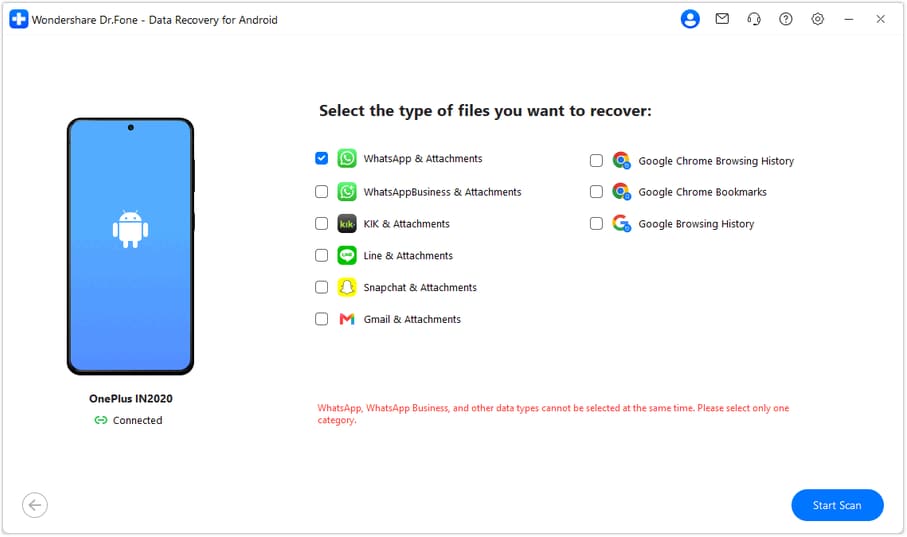
Select LINE on the available data-type screen and click Start Scan. Use that app-data category for the commission discussion and its available sample references.
Step 3 Let the scan finish with the cable connected
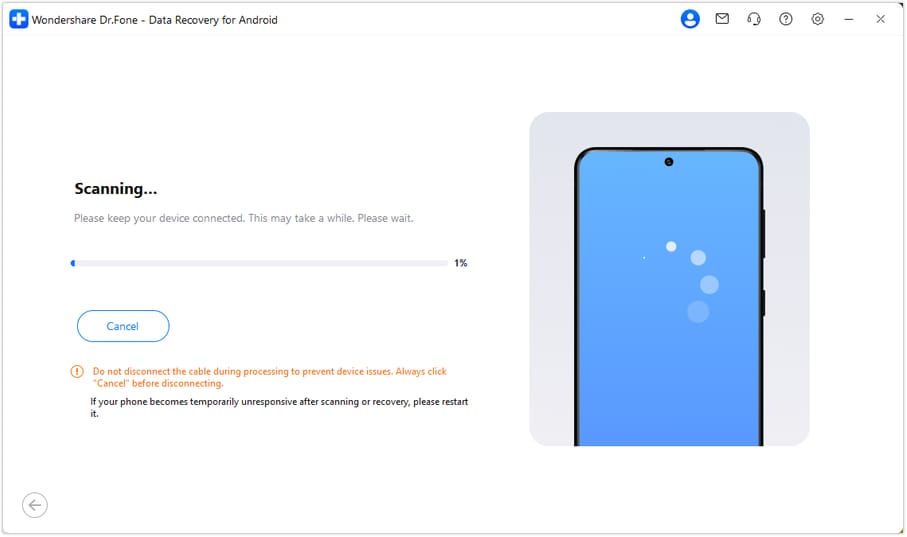
Keep the Flip 6 connected during Advanced Recovery. To stop, click Cancel before removing the USB cable. If the phone is temporarily unresponsive after scanning or recovery, restart it according to the product's displayed instructions.
Step 4 Preview selection messages and available sample files
Open LINE in the results sidebar and inspect available conversations for the sample code, cup shape and any replacement wording, using search or filters where available. Select LINE Attachments separately to browse the available photos, videos and files. Choose the useful results from each view after inspecting their actual contents.
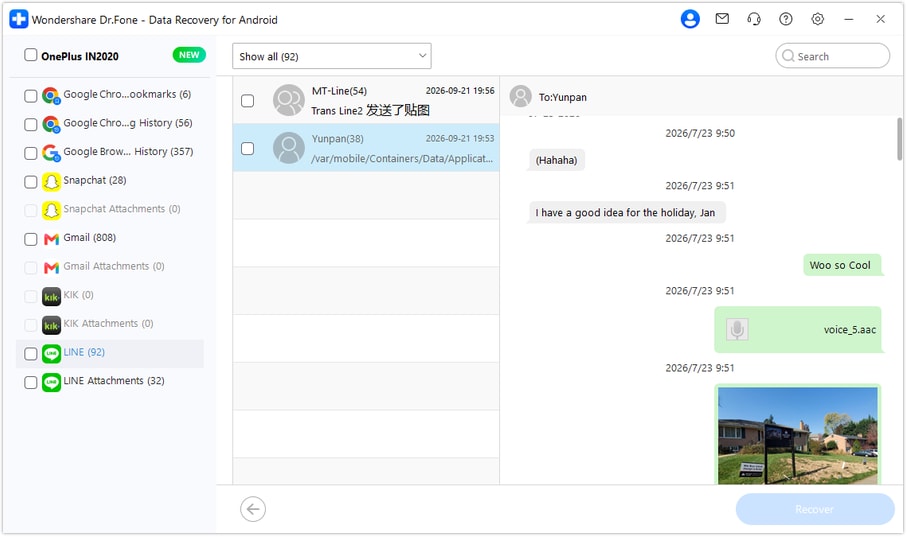
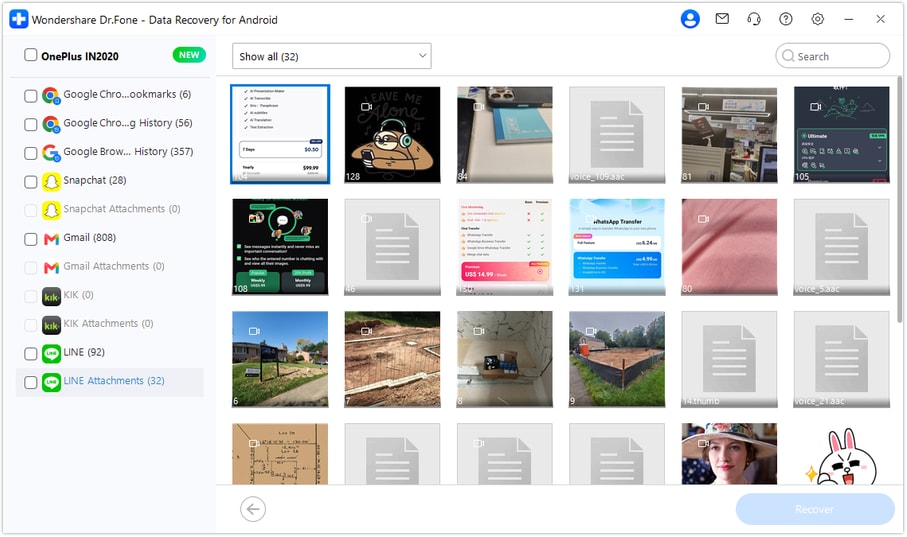
Step 5 Recover the selected commission records to a PC
Click Recover, choose a computer folder and complete the save prompts. Open the saved messages and usable files to check your selections. The result is a separate PC reference, not a restored LINE conversation or a newly reconstructed original-quality photograph.




Conclusion
The right sample is easier to identify when its image and the actual selection wording are available together. Dr.Fone - Data Recovery (Android) helps you look for missing LINE context, preview supporting attachments and save selected references to your PC. Download Dr.Fone for Windows and start Advanced Recovery on your supported Samsung Galaxy Z Flip 6.
FAQ
1. Can I recover deleted LINE messages on Samsung Galaxy Z Flip 6 without a backup?
Dr.Fone - Data Recovery (Android) offers a device-scan route for the supported Flip 6 and Kernel condition. Use Advanced Recovery on Windows, select LINE, preview discoverable conversations and attachments, then save your selected results to a PC without relying on an earlier LINE backup.2. Does finding the sample in an Album restore the deleted chat?
No. An Album contains items someone deliberately added and that you can still access. The image may solve the reference-photo problem, but the deleted selection message is a separate target for the LINE conversation scan.3. Does an Album photo's Details screen prove it is the original file?
It reports the available item's resolution. LINE distinguishes standard and eligible original-quality uploads, and says some metadata may be lost even with an original-quality photo. Resolution alone does not establish complete original metadata, capture time or the meaning of the deleted exchange.4. Can Dr.Fone recover deleted LINE photos and videos in their original quality?
Inspect the usable items actually found in LINE Attachments. Available photos or videos can be selected for PC saving, but the scan cannot promise an original-quality version, recreate expired originals or turn a low-detail preview into a sharper photograph.5. What if the recovered picture and message still do not identify the sample?
Keep the useful photo, sample-sheet contents and exact recovered wording as separate references, then ask for a current clarification of the unresolved code. This lets you use the material already recovered without confusing a new answer with the original choice.
 Add Wondershare Dr.Fone as a preferred source on Google