Recover photos, messages, WhatsApp, and more — no backup
needed.


 100% Security Verified | No Subscription Required | No Malware

 :

 ChatGPT
 Perplexity
 Gemini
 Claude
 Grok
Your match screenshot still shows the score, but the LINE group messages explaining a replay, a roster exception, or a corrected result are gone. For a community tournament, a scoreboard and an organizer's decision are different records. If you need to recover deleted LINE messages on POCO F8 Pro without a backup, focus on the particular round and decision rather than collecting every gaming image on the phone.
Dr.Fone - Data Recovery (Android) provides a focused way to inspect discoverable LINE conversation data and available attachments on a supported device, then keep selected results on a PC. Finding the actual wording can be more useful than guessing what a reaction emoji or an isolated screenshot was meant to approve.
In this article
Before you start
Use the POCO F8 Pro configuration, not another POCO entry
The confirmed support entry is POCO F8 Pro running Android 15 with Kernel 6.6.77. Do not substitute another model's conditions or assume every firmware combination is covered. Follow Dr.Fone's device-recognition and access prompts. The supplied record does not confirm a specific Root mechanism or a lossless Root outcome, so do not unlock, flash, or downgrade the phone as a recovery step.
Keep local LINE data intact and prepare PC output
Prepare a Windows computer, a USB data cable, and a private folder for selected records. Advanced Recovery is Windows-only and saves discoverable results to a PC rather than repopulating the LINE group. Leave LINE installed and signed in; avoid clearing its storage or cache, reinstalling it, or resetting the phone. This guide concerns ordinary LINE chat data, not game-account access or a promise to reconstruct a tournament platform.
Identify the match before reviewing results
Note the tournament, round, match date, team aliases, and the decision you need: replay instruction, score correction, or eligibility clarification. A team name may recur across several rounds. The relevant recovery target is the message assigning a decision to a particular match, plus any usable supporting media found.
Check current announcements and surviving match context in LINE
Use these checks when the group remains accessible and some messages or screenshots are still present. They locate retained records; they do not reverse a chat deletion.
Step 1 Read an existing announcement as a starting point
Check any announcement still displayed at the top of the group. LINE allows sent or received messages to be announced at the top of a chat, so an accessible announcement may identify the relevant round or rule. Compare its wording with the issue you are investigating. Announcing a message now would not restore a ruling that was already deleted.
Step 2 Search the match reference and inspect nearby discussion
Inside the chat, tap the search icon and enter a distinctive match reference or team name. Use the calendar icon near the field to narrow the date. Read the surrounding accessible messages, including any visible replies, to distinguish a proposed replay from the organizer's eventual instruction. A reply excerpt, if present, is only the text you can actually read, not the complete missing exchange.
Step 3 Trace a retained screenshot and interpret reactions carefully
Open the chat menu > Photos & videos > Photos & videos, select the relevant screenshot, and tap the date at the top to jump to its message. If reactions are still displayed below a message, tap them to inspect the available list of who reacted. A reaction establishes a visible reaction to that message, not an official ruling, player identity verification, or proof that a revised score was accepted.
- These checks apply only to content that remains accessible. The device scan below is a separate attempt to find discoverable deleted LINE records.
- If a decision affects the next match, ask the organizer for the current instruction while you preserve the old records. A fresh confirmation and historical recovery serve different purposes.
What a recovered match record does and does not establish
| Record | Useful information | Context still needed |
|---|---|---|
| Score screenshot | The score and names visible in the image | Which round it depicts and whether a later decision changed that result. |
| Replay or penalty message | The instruction and reason actually written | Its author, the match it refers to, and any subsequent correction found. |
| Reaction or short reply | The visible response to a particular message | Whether the organizer explicitly issued or revised a ruling; an emoji alone is not that wording. |
| Rules file or evidence video | The usable document or clip content | The applicable version and the discussion connecting it to this match. |
Common problems and fixes
The same two teams played more than once
Match the round and approximate date before interpreting the result. Use distinguishing details such as map or game number only when they are actually visible in the records. Keep an ambiguous screenshot separate rather than attaching it to whichever recovered message is closest in the result list.
Only a score image was found, not the ruling
Check LINE conversations as well as LINE Attachments. Save a useful screenshot, but leave the ruling unresolved unless its wording or a reliable current confirmation is available. The scan does not infer a penalty, calculate a bracket, or reconstruct a missing organizer decision from image content.
Someone suggests checking LINE on the same account's PC
For whole-chat deletion, LINE states that the chat is deleted on all devices using the same account. Another participant's own retained conversation is a different source: ask the organizer to check the particular match discussion and share only relevant material. Do not describe a linked PC as an independent full backup.
How to use Dr.Fone - Data Recovery (Android)
Dr.Fone - Data Recovery (Android) helps you search for the LINE wording behind an incomplete tournament record on a supported POCO F8 Pro. Its Windows-only Advanced Recovery mode scans selected LINE app data, lets you preview available conversations and attachments, and saves your chosen results to a PC. You can prioritize the organizer's instruction and the supporting screenshot or rules file instead of saving unrelated group chatter.
- Direct device scanning offers a no-backup route to look for discoverable deleted LINE messages.
- Conversation preview and available search or filters help narrow the review to the match reference and decision you need.
- Separate LINE Attachments results and selective PC saving keep usable evidence files accessible alongside the selected discussion.
 Scan Android phones and tablets directly.
- Preview and recover only what you want.
- Supports WhatsApp, photos, videos, contacts, and more.
- Works with 6000+ Android devices.
Follow the official Advanced Recovery workflow
Step 1 Enter Advanced Recovery and connect POCO F8 Pro
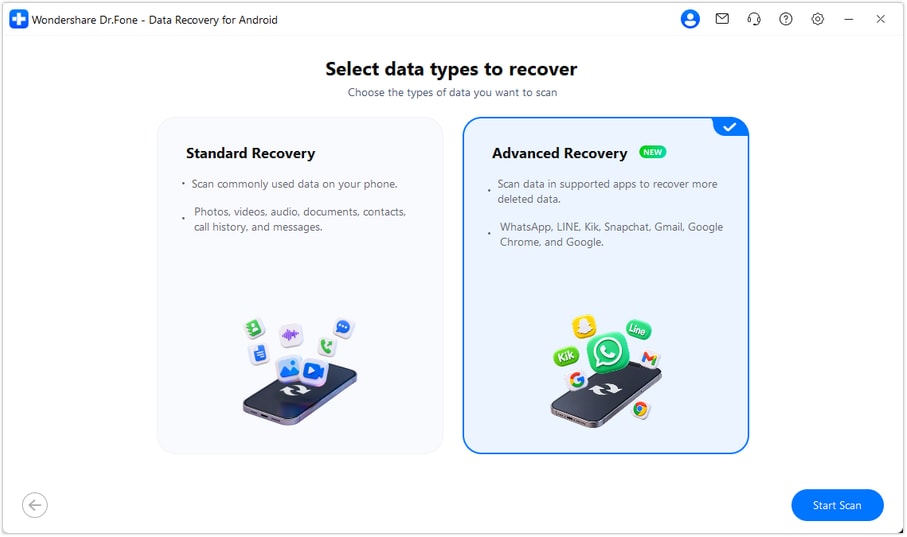
Start Dr.Fone on Windows and open Toolbox > Data Recovery. Choose Android > Recover Android Data, select Advanced Recovery, and click Start Scan. Connect the supported POCO F8 Pro by USB when prompted and follow the device-detection instructions.
Step 2 Select LINE from the supported app categories
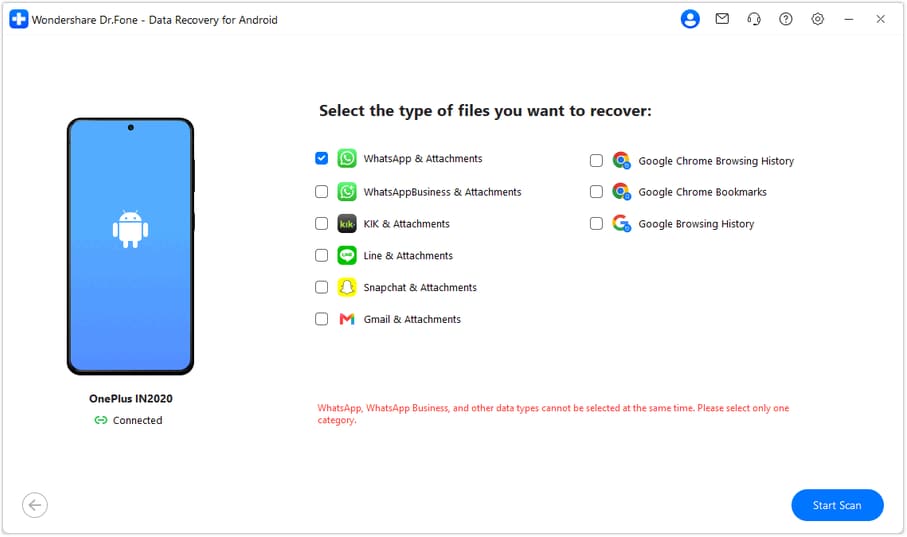
Choose LINE and click Start Scan. This scans the selected app data on the connected phone; it does not require an existing LINE cloud backup.
Step 3 Leave the device connected while scanning
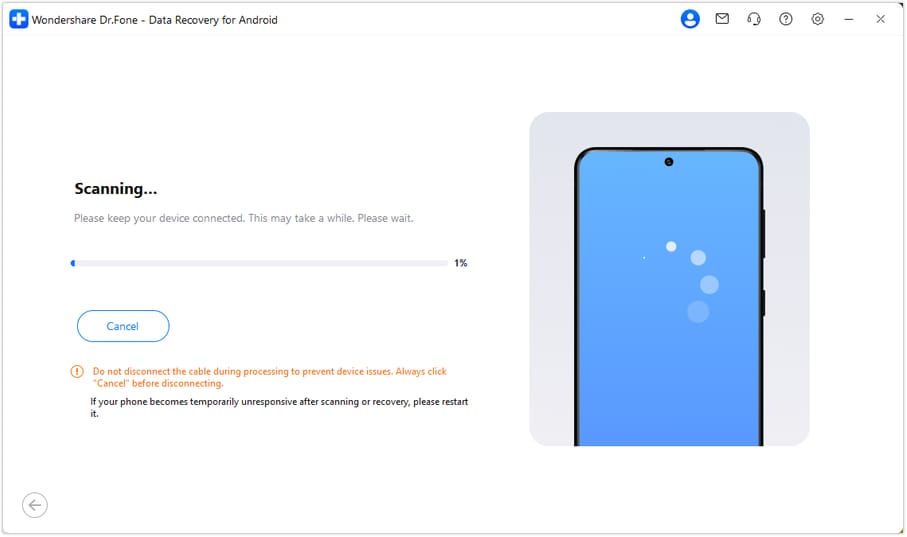
Keep the phone attached until scanning finishes. If you need to stop, click Cancel before disconnecting the cable. Follow the on-screen restart instructions if the phone becomes temporarily unresponsive after scanning or recovery.
Step 4 Preview the match discussion and its available files
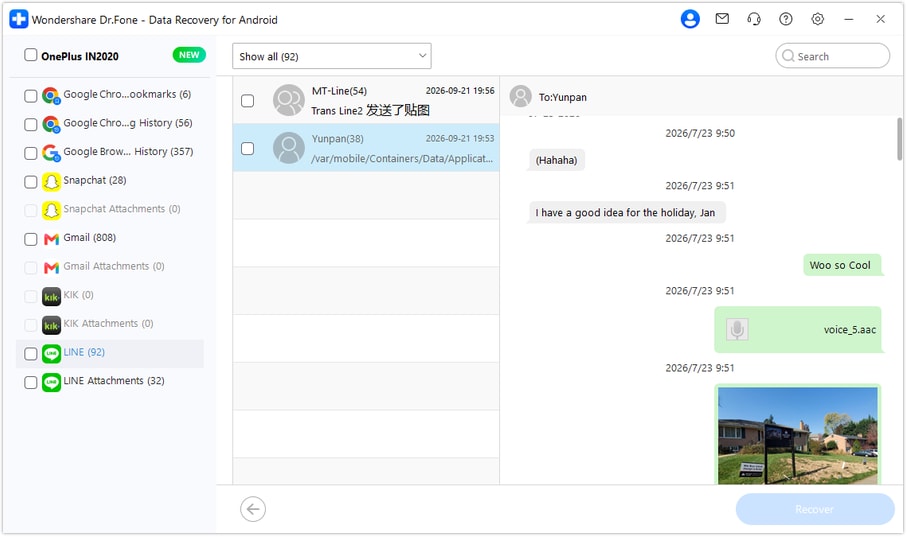
Select LINE in the sidebar to review available conversations. Look for the round, team aliases, or match reference using search and filters where available. Open LINE Attachments separately to inspect usable screenshots, videos, and files found. Select the records that belong to the discussion you need.
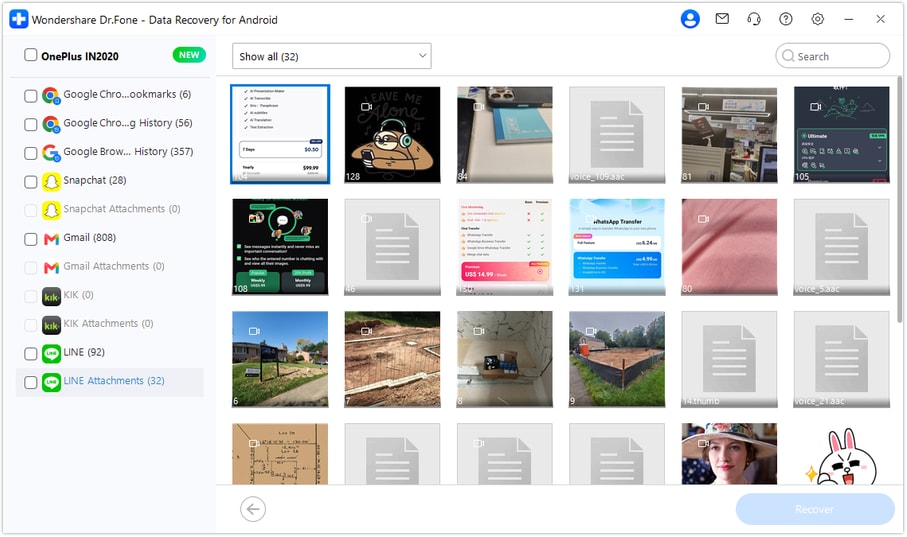
Step 5 Recover the selected records to your computer
Click Recover and follow the prompts to choose a PC folder. Save the selected results and check the output for the instruction and related files. This is a separate computer copy, not a restored LINE group or an updated tournament result.




Conclusion
A useful match record includes the decision as well as the score. Dr.Fone - Data Recovery (Android) gives supported POCO F8 Pro users a practical way to scan for deleted LINE conversations, preview separate attachment results, and keep selected messages and files on a PC. Download the Windows version, connect your compatible phone, and start reviewing the records that can clarify the missing discussion.
FAQ
1. Can I recover deleted LINE messages on POCO F8 Pro without a backup?
Dr.Fone - Data Recovery (Android) can scan a supported phone directly without requiring an existing LINE backup. The confirmed POCO F8 Pro entry lists Android 15 and Kernel 6.6.77. Use Windows Advanced Recovery to inspect what is found and save selected results to a PC; not every deleted record is guaranteed to remain available.2. Can a retained LINE announcement restore the deleted discussion?
No. An announcement that remains accessible may provide useful wording or a match reference, but it is not a rollback of the chat history. Review only what it actually displays, then use the device scan to look separately for discoverable missing records.3. Will the scan restore reactions, a bracket, or the official tournament result?
This workflow previews available LINE conversations and attachments and saves selected results to a PC. It does not promise to rebuild interactive reactions, infer a ruling, update a game service, or regenerate a bracket. Ask the organizer for the current operational decision when needed.4. Can I recover deleted LINE photos, videos, and rules files?
Review LINE Attachments for usable photo, video, and document results found by the scan. Verify the match and version using the available conversation text. A screenshot thumbnail or filename is not a promise that an expired original or the missing ruling can be recovered.5. Why not make a new backup or use Premium Backup?
A backup used to restore deleted LINE history must have been made before the deletion. Standard Backup mainly covers text, and LINE states that Premium Backup cannot undo a chat you manually deleted. Creating a backup afterward is not the no-backup recovery route described here.
 Add Wondershare Dr.Fone as a preferred source on Google