Recover photos, messages, WhatsApp, and more — no backup
needed.


 100% Security Verified | No Subscription Required | No Malware

 :

 ChatGPT
 Perplexity
 Gemini
 Claude
 Grok
A quotation is still in a LINE planning group, but the original conversation explaining how it could be used has been deleted. Before putting the words in a community newsletter, you may need the missing restriction, attribution request or later change, not just another copy of the excerpt.
To recover deleted LINE messages on Samsung Galaxy S23+ without a backup, Dr.Fone - Data Recovery (Android) offers a device-scan route for supported configurations. You can preview the available conversation records, inspect photos, videos and files separately, and save the useful selection to PC. The checks below help distinguish an original discussion from reshared material before you review the scan.
In this article
Before you start
Check the Galaxy S23+ and its kernel entry
The confirmed Samsung Galaxy S23+ record lists Kernel 5.15.153. No Android-version restriction is listed for this model; the kernel condition still applies, and the entry is not a blanket statement about other Galaxy models. Keep the exact model and software details ready for the software's support checks.
Prepare Windows and preserve the original local data
Use a Windows PC, USB data cable and private output folder. Advanced Recovery is Windows-only and saves selected discoverable results to PC, not back into LINE. Keep the current LINE installation and storage intact; avoid clearing cache or data, reinstalling, logging out, resetting or flashing. Follow the product's on-screen access instructions rather than an unverified Root or bootloader procedure.
Define the passage and context you need
Note a distinctive phrase, the source conversation, the planning group and the approximate date. Look for actual wording about attribution, the intended outlet or any restriction, not an assumption based on who forwarded the excerpt. Recovery depends on available scan findings. A recovered old message is a reference for review, not automatic identity authentication, legal clearance or renewed permission to publish.
Trace a retained quotation to its available conversation context
An excerpt survives in one chat while its original discussion or accompanying conditions appear to be missing.
Step 1 Search the phrase across retained conversations
On the Chats tab, use the top search icon in Japan, Taiwan or Thailand, or the search field above the list elsewhere. Search a distinctive phrase of at least two characters and inspect matching messages in the source chat and the planning group. When you open a chat, its own search and calendar selector can help locate the relevant discussion.
Step 2 Read the share and accompanying commentary separately
LINE allows people to share messages, photos and videos into another chat and to send an additional message with shared content. Read what actually appears before and after the excerpt. Do not assign the forwarder's explanation to the original speaker, or treat a reshared passage as a complete record of the earlier conversation.
Step 3 Request the specific source wording, not a reconstruction
If the original participant still has the discussion, ask for the relevant passage and its accompanying attribution or usage wording. If the historical wording cannot be supplied, ask for fresh confirmation of the proposed use and label it as a new decision. Keep private background material out of a group resend unless sharing it is appropriate.
- A hidden source chat can be checked through Home > Settings > Chats > Hidden chats > Edit > Unhide chat. Unhiding is not deleted-data recovery.
- Delete removes an individual message from your screen, while Unsend affects recipients too. Whole-chat deletion also affects your other devices on the same account, so a linked PC is not a promised independent archive.
Quotation recovery: preserve the evidence without enlarging its meaning
| Record you find | Useful review question | What it cannot settle alone |
|---|---|---|
| A reshared quotation | Which words are actually included in the excerpt? | Who wrote nearby commentary or what was omitted from the source discussion |
| The source conversation wording | Does it name the outlet, attribution or a restriction? | Whether a later change exists outside the records you have |
| An attached image, clip or document | Does the usable file contain the actual passage you intend to use? | That owning a file also supplies permission for every use |
| A later clarification from the speaker | What use is being confirmed now? | The exact contents of a deleted historical message |
Common problems and fixes
Only the forwarded excerpt appears in the results
Keep it as an excerpt, not as the complete source exchange. Review other available LINE conversations for the original wording and check any independently retained participant copy. If the conditions remain missing, seek fresh confirmation before publication.
A message allows one use but the planned publication is different
Preserve the actual restriction in your reference copy and ask about the new use. Do not expand permission because the image, clip or text is recoverable. The recovery tool helps retrieve records; it does not decide the permitted scope for you.
The attachment is available but the surrounding text is incomplete
Inspect LINE results independently of LINE Attachments and retain only the usable files you need. A recovered file may preserve the quotation while leaving attribution or restrictions unresolved. Keep that gap visible in your editorial checklist rather than filling it from the filename.
How to use Dr.Fone - Data Recovery (Android)
Dr.Fone - Data Recovery (Android) helps you look for the context behind a surviving excerpt instead of relying on the excerpt alone. On supported Galaxy S23+ configurations, Windows-only Advanced Recovery scans available LINE data without requiring a chat backup. Review found conversations in LINE, inspect photos, videos and files in LINE Attachments, and save selected relevant results to PC for private editorial review.
- Conversation preview helps identify actual attribution or usage wording in the records the scan finds.
- Separate attachment inspection distinguishes the available quoted material from the surrounding discussion.
- Selective PC saving lets you retain the needed context without choosing every unrelated or private conversation.
 Scan Android phones and tablets directly.
- Preview and recover only what you want.
- Supports WhatsApp, photos, videos, contacts, and more.
- Works with 6000+ Android devices.
Follow the official Advanced Recovery workflow
Step 1 Connect the Galaxy S23+ to Advanced Recovery
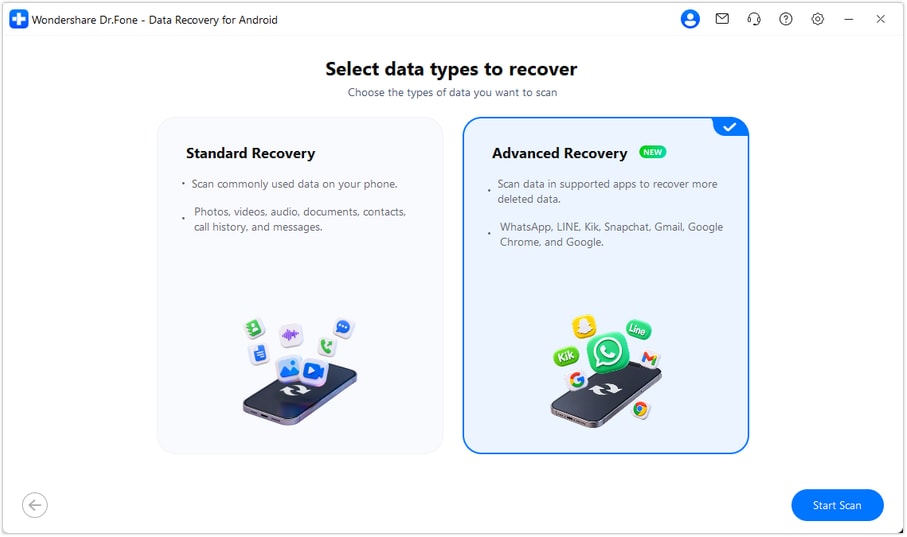
Start Dr.Fone on Windows and open Toolbox > Data Recovery. Select Android > Recover Android Data, choose Advanced Recovery and click Start Scan. Connect the supported Galaxy S23+ over USB when requested and follow the detection instructions shown.
Step 2 Select LINE as the app-data category
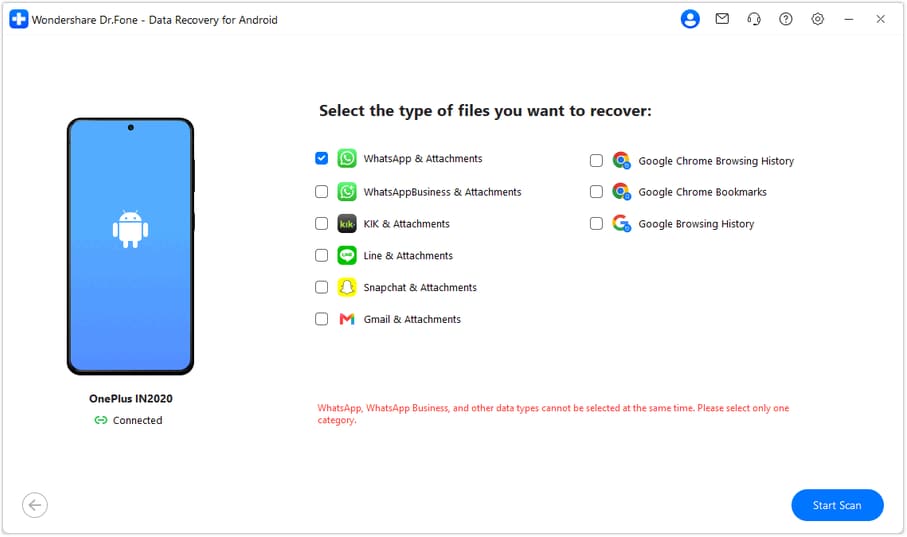
Choose LINE from the offered app-data categories and click Start Scan. This selects the app records to examine for the source discussion and its available media or files.
Step 3 Keep the phone connected until scanning finishes
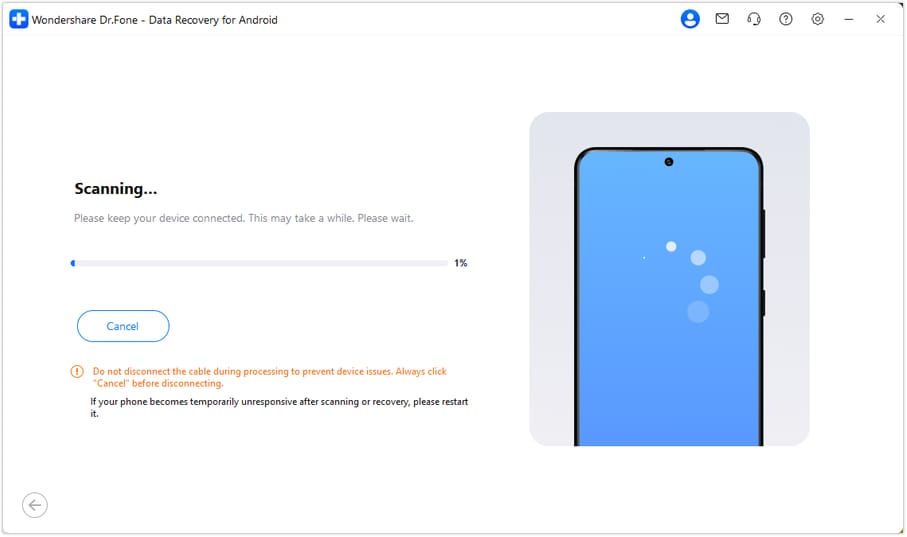
Leave the USB connection stable while Advanced Recovery scans. If stopping is necessary, click Cancel before disconnecting. Restart the phone as instructed on screen if it becomes temporarily unresponsive after scanning or recovery.
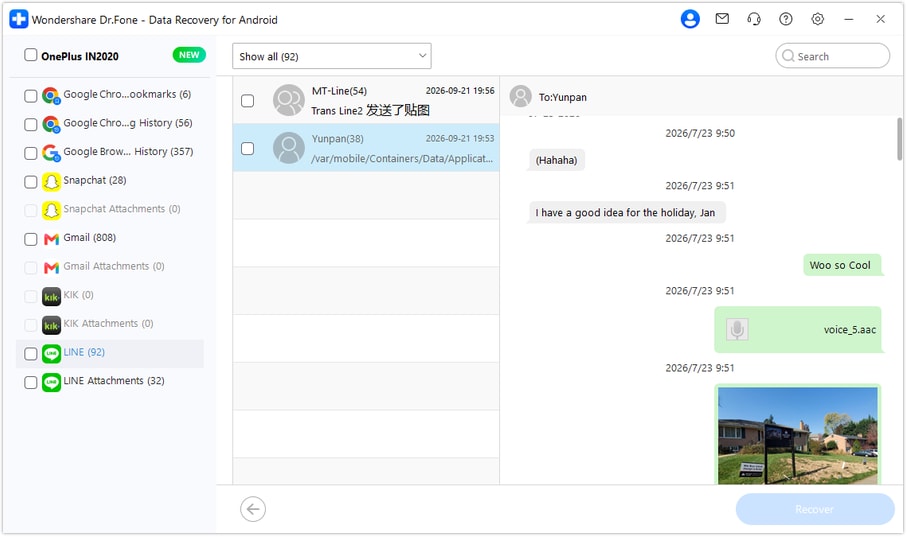
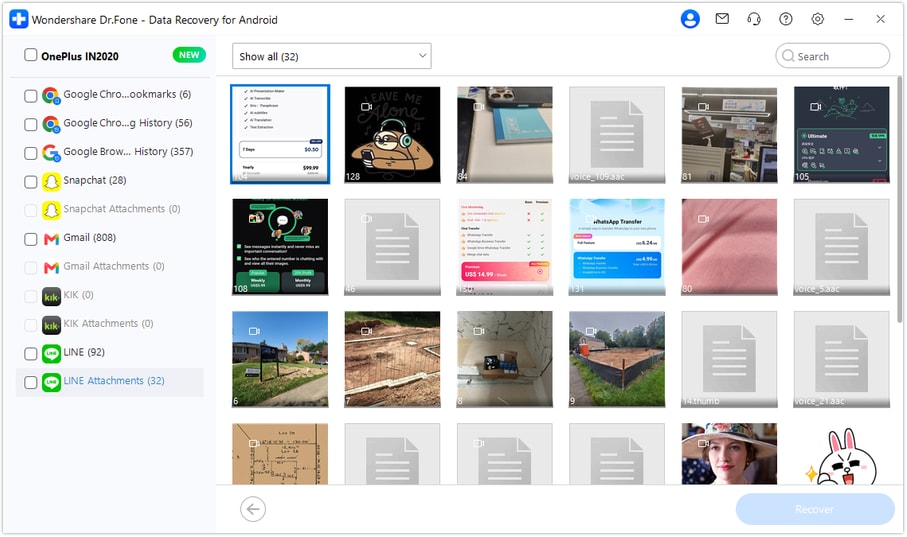
Step 4 Preview source wording and attachments separately
Choose LINE to review available conversations and look for the source passage and surrounding wording. Use search or filters where available. Then open LINE Attachments to inspect available photos, videos and files separately and select the useful results.
Step 5 Recover the selected reference material to PC
Click Recover and follow the prompts to select a computer folder. Save the selected data and check the output for the wording and files you wanted to keep. This saves a separate PC reference, not a restored LINE thread or an automatically approved publication package.




Conclusion
The missing context can matter as much as the quotation itself. Dr.Fone - Data Recovery (Android) gives supported Galaxy S23+ users available conversation preview, separate attachment review and selective PC saving in a guided no-backup workflow. Download Dr.Fone for Windows and start scanning for the LINE messages and files that make your reference set more useful.
FAQ
1. Can I recover deleted LINE messages on Samsung Galaxy S23+ without a backup?
Dr.Fone - Data Recovery (Android) offers a supported-device scan that does not need an existing LINE backup. Use Advanced Recovery on Windows, review LINE and LINE Attachments results separately, then save selected found records to PC. Availability depends on what the scan discovers.2. Is a forwarded quotation the same as the original conversation?
No. LINE lets people share content into another chat and add a message with it. An excerpt and the forwarder's commentary may omit the source discussion. Check the actual original wording where retained or found, and keep new explanations separate.3. Can I obtain a participant's own copy after deleting my message?
A participant may still have content removed only from your screen with Delete. Unsend is different because it removes sent content from recipients too, and its limits vary by region and subscription. Ask about the specific retained passage rather than promising that another person can restore the full chat.4. Does recovering a message establish current permission to publish?
No. It provides wording to review, not identity certification or automatic publication clearance. Check the actual scope and any known later changes, and obtain fresh confirmation when the planned use or the recovered context is unclear.5. Will a new Standard or Premium Backup recover the deleted discussion?
A backup created after deletion does not bring the discussion back. Standard Backup primarily covers text and needs the relevant history backed up beforehand for restoration. Premium Backup is not a rollback for manual chat deletion; the device scan in this article is a separate recovery route.
 Add Wondershare Dr.Fone as a preferred source on Google