Recover photos, messages, WhatsApp, and more — no backup
needed.


 100% Security Verified | No Subscription Required | No Malware

 :

 ChatGPT
 Perplexity
 Gemini
 Claude
 Grok
The bench photo is familiar, but which mark did the maker say to ignore? Losing a LINE furniture discussion can leave you with several similar reference images and none of the wording that distinguishes a cosmetic mark from the detail you actually asked about. If you need to recover deleted LINE messages on Google Pixel Fold, useful recovery means finding that explanation, not simply finding another picture of the bench.
Dr.Fone - Data Recovery (Android) provides a focused way to look for available LINE conversations, preview separate photo, video and file results, and save the records you choose to a PC. Before scanning, check whether a reference you had already saved is merely archived in Google Photos. That small distinction lets you spend the recovery effort on the information still missing: the maker's words, the relevant view, or both.
In this article
Before you start
Match the original Pixel Fold configuration
The listed model is Google Pixel Fold, Android 14, Kernel 6.1.157. These conditions do not describe Pixel 9 Pro Fold or every folding Pixel. Compare your phone's model, Android and Kernel information with this record before starting. The folding display is not a separate recovery mechanism; recoverability depends on supported access and the data the scan can still discover.
Prepare Windows and preserve the phone
Advanced Recovery is Windows-only. Have a reliable USB data cable and a PC destination folder ready. Keep LINE installed and avoid clearing its storage or cache, cleanup tools, resets, reinstalls and generic rooting or bootloader-unlock instructions. Follow the product's displayed connection and access guidance; do not make a potentially destructive device change just to expose a recovery option.
Separate a saved image from a LINE backup
The Photos check below applies only if you previously saved the image separately and can normally access it in your own existing Photos account or device library. It is not a required LINE backup. LINE's native Standard Backup saves text only and must predate deletion for the corresponding native restore; a later backup or Premium Backup does not roll back manually deleted chats. This guide's device-scan route does not require that earlier backup and saves selected discoverable results to PC, not back into LINE.
Check Photos Archive before treating the bench reference as lost
Use this retained-copy check when a bench or material photo was saved separately before the LINE discussion disappeared and is now absent from the main Photos view.
Step 1 Open the existing Archive collection
In Google Photos on Android, use the account in which you normally view the saved reference. Tap Collections > Archive. Google notes that frequent users may also see Archive at the top. Inspect the existing collection; there is no need to archive a new item, enable backup or move an image to demonstrate this check.
Step 2 Compare the actual reference views
Look for the complete bench, close-up of the marked area and any comparison image you remember saving. Archived photos remain in search results, albums they were added to and device folders, so absence from the main Photos view alone is not evidence that the file was deleted. Read the actual image rather than treating a search match as the requested view.
Step 3 Define the remaining LINE recovery target
If the correct image is present, note the visible feature that needs explanation and concentrate the LINE scan on the maker's actual wording. If only a different angle survives, inspect both conversation and attachment results. A photo can show a mark; it cannot establish that the maker accepted a repair, excluded a part or described the mark as harmless.
- Archive is not Trash, a protected folder or deleted-message recovery. Reading an archived photo does not require unarchiving it.
- A search result and an Archive entry can be two views of the same retained photo. Finding both does not mean you have recovered two different reference images.
- A separately retained video or document can help identify the item, but its existence does not supply missing LINE text.
What each Pixel Fold result actually gives you
| What you find | Useful next action | What it does not establish |
|---|---|---|
| The reference is in Photos Archive | Inspect the existing image and identify the mark or angle mentioned in the lost discussion. | That the original LINE explanation or later reply is still present. |
| A similar photo, but not the requested close-up | Review LINE Attachments for an actual matching view or demonstration video. | That another angle documents the same feature clearly. |
| Readable maker wording in LINE results | Read the whole available exchange, including qualifications and later responses. | That every referenced image or the eventual repair is included. |
| A usable photo, video or file in LINE Attachments | Preview it and select the relevant original content available to the scan. | That its position in the result list proves which message approved it. |
| Only part of the discussion is discoverable | Save the useful available text and media to a focused PC folder. | A complete reconstructed conversation or a new message inside LINE. |
Common problems and fixes
The picture appears in search but not in the main Photos view
Check Collections > Archive in the existing Photos library. Archived images can still appear in search and their existing albums. This is a visibility explanation, not a reason to clear data or run an undelete operation on the photo.
An image looks relevant but the disputed detail is not visible
Treat it as an identification reference rather than evidence of the missing statement. In LINE Attachments, inspect any actual close-up or playable clip that is found; in LINE, look for the specific explanation. Do not infer the maker's conclusion from an indistinct mark.
Advanced Recovery is unavailable for the connected Fold
Confirm the Windows workflow and compare the exact original Pixel Fold model, Android 14 and Kernel 6.1.157 with the phone. Follow the product's compatibility message or contact support with those identifiers. Do not unlock, flash or reset the phone to force access.
How to use Dr.Fone - Data Recovery (Android)
Dr.Fone - Data Recovery (Android) helps you look beyond a surviving reference photo for the LINE explanation that made it useful. On the listed Pixel Fold configuration, its Windows-only Advanced Recovery workflow scans available local LINE data, separates readable conversations from LINE Attachments, and lets you save selected discoverable records to a PC. Use the preview to choose the maker's actual words and the specific views you need, rather than collecting unrelated images.
- Conversation review helps locate the actual description, qualification or reply behind a visible mark.
- Separate attachment review lets you distinguish the required close-up from other photos, clips and files found by scanning.
- Selective PC saving keeps the useful explanation and supporting references together outside the phone.
 Scan Android phones and tablets directly.
- Preview and recover only what you want.
- Supports WhatsApp, photos, videos, contacts, and more.
- Works with 6000+ Android devices.
Follow the official Advanced Recovery workflow
Step 1 Start Advanced Recovery and connect Pixel Fold
On Windows, open Dr.Fone > Toolbox > Data Recovery. Choose Android > Recover Android Data, select Advanced Recovery and click Start Scan. Connect the supported Pixel Fold with a USB data cable when prompted and follow the on-screen instructions until the phone is detected.
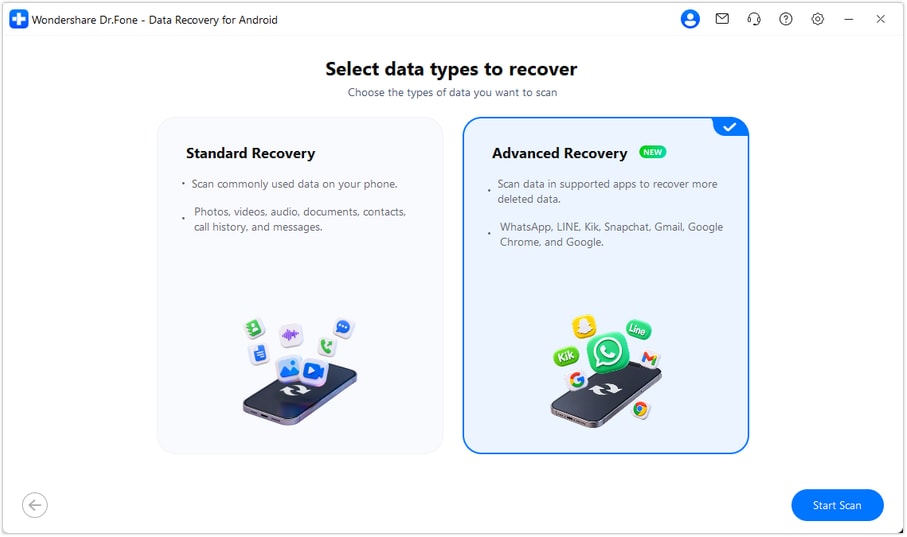
Step 2 Select LINE app data
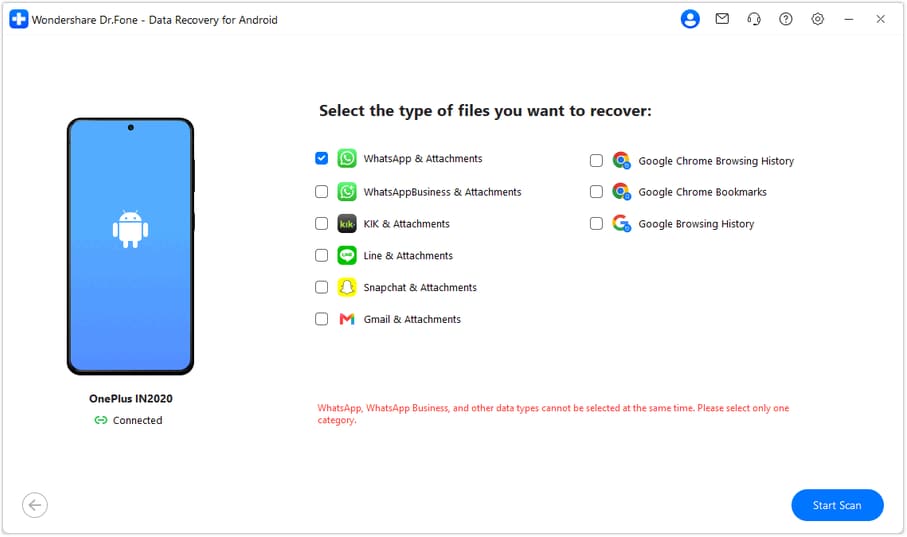
Choose LINE from the available app-data categories, then click Start Scan to search the selected data. This is the app-data scan for the missing discussion, not a Google Photos Archive operation or a cloud-backup restore.
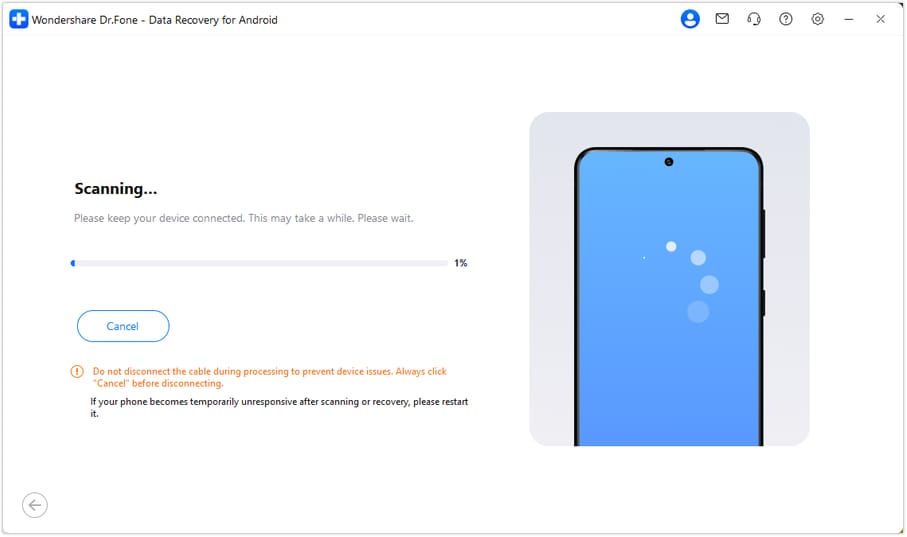
Step 3 Keep the phone connected during scanning
Let Advanced Recovery scan the selected data while the USB connection stays stable. If you need to stop, click Cancel before disconnecting. If the phone is temporarily unresponsive after scanning or recovery, follow the restart instructions shown by the product.
Step 4 Preview the maker's words and reference attachments
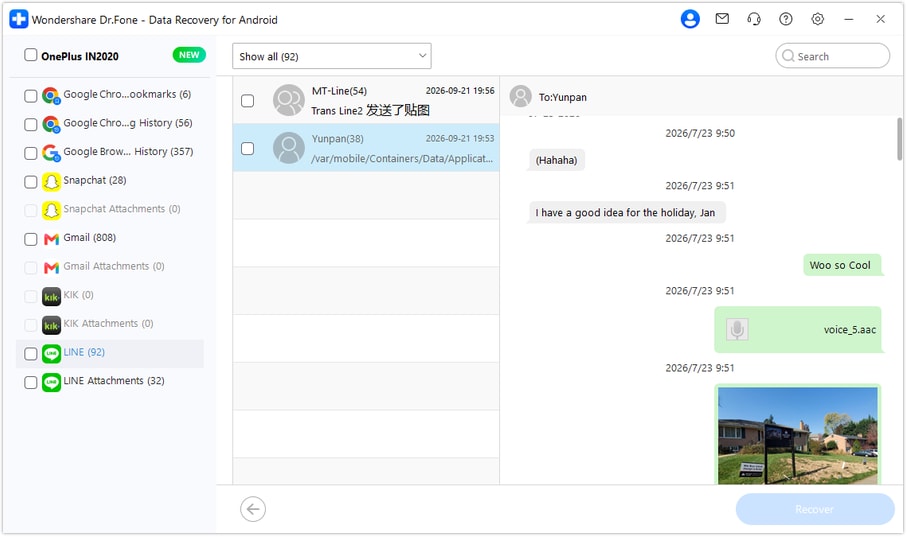
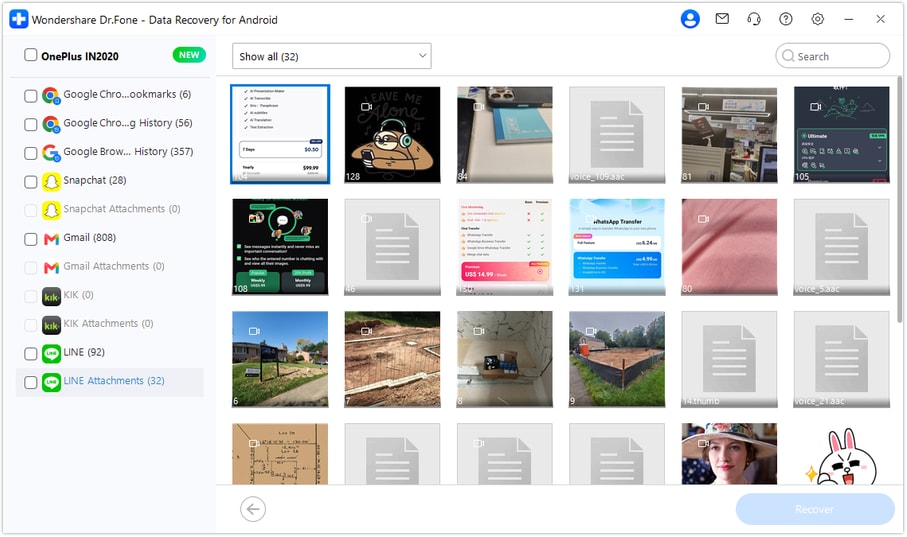
Choose LINE in the results sidebar to inspect available conversations. Use search or filters where available to narrow the exchange, then read the actual explanation. Open LINE Attachments separately to review found photos, videos and files; select the relevant views and wording that are really available.
Step 5 Save selected useful records to your PC
Click Recover and follow the prompts to choose a computer folder. Save the selected results and inspect the saved output. This creates a PC copy of discoverable records; it does not import the bench discussion into LINE or change your Photos Archive.




Conclusion
For a missing explanation behind a familiar reference image, Dr.Fone - Data Recovery (Android) offers a practical way to review available LINE wording, inspect the matching photos or clips and keep selected useful records on your PC. Download the Windows version, connect your eligible Google Pixel Fold and start a focused scan for the conversation and references that matter.
FAQ
1. Can I recover deleted LINE messages on Google Pixel Fold without a backup?
Dr.Fone - Data Recovery (Android) offers a Windows device-scan route for the listed Pixel Fold configuration: Android 14, Kernel 6.1.157. Preview LINE and LINE Attachments, then save selected available results to PC. No earlier LINE backup is required for this route, but the result depends on what the scan finds.2. Does finding an archived Google Photos image recover my LINE chat?
No. It identifies an existing independently saved image that was hidden from the main Photos view. Archive items can remain in search and existing albums. The missing chat wording is a separate recovery target.3. Must I unarchive or upload the photo before scanning LINE?
No. Read the already accessible reference where it is. Neither unarchiving nor starting a new upload is required for the LINE device scan, and no new backup can recreate the deleted explanation.4. Can I also recover deleted LINE photos, videos and attachments on Pixel Fold?
Inspect LINE Attachments for the actual media and files found by scanning. Preview the relevant items before selecting them. A conversation reference or thumbnail alone does not guarantee that the original file is available, particularly if it has expired and no usable local data remains.5. Will the saved records appear back in LINE on the Fold?
No. Advanced Recovery saves selected discoverable results to a PC folder. You can review that separate copy alongside your retained reference image; it does not refill LINE history or a Google cloud library.
 Add Wondershare Dr.Fone as a preferred source on Google