Recover photos, messages, WhatsApp, and more — no backup
needed.


 100% Security Verified | No Subscription Required | No Malware

 :

 ChatGPT
 Perplexity
 Gemini
 Claude
 Grok
A contributor sends a private LINE instruction about which name belongs on an anthology cover and which details belong only in the inside biography. After the conversation disappears from your Vivo X Fold3 Pro, you still have a PDF, but it contains only part of the handbook. A name in one surviving page does not settle where the contributor wanted it printed.
Dr.Fone - Data Recovery (Android) helps you look for the actual instruction rather than guessing from the remaining PDF. On a supported phone, its Windows-only Advanced Recovery workflow scans local LINE data without a previous chat backup, previews available messages and attachments, and saves selected results to PC. You can keep useful wording, cover references and biography files together as separate sources for your own review.
In this article
Before you start
Keep the exact X Fold3 Pro configuration
Vivo X Fold3 Pro is listed with Kernel 6.1.124 and no Android-version restriction for this named model. Do not substitute the T4 or X200 family's Kernel, or infer a special recovery mechanism from the folding screen. Record the current device details for compatibility checking without flashing, upgrading or downgrading firmware as a recovery step.
Prepare a Windows destination without resetting LINE
Use a Windows computer, a reliable USB data cable and a private writable PC folder. Preserve the original LINE installation, login and local storage. Do not clear app data, reinstall, log out, factory-reset or unlock the bootloader. Follow the product's displayed access instructions instead of an unverified Root tutorial.
Identify the placement instruction you need
Note the contributor, approximate date, and whether the missing wording concerns the cover, contents page or inside biography. Existing document content and an earlier export can differ. The scan saves selected discoverable local LINE results to PC, not back into LINE or Google Docs, and cannot infer a contributor's permission from a matching name.
Optionally check the native document's tabs before calling the handbook incomplete
Use an existing Google Docs document that you are already allowed to open. This optional reference check needs no new sharing, backup, document copy or export and is not required for the LINE scan.
Step 1 Open the accessible native document on a computer
Use the existing Google Docs document, not just a downloaded PDF or screenshot. Click Show tabs & outlines at the top left, then select the relevant tab. Google notes that the left panel may not open automatically when only one tab contains content.
Step 2 Inspect relevant tabs and any listed subtabs
Read the actual cover, contributor or biography section if it is present in the tab panel. Docs supports nested tabs, so the first displayed tab is not necessarily the complete document. Do not create, rename, delete or move tabs, and do not request broader access just to perform this optional check.
Step 3 Distinguish a partial export from missing historical wording
Google's download dialog defaults to Current Tab and offers All Tabs; printing also distinguishes current and all tabs. An earlier PDF may therefore omit a section without that section having been deleted. Finding the current biography tab supplies its present contents, not the contributor's missing LINE instruction or proof of what an older export contained.
- This is navigation within retained document content, not document version history, comments, Speaker notes or deleted-tab recovery.
- A tab label or handbook example does not identify which personal details the contributor approved for a particular printed location.
Keep the handbook, contributor instruction and design references distinct
| Source you can inspect | Useful result | Remaining question |
|---|---|---|
| An accessible native Docs tab | The current cover or biography guidance in that section | Was the private LINE instruction a different exception for this contributor? |
| An earlier single-tab PDF | The actual pages included in that export | Other native tabs may have been omitted rather than deleted. |
| A found LINE conversation | The placement and name-form instruction actually written | Does it refer to the cover, the inside biography or a later revision? |
| Found photos, videos or files | A usable mock-up, explanation or contributor reference | A design label or file alone does not establish approval or reproduce missing text. |
Common problems and fixes
The PDF has no biography section, but the Docs link still opens
Inspect Show tabs & outlines in the accessible native document. The PDF may represent only the tab selected when it was exported. Do not describe a section as deleted merely because it is absent from that PDF, and do not overwrite the current document to test an older layout.
Two name forms appear in different recovered materials
Read the actual LINE wording for the location and purpose assigned to each name. Both forms may have different intended uses; one is not automatically a corrected version of the other. Save the relevant instruction and mock-up separately, and keep newly requested clarification distinct from the original exchange.
The preview finds a cover image but not the contributor's response
Check the LINE conversation view as well as LINE Attachments. Preserve a usable cover reference if found, but do not infer acceptance from its filename, visual position or proximity to another result. Recover only the useful actual content available for selection.
How to use Dr.Fone - Data Recovery (Android)
Dr.Fone - Data Recovery (Android) gives supported Vivo X Fold3 Pro users a focused route to the private instruction behind a surviving document. Its Windows-only Advanced Recovery mode searches local LINE app data without a previous chat backup, separates conversation previews from LINE Attachments, and saves selected results to PC. That helps you review actual placement wording alongside useful design images and files without changing the live handbook.
- Look for the contributor's actual message instead of relying on a current handbook or an incomplete export.
- Preview available images, videos and files independently from the conversation to identify useful design references.
- Save selected private records to PC for your own comparison without replacing document content or importing chats.
 Scan Android phones and tablets directly.
- Preview and recover only what you want.
- Supports WhatsApp, photos, videos, contacts, and more.
- Works with 6000+ Android devices.
Follow the official Advanced Recovery workflow
Step 1 Start Advanced Recovery and connect the X Fold3 Pro
Open Dr.Fone on Windows and go to Toolbox > Data Recovery. Choose Android > Recover Android Data, select Advanced Recovery and click Start Scan. When prompted, connect the supported Vivo X Fold3 Pro by USB and follow the device-detection directions.
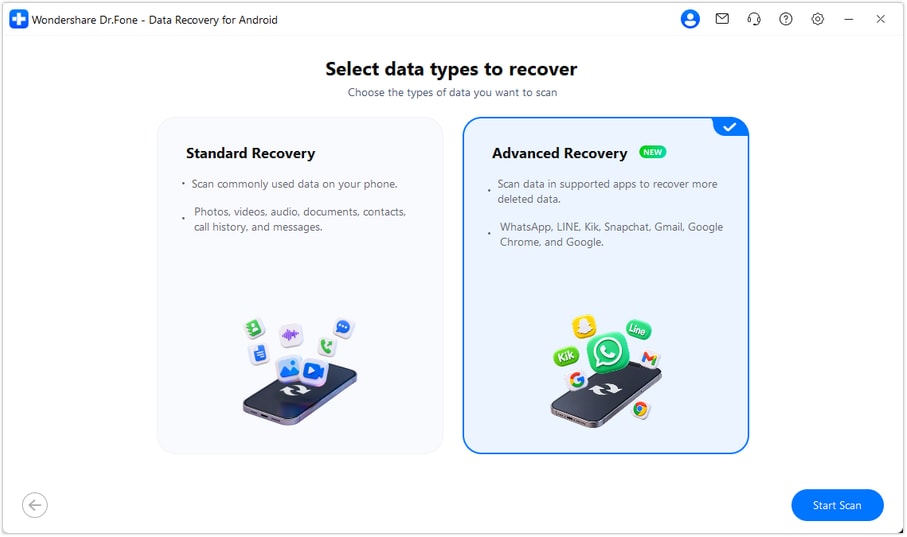
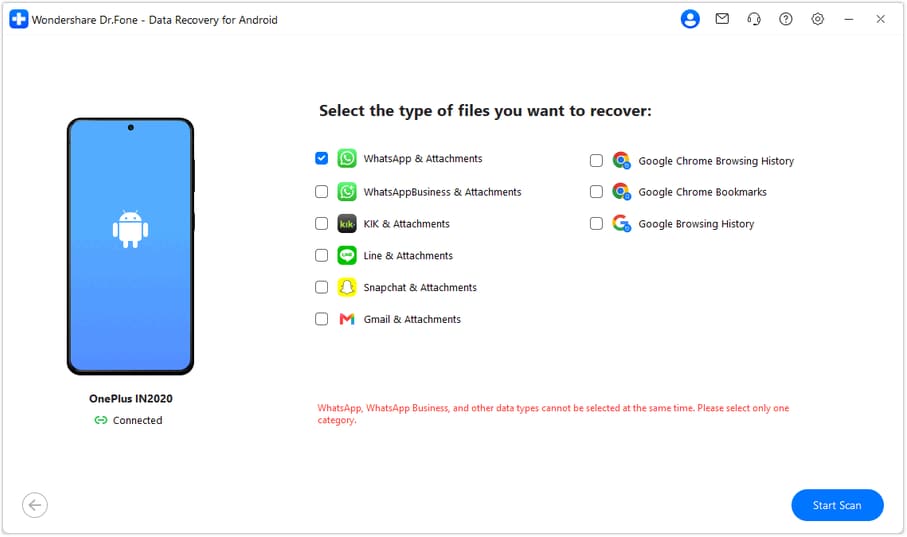
Step 2 Choose LINE for the local app-data scan
Select LINE in the available app-data categories and click Start Scan. The connected phone is the source for this workflow; a Google Docs document or an earlier LINE backup is not required.
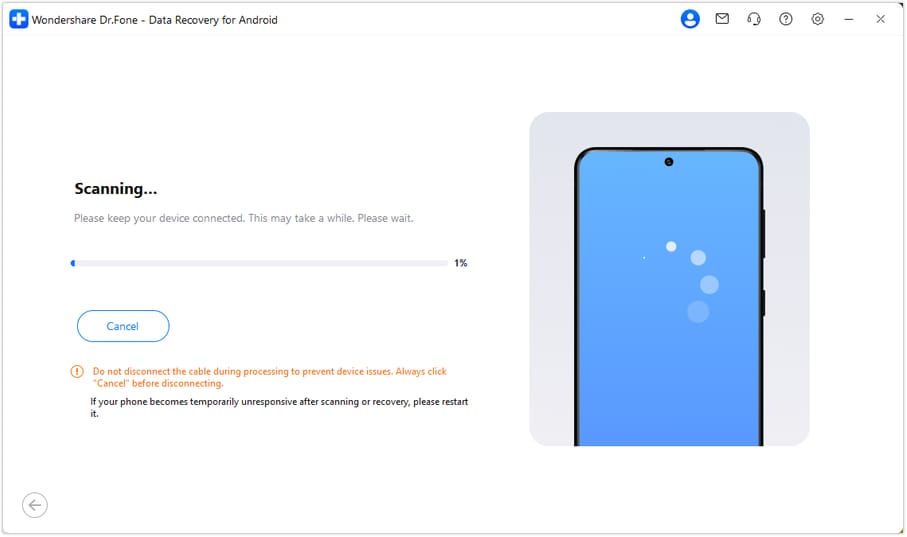
Step 3 Wait with the USB connection intact
Keep the X Fold3 Pro connected while Advanced Recovery scans. If you need to stop, click Cancel before removing the cable. If the phone becomes temporarily unresponsive after scanning or recovery, follow the product's on-screen restart instruction.
Step 4 Read the found placement instruction and inspect design files
Choose LINE in the results sidebar and inspect the available contributor conversation, using search or filters where provided. Read the actual wording for cover versus biography scope. Select LINE Attachments separately to review found photos, videos and files, then select useful actual messages and references.
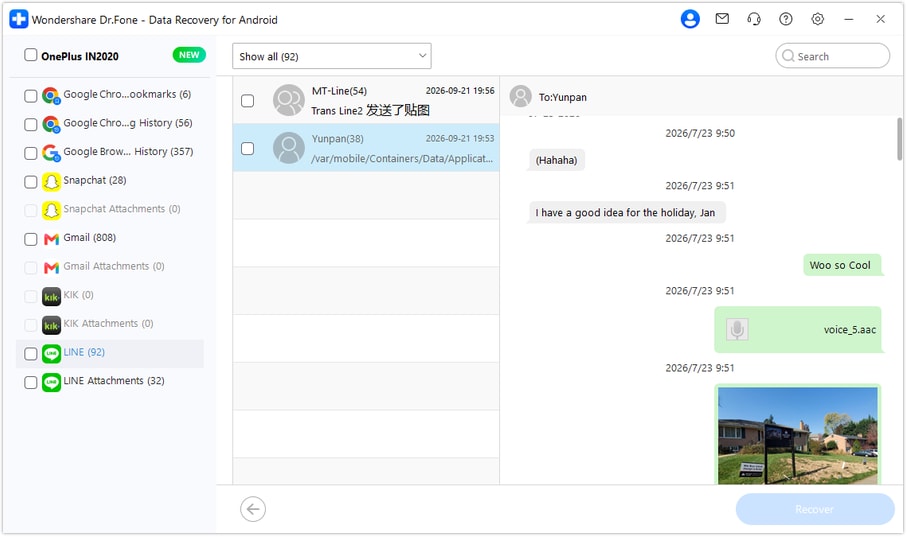
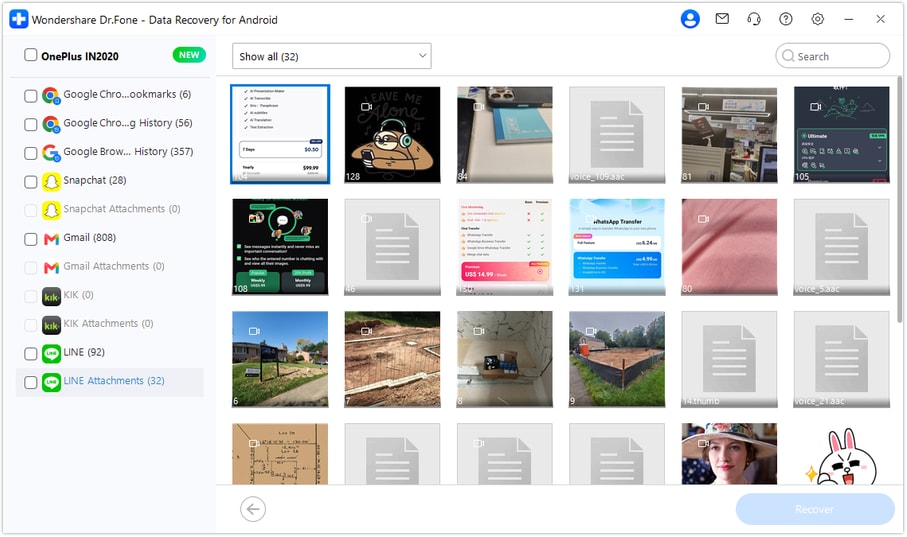
Step 5 Save the selected contributor records to PC
Click Recover, choose a computer folder through the displayed prompts and complete the save. Open the output to check the selected wording and files. Advanced Recovery creates a PC copy; it does not insert messages into LINE or edit the Google document.




Conclusion
For lost contributor instructions on a supported Vivo X Fold3 Pro, Dr.Fone - Data Recovery (Android) helps you find available LINE wording, inspect useful design attachments and preserve selected private records on PC. Download Dr.Fone for Windows and start the guided scan to look for the context a partial handbook export cannot supply.
FAQ
1. How can I recover deleted LINE messages on Vivo X Fold3 Pro without a backup?
Use Dr.Fone - Data Recovery (Android) on Windows with the exact listed model and Kernel 6.1.124 condition. Run Advanced Recovery, choose LINE, preview the found conversations and LINE Attachments, and save useful selected results to PC. No Android-version restriction is listed for this named model.2. Does a missing section in a PDF mean it was deleted from Google Docs?
Not necessarily. Docs downloads default to Current Tab, and both downloading and printing distinguish the current tab from all tabs. If you can already access the native document, inspect Show tabs & outlines for the retained sections. That does not restore a deleted LINE message or establish an older document state.3. Can LINE Standard Backup or Premium Backup undo this manual chat deletion?
A suitable Standard Backup must have been made before the manual deletion; it saves text only and supports same-OS transfer. LINE says a Standard copy made afterward or Premium Backup does not restore that manually deleted history. Creating a backup now is not this article's no-backup solution.4. Can I recover deleted LINE photos, videos and files as well as text?
Review LINE Attachments separately for the actual usable media and files found by scanning. Available attachment results and conversation text can differ. Selected output goes to PC, not into LINE; complete history, every file and expired originals without discoverable local data are not promised.
 Add Wondershare Dr.Fone as a preferred source on Google