Recover photos, messages, WhatsApp, and more — no backup
needed.
Recover photos, messages, WhatsApp, and more — no backup
needed.

 100% Security Verified | No Subscription Required | No Malware

 :
: 
 ChatGPT
 Perplexity
 Gemini
 Claude
 Grok
Grok
Losing vital contacts and messages due to a misplaced device, unexpected system crash, or a corrupted SIM card can be incredibly overwhelming. When faced with this digital crisis, reliable sim card recovery becomes a top priority. Fortunately, ecosystems like Apple's iCloud and iTunes provide standardized backup frameworks that make it entirely possible to retrieve SIM card data from iPhone devices seamlessly. However, these native solutions come with strict limitations, such as permanently overwriting existing data, which this article will explore in detail.

This comprehensive guide delves into the most effective methods and alternatives for those looking to recover sim card data efficiently. From meticulously checking computer backups to leveraging advanced sim card recovery software, each method is carefully outlined with actionable steps. Keep reading to discover the best strategy to securely restore contacts from sim card and safeguard your personal information against permanent loss.
In this article




Part 1. Retrieve SIM Card Data from a Computer Backup
If you regularly back up your device to a Mac or Windows PC, you are in luck. Local computer backups act as a robust safety net, making it highly straightforward to restore SIM card data. Rather than downloading massive files from the cloud, you can seamlessly push the archived contacts and messages directly back into your device ecosystem via a physical connection. Follow the structured process below to retrieve your lost files in no time:
-
Step 1 Connect and Open Device Manager
On your Mac computer, launch the Finder application or the dedicated Apple Devices app. If you are operating on a Windows PC environment, open the standard iTunes application to begin the process.
-
Step 2 Authenticate Your iPhone
Plug your iPhone into the Windows or Mac workstation using an original, certified USB-C or Lightning cable. Wait a few seconds for the system hardware to detect your mobile device. If a security prompt appears asking you to "Trust this computer" or requesting a "device passcode," follow the on-screen instructions strictly to authorize the data connection.
-
Step 3 Access Device Settings
Click on your iPhone icon that officially appears on the left navigation sidebar of the Finder, iTunes, or Apple Devices interface to securely access your backup summary dashboard.
-
Step 4 Initiate the Restore Process
On the newly displayed general window pane, locate the designated backups section and tap the "Restore backup" button.

-
Step 5 Select the Appropriate Backup File
The application will instantly display a comprehensive list of backups you previously created. Carefully inspect the corresponding dates and sizes, pick the one most likely to contain your essential SIM card data (like contacts, messages, and saved calendars), and click "Restore".
-
Step 6 Enter Encryption Credentials
If you previously chose to encrypt and heavily secure the local backup file, input the correct password when prompted and wait for the restore sequence to finalize successfully without interruption.
-
Step 7 Reboot and Sync
Keep your iPhone firmly connected to the computer terminal until the device reboots entirely, and wait for it to fully sync with the machine. Once the background synchronization is declared complete, you may safely disconnect it.
Part 2. Recover SIM Card Data from iCloud Backup Files
When you actively enable the "iCloud Backup" option in your device settings, Apple's servers automatically store a secure, heavily encrypted copy of your essential digital data—including vital contacts, messages, and call histories. This built-in feature proves exceptionally helpful if your physical SIM card becomes damaged, heavily corrupted, or misplaced, as your fundamental information remains safely shielded online. To accurately retrieve SIM card data from iPhone and seamlessly restore your iCloud backups, explore the two primary scenarios outlined below.
Option 1: If You Got a New iPhone
If you recently purchased a brand-new iPhone model and need to restore contacts from sim card records linked strictly to your Apple ID, the setup assistant dramatically simplifies the entire transition process:
-
Step 1 Reach the Setup Screen
Turn on your new mobile device and proceed with the initial setup phase by meticulously following the on-screen instructions. Continue until you successfully reach the "Transfer your apps & data" screen. From the provided list of setup options, tap "From iCloud backup".
-
Step 2 Sign Into iCloud
Input your official user credentials—specifically your registered Apple ID and corresponding password—to securely authenticate and sign into the Apple iCloud infrastructure.
-
Step 3 Select the Target Backup
The subsequent cloud page lists all natively available cloud backups. Carefully review the explicit date and overall size of each archive and pick the one that definitively contains the data from your old SIM card. The recovery process will commence immediately. Stay firmly connected to a stable WiFi network and wait patiently until the progress bar completes. The duration inherently varies depending on your overall internet speed and backup size.
-
Step 4 Verify the Restored Data
Your SIM card data restoration is now successfully completed. Browse actively through your phonebook contacts and central messaging application to ensure everything you needed was transferred correctly without data fragmentation.
Option 2: You Lost Your SIM Card but Kept the Device
If your SIM card is physically corrupted or you replace an older card with a new network chip while keeping the same exact iPhone, restoring data via iCloud requires effectively replacing all current device data with the historical backup snapshot. This means you must completely erase the existing information to artificially trigger the initial setup assistant again:
-
Step 1 Access iCloud Settings
On your active iPhone, confidently tap on Settings > [Your Name] > iCloud to open the main cloud configuration menu.
-
Step 2 Verify Backup Status
Tap "iCloud Backup" directly and ensure the operational toggle is completely turned on if it isn't already forcefully enabled.
-
Step 3 Force a Final Backup
On the new configuration window, tap "Back up Now" to systematically create a fresh backup of any existing new data before you proceed to erase the device. This highly recommended step prevents secondary data loss.
-
Step 4 Erase All Content
Navigate to General > Transfer or Reset iPhone > Erase All Content and Settings. Once the internal device data is forcefully cleared, it will natively prompt you to set it up again. Follow the standard automated instructions until the Apps & Data screen appears.

-
Step 5 Execute the Restoration
Select "Restore from iCloud Backup" and carefully choose the specific backup file that structurally resembles your lost SIM card data framework.
-
Step 6 Await Completion
Wait until the visual progress bar successfully appears on the screen and fills completely, signifying that all your previously lost communication contacts and messages are now fully restored.
Part 3. How to Directly Recover SIM Card Data from iPhone
Many iPhone users realistically find it entirely unnecessary and unnecessarily risky to forcibly erase all existing device data just to restore a few specific pieces of information. When the primary goal is simply to retrieve SIM card data from iPhone—such as an important isolated list of professional contacts or specific communication text threads—performing a full destructive system reset can feel vastly excessive and counterproductive. Fortunately, there are advanced targeted extraction options that seamlessly allow you to precisely select and securely restore only the data you functionally need without blindly wiping your entire smartphone framework.
To execute selective recovery highly effectively, you fundamentally need a highly reliable third-party utility structure. Dr.Fone - Data Recovery (iOS) proudly boasts an industry-leading successful data recovery rate and strictly stands as one of the most technologically popular toolkit solutions globally. With it, you can accurately pinpoint and back up a highly specific section of data that was either tragically lost or deleted. More than just a standard sim card recovery software, it heavily acts as a comprehensive diagnostic bridge that recognizes available memory metadata and directly helps you get your phone contacts and messages back with merely a few automated clicks.
 Recovers data after deletion, crashes, or device damage.
- Supports photos, messages, contacts, WhatsApp, and more.
- Supports all major iPhone, iPad, and iPod models.
- Preview and recover only what you need.
Beyond highly simplistic contact extraction, this multifaceted technical software is robustly compatible with the very latest iOS versions and thoroughly supports an extensive array of essential file types, including high-resolution photos, localized personal videos, varied application data, and significantly more. Moreover, its highly intuitive, heavily streamlined interface is perfectly tailored for both advanced technicians and non-technical amateurs alike. You can securely attempt to recover sim card data dynamically from your iPhone regardless of its structural condition (whether severely broken, water-damaged, internally corrupted, or stuck permanently in a boot loop). Follow these exact foundational steps to reliably initiate the recovery protocol using Dr.Fone:
-
Step 1 Connect Your Device to a Computer
To officially begin the targeted digital extraction sequence, immediately download and systematically launch the trusted Dr.Fone software client on your dedicated Windows or Mac workstation. Navigate smoothly to the main software menu and actively select Toolbox > Data Recovery. Choose iOS strictly as your target operating environment, and then explicitly click on the "Recover Data from iOS device" operational module from the comprehensively provided list of internal features.
-
Step 2 Scan for Deleted Messages and Contacts
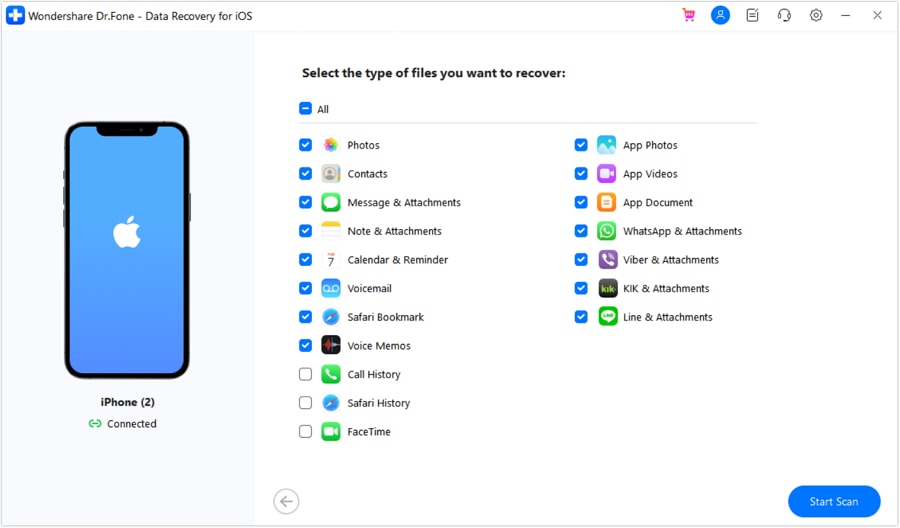
On the subsequent core display screen, you will be heavily prompted to deliberately select specific data categories. Accurately click the precise checkboxes directly beside "Contacts" and "Messages" (or additionally any other data framework types you genuinely wish to heavily retrieve). Once properly highlighted, actively tap the "Start Scan" interface button. The underlying software will instantly deploy its deep-scan memory algorithms to rigorously search your smartphone device's memory chips for deleted string fragments.
-
Step 3 Preview and Execute the Recovery
Once the intensive background scanning protocol is definitively marked complete, you are natively granted the profound ability to closely preview and filter the raw data Dr.Fone has successfully identified inside your smartphone architecture. Utilize the advanced built-in search filters to seamlessly toggle freely between existing files and permanently deleted information. After carefully selecting the specific contact records or messaging elements you truly need, simply tap "Recover to Computer" or dynamically "Restore to Device" to securely finalize the entire extraction operation.
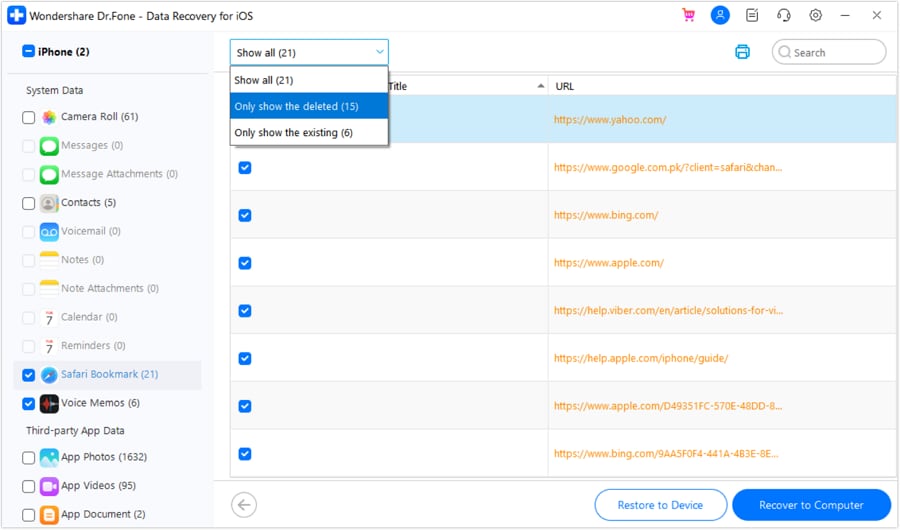
The logically parsed digital lists securely found in the dashboard matrix will structurally display the recovered contacts, SMS textual threads, and other actively chosen elements actively residing on your hardware memory. Additionally, you can effortlessly utilize this dynamic professional software suite to highly selectively restore uniquely isolated data pieces directly from an existing remote iCloud account without strictly ever needing to execute a total system reset on the actual mobile device.
Conclusion
In analytical summary, actively facing unexpected critical contact loss definitely does not rigidly have to operate as a permanent digital catastrophe. There fundamentally exist several deeply proven software pathways to highly effectively retrieve SIM card data from iPhone platforms, prominently including deeply leveraging native standard firmware resets or manually restoring large archives from robust structural iCloud and traditional iTunes backups. While these Apple-certified systemic methods are generally conceptually simple to safely navigate, it is technologically critical to functionally acknowledge that restoring entire monolithic full backups will inevitably physically overwrite your smartphone's actual current existing internal information, primarily as standard smartphone operating systems do not natively provide modular granular recovery choices.
For cautious individuals aggressively seeking a distinctly more versatile, time-efficient, and entirely uncompromising technical method to securely restore contacts from sim card or primary internal NAND storage, utilizing professional elite sim card recovery software like Dr.Fone - Data Recovery (iOS) actively stands out as the most highly recommended technical solution on the broader market. This deeply powerful, globally trusted toolkit architecture effortlessly allows you to safely and selectively extract highly specific communication text threads and vital business contact cards without fundamentally jeopardizing your existing stored files. By fully embracing a purely professional, non-destructive approach to deep digital database extraction, you can structurally guarantee notably high success recovery rates while safely ensuring your absolute most sensitive personal background information fundamentally remains thoroughly isolated, totally private, and exceptionally protected.
FAQ
-
1. Can I recover deleted contacts directly from a physical SIM card without software?
Generally, modern smartphones heavily restrict direct access to the physical SIM card's deleted memory blocks. Once a specific contact is manually deleted from the physical network chip, the corresponding space is immediately marked as writable and easily overwritten. Without leveraging specialized sim card recovery software, it is nearly technologically impossible to confidently retrieve the raw database data manually. -
2. Does Apple natively support selective recovery of just text messages or SIM contacts?
No. Apple’s official iCloud and legacy iTunes backup restorations strictly follow an inflexible "all-or-nothing" foundational rule. If you proactively choose to manually restore a standard iCloud backup, it will completely wipe the existing active device structure and globally replace absolutely everything. To actively achieve granular selective recovery, a powerful third-party software tool like Dr.Fone is unequivocally required. -
3. What is the main functional difference between recovering from an iTunes backup versus iCloud?
An iTunes (or Finder equivalent) database backup strictly relies on physical local storage fundamentally saved on a personal computer's hard drive, often ensuring a significantly faster restoration process primarily via a physical USB cord. Modern iCloud backups inherently rely entirely on dynamic wireless synchronization interacting heavily with Apple servers and fundamentally require a robust active Wi-Fi connection to download the previously securely saved SIM card backup data. -
4. Can a physically corrupted SIM card still be effectively scanned for lost contact data?
If the physical SIM card processing chip is severely structurally physically damaged, heavily water-logged, or literally shattered, conventional software tools simply cannot read it. However, if the active corruption is purely digital software-based (logical file corruption) or basically unresponsive in the general phone UI, highly professional digital extraction tools effectively paired with an external card reader component can frequently completely bypass the software interface block and fundamentally recover the surviving internal file directory.
 Add Wondershare Dr.Fone as a preferred source on Google