Recover photos, messages, WhatsApp, and more — no backup
needed.


 100% Security Verified | No Subscription Required | No Malware

 :

 ChatGPT
 Perplexity
 Gemini
 Claude
 Grok
The venue-plan slide still opens, but the arrow you remember is no longer visible, perhaps covered by a large photograph. The LINE message explaining which entrance to use has disappeared from your Sony Xperia 1 IV too. A flattened image of the slide cannot tell you whether the arrow was deleted, covered or deliberately hidden. Even finding that arrow would not establish which entrance the organizer finally chose.
Dr.Fone - Data Recovery (Android) helps you look for the original local direction and supporting reference material without an earlier chat backup. Read conversations found by scanning, inspect available photos, videos and files, and save useful selected records to your PC. If the native plan survives, the optional object check below can first distinguish a covered element from content that is genuinely absent.
In this article
Before you start
Match Sony Xperia 1 IV, not a different Xperia generation
The approved Sony Xperia 1 IV record lists Kernel 5.10.218; no Android-version restriction is listed for this named model. Keep the IV model and Kernel condition together, without borrowing another generation's support or treating the entry as every firmware. Follow the actual product eligibility and connection prompts.
Protect the original LINE source and prepare Windows
Keep the phone's original LINE installation, login and local storage intact. Do not clear data or cache, reinstall, log out, reset, flash or attempt an unverified Root or bootloader change for recovery. Advanced Recovery is Windows-only. Prepare a USB data cable and a private PC folder; selected found records go to PC rather than back into LINE.
Keep deck changes optional and private
The helper needs a native deck already available in desktop PowerPoint for Windows. Selecting a retained object is different from changing visibility. Only perform the temporary show/hide steps if you may alter that local file and can preserve its intended visibility afterwards; skip them for a shared or automatically saved deck when a change is inappropriate. Neither a presentation nor a LINE backup is required for the phone scan.
Optional: inspect individual objects behind the venue-plan image
Use this with an existing authorized native PowerPoint deck. The Selection Pane exposes objects still stored on a slide, not a deleted slide, an older file version or a missing chat message.
Step 1 Open the slide's object list
In desktop PowerPoint for Windows, open the relevant slide and choose Home > Editing > Select > Selection Pane. Microsoft documents this pane for selecting objects that are difficult to reach on the slide. Read the actual list and select a relevant item once; do not rename, drag, reorder, delete, group or ungroup objects to investigate.
Step 2 Distinguish a listed object from an exposed object
Inspect the selected object's place in the overlapping stack. Microsoft's guidance places a top overlapping object above the lower ones in the pane's list. A selection does not necessarily reveal the content hidden underneath a photograph. An object name is only a list label, not proof that its shape, text or intended entrance matches your memory.
Step 3 Reveal retained content only if a temporary change is appropriate
The documented hide control hides an object while leaving it in the file; the unhide control shows it again. If permitted, temporarily hide the covering object to inspect what lies below, then show that covering object again. If the sought object itself is hidden, show it only for inspection and return it to its original state afterwards. These actions change object visibility: they are not a read-only undelete command. Skip them if preserving or restoring the state is uncertain.
Step 4 Record the actual visual and the remaining instruction gap
Read the arrow, entrance label and any visible qualification actually exposed, without moving elements or changing their content. Keep a covered object, a deliberately hidden object and an absent object as different findings. None explains whether the organizer replaced that direction in LINE. Use the conversation scan for the actual final instruction rather than turning a visible arrow into an agreement.
- A PDF, screenshot or exported slide image does not necessarily contain selectable native objects. Do not assume a hidden layer can be recovered from flattened pixels.
- This is not Hide Slide or See All Slides: those controls concern whole-slide presentation status. It is also not media extraction. Do not present visibility changes as a new phone recovery mechanism or a restored earlier plan.
Covered object, hidden object and missing LINE direction
| What you find | Meaning of that result | Useful action |
|---|---|---|
| The arrow's actual object is listed beneath another element | The native slide retains that object within an overlapping stack. | Inspect it only under suitable access and visibility-change conditions. |
| Content appears after a permitted visibility change | That content existed in the retained deck rather than being recreated. | Restore the intended visibility and keep its role separate from the organizer's instruction. |
| Only a flattened slide image is available | You have the visible pixels of that export. | Do not infer a native object list or unshown arrow from the image. |
| LINE results contain a direction and actual reference files | The scan found local wording or media for review. | Read any replacement or exception, then save useful selected PC copies. |
Common problems and fixes
Selecting the object still leaves it obscured
Selection and visibility are different. Do not drag the object forward or delete the covering photograph just to expose it. Use the documented temporary visibility route only if changing that local deck is appropriate and you can return its state; otherwise skip the helper and continue with LINE recovery.
The arrow appears but the organizer's latest entrance is unknown
Treat the arrow as retained visual content, not the final event instruction. Read actual available LINE wording for a replacement entrance, session-specific condition or response. For an upcoming visit, current organizer confirmation is new guidance, not a recovered historical message.
Only a small plan image is found in LINE Attachments
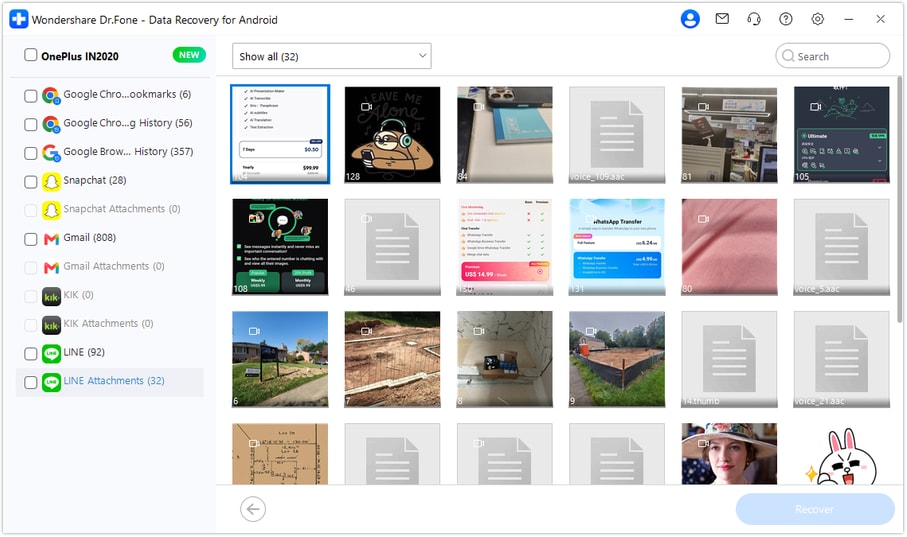
Save a useful image independently, but do not call it an editable PowerPoint deck or promise unshown layers. Inspect LINE conversations for the written landmark and any exception. A thumbnail cannot establish that a full-resolution original or a native presentation remains available.
How to use Dr.Fone - Data Recovery (Android)
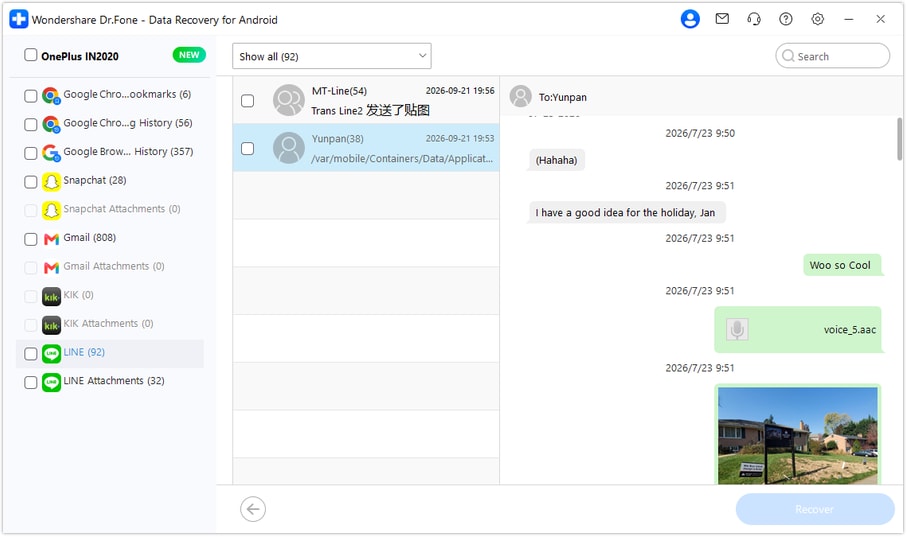
Dr.Fone - Data Recovery (Android) gives supported Sony Xperia 1 IV users a focused route to the LINE wording that a plan's layers cannot explain. Its Windows-only Advanced Recovery mode scans local app data, lets you preview found conversations and browse LINE Attachments separately, and saves selected useful records to PC without an earlier backup. Preserve the actual entrance instruction, usable landmark photos and any found clip or file without rebuilding the plan from memory.
- A local LINE scan can look for the written replacement or condition independently of whether a native presentation survives.
- Separate message and attachment previews help distinguish actual directions from an illustrative plan, photo or video.
- Selective saving keeps the useful PC reference private without inserting records into LINE or changing the deck.
 Scan Android phones and tablets directly.
- Preview and recover only what you want.
- Supports WhatsApp, photos, videos, contacts, and more.
- Works with 6000+ Android devices.

Follow the official Advanced Recovery workflow
Step 1 Enter Advanced Recovery for the Xperia 1 IV
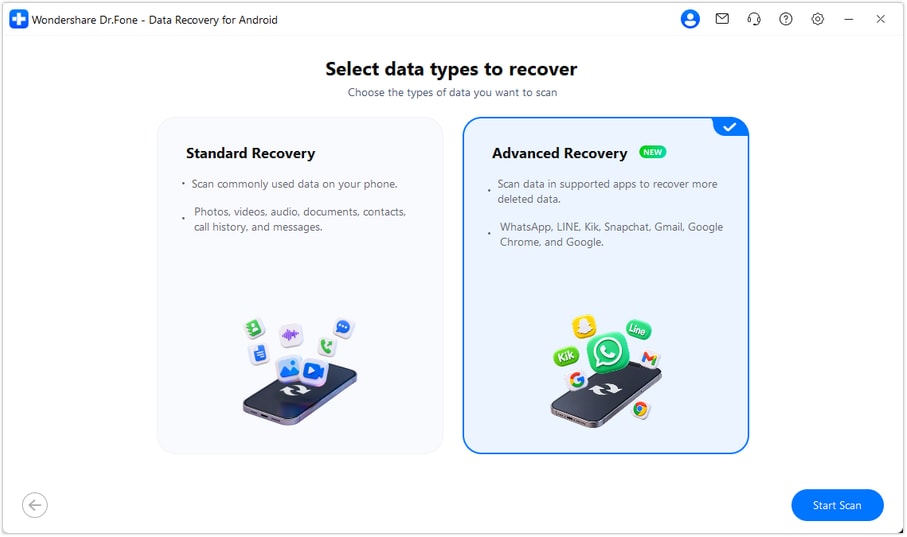
Launch Dr.Fone on Windows and go to Toolbox > Data Recovery. Select Android > Recover Android Data, choose Advanced Recovery and click Start Scan. Connect the supported Sony Xperia 1 IV by USB when prompted and follow the on-screen detection instructions.
Step 2 Choose LINE for the app scan
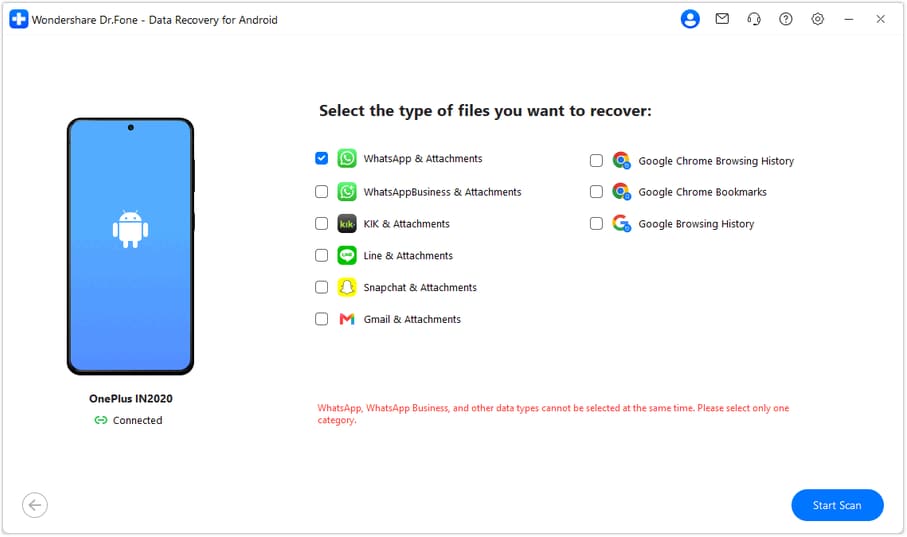
Select LINE among the available app-data categories and click Start Scan. WhatsApp and WhatsApp Business each require a separate scan from the other categories under the guide. Do not extend that specific restriction to every combination of non-WhatsApp categories.
Step 3 Wait with the phone connected
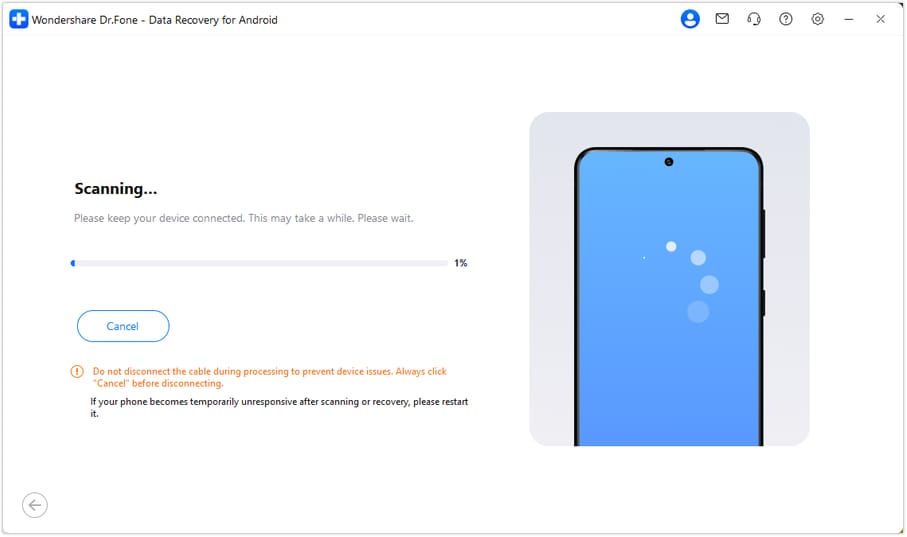
Keep the Xperia 1 IV connected while scanning progresses. If you need to stop, click Cancel before removing the USB cable. If the device becomes temporarily unresponsive after scanning or recovery, follow the restart instruction shown by the product.
Step 4 Read the direction and inspect separate media
Choose LINE in the results sidebar and inspect available conversations for the entrance, session and any later replacement. Use search or filters where offered and select useful records. Open LINE Attachments separately to review actual found photos, videos and files without assuming a plan image contains native hidden objects.
Step 5 Save selected useful records to PC
Click Recover and follow the prompts to choose a computer folder and save your selection. Inspect the output and keep independent presentation material identified separately. The saved PC records are not imported back into LINE, and this mode does not restore a cloud presentation or its earlier object state.




Conclusion
For a supported Sony Xperia 1 IV, Dr.Fone - Data Recovery (Android) helps you inspect original LINE directions, review useful found photos and files, and preserve selected records on your PC. Download the Windows version, connect your compatible phone and start the guided scan for the wording and visual references worth keeping.
FAQ
1. Can I recover deleted LINE messages on Sony Xperia 1 IV without a backup?
Use Dr.Fone - Data Recovery (Android) on Windows to scan a supported Xperia 1 IV, preview actual LINE conversations and attachments, and save selected results to PC without an earlier LINE backup. The exact model entry lists Kernel 5.10.218 with no Android-version restriction for this named model.2. Does hiding a PowerPoint object delete it?
No. Microsoft says a hidden object remains in the file but is not visible. Showing or hiding it changes the document's visibility state, so this guide makes that helper optional and requires suitable authority to make and reverse the temporary change.3. Can the Selection Pane restore an arrow missing from a screenshot?
Not from the screenshot alone. It works with actual objects retained in the native document. A flattened slide image need not contain those objects, and a listed label is not proof of the arrow's contents or the organizer's final direction.4. Can I recover deleted LINE photos, videos or the plan file too?
Review LINE Attachments separately and select actual useful items found by scanning. A usable plan image, native deck and video are different possible files, not interchangeable outcomes. Standard Backup is text-only and needs a suitable earlier copy; Premium Backup is not rollback for manually deleted chats. Selected scan results save to PC, not back into LINE.
 Add Wondershare Dr.Fone as a preferred source on Google