Recover photos, messages, WhatsApp, and more — no backup
needed.


 100% Security Verified | No Subscription Required | No Malware

 :

 ChatGPT
 Perplexity
 Gemini
 Claude
 Grok
An exhibition checklist can still list a borrowed book while the LINE message saying 'display only, not for exchange' is missing. Finding the spreadsheet would help identify the item, but its row alone may not contain the owner's qualification. To recover deleted LINE messages on OPPO Find N2 without a backup, look for the actual instruction and any useful reference files as separate results.
Dr.Fone - Data Recovery (Android) gives a supported Find N2 a way to scan LINE app data, preview available conversations and photos, videos or files, and save selected records to a Windows PC. If you already made the linked checklist available offline in Google Drive, you can inspect that existing source too. The important distinction is practical: a document opening inside Drive is not automatically a standalone download or an attachment stored in LINE.
In this article
Before you start
Keep the exact Find N2 model and Kernel
No Android-version restriction is listed for this named OPPO Find N2 model in the supplied support record; its listed Kernel is 5.10.236. Do not extend that entry to another Find N model or replace its conditions with the Find X8 Pro's. Note the identifiers shown on your phone. Ask Dr.Fone support if they differ or Advanced Recovery is not displayed, without changing firmware.
Preserve LINE and prepare Windows saving
Advanced Recovery is Windows-only and saves selected discoverable data to PC, not back into LINE or Drive. Prepare a USB data cable and a private computer destination. Keep the existing LINE installation and signed-in state; do not log out, reinstall, clear storage, reset, flash firmware or unlock the bootloader. Follow authorised product connection and access prompts, not an unverified Root procedure.
Use only an already-accessible independent Drive file
The optional check is for a document already saved for offline access in an authorised Drive, Docs, Sheets or Slides app. It is not a request to create a new offline copy, widen sharing permissions or extract protected app storage. No Drive file or LINE backup is required for the local LINE scan. The Find N2's folding design does not create an additional recovery mechanism.
Inspect an existing Drive Offline checklist without treating it as LINE media
You already used Drive's offline availability for the linked document and want to read the reference that remains. Skip this check if the only surviving item is a LINE URL and no accessible independent file exists.
Step 1 Open the app's actual Offline list
In the authorised Google Drive, Docs, Sheets or Slides app already in use, tap Menu > Offline. Google's Android instructions use this route to find files saved for offline access. Look for the actual checklist, not merely the message that once linked to it.
Step 2 Read the existing accessible file without editing
Open the listed file if available and inspect its title, item row and displayed notes. Leave the contents and offline setting unchanged. Do not edit the checklist, turn connectivity off as a test or make another file available offline to imitate an earlier copy. Use what the app actually displays.
Step 3 Distinguish app-managed access from a downloaded attachment
Opening a file through Drive Offline does not establish that a separate PDF or spreadsheet was downloaded into ordinary phone storage, or that LINE stored the linked file as an attachment. Do not search protected cache directories or promise the LINE scan can export Drive's offline storage. If you separately saved an actual ordinary file earlier, treat that as another independent reference.
Step 4 Compare the checklist entry with the missing private qualification
Record what the visible item row actually says. An item on a checklist does not establish whether the owner offered it for exchange, allowed display only or changed the arrangement later in LINE. Review actual found LINE wording for that qualification, then inspect LINE Attachments separately for any available cover photo, display clip or file.
- Offline availability is an existing access state, not a dated revision archive. Do not call the displayed file the exact version used at the time of the missing LINE message unless a separate source establishes that.
- If the file is absent or will not open, stop this optional check without changing permissions, clearing app data or trying to bypass access controls. Missing Drive access and missing local LINE records are different problems.
A linked checklist is not automatically a recoverable LINE attachment
| What you have | Useful action | What it means for recovery |
|---|---|---|
| An actual file in Drive's Offline list | Read the existing accessible checklist without editing | An independent document reference, not an undeleted LINE thread. |
| Only a LINE link to a Drive file | Keep the link separate from actual file availability | A URL does not establish a downloaded spreadsheet or attachment. |
| A separately downloaded ordinary file | Read that real file as its own source | It differs from app-managed offline access and may contain different content. |
| Found LINE wording about display or exchange | Read the owner's qualification and any later reply | The actual text can clarify the missing arrangement. |
| Found cover photos, clips or other files | Preview LINE Attachments and save useful matches | Visual identification remains useful even when it cannot supply the private qualification. |
Common problems and fixes
The checklist opens in Drive, but LINE Attachments does not show it
A linked file available inside Drive need not have been stored as a LINE attachment. Keep the document as an independent reference and inspect the conversation results for the owner's words. Do not interpret that attachment absence as a reason to clear Drive, copy cache files or broaden the scan into an unsupported cloud-file extraction.
The item row survives, but its display-only status is unclear
Do not infer exchange permission from the item's presence in the list or from a cover photo. Look for the actual qualification and later response among the found LINE messages. Save useful text and media selectively; if a present-day arrangement is needed, obtain a fresh owner confirmation and keep it separate from recovered historical wording.
How to use Dr.Fone - Data Recovery (Android)
Dr.Fone - Data Recovery (Android) helps a supported OPPO Find N2 look for the LINE instruction that an accessible checklist may not contain. Its Windows-only Advanced Recovery mode scans local LINE app data without a pre-existing backup, presents conversations and attachments for separate review, and saves selected discoverable records to PC. You can concentrate on the owner's actual qualification, inspect found identifying media, and keep only the useful references instead of unrelated results.
- Conversation preview helps identify actual display-only wording rather than inferring it from a document row.
- Separate LINE Attachments review lets you inspect available photos, videos and files without confusing a cloud link with local media.
- Selective PC recovery preserves useful text and visual references outside the phone without rewriting the live checklist.
 Scan Android phones and tablets directly.
- Preview and recover only what you want.
- Supports WhatsApp, photos, videos, contacts, and more.
- Works with 6000+ Android devices.
Follow the official Advanced Recovery workflow
Step 1 Start Advanced Recovery for the Find N2
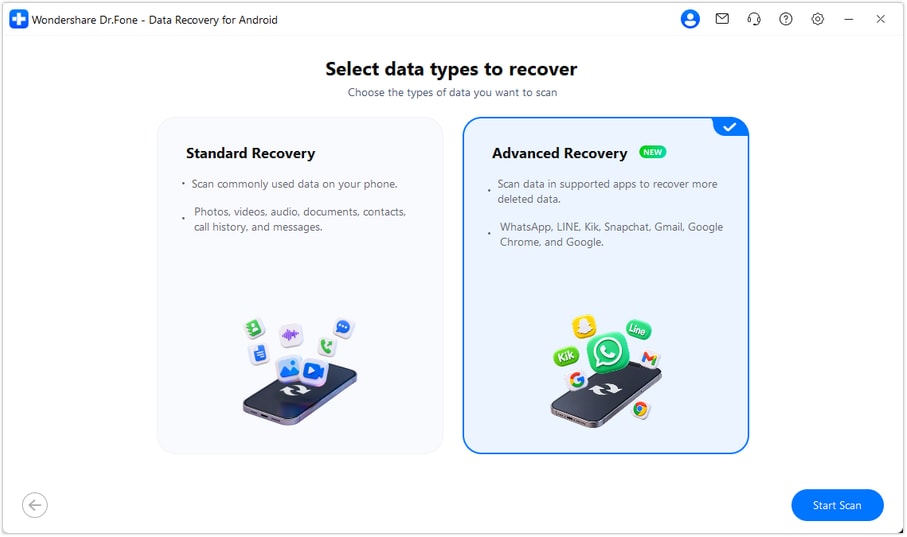
Launch Dr.Fone on Windows and open Toolbox > Data Recovery. Choose Android > Recover Android Data, select Advanced Recovery and click Start Scan. Connect the supported OPPO Find N2 by USB when prompted and follow the on-screen instructions until the device is detected.
Step 2 Select LINE for the local app-data scan
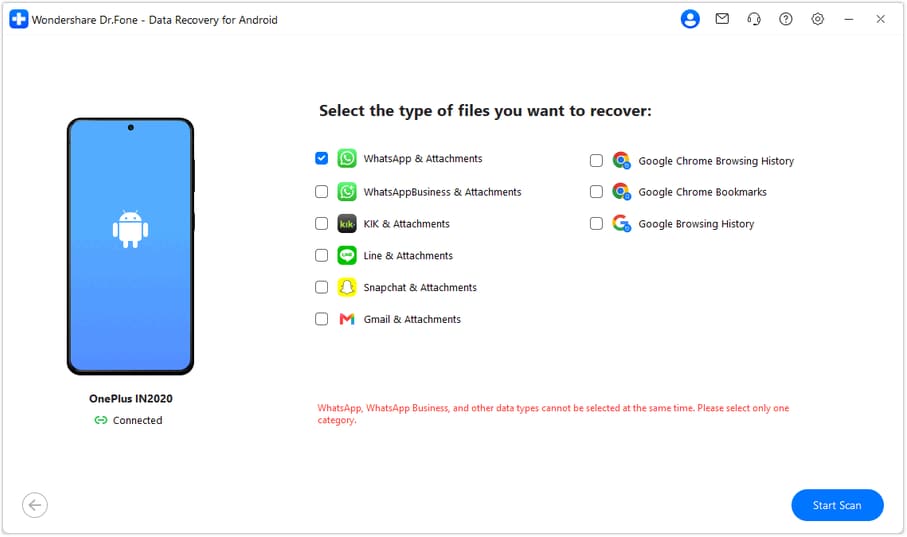
Choose LINE from the available categories and click Start Scan. This selection scans supported LINE data, not a remote Drive checklist or its protected offline storage. WhatsApp and WhatsApp Business each require a separate scan from the other categories and are not needed for this task.
Step 3 Let the scan finish with the phone connected
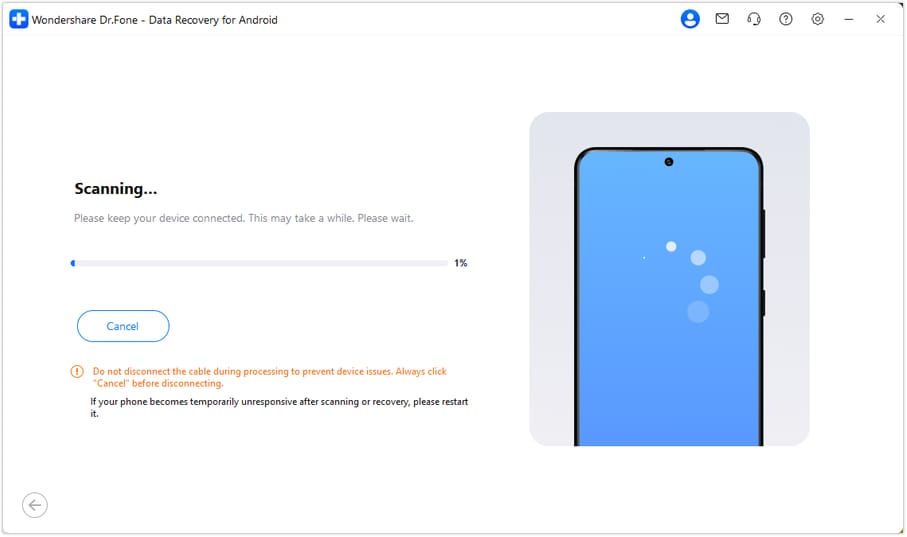
Keep the phone connected during scanning. If you must stop, click Cancel before removing the cable. If the device is temporarily unresponsive after scanning or recovery, follow the product's on-screen restart instructions.
Step 4 Preview the owner's instruction and found attachments
Choose LINE in the results sidebar and inspect available conversations for the item and display-only qualification. Use search and filters where offered. Then choose LINE Attachments separately to browse found photos, videos and files, selecting useful actual results rather than treating a Drive URL as an exported spreadsheet.
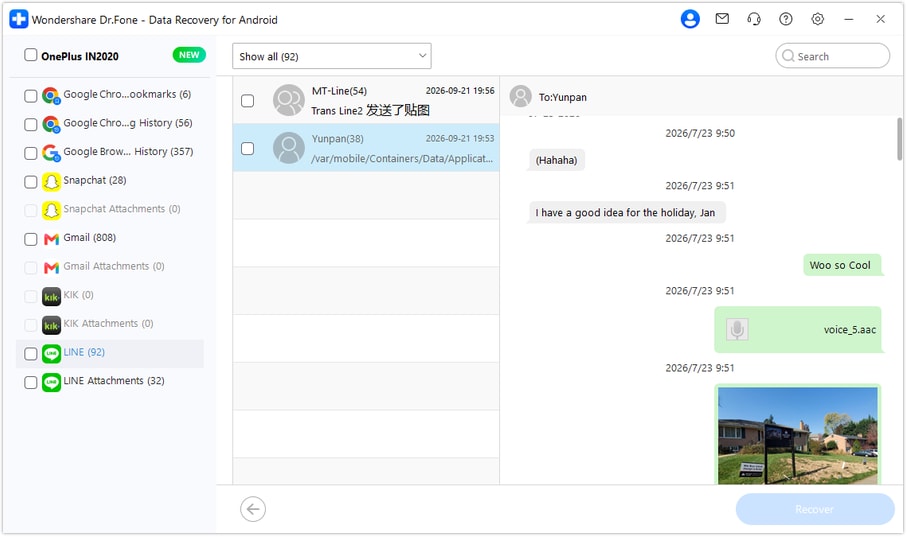
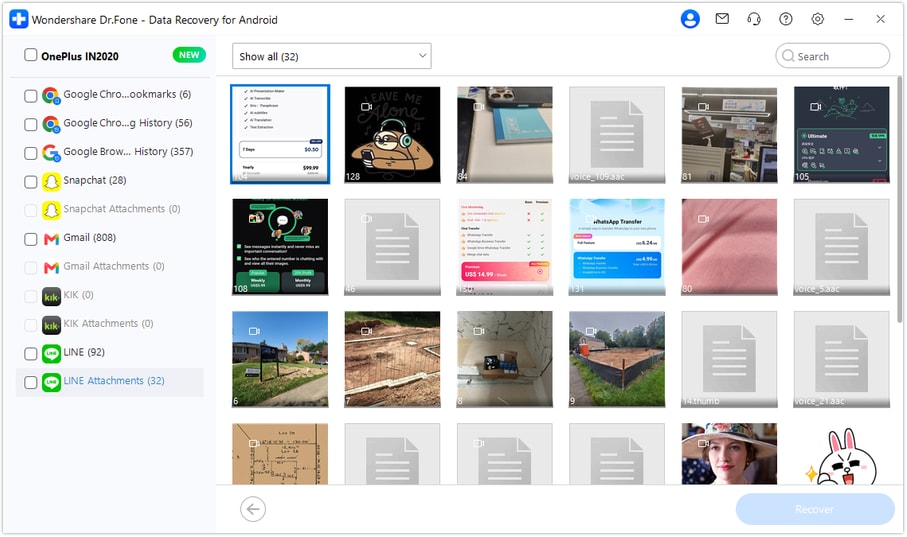
Step 5 Recover the selected useful records to PC
Click Recover, choose a computer folder through the prompts and finish saving. Open the selected output to check its readable text and available files. The process saves PC copies of discovered results; it does not repopulate LINE or alter Drive's file, sharing or offline state.




Conclusion
Dr.Fone - Data Recovery (Android) offers a supported OPPO Find N2 a focused no-backup route for the missing LINE context behind a surviving checklist. Preview actual conversation results, inspect relevant identifying photos and files, and save selected useful records to your PC. Download Dr.Fone for Windows and start Advanced Recovery to keep the wording and references that explain the arrangement.
FAQ
1. Can I recover deleted LINE messages on OPPO Find N2 without a backup?
Dr.Fone - Data Recovery (Android) provides a local scan for the listed Find N2 configuration. No Android-version restriction is listed for this named model, with Kernel 5.10.236 retained as its supplied condition. On Windows, scan LINE in Advanced Recovery, preview available conversations and attachments, then save selected discoverable records to PC.2. Does making a Drive file available offline create a LINE backup?
No. It makes that independent file available through the supported Google app. It does not back up LINE conversations or establish that a separate attachment was downloaded. This article only inspects an existing accessible Offline file and does not ask you to create or extract one.3. Can Dr.Fone extract the offline spreadsheet from Drive in this workflow?
The LINE workflow does not promise extraction of Drive's app-managed offline storage or a protected cloud file. It scans supported local LINE data and saves only available results. A found link is not the spreadsheet itself; review an authorised accessible document separately and inspect LINE Attachments only for actual found files.4. Can I use Standard Backup or Premium Backup to restore the deleted instruction?
Standard Backup is text-only and same-OS, requiring a suitable copy from before deletion for native restoration. A Standard backup made after manual deletion cannot undo it, and Premium Backup does not roll back manually deleted chat history. The separate device scan does not require either backup and saves found records to PC rather than back into LINE.
 Add Wondershare Dr.Fone as a preferred source on Google