Recover photos, messages, WhatsApp, and more — no backup
needed.


 100% Security Verified | No Subscription Required | No Malware

 :

 ChatGPT
 Perplexity
 Gemini
 Claude
 Grok
The running-order sheet still opens, but the LINE message saying whether to use the alternate closing piece is gone from your Vivo X200. A rehearsal clip and a programme draft may survive while the final choice and transition instruction are missing. Reconstructing the plan from whichever file opens first could confuse a candidate with the selected performance.
Dr.Fone - Data Recovery (Android) offers a focused next step without needing an earlier LINE chat backup. Its Windows-only Advanced Recovery mode searches supported local app data, lets you read the conversations it finds and inspect available media separately, then saves selected records to PC. You can look for the actual choice, keep useful rehearsal references and avoid treating an old spreadsheet tab as the final instruction.
In this article
Before you start
Use the base Vivo X200 support condition
The approved Vivo X200 entry lists Kernel 6.6.89 and no Android-version restriction for this named model. This is the base X200, not the X200 Pro or Ultra with their own records. Keep your current model, Android and Kernel information ready; do not change firmware or infer support for another variant from the name.
Preserve the local LINE source
Prepare Windows, a reliable USB data cable and a writable PC folder. Leave LINE installed, logged in and with its storage intact. Do not clear storage, reinstall, log out, reset the phone or unlock the bootloader while trying to retrieve deleted records. Follow Dr.Fone's displayed access instructions rather than a guessed Root procedure.
Separate alternatives, choices and transitions
Note the group, approximate performance date and the precise missing item: selection of the closing piece, its place in the order or the transition wording. A hidden existing chat or sheet is retained content, while a manually deleted LINE exchange needs a different recovery route. Advanced Recovery saves selected discoverable results to PC, not back into LINE or the live running-order workbook.
Optionally reveal a hidden reference sheet in an authorised workbook
Use this only for an existing Google Sheets workbook you own or already have permission to edit. It can expose a retained alternative sheet, not restore deleted LINE text, and it is not a backup prerequisite.
Step 1 Distinguish a hidden sheet from a missing file
Open the native workbook on a computer. Google distinguishes hiding a sheet from protecting it: editors can unhide existing sheets. This check is about a whole worksheet tab, not a row filter, a cell search or historical edits.
Step 2 Use View to show the relevant existing sheet
If authorised and appropriate, click View > Show [name], then select the sheet you want visible. Google says this option is grayed out when there are no hidden sheets. Unhiding changes the workbook's sheet visibility; skip the action if changing a shared workbook is inappropriate. Do not alter permissions, publish a copy or bypass a restricted view.
Step 3 Read the sheet's role before treating it as the final order
Inspect the actual headings and entries. A sheet named Alternatives may retain rehearsal choices or old calculations rather than the accepted programme. Google notes that hidden sheets can remain hidden through certain exports and imports, so an exported file is not proof that the original workbook lacked them. Continue to the LINE scan for the actual selection and any later replacement.
- Showing a retained sheet does not restore a deleted sheet, identify a historical decision-maker or recover a missing chat.
- No workbook, downloaded programme or rehearsal file is required for the local LINE scan.
Turn available performance records into useful references
| What you find | What it can supply | What it cannot settle alone |
|---|---|---|
| A retained alternative worksheet | The entries currently stored in that sheet | That an alternate was selected rather than merely rehearsed |
| A found LINE selection message | The piece and conditions actually stated in the exchange | A later transition or replacement that is absent from the result |
| A programme photo or document | The order and labels visible in that particular version | That the printed draft reflects every later instruction |
| A usable rehearsal video | The performance material and sequence actually captured | That a rehearsed transition became the final plan |
Common problems and fixes
The workbook has a candidate list but no clear final choice
Keep the candidate list as a reference and review LINE results for explicit selection, replacement and qualifying wording. Do not infer the final choice from tab order, a colored cell or a familiar filename. Preserve useful actual messages even if the whole discussion is unavailable.
View does not offer a hidden sheet to show
Google says the show option is grayed out when the workbook has no hidden sheets. It does not expose a deleted tab or another person's inaccessible workbook. Skip this optional route rather than creating copies, changing protection or assuming that the local LINE scan has the missing cloud sheet.
A clip is recovered but the transition instruction is absent
Inspect LINE separately from LINE Attachments. A playable rehearsal can remain useful without proving the chosen running order. Review any actual text for the named piece and transition, and keep a new organizer clarification separate from the historical records saved to PC.
How to use Dr.Fone - Data Recovery (Android)
Dr.Fone - Data Recovery (Android) helps you search for the conversation that separates a rehearsal alternative from a chosen performance item. Its Windows-only Advanced Recovery workflow scans supported Vivo X200 local LINE data without a previous chat backup, provides conversation and separate attachment previews, and saves selected results to PC. You can retain useful decision wording, programme references and found clips without replacing the live workbook.
- Read discoverable LINE messages for an actual selection, later replacement or transition condition.
- Review found photos, videos and files in LINE Attachments as independent performance references.
- Select useful text and media for PC saving instead of keeping unrelated discussions or changing the running order.
 Scan Android phones and tablets directly.
- Preview and recover only what you want.
- Supports WhatsApp, photos, videos, contacts, and more.
- Works with 6000+ Android devices.
Follow the official Advanced Recovery workflow
Step 1 Connect the Vivo X200 through Advanced Recovery
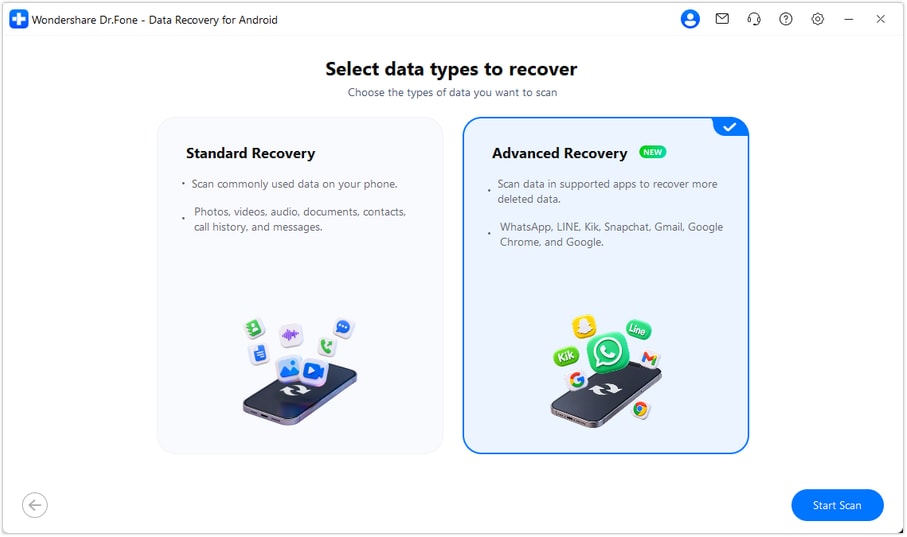
On Windows, open Dr.Fone and choose Toolbox > Data Recovery. Select Android > Recover Android Data, choose Advanced Recovery and click Start Scan. Connect the supported Vivo X200 by USB when prompted and follow the directions until the phone is detected.
Step 2 Choose LINE data for scanning
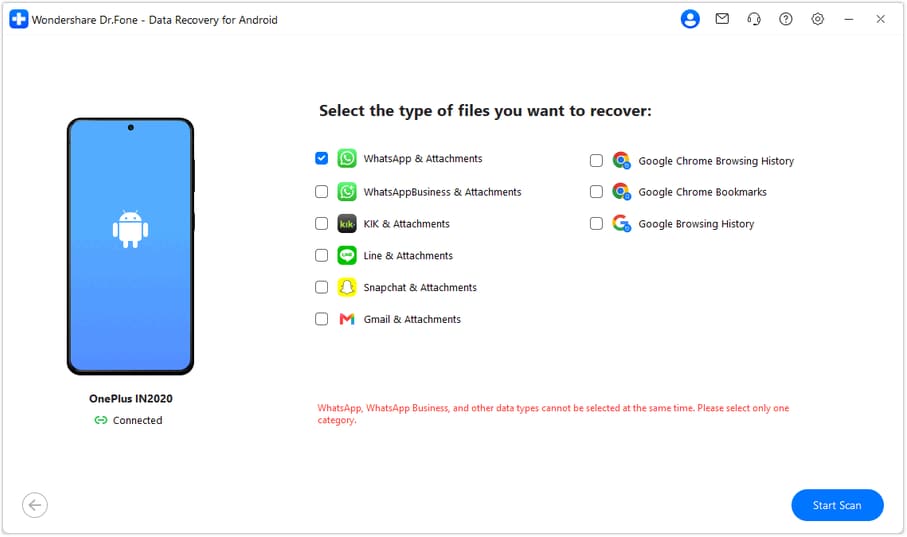
Select LINE from the available app-data categories and click Start Scan. This is a local phone-data search, not a request for access to the running-order workbook or a restore from a chat backup.
Step 3 Let the scan finish before disconnecting
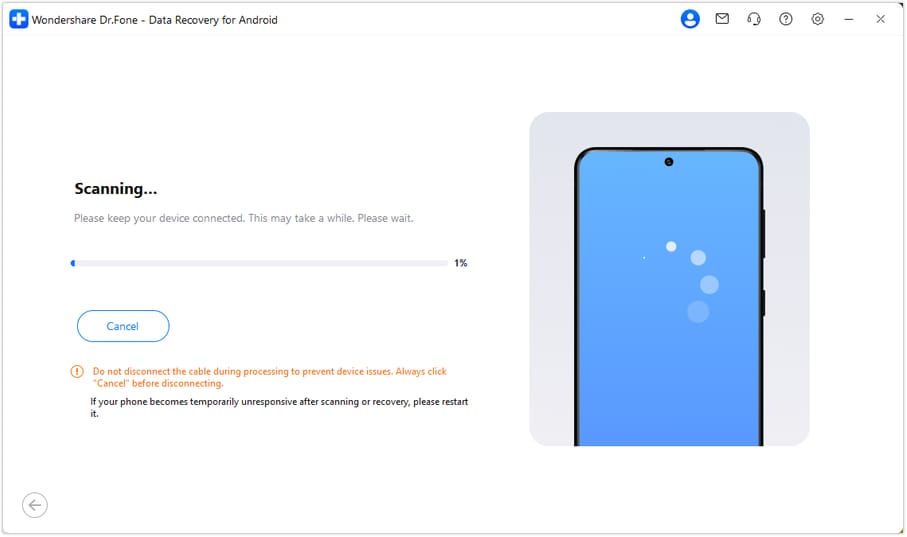
Keep the USB connection stable while Advanced Recovery scans. If you need to stop, click Cancel before unplugging the cable. Follow the product's displayed restart instruction if the phone becomes temporarily unresponsive after scanning or recovery.
Step 4 Inspect actual choices and found performance attachments
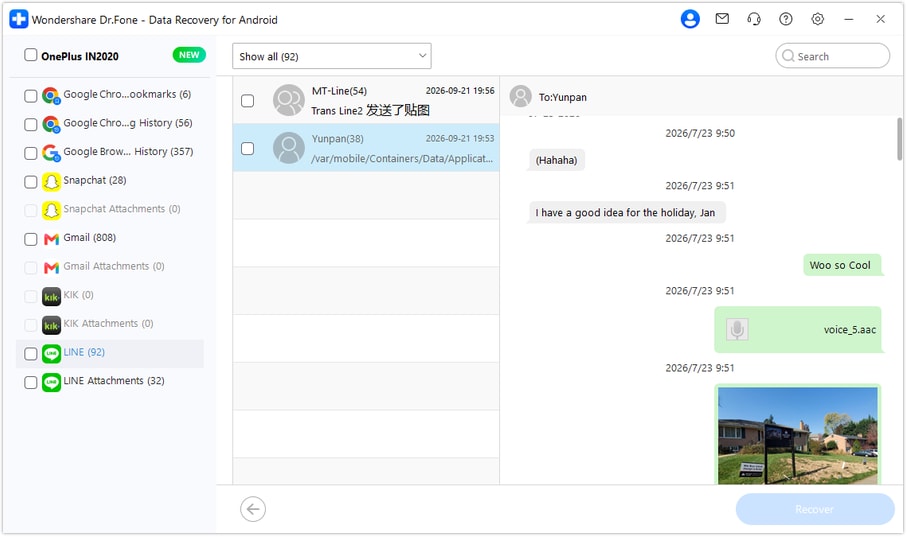
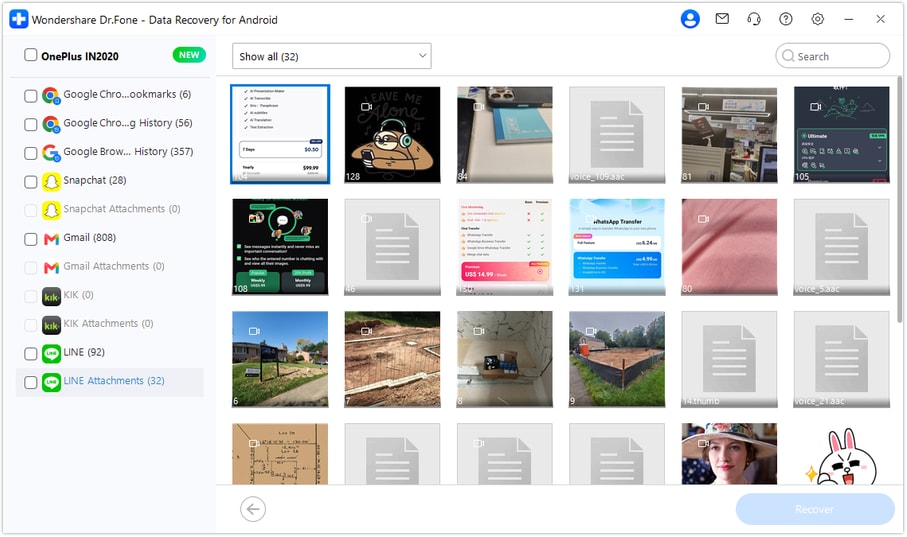
Choose LINE in the sidebar and read the available group conversation, using search and filters where provided. Look for actual selection or replacement wording. Select LINE Attachments separately to browse found photos, videos and files, then select the useful messages and usable reference material.
Step 5 Recover the selected performance records to PC
Click Recover and choose a computer folder through the on-screen prompts. Complete the save and open the output to inspect the selected instruction and references. The results are PC copies, not a rebuilt LINE chat or an update to the programme.




Conclusion
For a lost running-order exchange on a supported Vivo X200, Dr.Fone - Data Recovery (Android) helps you look for the actual decision, preview available rehearsal and programme attachments, and keep selected useful records on PC. Download Dr.Fone for Windows and start the guided scan to recover more context than a candidate list can provide.
FAQ
1. Can I recover deleted LINE messages on Vivo X200 without a backup?
Dr.Fone - Data Recovery (Android) offers a local scan for supported Vivo X200 data without an earlier LINE backup. Retain the exact-model Kernel 6.6.89 condition, use Advanced Recovery on Windows and save selected found conversation and attachment results to PC. No Android-version restriction is listed for this named model.2. Does unhiding a Google Sheets tab restore my deleted LINE instruction?
No. View > Show [name] reveals an existing hidden worksheet when you have appropriate editing access. It changes worksheet visibility, not LINE history. The retained entries may help identify a candidate, but the original choice or exception still needs actual conversation wording.3. Can I make a LINE backup now to recover the deleted group history?
LINE requires a suitable Standard Backup from before the manual deletion. Standard Backup saves text only and supports same-OS transfer; a new Standard copy or Premium Backup does not undo that manually deleted history. This article's no-backup route scans the supported phone instead.4. Will the scan restore every programme file and rehearsal video?
Only actual discoverable results can be selected. Review LINE Attachments for usable photos, videos and files, independently of message text. Output is saved to PC rather than imported into LINE, and expired originals or missing files with no discoverable local data are not guaranteed.
 Add Wondershare Dr.Fone as a preferred source on Google