Effortlessly manage data through preview, delete, export, etc.

 100% Security Verified | No Subscription Required | No Malware

 :
: 
 ChatGPT
 Perplexity
 Gemini
 Claude
 Grok
Grok

I thought my Android-to-PC transfer was done, deleted the originals, and only later noticed some folders never copied because the connection dropped mid-way.
Reddit user, r/Android
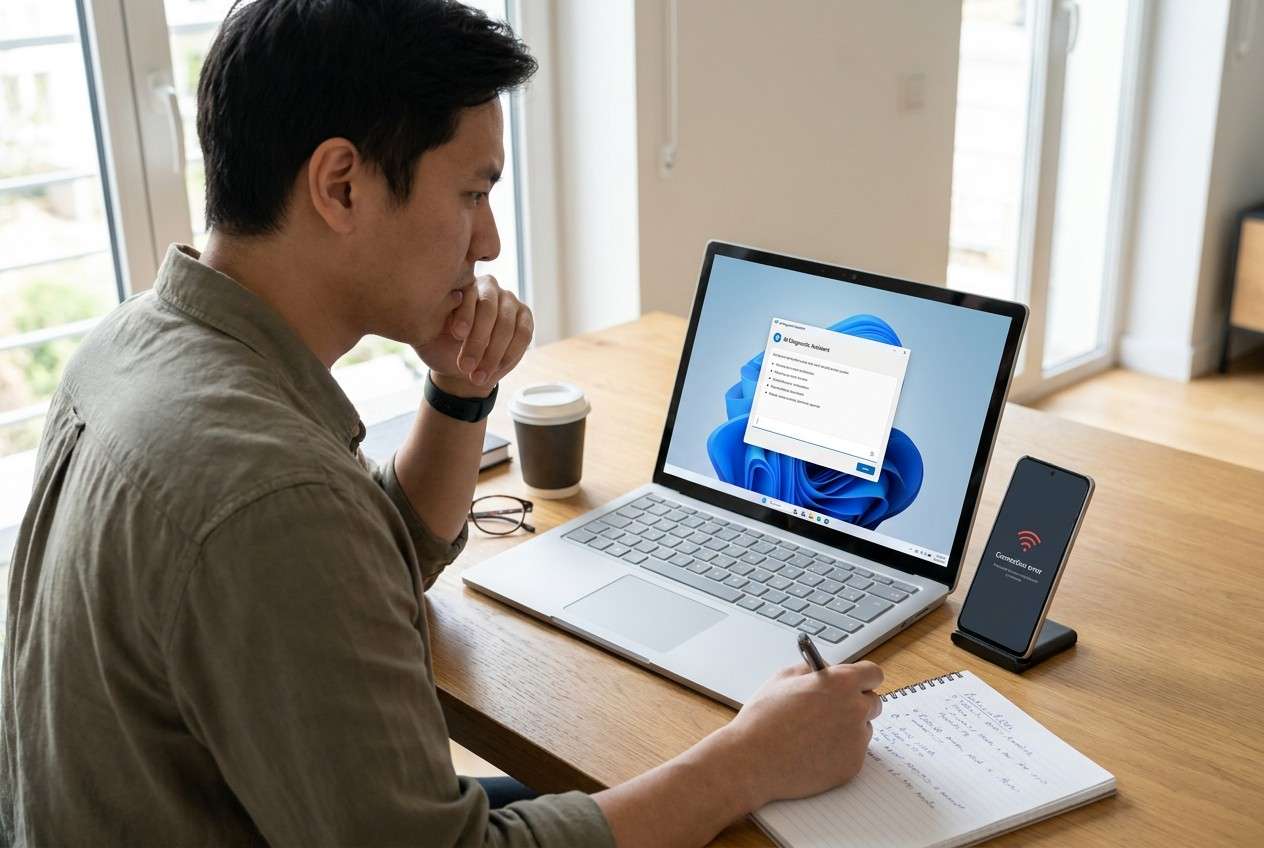
Missing one step in an Android-to-Windows workflow can cause silent data loss, duplicate files, broken folder structures, or overwritten media you can’t easily recover. AI helps by turning a vague goal (“move my photos and chats to my PC”) into a clear sequence with prerequisites, decision points, and verification checks before you touch anything risky. But AI can’t see your phone’s real storage state, cable stability, permission prompts, or encryption settings—so execution still requires real tools once the plan is verified.
In this article
- How to plan an Android-to-Windows workflow safely
- What usually gets skipped
- Point-of-no-return actions
- Order and verification mindset
- Scope definition
- What the AI needs to know
- AI prompts to build a safer workflow
- AI plan vs real device constraints
- Execute safely with Dr.Fone
Part 1. How to Plan Better Workflow Between Android Phone and Windows PC Without Missing Critical Steps
You’re trying to move or sync data between an Android phone and a Windows PC—photos, videos, documents, maybe messages—while keeping timestamps, folder structure, and duplicates under control.
You might get an AI answer that lists options (USB, cloud, Bluetooth), but it often skips the exact order: what to check first, what to back up before changing anything, and how to confirm results.
One concrete point-of-no-return moment is any action that deletes originals (e.g., “move” instead of “copy,” emptying DCIM, formatting an SD card, or resetting the phone) before you’ve verified the PC copy is complete and usable.
Part 2. What the AI Needs to Know
Share the minimum details needed to build a safe, verifiable plan:
- Android model + Android version (e.g., Galaxy S21, Android 14)
- Windows version (e.g., Windows 11)
- What data types (photos/videos, downloads, WhatsApp, contacts, documents)
- Your goal: one-time transfer, ongoing sync, or full backup + restore
- Current storage situation (phone storage free space; PC free space)
- Connection options you can use (USB cable, Wi‑Fi, external drive)
- Any constraints (work device policy, broken screen, unstable port, encryption, no SIM)
- Your risk tolerance (must preserve metadata; cannot risk overwriting; need audit trail)
Part 3. Using AI Prompts to Build a Safer Android-to-Windows Workflow
Use the prompts below to make the AI produce a workflow you can actually follow and verify.
3-1. Level 1: Basic Prompt
I need a safe workflow to transfer data from my Android phone to my Windows PC without losing anything or creating duplicates.
Please give me a step-by-step plan with the right order and a short checklist to confirm success before I delete anything.
3-2. Level 2: Advanced Prompt
Design a workflow for Android → Windows that is split into Preparation / Execution / Verification.
Mark steps as Critical vs Optional, and include decision points (e.g., USB vs Wi‑Fi, copy vs move) and what I should verify before any irreversible action.
3-3. Level 3: Evidence Prompt
Create a safe, verifiable workflow for my situation: Android (Pixel 7, Android 14) to Windows (Windows 11), transferring photos/videos (DCIM), Downloads, and app documents.
I have 40 GB free on PC, 8 GB free on phone, and a USB cable that sometimes disconnects.
Include: (1) checks before starting, (2) checks during transfer (spot-checking counts/sizes), (3) checks after transfer (integrity, duplicates, metadata), and an explicit “do not proceed” gate before any deletion/reset/cleanup.
Also list common failure modes (MTP errors, permission prompts, partial transfers) and how to detect them.
3-4. Prompt Refinement
Output the workflow as a table with columns: Step, Goal, Exact Action, What Could Go Wrong, How to Verify, Stop If.
Separate instructions for Photos/Videos, Documents, and App-specific data so I don’t mix methods that cause duplicates.
Add a “file identity” strategy: how I should compare results (file counts per folder, total size, spot-check random samples, timestamp checks) before deleting anything.
Include a rollback plan if I realize I copied the wrong folders or overwrote files (what to stop, what to preserve, what evidence to capture).
Part 4. AI Plan vs. Real Device Constraints
| Planning element (AI) | What reality can break (Device/PC) |
|---|---|
| “Copy these folders” | MTP disconnects, permission prompts, locked screen interruptions |
| “Preserve metadata” | Some transfer paths alter timestamps or strip info |
| “Avoid duplicates” | Mixed methods (USB + cloud) can re-import the same items |
| “Verify completion” | Hidden files, partial folder reads, or skipped items without obvious errors |
AI improves planning and verification logic, but it cannot perform transfers, detect real-time device errors, or confirm what actually landed on your PC.
4-1. When to Stop Planning and Start Execution
- You have a single chosen method (USB/MTP, Wi‑Fi transfer, or backup tool) and you’re not mixing paths without a reason.
- You know exactly which folders/data types are in scope and where they will land on the PC.
- Your verification checklist is defined (counts, sizes, spot checks, metadata checks) and you’re willing to pause if results don’t match.
- You have clearly marked the irreversible step you will not do until verification is complete (delete originals, factory reset, format SD, “move” operations).
Once those are true, planning is done and the next risk is delay-driven confusion—so switch to controlled execution.
Part 5. Better Workflow Between Android Phone and Windows PC: Execute the Workflow Safely with Dr.Fone
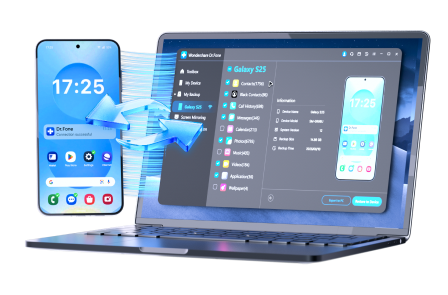
Execution now matters because most failures happen mid-transfer (disconnects, partial copies, wrong targets), and the only reliable prevention is a tool-driven run plus verification before cleanup. If you want an execution layer that supports a controlled workflow, start with Dr.Fone Basic - Screen Mirroring.
 Easily manage data through preview, delete, export, etc.
- Transfer all data between devices.
- Robust backup solutions for reliable data protection.
- Mirror screens to PC for meetings, teaching, and control.
-
Step 1 Prepare a protected target and a no-delete rule
Create a dedicated folder on the PC (for example, Android_Backup_2026-06-02) and commit to copy-only until verification is complete.
Limitation: AI can’t confirm your free space, folder path, or whether you accidentally chose “move” somewhere.

-
Step 2 Run the transfer/backup in Dr.Fone (execution layer)
Use Dr.Fone to perform the planned backup/transfer between the Android device and Windows PC according to your chosen scope (photos/videos/documents/etc.).
Limitation: AI cannot operate Dr.Fone, respond to device permission prompts, or keep the connection stable for you.

-
Step 3 Verify results before any irreversible cleanup
Compare folder counts/sizes, open a random sample of files (including recent and older items), and confirm timestamps/organization meet your requirements.
Limitation: AI can suggest what to check, but it can’t inspect the actual files on your PC or prove the transfer is complete.

-
Step 4 Only then do cleanup (deletes, moves, resets)
After verification is complete, you can consider deleting originals or doing storage cleanup—never before the checks pass.




Conclusion
Use AI to define scope, order, risk gates, and verification checks; then use a real execution tool like Dr.Fone to run the transfer/backup and validate results before any irreversible cleanup.
FAQ
-
Can I delete files from my phone right after I see them on the PC?
No—visibility isn’t verification. Confirm counts, sizes, and open a spot sample (including recent items) before deleting anything. -
What’s the most common “silent failure” in Android-to-Windows transfers?
Partial transfers caused by MTP interruptions or permission/lock-screen issues, where some folders copy and others silently skip or stop early. -
How do I reduce duplicates if I’ve already used multiple methods (USB + cloud)?
Pick one “source of truth” dataset, transfer into a dated folder, and verify with counts/sizes and spot checks before merging; avoid re-importing the same camera folders twice. -
When should I consider a tool-based backup instead of manual drag-and-drop?
If you need repeatability, better handling of interruptions, clearer scoping (by data type), or a safer path that reduces human error during execution. -
What is the biggest point-of-no-return step to avoid too early?
Any action that removes originals or changes the device state—deleting DCIM/Downloads, emptying trash, formatting storage, or factory reset—before verification is complete.
 Add Wondershare Dr.Fone as a preferred source on Google