Effortlessly manage data through preview, delete, export, etc.

 100% Security Verified | No Subscription Required | No Malware

 :
: 
 ChatGPT
 Perplexity
 Gemini
 Claude
 Grok
Grok
What is Action Mode? Action Mode is an iPhone Camera feature that records video with extra-strong stabilization to reduce shake during fast movement. It’s designed for scenarios like running, handheld walking shots, or filming from a moving vehicle, where standard stabilization may still look bouncy.
In plain English: Action Mode helps your iPhone video look smoother when you can’t hold the phone perfectly steady. One key takeaway: it trades some low‑light performance and may limit certain video settings to prioritize steadiness.
In this article
- Part 1. What Action Mode is used for: core uses & scenarios (Why it matters)
- Part 2. How Action Mode works: official working logic (How it works, non-technical + technical-lite)
- Part 3. Where to find Action Mode: settings paths and entry points (Where to find it)
- Part 4. How to use, enable, disable, or check Action Mode
- Part 5. Requirements and compatibility
- Part 6. Action Mode vs related concepts
- Part 7. Common issues and misconceptions
- Part 8. Security, privacy, and compliance notes
Part 1. What Action Mode is used for: core uses & scenarios (Why it matters)
Core uses and real-world scenarios
Action Mode matters because shaky video can be distracting and harder to watch, especially when you’re moving quickly. It gives creators and everyday users a simple way to capture more "gimbal-like" footage without extra gear.
- Filming while running with your phone in hand (sports, pets, kids)
- Walking-and-talking vlogs where footsteps normally cause bounce
- Capturing action scenes (skateboarding, biking, amusement rides)
- Recording travel clips from a moving car or bus (as a passenger)
- Shooting quick handheld B-roll without setting up a stabilizer
Who needs it most
Everyday users benefit when recording family moments on the move. Content creators and vloggers use it for smoother handheld sequences. Parents often rely on it for unpredictable, fast kid movement. Travelers and outdoor enthusiasts use it when filming while walking, hiking, or riding. (For enterprise/IT teams, it’s usually less critical unless camera quality is part of a workflow.)
Part 2. How Action Mode works: official working logic (How it works, non-technical + technical-lite)
Plain explanation
Action Mode stabilizes video by intentionally capturing a wider view than you ultimately see, then dynamically "reframes" the video to keep the subject centered and reduce shake. As you move, the iPhone uses sensor and motion data to compensate, smoothing the camera path in real time.
Key components
- Cropping/reframing headroom: The camera captures extra image area so the final frame can shift around to counter movement.
- Motion sensors (gyro/accelerometer): Movement data helps the iPhone predict and correct shake more effectively.
- Real-time processing: The iPhone applies stabilization while recording (and finalizes it in the saved video).
- Lighting dependency: Because stabilization often involves faster shutter and extra processing, results can degrade in low light (more noise/softness).
- Mode constraints: Some resolutions, frame rates, lenses, or features may be restricted depending on model and iOS version.
Part 3. Where to find Action Mode: settings paths and entry points (Where to find it)
Settings or menu paths
- Camera app (most common): Open Camera > switch to Video > look for the Action Mode icon/toggle on the screen (labeling and placement can vary by model).
- Settings path (availability/options may vary): Settings > Camera > Record Video (check supported formats/frame rates that may affect which toggles appear in the Camera app).
Search keywords and entry tips
- Settings search keywords to try: "Camera", "Record Video", "Formats", "Stabilization".
- If you don’t see "Action Mode" by name, look for a running-person style icon or an "Action" toggle while in Video mode. Some iPhones simply won’t show it if the model doesn’t support it.
Part 4. How to use, enable, disable, or check Action Mode
Safe how-to steps
-
Step 1 Open Camera and switch to Video
Open the Camera app and switch to Video.
-
Step 2 Turn on Action Mode
Look for the Action Mode toggle/icon on the screen and turn it On (it should visually indicate it’s enabled).
-
Step 3 Record a quick test clip and review
Record a short clip while walking or moving, then review it in Photos to confirm the stabilization look.
-
Step 4 Turn Action Mode off when you don’t need it
Turn Action Mode Off when you don’t need it—especially in low light—to avoid unnecessary noise/softness.
-
Step 5 Check model, iOS, and recording mode if it’s missing
If the toggle doesn’t appear, check your iPhone model and iOS version, and confirm you’re in Video (not Cinematic or another mode).
Official help resources
If you need official guidance, use the Apple Support app on your iPhone (if installed) or search Apple Support for "iPhone Action mode" (availability and wording can vary by iOS version).
Part 5. Requirements and compatibility
Quick compatibility table
| Requirement / factor | What to know |
|---|---|
| Supported iPhone models | Generally available on iPhone 14 series and later (exact availability can vary by model and iOS version). |
| iOS version | Typically requires iOS 16 or later (varies by device). |
| Where it works | Apple Camera app in Video mode (third-party apps may not support the same toggle). |
| Account sign-in | No Apple ID sign-in is required to use Action Mode. |
| Connectivity | Not required for recording; sharing/uploading videos may require Wi‑Fi/cellular. |
| Offline behavior | Works offline; processing is on-device. |
| Notable limitations | May be less effective in low light; can limit certain video settings (resolution/frame rate/lens options vary). |
| Storage impact | Stabilized high-quality video can create large files, depending on settings and length. |
Notes and caveats
Action Mode behavior (including which resolutions, frame rates, and lenses are supported) can differ by iPhone generation and iOS release. If you recently updated iOS or changed camera settings, the toggle’s placement or availability may change.
Part 6. Action Mode vs related concepts
Key differences
| Concept | Purpose | Where it appears | Dependencies | Common confusion |
|---|---|---|---|---|
| Action Mode | Extra-strong stabilization for heavy movement | Camera app > Video | Supported iPhone model; sufficient light helps | People expect it to improve all video, including dark scenes |
| Standard stabilization (OIS/EIS) | Everyday shake reduction | Usually always-on in Video | Hardware/software varies by model | Users think Action Mode is the only stabilization iPhone has |
| Cinematic mode | Shallow depth-of-field + focus shifts | Camera app > Cinematic | Supported models; different processing goals | Confused as "stabilized pro video" when it’s mainly about focus/blur |
| Tripod/gimbal stabilization | Physical stabilization for very smooth motion | External accessory | Requires extra gear | Users expect Action Mode to fully replace a gimbal in every scenario |
When readers confuse them
- Turning on Cinematic won’t give the same stabilization as Action Mode during intense movement.
- iPhones already apply standard stabilization, so Action Mode is an extra option—not the baseline.
- In low light, Action Mode can look worse than standard video, even if it’s steadier.
Part 7. Common issues and misconceptions
Symptom → likely reason → what to check
- Action Mode toggle is missing → your iPhone may not support it → check your iPhone model and iOS version, and confirm you’re in Video mode in the Apple Camera app.
- Video looks grainy or soft → low light forces more noise reduction and/or different exposure → try brighter lighting, turn Action Mode off, or add light.
- Footage is stable but looks "cropped in" → stabilization needs extra framing headroom → step back from the subject or avoid ultra-tight framing.
- Files are huge / sharing is slow → high-quality video settings + longer clips → check Settings > Camera > Record Video, available storage, and your sharing method.
- Camera app stutters or crashes → temporary iOS/app glitch or low storage → restart iPhone, free storage, and update iOS (if available).
When Dr.Fone can help
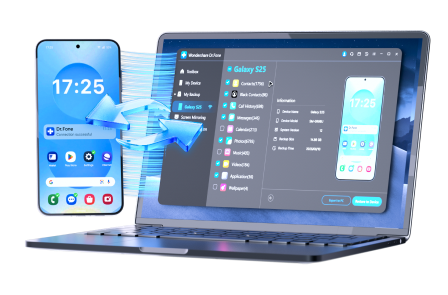
If Action Mode isn’t the real problem—such as the Camera app crashing, the iPhone freezing during recording, or you needing a safer way to back up and move large video files— Wondershare Dr.Fone can be relevant as a troubleshooting and device-management tool. For example, Dr.Fone can help with system repair workflows when iOS is unstable, or with backup/transfer tasks when videos won’t copy reliably through normal methods. Use it for legitimate maintenance and data management, not for bypassing security.
 Effortlessly manage data through preview, delete, export, etc.
- Transfer all data between devices.
- Robust backup solutions for reliable data protection.
- Mirror screens to PC for meetings, teaching, and control.
-
Step 1 Connect iPhone and open Dr.Fone
Connect your iPhone to a computer and open Dr.Fone, then choose a relevant module such as System Repair or Backup/Transfer (module names may vary by version).
-
Step 2 Follow prompts to repair iOS or export videos
Follow the on-screen prompts to repair iOS (if the device is unstable) or back up/export videos to reduce storage pressure.
-
Step 3 Re-test recording and Action Mode
After completion, re-test recording in the Camera app and confirm Action Mode behavior under good lighting.
- If you can still access the phone, prioritize backup/export first to protect your videos before deeper troubleshooting.
- If you forgot the passcode, use official Apple account recovery options; avoid tools or steps that claim to bypass ownership checks.
- If the device is stuck or unstable, consider system repair steps and then update iOS through official channels when possible.




Part 8. Security, privacy, and compliance notes
Action Mode is a camera quality feature, not a security control, but recorded video can still contain sensitive personal data (faces, locations, private spaces). Be mindful of consent and local recording laws, especially in schools or workplaces. Don’t try to use any software or "tweaks" that claim to unlock restricted device functions or bypass Apple protections; if your iPhone is managed by an organization (MDM) or tied to an Apple ID you don’t control, the correct next step is official support and ownership verification (proof of purchase, original account access, or your organization’s IT admin).
Conclusion
Action Mode on iPhone is an enhanced video stabilization feature built for filming while you’re moving, helping footage look smoother in everyday action scenarios. It works best with good light and supported devices, and it’s easiest to find directly in the Camera app’s Video mode. If you run into crashes, transfer problems, or instability around recording, Dr.Fone may be a reasonable next step for legitimate repair or backup workflows.
FAQ
Q1. Does Action Mode improve video quality in low light?
Not usually. Action Mode prioritizes stability, and in dim environments it can produce noisier or softer-looking footage than standard video, depending on the iPhone model and settings.
Q2. Why can’t I find Action Mode on my iPhone?
Many older models don’t support it. Confirm your iPhone model (Action Mode is generally on iPhone 14 series and later) and make sure you’re using the Apple Camera app in standard Video mode with an up-to-date iOS version.
Q3. Is Action Mode the same as a gimbal?
No. Action Mode is software-based stabilization and can look very smooth, but a gimbal provides physical stabilization that can be better for certain movements, longer shots, and consistent cinematic motion.
Q4. Does Action Mode work in third-party camera apps?
It depends on the app and iOS support. Action Mode is most reliably available in Apple’s Camera app; third-party apps may use different stabilization methods or may not expose the same toggle.
 Add Wondershare Dr.Fone as a preferred source on Google