Effortlessly manage data through preview, delete, export, etc.

 100% Security Verified | No Subscription Required | No Malware

 :
: 
 ChatGPT
 Perplexity
 Gemini
 Claude
 Grok
Grok
what is sidecar? Sidecar is an Apple feature that lets you use an iPad as an extra display for a compatible Mac, either by extending your desktop or mirroring your Mac screen. It also supports Apple Pencil input in supported apps, turning the iPad into a flexible companion screen for Mac work.
In plain English: Sidecar makes your iPad act like a second monitor (or a mirror) for your Mac, without needing third-party apps. One key takeaway: it’s designed for convenience and productivity, not for remote control or device "sharing" between different Apple IDs.
In this article
- Part 1. What Sidecar is used for: core uses & scenarios (Why it matters)
- Part 2. How Sidecar works: official working logic (How it works, non-technical + technical-lite)
- Part 3. Where to find Sidecar: settings paths and entry points (Where to find it)
- Part 4. How to use, enable, disable, or check Sidecar
- Part 5. Requirements and compatibility
- Part 6. Sidecar vs related concepts
- Part 7. Common issues and misconceptions
- Part 8. Security, privacy, and compliance notes
Part 1. What Sidecar is used for: core uses & scenarios (Why it matters)
Core uses and real-world scenarios
Sidecar matters because it adds screen space and input options using devices many people already own, helping reduce window juggling and making certain creative or note-taking workflows smoother.
- Working on a document on your Mac while keeping chat, calendar, or reference material open on the iPad
- Using the iPad to preview content (slides, designs, video timelines) while editing on the Mac
- Drawing or annotating in compatible Mac apps with Apple Pencil on the iPad screen
- Keeping a coding window on the Mac and documentation or testing notes on the iPad
- Mirroring the Mac to the iPad for presentations or quick review without moving monitors
Who needs it most
Sidecar is most useful for everyday Mac+iPad owners who want a portable second display, students who multitask between writing and references, and creative users who benefit from Apple Pencil input. It can also help remote workers with limited desk space. Second-hand buyers and sellers may care about Sidecar mainly to confirm both devices are compatible and properly signed in to the right Apple ID before setup.
Part 2. How Sidecar works: official working logic (How it works, non-technical + technical-lite)
Plain explanation
Sidecar creates a secure connection between your Mac and iPad and treats the iPad like an additional display. You can choose to extend the desktop (more space) or mirror it (same screen). It typically works wirelessly when the devices are nearby, and it can also work over a wired connection in some setups for stability and charging.
Key components
- Compatible Mac and iPad models: Sidecar availability depends on hardware support and macOS/iPadOS versions (varies by device and OS version).
- Apple ID/iCloud sign-in: Both devices generally need to be signed in with the same Apple Account (Apple ID) for a straightforward setup.
- Wireless or wired connectivity: Wireless uses short-range networking (and may rely on Wi‑Fi/Bluetooth being enabled); wired can improve reliability and keep the iPad charged.
- Display modes: "Extend" adds a second desktop space; "Mirror" duplicates the Mac’s screen.
- Input features: Apple Pencil and touch interactions can be supported in certain contexts, depending on app support and settings.
Part 3. Where to find Sidecar: settings paths and entry points (Where to find it)
Settings or menu paths
Common places to start on a Mac (wording may vary by macOS version):
- System Settings > Displays > Add Display (then select your iPad)
- Or System Settings > Displays (look for options to connect or add a display)
- On some versions, Sidecar-related options may also appear under System Settings > Desktop & Dock or System Settings > Control Center (labels vary)
Search keywords and entry tips
- In Mac System Settings search, try keywords like "Sidecar", "Displays", "Add Display", or "AirPlay".
- If you don’t see "Sidecar" by name, look for the iPad listed as a display target under Displays or Add Display; Apple sometimes groups Sidecar options under general display/connection menus.
Part 4. How to use, enable, disable, or check Sidecar
Safe how-to steps
-
Step 1 On your Mac, open System Settings > Displays > Add Display
Then choose your iPad from the list (or select it where available).
-
Step 2 Choose whether to extend the desktop or mirror the display
Then confirm the connection prompts on the iPad if asked.
-
Step 3 Arrange displays in Displays settings
Match your physical layout (drag to reposition), and adjust resolution/scaling if needed.
-
Step 4 To disconnect, return to Displays
Stop using the iPad as a display (or choose to disconnect from the display menu).
-
Step 5 To check status, open System Settings > Displays
Confirm the iPad appears as an active display when connected.
Official help resources
Use Apple’s built-in help in System Settings (search within settings for "Sidecar" or "Displays") and the macOS Help app for the most accurate steps for your macOS version. (No specific official URL was provided in the inputs.)
Part 5. Requirements and compatibility
Quick compatibility table
| Requirement area | What you typically need | Notes |
|---|---|---|
| Supported devices/platforms | A compatible Mac + compatible iPad | Support varies by model year and macOS/iPadOS version. |
| Account sign-in | Usually the same Apple Account on both devices | Different accounts can prevent discovery/connection. |
| Required toggles | Often Wi‑Fi and Bluetooth enabled for wireless use | Exact requirements can vary by OS version and setup. |
| Connectivity | Wireless nearby or wired connection in some setups | Wired can improve stability and charge the iPad. |
| Offline behavior | Works locally; no internet is typically required once devices can connect | Some Apple services (sign-in/verification) may require internet initially. |
| Notable limitations | Not all iPads/Macs support Sidecar; some apps handle input differently | Apple Pencil features depend on app support; performance depends on signal and load. |
Notes and caveats
Sidecar behavior and menu labels change across macOS versions (for example, older macOS may show Sidecar as its own preference area). If your devices don’t meet Apple’s compatibility list for your OS versions, Sidecar may not appear at all, or it may be unreliable.
Part 6. Sidecar vs related concepts
Key differences
| Concept | Purpose | Where it appears | Dependencies | Common confusion |
|---|---|---|---|---|
| Sidecar | Use iPad as a second display (extend/mirror) and optional Apple Pencil input | macOS Displays / Add Display | Compatible devices, typically same Apple Account, nearby connection | Mistaken for general screen sharing or remote access |
| AirPlay to Mac / AirPlay display | Stream audio/video or screen to another device (varies by feature) | Control Center / Displays / AirPlay menus | Network support, compatible devices | Confused with Sidecar because both can show a screen on another device |
| Universal Control | Use one keyboard/trackpad across Mac and iPad without making iPad a display | System Settings (Display/Input related areas) | Same Apple Account, nearby, settings enabled | People expect it to "extend the screen" like Sidecar |
| Screen Mirroring (general) | Duplicate the same screen to another display | Displays / Control Center | Connection method varies | Confused with Sidecar’s "Mirror" mode vs "Extend" mode |
When readers confuse them
- Sidecar extends or mirrors the Mac display onto iPad; Universal Control does not turn the iPad into a monitor.
- AirPlay-style mirroring is often for streaming; Sidecar is designed as a workable second display with tighter integration.
- If you only see "Mirror" options, you may be using general mirroring rather than Sidecar’s extend workflow.
Part 7. Common issues and misconceptions
Symptom → likely reason → what to check
- iPad doesn’t appear under Add Display → compatibility or account mismatch → confirm both devices support Sidecar for their current OS versions and are signed in to the same Apple Account.
- Connection is laggy or drops → wireless interference or distance → move devices closer, reduce Wi‑Fi congestion, or try a wired connection if supported.
- Only mirroring works (no extend) → display mode selection or settings limitation → check display mode options in System Settings > Displays and ensure you’re selecting "extend."
- Apple Pencil doesn’t work as expected → app-level support varies → test with a known compatible app and confirm Pencil is paired/charged.
- It worked before, now it won’t connect → OS update or settings change → re-check Wi‑Fi/Bluetooth, restart both devices, and re-add the iPad as a display.
When Dr.Fone can help
Sidecar problems are usually settings, compatibility, or connectivity issues, but sometimes a device is unstable (system glitches, repeated disconnects, or update-related problems). In those cases, Wondershare Dr.Fone can be relevant for legitimate maintenance tasks like iOS system repair, data backup, or device-to-device transfer before you troubleshoot more aggressively. It’s not a Sidecar "enabler," but it can help you protect data and stabilize a device so Apple features work normally again. Use Dr.Fone only on devices you own or are authorized to manage.
 Effortlessly manage data through preview, delete, export, etc.
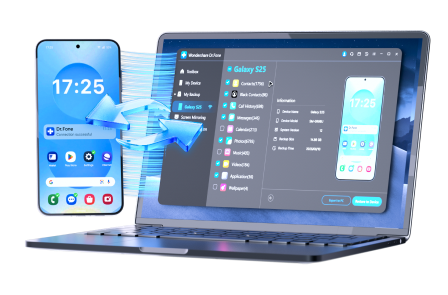
- Transfer all data between devices.
- Robust backup solutions for reliable data protection.
- Mirror screens to PC for meetings, teaching, and control.
-
Step 1 Back up important iPad data
Back up important iPad data with Dr.Fone before making major changes (updates, resets, repairs).
-
Step 2 Address instability with system repair functions
If the iPad is unstable, use Dr.Fone system repair functions to address crashes/boot issues, then re-try Sidecar setup.
-
Step 3 Update and retry connecting through Displays
After stabilizing, confirm iPadOS/macOS are updated and retry connecting through System Settings > Displays on the Mac.
- If you can still access the phone or iPad normally, prioritize built-in updates, restarts, and display settings first.
- If you forgot the passcode, follow Apple’s official account and device recovery steps; don’t attempt bypass methods.
- If the device is stuck or unstable, consider a backup and repair workflow (and contact Apple Support if hardware is suspected).




Part 8. Security, privacy, and compliance notes
Sidecar is designed to protect users by keeping cross-device display sharing within trusted, authenticated relationships (typically the same Apple Account) and short-range or direct connections. You should not try to bypass account requirements, device eligibility checks, or organizational controls (such as managed device policies) to force Sidecar to work. If a device is company-managed, follow your IT team’s guidance; if ownership or account access is in question (for example, second-hand devices), use official Apple Account recovery, request proof of purchase, or contact Apple Support for legitimate resolution.
Conclusion
Sidecar is Apple’s built-in way to use an iPad as a second Mac display for extending or mirroring your workspace, often with optional Apple Pencil input. It matters because it adds practical screen space and flexibility with minimal setup when devices are compatible and correctly signed in. If device instability blocks normal troubleshooting, Dr.Fone may be a reasonable, data-safe helper for backup or system repair before you try connecting again.
FAQ
-
Q1. Does Sidecar require the same Apple ID on Mac and iPad?
In most everyday setups, yes—using the same Apple Account is the expected and simplest way for the devices to discover and trust each other. If accounts don’t match, the iPad may not appear as an available display. -
Q2. Can I use Sidecar with a Windows PC?
No. Sidecar is an Apple feature designed for macOS and iPadOS devices that meet Apple’s compatibility requirements. -
Q3. Is Sidecar the same as Universal Control?
No. Sidecar turns the iPad into a display for the Mac (extend/mirror), while Universal Control lets you use one keyboard/trackpad across devices without making the iPad a second monitor. -
Q4. Why can’t I find Sidecar in my Mac settings?
Most often it’s because of device/OS compatibility, different menu wording in your macOS version, or account/connectivity prerequisites. Check System Settings > Displays > Add Display, search "Displays" or "Sidecar," and confirm both devices are compatible and properly signed in.
 Add Wondershare Dr.Fone as a preferred source on Google